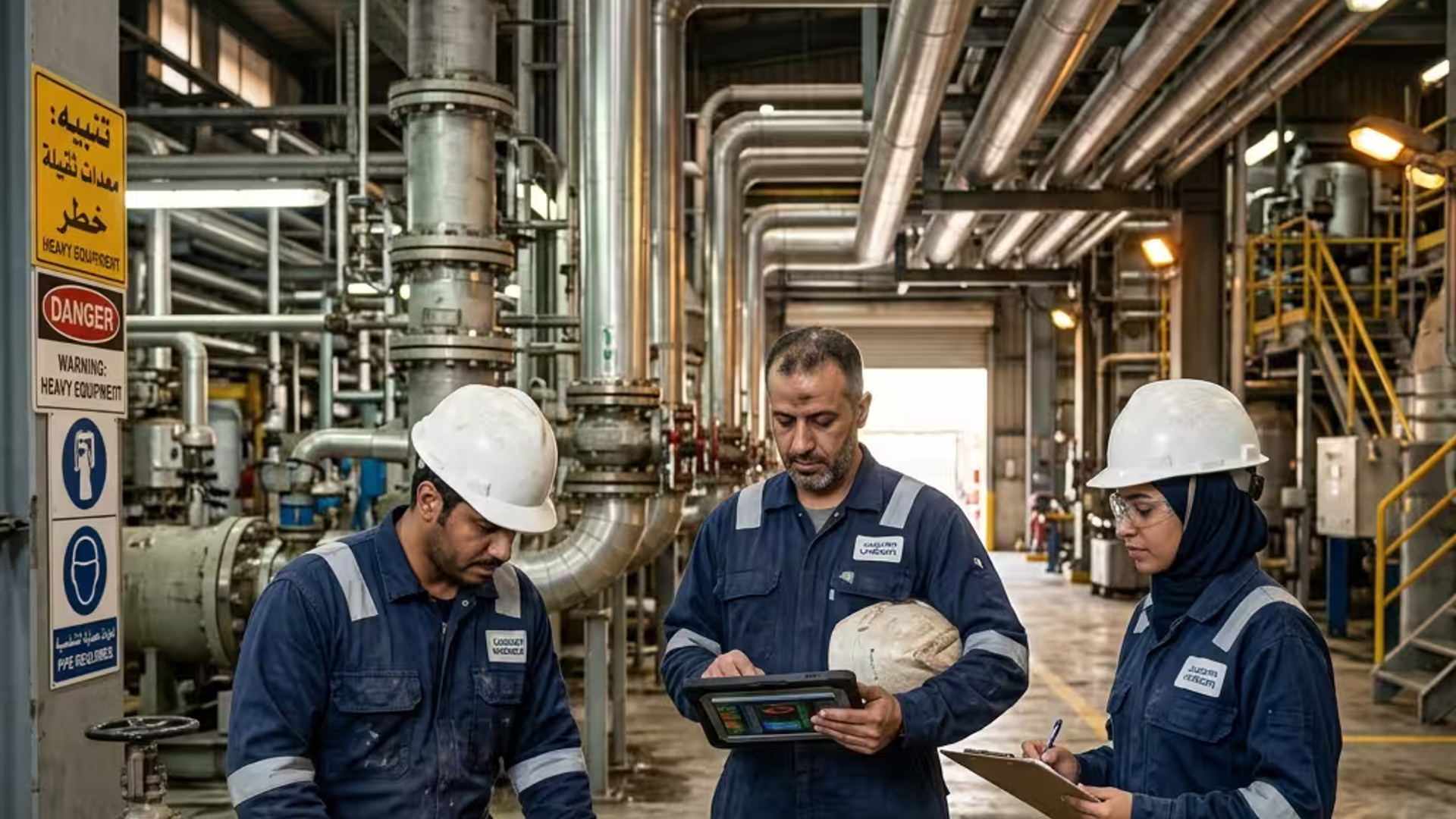
- What does HCIS require for petrochemical worker PPE?
- HCIS 2024 PPE Standards mandate combined NFPA 70E HRC2 (ATPV ≥ 8 cal/cm²), ANSI 107 Class 2 hi-vis, dimensional stability under 100+ wash cycles, and per-garment serial number traceability. Annual ARC re-testing of randomly sampled garments is required. UNEOM ships an audit pack with every petrochemical programme.
- How much does an FR coverall cost in Saudi Arabia in 2026?
- UNEOM HRC2 inherent-FR coveralls range 380–520 SAR depending on integration features (hi-vis tape, reinforced knees, embroidered IDs). Standard treated-FR alternatives sit at 220–290 SAR but reach end of compliant life within 25–40 wash cycles. Marketing-only "FR" coveralls at 90–150 SAR are non-compliant for HCIS-licensed sites.
- What is the difference between HRC1 and HRC2 FR ratings?
- NFPA 70E hazard risk categories. HRC1 = ATPV 4 cal/cm² (acceptable for incident energy ≤ 4 cal/cm² — light electrical work). HRC2 = ATPV ≥ 8 cal/cm² (covers most petrochemical and substation work). HCIS-licensed Saudi sites typically require HRC2 minimum for active maintenance roles. UNEOM industrial line ships HRC2 as default; HRC4 (ATPV ≥ 40 cal/cm²) available for arc-blast roles.
- Why does treated-FR fail under Saudi conditions?
- Two converging stresses. First, industrial laundering at 60–90°C with chlorinated detergents leaches the chemical FR treatment from cotton fibers — measurable degradation begins around cycle 25, complete failure typically by cycle 40. Second, Saudi heat-soak (45–50°C ambient) accelerates polymer breakdown of synthetic stretch components in hybrid weaves. Inherent-FR cotton (FR property in the fiber molecule, not added) is the only construction that survives Saudi industrial wash regimes for the documented 100+ cycle service life.
- Does UNEOM provide hi-vis vests separate from FR coveralls?
- Yes, but we recommend integrated PPE for HCIS-licensed sites. A separate ANSI 107 Class 2 vest layered over an FR coverall traps body heat (measurable 4–6°C core temperature rise in afternoon shifts), reduces productivity by ~18%, and creates an ignition layer in arc-flash incidents. Integrated UNEOM coveralls bond the hi-vis tape thermally onto the FR base — single layer, single audit document.
- What is the lead time for large industrial PPE orders?
- Repeat programmes (existing fabric and pattern) ship in 14–21 days for orders up to 5,000 units. Bespoke FR designs add 21 days for ATPV-validated sample production, totaling 35–42 days end-to-end. Programmes above 10,000 units are split across two production runs to allow fresh batch ARC testing on each.
- How does UNEOM handle annual ARC re-testing?
- Each UNEOM coverall ships with a serial number and a wash-count log book. At month 11 of service, UNEOM coordinates with the site safety officer to retrieve a 2% random sample for independent third-party ATPV testing (typically through KSA-accredited labs). Coveralls retaining ATPV ≥ 8 cal/cm² continue service; those below are replaced under the 18-month warranty if cycle count is below the documented 100-wash threshold.
- Which Saudi industrial sites does UNEOM currently serve?
- UNEOM's manufacturing programme covers 47 industrial accounts including SABIC affiliates, Aramco contractor lines, three Royal Commission heavy-industry tenants in Jubail and Yanbu, and several Riyadh and Dammam manufacturing clusters. Specific account names are confidential under NDA but reference cases are available to qualified procurement teams.
- Where can I buy coverall uniforms in Saudi Arabia?
- UNEOM manufactures coverall uniforms and safety uniforms across Saudi Arabia with delivery to all 24 served cities. Our Aramco-grade FR coveralls ship from Riyadh, Jeddah, and Dammam depots. For bulk orders (50+ units), request a quote through uneom.com/quote for direct factory pricing with HCIS compliance audit packs included.