Stretch Uniform Fabric Comfort: What Active Roles Actually Need
How stretch uniform fabrics really work: elastane versus mechanical give, two-way versus four-way, recovery and sagging, and the roles where stretch is worth its added cost.
Stretch uniform fabric comfort comes from two very different sources: an elastic fibre such as elastane, or a knit and yarn structure that gives mechanically. Which one you specify decides how the garment recovers its shape, how it survives industrial laundry, and whether the added cost is justified for the role wearing it.
Two Ways a Fabric Stretches
Stretch in a uniform fabric comes from one of two places, and buyers who confuse them end up disappointed. Elastomeric stretch comes from an elastic fibre, elastane, sold under trade names such as spandex or Lycra, spun alongside polyester or cotton so the yarn itself wants to return to its original length. Mechanical stretch comes from structure rather than chemistry: a jersey or interlock knit whose loops open under load, a texturised polyester yarn carrying built-in crimp, or a weave engineered with enough slack that it gives before it resists. Mechanical stretch is cheaper, survives industrial laundering better, and never loses elasticity because it never had a rubber-like component to lose. What it lacks is power, the pull that closes a garment back onto the body after movement. Elastomeric stretch supplies that recovery force, but it introduces a fibre with its own vulnerabilities to heat, chlorine and time. Most working uniforms use one, some use both, and the specification should say plainly which it is.
Two-Way and Four-Way
Fabric is directional, so stretch means little until you state the direction. Two-way stretch elongates along a single axis, usually across the body, which is enough for a shirt that needs room around the chest and shoulders when the arms come forward. Four-way stretch elongates across and along the fabric, so a garment gives when a technician squats and reaches overhead in the same motion. The phrase 4 way stretch workwear is used loosely in catalogues; the honest test is simple, pull a swatch in both directions with the same hand pressure and feel whether one axis is dead. Direction matters most where the body moves diagonally: kneeling, twisting toward a shelf, climbing into a cab, transferring a patient. Trousers and coveralls benefit from genuine four-way behaviour far more than shirts do, because the lower body hinges in two places at once. Paying a four-way premium on a garment that only needs cross-body give is money spent on a line nobody feels.
Recovery, Not Just Give
Elongation is easy to demonstrate in a showroom; recovery is what decides how the garment looks in month nine. Recovery is the fabric's ability to return to its original dimensions after being held under tension, and it is where most disappointing stretch garments fail. Knees bag, elbows balloon, waistbands go slack, and fabric that felt generous on day one now reads as untidy on the floor. Several things cause it: too little elastic content for the load, a knit already near the limit of its extension when worn, heat that has relaxed the elastic fibre, or chlorine and strong alkaline detergents that have degraded it chemically. Ironically, a garment cut too tight fails faster, because the fabric spends the whole shift near maximum extension and never rests. Recovery should therefore be judged after repeated wash and wear cycles, never on a fresh swatch, and any supplier claim about flexible uniform fabric performance is worth little until it survives the laundry the client actually uses.
Where Stretch Earns Its Cost
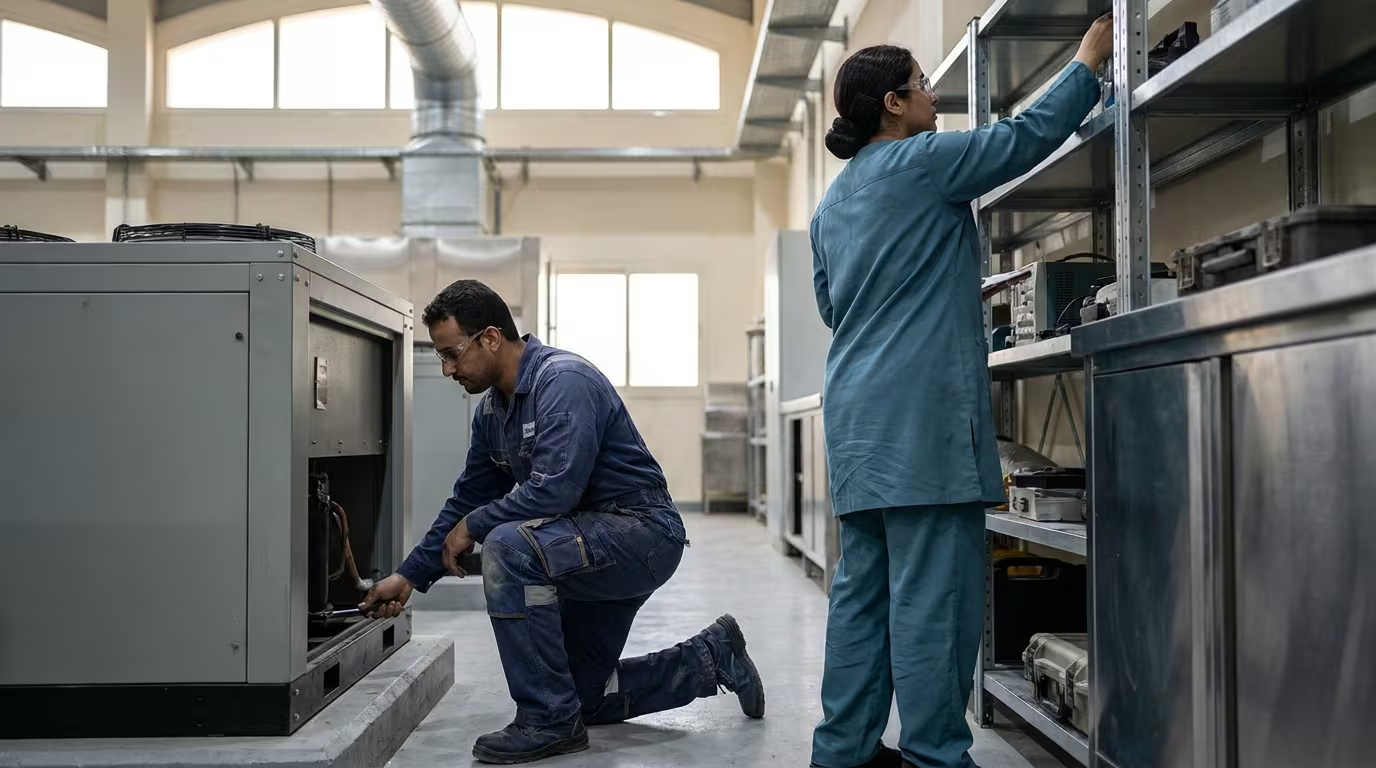
Stretch is not a universal upgrade; it is a targeted one. Pay for it where the body works against the garment: housekeeping teams bending into low beds and baths, nurses transferring patients, warehouse pickers reaching high and low within the same minute, maintenance technicians kneeling under equipment, drivers seated for long stretches, kitchen and service staff carrying trays through tight aisles. In these roles restriction is not merely uncomfortable; it changes how people work, and staff quietly order a size up, which then hangs badly and catches on equipment. Stretch also does useful work alongside modesty expectations in Saudi workplaces, where longer tunics, higher necklines and fuller sleeves are the norm: a modest cut that still moves cleanly needs give in the cloth, otherwise coverage is bought at the cost of range. Stretch earns least in static roles such as reception, administration and standing front-of-house positions, where a stable woven fabric holds its press and looks sharper for longer.
The Trade-offs
Every stretch decision is paid for somewhere else. Elastane is a fine, low-strength fibre, so a blend containing it usually gives up some abrasion resistance and tear strength against a robust polyester-cotton of the same weight. Knits, which stretch most readily, snag and pill more than tight wovens, and a pilled garment looks worn long before it is worn out. Industrial laundries are the harshest environment stretch will meet: high wash temperatures, strong alkalinity, chlorine bleach on whites, and most damaging of all, hot tumble drying and finishing presses that relax the elastic fibre permanently. Flame-resistant programmes restrict elastic content sharply, because elastane is not inherently flame resistant and melts. Saudi conditions add their own load, with prolonged ultraviolet exposure, outdoor summer work in the 45 to 50 degree range, and heavy perspiration carrying salts into the fibre. None of this rules stretch out. It means the wash protocol, the drying temperature and the role's exposure belong in the specification beside the stretch claim.
Specifying Stretch Properly
Write the specification around behaviour rather than adjectives. State which direction must stretch and how much give the role needs, described in movement terms, a full squat, an overhead reach, arms crossed at the chest, rather than a number a mill can satisfy on paper. Require recovery to be demonstrated after repeated laundering under the client's own process, not a domestic wash. Ask what the stretch comes from, elastomeric or mechanical, and with poly spandex uniform fabric ask specifically how the elastane behaves at the drying temperature the laundry actually runs. Then remember that cloth is only half of mobility: gusseted underarms, articulated knees, an action back and a properly graded size set deliver movement no fibre can rescue if the pattern is wrong. Run a wear trial by role rather than by head-office preference, and let the people who kneel and reach report before full rollout. UNEOM has manufactured inside the Kingdom since 2013 under ISO 9001:2015, with OEKO-TEX Standard 100 certified fabric options, and specifies stretch this way as standard practice.
Frequently asked
- What is the difference between elastane stretch and mechanical stretch?
- Elastane is an elastic fibre blended into the yarn; it pulls the fabric back to shape after movement. Mechanical stretch comes from knit structure or texturised yarns that give under load without any elastic component. Mechanical stretch survives hot industrial laundering better, while elastane delivers stronger recovery. Many uniform fabrics use both, and the specification should state which.
- Do all active roles need four-way stretch?
- No. Four-way stretch matters most in trousers and coveralls, and in roles that bend and reach at the same time, such as kneeling technicians, warehouse pickers and patient handling. Shirts and tunics usually need cross-body give only. Paying for four-way behaviour on a garment that flexes in one direction adds cost the wearer never notices.
- Why do stretch uniforms sag at the knees and elbows?
- Because recovery failed, not elongation. The usual causes are too little elastic content for the load, garments cut so tight the fabric never rests, heat from tumble drying and pressing that relaxes the elastic fibre, and chlorine or strong alkaline detergents that degrade it. Always assess recovery after repeated laundering, never on a new swatch.
- Does stretch fabric cope with Saudi summer heat?
- Heat matters in two separate ways. Wearer comfort depends mainly on fibre choice, fabric weight and construction rather than on stretch itself, so breathability and moisture movement come first. Elastic fibres, however, dislike sustained high temperature, particularly in drying and finishing, so specify the laundry process alongside the stretch requirement.
- Is poly spandex uniform fabric suitable for industrial laundry?
- It can be, provided the process is agreed in advance. The controllable variables are wash temperature, chlorine bleach use, alkalinity and above all drying and finishing temperature. Run a pilot batch through the client's actual laundry before committing to volume, and write the limits into the contract rather than assuming standard care.