Hi-Vis Class 1, 2 or 3: A Hi-Vis Class Selection Guide for Saudi Sites
How hi-vis class selection actually works on Saudi sites: what pushes a class higher, how fluorescent and retroreflective elements differ, and why heat and laundering change the answer.
High-visibility clothing is one of the few categories of PPE where buying the wrong level stays invisible until something goes wrong. Class is not a comfort tier or a brand grade; it is a conspicuity level tied to how, where and when your people actually work. This guide explains the reasoning behind that choice.
What a hi-vis class actually is
A class is not a fabric quality rating or a supplier's commercial tier; it is a way of describing how much conspicuity a garment provides and how completely it wraps the wearer's body. Two specifications dominate procurement conversations in Saudi Arabia: the North American-origin ANSI/ISEA 107 and the international ISO 20471. Both organise garments into ascending levels, and both keep their detailed requirements — the measurements, the layout rules and the qualifying conditions — inside the standard text itself. That is where your purchase specification must point. Do not let a supplier, a catalogue or an article decide for you that a given task is Class 2. The class you are obliged to buy is fixed by the standard your contract cites, by the site standard imposed by your client or the competent authority, and by your own documented risk assessment. The procurement job is to capture those three inputs in writing before the first sample is ordered, then buy consistently against what was written.
The three factors that push a class higher
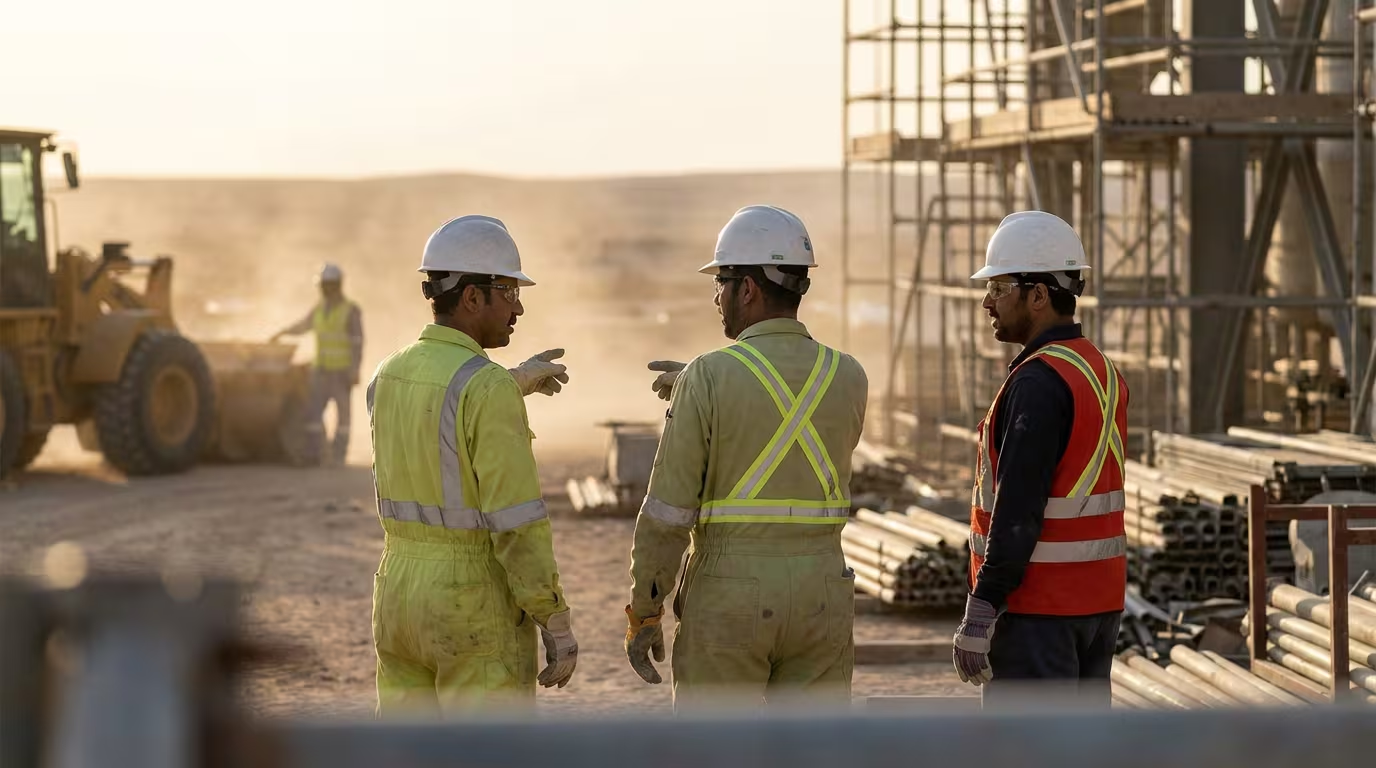
The underlying logic is the same across both specifications, and it is worth understanding even though the thresholds are not yours to invent. Conspicuity requirements rise as vehicle and plant speed rises, because a faster approach gives the driver less time to detect, recognise and react to a person. They rise as the visual background becomes more complex or cluttered — a laydown yard stacked with pipe, a busy logistics apron, a night highway where signage, headlights and reflective furniture all compete for attention. They rise with exposure duration: a worker who spends a full shift inside a live traffic corridor is a different case from an inspector who crosses it twice a day. Separation matters too, whether the worker is protected by barriers, cones or a closed lane, or is working directly among moving traffic. Score those factors honestly for each family of tasks on your site, then read the class the standard assigns. The assessment is the real deliverable; the class is its output.
Fluorescent background and retroreflective tape do different jobs
A high-visibility garment is really two technologies stitched together, and conflating them is an expensive mistake. The fluorescent background — the yellow-green, orange-red or red material forming the body of the garment — works by absorbing ultraviolet energy and re-emitting it as visible light, which is why it appears to glow in daylight and, most usefully, in the low-angle light of dawn, dusk, dust and haze. It does almost nothing in true darkness, because there is no ultraviolet to convert. Retroreflective tape does the opposite: it returns incident light back toward its source, so it stays unremarkable until a headlight, torch or plant-mounted lamp is aimed at the wearer, at which point it reads brightly to anyone positioned near that light source. Neither element substitutes for the other. A garment stripped of tape is a daytime garment; a strip of tape sewn onto a dark shirt is a night-only marker. The standards combine both because real sites run through both conditions.
Day, night and the shape of a person
Detection is not the same as recognition. A driver may register a bright patch well before understanding that the patch is a human being who might step forward. That distinction drives how retroreflective material is arranged, not only how much of it is present. Bands that follow the torso and, where the garment type allows, the limbs help an observer read the outline and gait of a walking person; the human visual system is unusually good at identifying motion at the joints, and material placed there turns an ambiguous bright blob into an unmistakable pedestrian. It also matters that the wearer be conspicuous from every approach angle, since vehicles, cranes and reversing plant do not arrive from the front by arrangement. Practical consequences follow. Tape covered by a tool belt, a fall-arrest harness, a backpack or an open jacket is tape that is not working, and a vest worn over a dark coverall at night can leave the legs unread. Specify the garment as a system, then verify it on the body.
What Saudi conditions do to reflective performance
A hi-vis garment is a consumable with a service life, and Saudi service conditions are hard on both of its technologies. Sustained ultraviolet exposure fades fluorescent dyes, and a jacket that has spent a summer on an open site in Jubail or Riyadh can shift visibly toward a duller, washed-out shade long before its seams fail. Retroreflective tape degrades differently: repeated laundering, high wash temperatures, harsh alkaline or chlorine chemistry, mechanical abrasion and aggressive tumble drying attack the optical layer and its bond to the fabric, producing cracking, lifting, delamination and dull patches. Oil, cement dust and fine sand disable both elements simply by covering them, which is why a filthy garment can fail in practice while looking structurally intact. None of this can be judged by feel, so build the controls in: follow the garment's own care label rather than a generic laundry recipe, inspect at defined intervals against an unused reference garment, and retire on evidence rather than on habit.
Turning class selection into a program
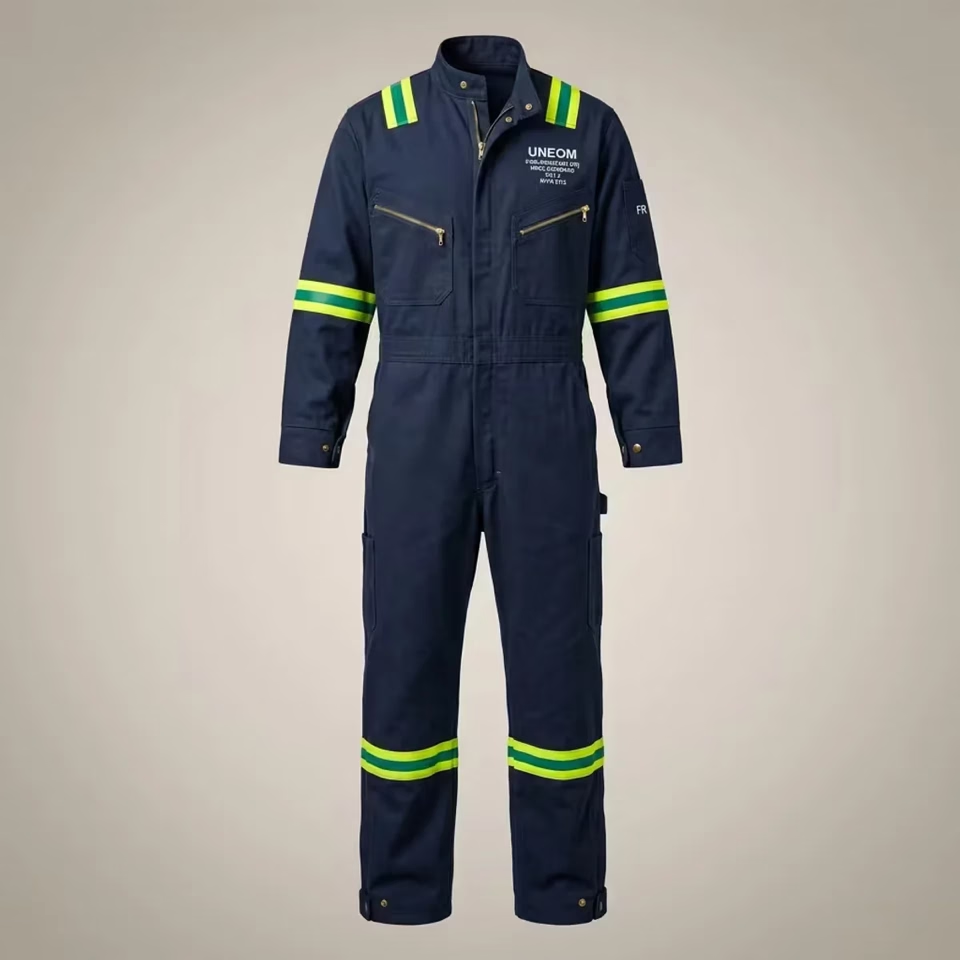
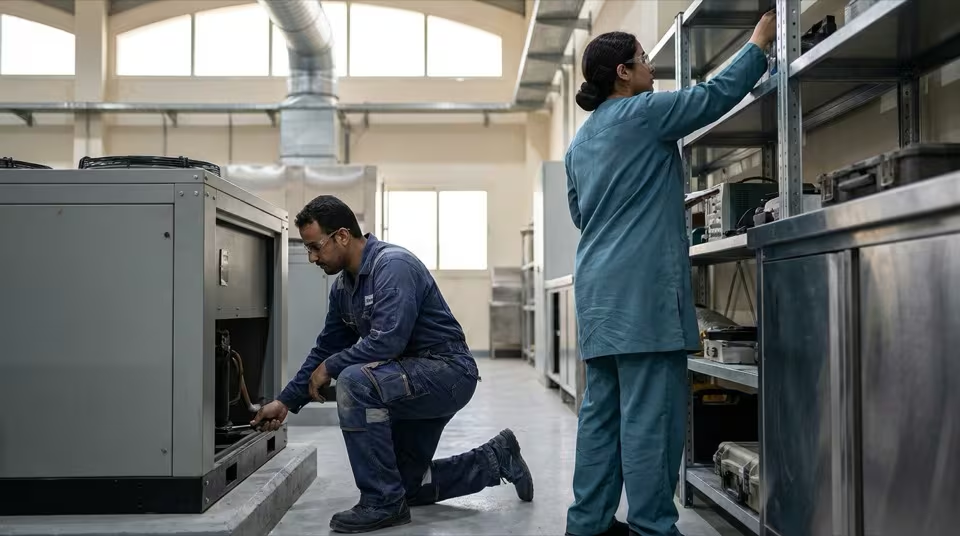
Once the class is settled by the standard and the risk assessment, the remaining decisions are program decisions, and that is where Saudi sites usually win or lose. Heat comes first: any hi-vis layer adds thermal burden in a 45 to 50 degree summer, so favour constructions that achieve the required class in a single breathable layer rather than a vest stacked over a coverall, and treat ventilation, moisture management and lighter fabric weights as safety features rather than comfort extras. Fit and modesty come second: longer cuts, relaxed silhouettes and appropriately covering options let women and men wear compliant garments without improvising, and improvised garments are the ones that end up unzipped, rolled up or removed. Then govern everything else — size range, replacement stock, laundering route, inspection ownership, retirement rule — in one written specification and buy to it consistently. UNEOM manufactures inside the Kingdom and has done since 2013, working to ISO 9001:2015 and OEKO-TEX Standard 100.
Frequently asked
- What is the difference between ANSI/ISEA 107 and ISO 20471 classes?
- They are two separate specifications, each with its own class structure, definitions and qualifying requirements, so a class number in one is not automatically equivalent to the same number in the other. Decide which standard your contract, client or competent authority actually cites, then read the class requirements inside that document rather than translating between them.
- Can I decide a task needs Class 2 based on a guide like this one?
- No. A guide can explain the logic — speed, background complexity, exposure duration, separation from traffic — but the class you are obliged to provide is fixed by the standard your specification cites, the site standard imposed by the client or authority, and your own documented risk assessment. Record those inputs and buy to the result.
- Does a vest over a coverall count as the same class as a single hi-vis garment?
- Not automatically. Classes are defined at garment or ensemble level within the standard, and layering can cover the very tape and background material that make the outer level valid. Check what your cited standard says about combinations, and confirm on a wearer that nothing is obscured by the second layer, a harness or a tool belt.
- How often should hi-vis clothing be replaced in Saudi heat?
- There is no universal interval, because service life depends on ultraviolet exposure, soiling, laundering method and wash frequency. Set a scheduled inspection instead, compare each garment against an unused reference of the same model, and retire on evidence: faded background colour, cracked, lifted or delaminated tape, or contamination that laundering does not remove.
- Do modest or longer-cut hi-vis garments reduce visibility performance?
- Cut and coverage are design variables the manufacturer works within, not automatic compromises. The requirement is that the finished garment meet the class as defined in the cited standard, with fluorescent and retroreflective elements laid out and left unobstructed as that standard requires. Specify modesty needs up front so they are engineered in rather than added later.