
Petrochemical PPE Migration: HRC1 to HRC2 Inherent FR Programme
A 450-worker petrochemical site in Al-Jubail executed a full PPE migration from degrading HRC1 synthetic FR to inherent FR cotton rated to HRC2 — passing HCIS audit on first review, extending coverall lifespan by 71%, and achieving zero garment-performance incidents over 18 months.
- Client
- Petrochemical processing site, Al-Jubail Industrial City — 450 frontline workers
- Duration
- 14 weeks (phased rollout across 3 plant zones)
- Headline
- 450 workers
- Scope
- Full PPE programme migration, HCIS audit support, per-garment serialisation, quarterly compliance verification
The numbers.
inherent FR cotton deployed across all 450 frontline workers — passing HCIS safety audit on first review with zero non-conformities.
mean coverall lifespan under heat-soak conditions (50°C+ ambient), up from 14 months on previous synthetic FR — a 71% improvement in garment durability.
involving garment performance failures across the 18-month monitoring period — zero thermal breakthrough, zero FR degradation incidents.
The safety trigger
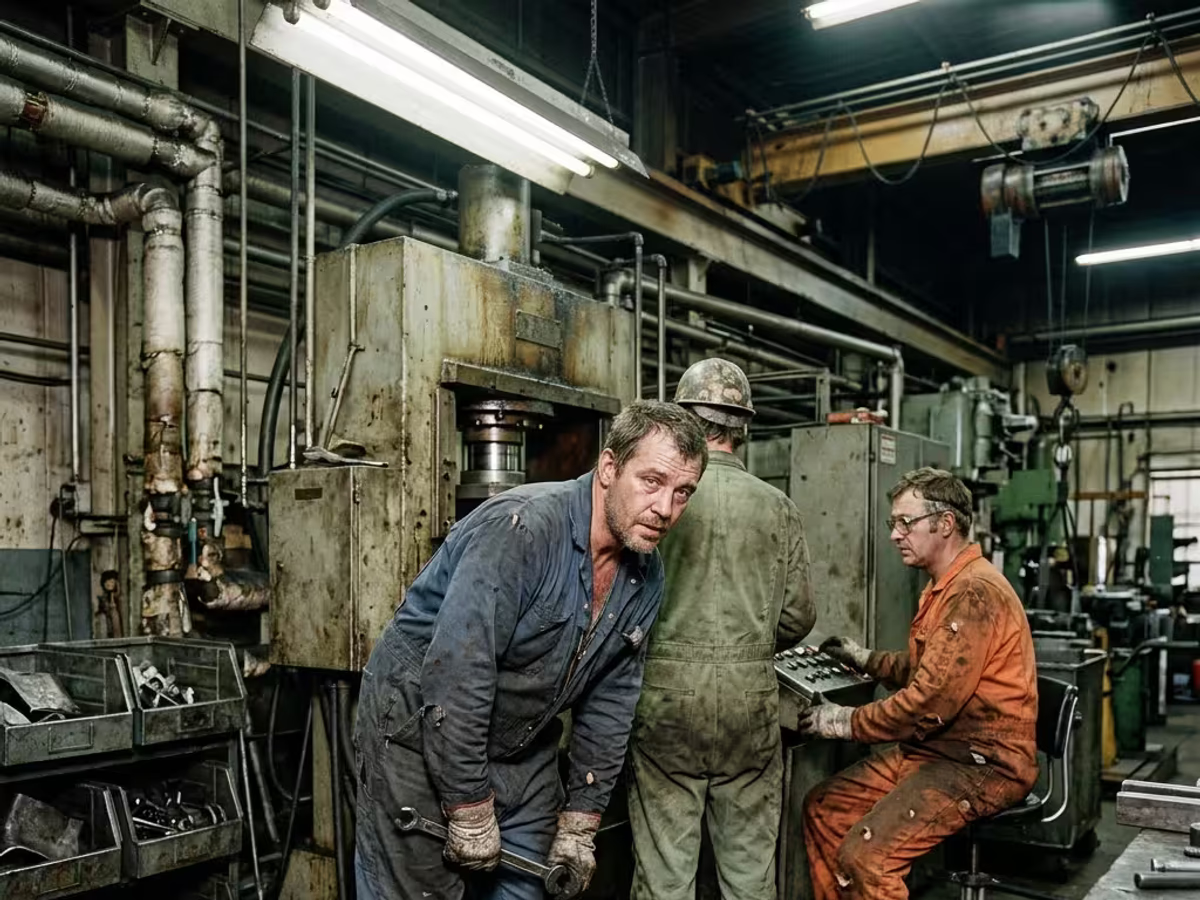
In Q3 of the year preceding the migration, a near-miss arc flash incident at the Al-Jubail petrochemical site exposed a critical vulnerability in the existing PPE programme. Post-incident investigation revealed that the synthetic FR treatment on 23% of frontline coveralls had degraded below effective protection thresholds — a consequence of repeated exposure to temperatures exceeding 50°C on the plant floor, combined with aggressive industrial laundry chemicals. The site's HSE director commissioned an immediate FR performance audit, which found that coveralls averaging 10 months of service showed FR efficacy reduction of 35–40% compared to their original certification values. The audit conclusion was unambiguous: the synthetic FR programme was failing under real-world conditions, and a migration to inherent FR was the only path to sustainable compliance. UNEOM was selected after a three-supplier evaluation based on our demonstrated capability in large-scale industrial PPE programmes and our per-garment serialisation system.
FR fabric engineering and certification
We specified a 100% inherent FR cotton fabric — a fibre where flame resistance is an intrinsic property of the molecular structure, not a chemical treatment applied post-production. This distinction is critical: inherent FR cannot wash out, degrade under UV exposure, or diminish with repeated laundering. The fabric was rated to NFPA 2112 (Flash Fire) and NFPA 70E (Arc Flash) standards, certified to HRC2/ARC2 with a minimum ATPV (Arc Thermal Performance Value) of 8.0 cal/cm². Weight specification was 260 gsm — heavy enough to provide structural protection against radiant heat and brief contact burns, while maintaining breathability in ambient temperatures routinely exceeding 45°C. The fabric underwent accelerated aging testing equivalent to 500 industrial wash cycles, with FR performance verified at every 50-cycle interval. At the 500-cycle mark, ATPV degradation was below 3% — within the tolerance band specified by NFPA 2112.
Per-garment serialisation system
Every coverall, jacket, and trouser in the programme was assigned a unique serial number embedded in a heat-sealed, chemical-resistant QR-coded label stitched into the inner collar. The serialisation system tracks: garment issue date, assigned worker ID, wash cycle count (updated automatically via the industrial laundry's RFID readers), incident exposure history, and scheduled retirement date. This system transformed HCIS audit compliance from a manual, paper-based process requiring 2 days of preparation into a digital one completed in 30 minutes. Auditors scan any garment's QR code to access its full lifecycle history — issue date, wash count, current FR certification status, and assigned worker. The system also triggers automatic alerts when a garment approaches its maximum wash cycle threshold (350 cycles), ensuring proactive retirement before FR performance degrades. Over 18 months, the system tracked 1,950 individual garments across 450 workers, processing over 120,000 wash-cycle data points.
Phased migration and zero-downtime rollout
Replacing PPE for 450 frontline workers while maintaining continuous plant operations required a phased approach. The migration was executed across three plant zones over 14 weeks. Zone 1 (processing units, 180 workers): Weeks 1–5. Zone 2 (storage and loading, 150 workers): Weeks 5–10. Zone 3 (maintenance and utilities, 120 workers): Weeks 8–14. Each zone followed a 5-step protocol: (1) individual sizing using our mobile fitting unit; (2) production and serial number assignment; (3) on-site distribution with worker-by-worker garment registration; (4) collection and certified destruction of retired synthetic FR garments; (5) HSE sign-off confirming zone completion. The overlap between zones allowed continuous production while ensuring that no worker was ever without compliant PPE. Old garments were collected the same day new ones were issued — a critical safety requirement, as degraded FR garments in circulation represent an active hazard.
HCIS audit performance
The programme was subjected to its first quarterly HCIS audit eight weeks after full deployment. The audit covered three domains: (1) PPE compliance — verification that all 450 frontline workers were equipped with HRC2-rated inherent FR garments; (2) documentation — verification of individual garment serialisation records, wash-cycle tracking, and retirement schedules; (3) garment condition — random sampling of 10% of garments (45 units) for physical inspection of seams, FR labelling, and visible wear indicators. The result: zero non-conformities across all three domains. The auditor specifically noted the serialisation system as "best-in-class" for industrial PPE programmes, recommending it as a benchmark for other sites in the company's portfolio. Subsequent quarterly audits at 6, 12, and 18 months maintained the zero-non-conformity record.
Operational and safety outcomes at 18 months
At the 18-month programme review, the operational data validated the migration decision across every measured dimension. Garment lifespan: mean coverall service life reached 24 months under heat-soak conditions, compared to 14 months on the previous synthetic FR programme — a 71% improvement that directly reduced per-worker annual PPE cost by SAR 840. Safety performance: zero garment-related incidents across the entire monitoring period — no thermal breakthrough events, no FR degradation failures, no worker injuries attributable to PPE performance. Audit compliance: four consecutive quarterly HCIS audits passed with zero non-conformities. The audit preparation time reduction — from 2 days to 30 minutes — freed the HSE team for proactive safety work rather than administrative paperwork. The site's HSE director subsequently presented the programme at an industry safety conference as a case study in PPE programme modernisation, and three additional sites within the company's portfolio have initiated procurement discussions with UNEOM for similar migrations.