
Site — 50–199 units
595 SAR
from · per unit
Inherent FR cotton 88/12 nylon
Standard programme; 21-day lead.
18 months warranty
أوفرول مقاوم للحريق
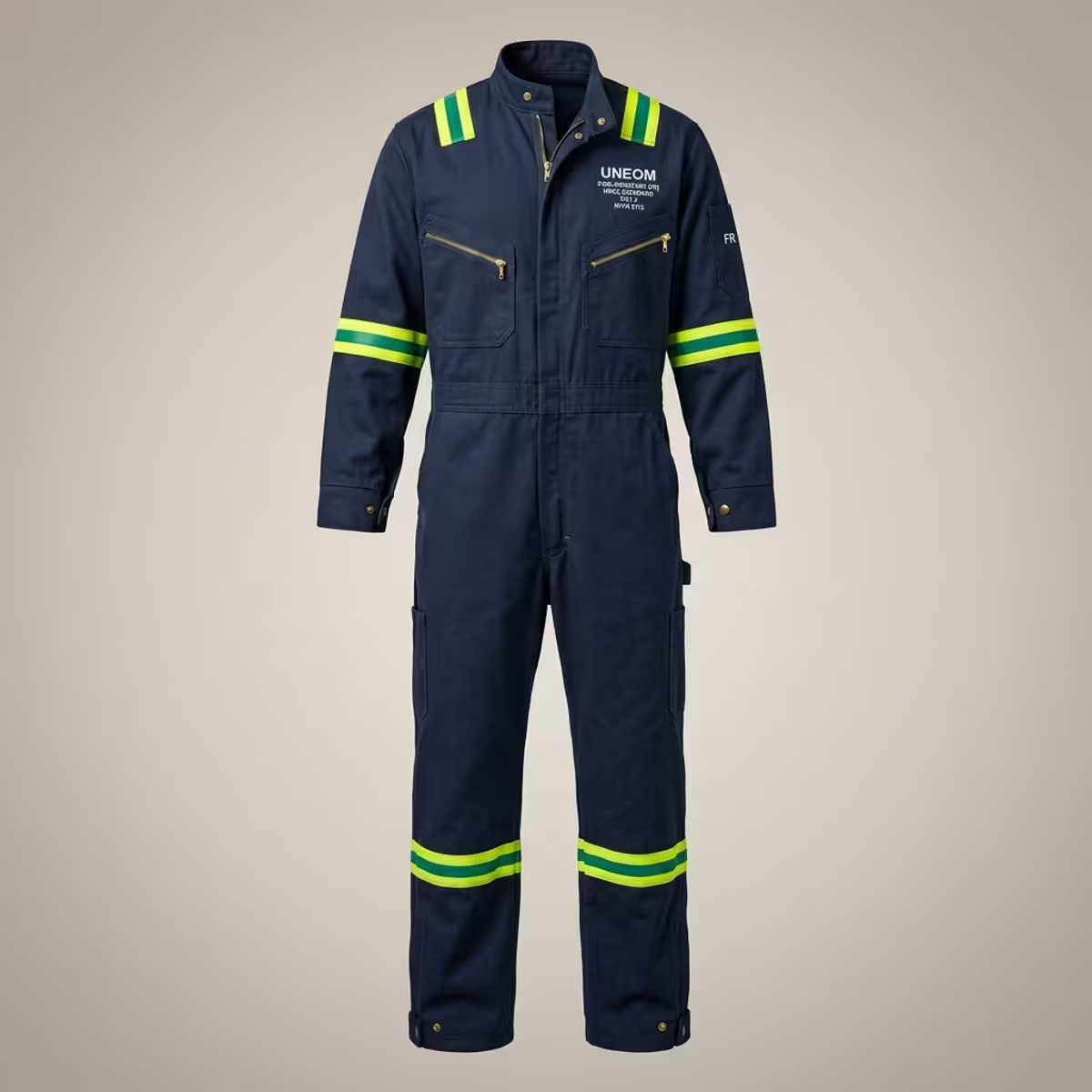
Inherent FR cotton + ANSI 107 hi-vis bands — HRC2-rated for Saudi heat-soak industrial sites.
Last updated:
Unlike treated-FR coveralls that fail HCIS 2024 audit after 25 industrial wash cycles when chemical FR leaches out, UNEOM's HRC2 uses inherent FR cotton 88/12 nylon — FR property in the fiber molecule itself, validated through 100+ wash cycles with retained ATPV ≥ 8 cal/cm².
DefinitionThe UNEOM HRC2 FR Coverall is the inherent flame-resistant cotton industrial garment that petrochemical and heavy-industry workers wear in HCIS-licensed Saudi facilities — combining ATPV ≥ 8 cal/cm² arc-flash protection with ANSI 107 Class 2 hi-vis and per-garment serial-number traceability.
Heavy-duty HRC2 FR coverall in inherent FR cotton — the alternative to synthetic-treated FR that fails in Saudi heat-soak. ANSI 107 Class 2 hi-vis bands, triple-stitched seams, reinforced knees and elbows, per-garment serial number for HCIS audit.
Designed for Saudi Aramco contractor crews, SABIC affiliate plant operators, Royal Commission heavy-industry tenants in Jubail and Yanbu, and any HCIS-licensed petrochemical or industrial facility requiring NFPA 70E HRC2 PPE. The integrated ANSI 107 Class 2 hi-vis bands eliminate the layered-vest failure mode (heat-trap + ignition layer). Per-garment serial number tracks wash cycles for the annual ARC re-test compliance audit.
Key features
The technical engineering behind the spec sheet — what survives the wash regime, what fails under Saudi conditions, and why the chemistry matters.
The fabric core is inherent FR cotton 88/12 nylon — flame resistance integrated into the fiber molecule during manufacture, not a chemical coating applied post-weave. This distinction is operationally critical: chemical FR treatments leach out during industrial laundering (60–90°C with chlorinated detergents), with measurable ATPV degradation beginning around wash cycle 25 and complete failure typically by cycle 40. Inherent FR cotton retains its full flame-resistance property through 100+ cycles because the molecular structure itself is FR — there is no coating to wash away. ATPV ≥ 8 cal/cm² (NFPA 70E HRC2) is verified per production batch through independent laboratory testing. The 320 GSM weight provides arc-flash protection while remaining breathable for Saudi 50°C plant-floor heat-soak conditions.
A side-by-side at the spec level. Same wash regime, same Saudi conditions, three different outcomes.
| Dimension | UNEOM HRC2 | Treated-FR Standard | Marketing-Only "FR" |
|---|---|---|---|
| Fabric type | Inherent FR cotton 88/12 nylon | Treated FR cotton 100% | Polyester w/ chemical FR |
| GSM | 320 | 290 | 220 |
| ATPV rating (NFPA 70E) | ≥ 8 cal/cm² (HRC2) | 4–6 cal/cm² (HRC1) | Untested / unverifiable |
| Hi-vis integration | ANSI 107 Class 2 thermally bonded | ANSI 107 Class 1 sewn-on | None |
| Wash cycle limit (ATPV retained) | 100+ industrial cycles | 25–40 cycles | <20 cycles |
| Per-garment traceability | Serial + wash log + ARC re-test | Batch only | None |
| Warranty | 18 months | 6 months | None |
| Price (SAR) | 580 | 290 | 150 |
| Replacement after ARC incident | Same garment 580 | 8× = 2,320+ + insurance | 8× + dispute + worker harm |
Reserved-batch fabric, on-site fittings, and SLA features unlock at higher tiers — final pricing depends on volume and customisation.
Site — 50–199 units
595 SAR
from · per unit
Inherent FR cotton 88/12 nylon
Standard programme; 21-day lead.
18 months warranty
Plant — 200–999 units
580 SAR
from · per unit
Reserved batch + ARC test + audit pack
Reserved batch + per-garment serial + HCIS audit pack.
18 months warranty
Enterprise — 1,000+ units
540 SAR
from · per unit
Custom Pantone + dedicated production
Site-specific Pantone + annual ARC re-test programme + replacement SLA.
18 months warranty
The sequence that keeps the fabric chemistry, structural integrity, and warranty intact.
Cold-water pre-wash to remove surface contamination before hot industrial laundering.
Hot-water wash at 60°C maximum with phosphate-free detergent. Avoid bleach above 200 ppm chlorine.
Fabric softener coats the fiber surface and can interfere with FR performance. Use only prescribed institutional detergent.
Tumble dry on medium (max 70°C). Avoid prolonged high-heat drying.
Each garment ships with a serial-numbered wash-count log book. Update after each industrial wash cycle.
At month 11 of service, coordinate with site safety officer for 2% random-sample ARC re-testing per HCIS 2024 audit protocol.
Coveralls failing to retain ATPV ≥ 8 cal/cm² are removed from circulation regardless of visual condition. Replacement under 18-month warranty if cycle count is below 100.
The questions Saudi procurement teams ask before they sign. Direct answers.
Programmes start at 50 units. 580 SAR per unit indicative — final pricing depends on volume, customisation, and rotation cycle.