Manufacturing & Safety
Electrostatic Protection in Saudi Industrial Workwear
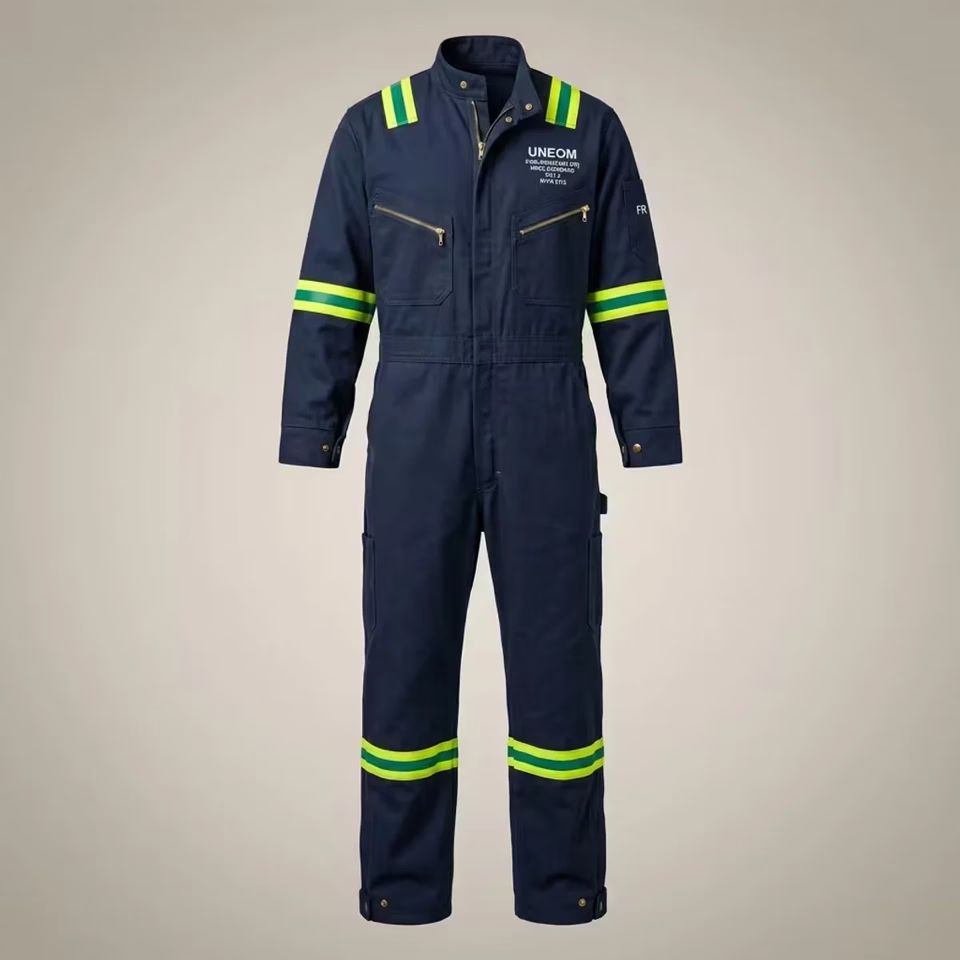
ESD-rated coveralls for petrochemical, electronics assembly, and explosive-environment sites — what HCIS expects.
Khalid Al-Otaibi·Industrial Safety Engineer··7 min read
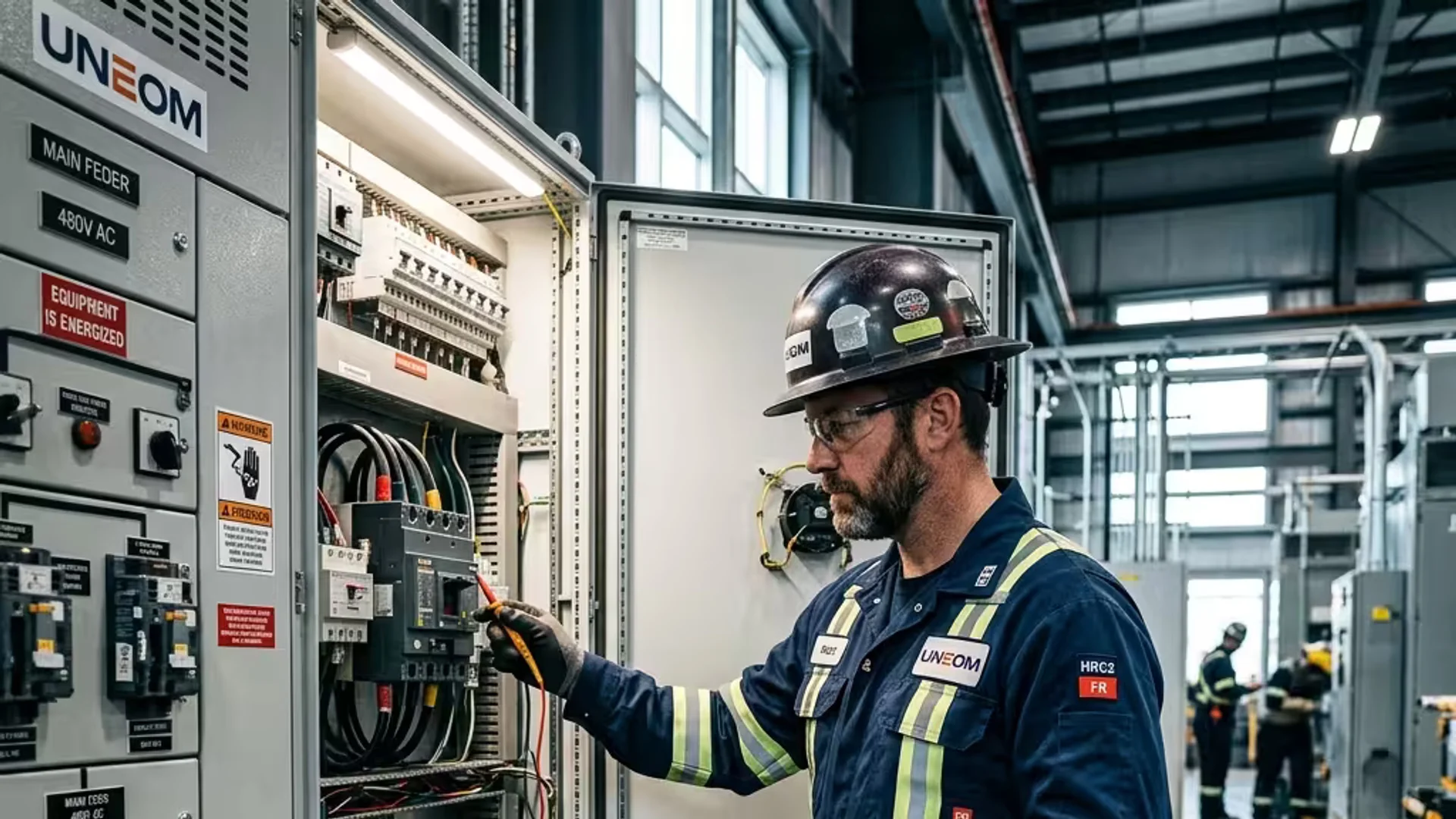
In a Saudi petrochemical plant, an electrostatic discharge is not a static-shock annoyance — it is an explosive-environment ignition source. ESD-rated coveralls are the difference between a near-miss and an incident. The HCIS spec is specific; most catalogue products don't meet it.
ESD physics in petrochemical environments
HCIS specification for ESD coveralls
Carbon-conductive thread integration
Programme audit and replacement
Frequently asked
- How is ESD measured?
- Via surface resistivity in ohms per square, measured to the recognised ESD test method. Confirm the exact limit in the HCIS requirement that applies to your site — UNEOM specifies to the value your safety authority mandates.
- Are ESD coveralls more expensive?
- Yes — 30-40% over standard FR coveralls.
- How long does ESD performance last?
- Wash-validated to 80 cycles; UNEOM provides per-garment serial tracking.
- Is ESD required at every petrochemical site?
- In ATEX-zoned areas, yes. UNEOM specifies ESD into the relevant programme tier.
- Can ESD and HRC2 be combined?
- Yes — UNEOM produces inherent FR cotton coveralls with combined ESD and arc-rated performance; we supply the arc rating in cal/cm² and the test certificate so your safety team can match it to the site hazard assessment.