Construction Workwear for Megaproject Sites: Sizing and Supply Before Fabric
Megaproject sites break normal uniform buying: headcount ramps, dozens of subcontractors purchase separately, colour drifts between dye lots, and camp laundry destroys anything over-personalised. This guide covers writing a standard subcontractors can meet, sizing a multinational workforce, keeping employers identifiable under one project identity, and planning replacement stock you will not write off at demobilisation.
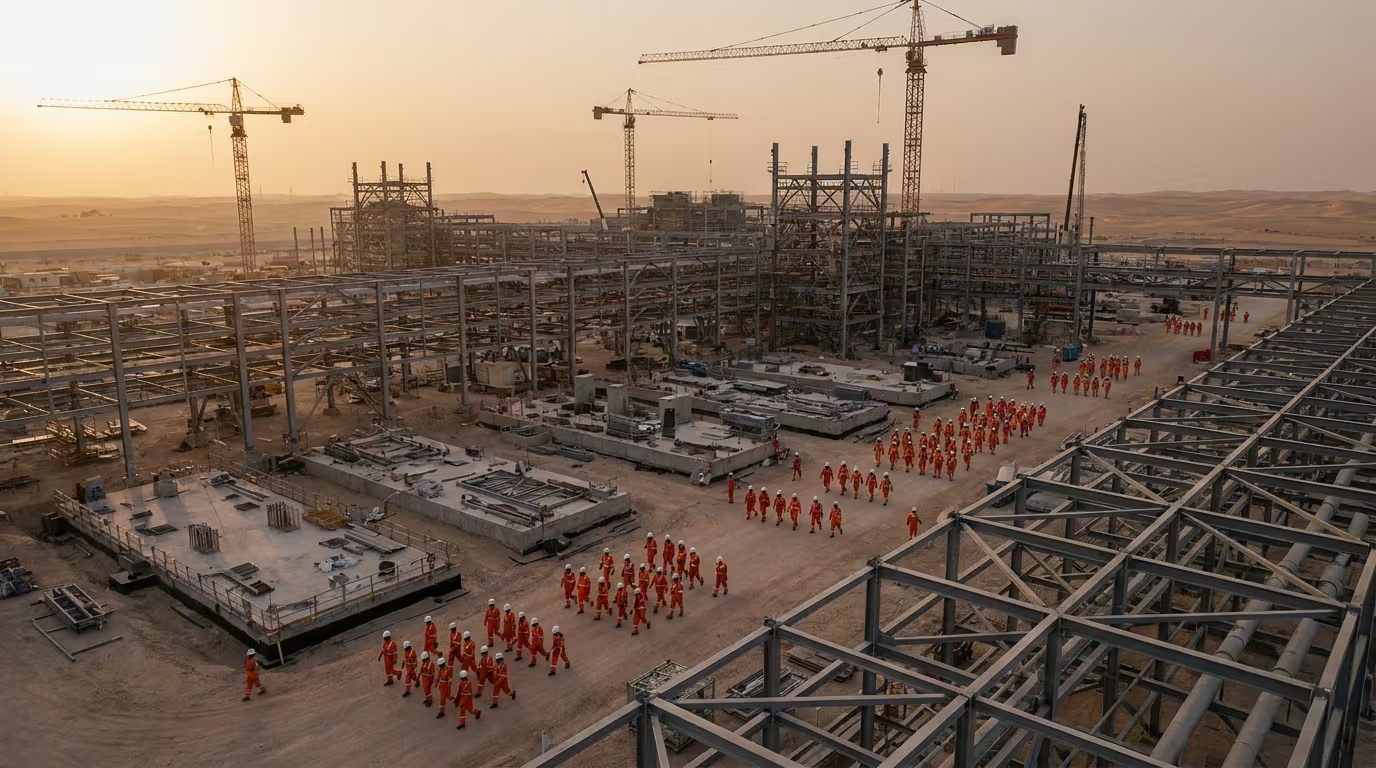
You approve a shirt colour at mobilisation. Much later, a new subcontractor arrives in a shade that is visibly off, sizes issued at the gate come back unworn, and the camp laundry returns garments to the wrong men. Sites at the scale of the Vision 2030 giga-projects rarely fail on garment quality. They fail on repeatability, sizing and re-issue. Those are the three problems worth designing the order around.
Scale Turns a Uniform Order Into a Supply Programme
On a normal industrial contract, workwear is a purchase: agree a specification, place an order, receive the goods. On a megaproject it stops behaving that way. The population is not fixed — it ramps up through mobilisation, peaks through the structural phase, and falls away trade by trade. It is not one employer either; it is a main contractor plus a long tail of subcontractors, each with its own HR system, its own payroll cycle and its own idea of what workwear should cost. And it runs for years, which means the garment approved in the first month has to still be reproducible, in the same shade, long after the original fabric lot is gone. That changes what you are actually buying. You are buying repeatability: a fabric that can be re-woven to the same construction, a colour that can be matched against a sealed physical reference rather than a screen, a size curve that survives a continuous flow of new arrivals, and a supplier who can hold all of that constant while your headcount moves. Treat it as a programme with a document set, not a purchase order. At minimum you need an approved specification, a sealed colour and garment reference held by both parties, a size chart with agreed tolerances, a marking and identification rule, and an agreed process for what happens when a fabric or trim is discontinued mid-project. Everything below hangs off those five things.
Write a Standard Subcontractors Can Actually Buy
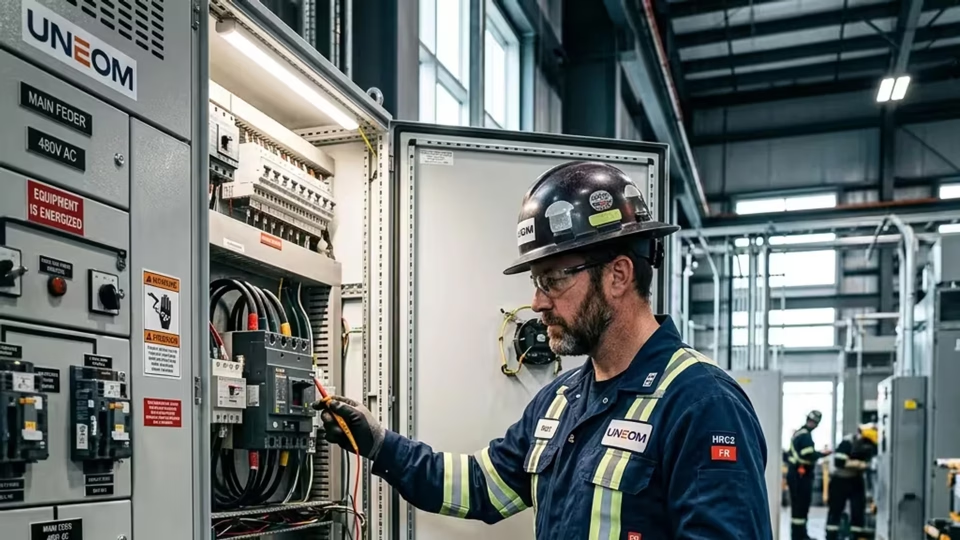
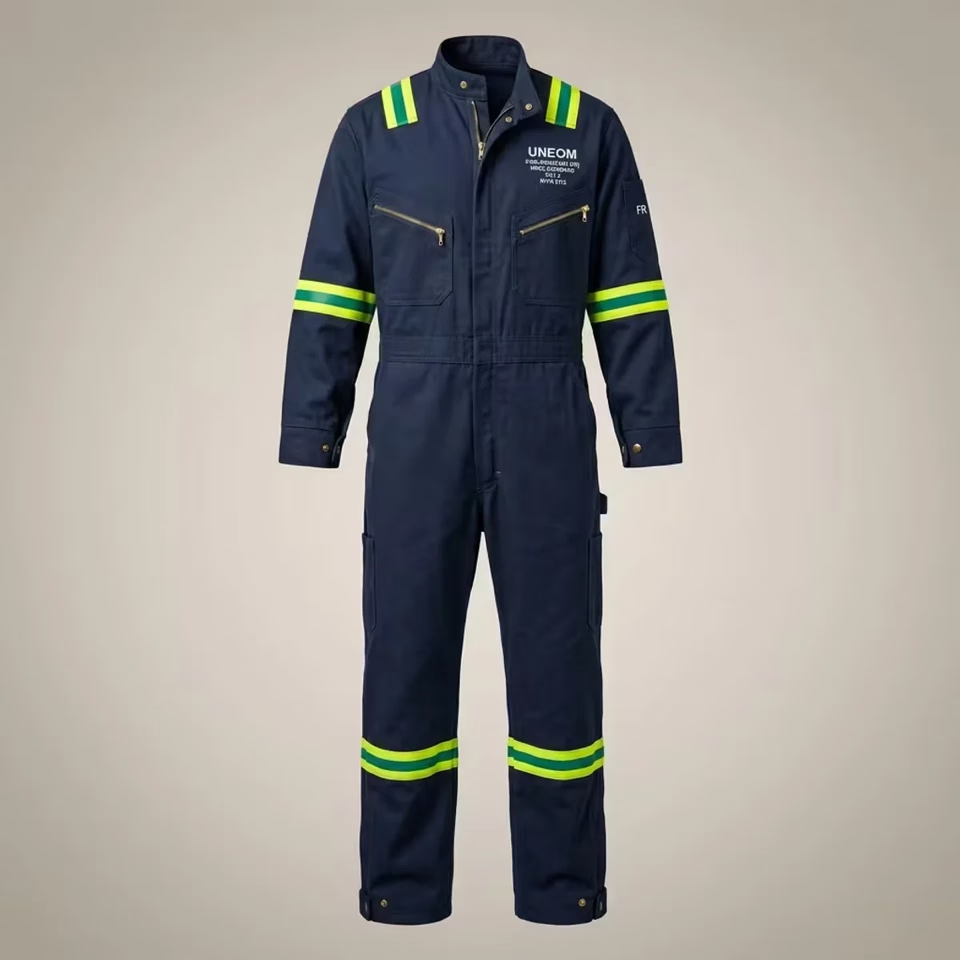
A project workwear standard fails in one of two ways: it is too vague to enforce, or too expensive to obey. The second failure is the dangerous one, because it is silent — a subcontractor under margin pressure simply buys something close enough and hopes nobody checks the label. Write the standard around what can be verified on delivery. Name the fabric composition and construction, the weight class your specification uses, a sealed physical colour reference rather than a screen value, the garment style with a technical drawing and a labelled feature list, the size chart with agreed measuring points, the marking and labelling rules, and care instructions in the languages your workforce actually reads. State what evidence must accompany each delivery: test reports against the methods your specification names, from a laboratory both sides accept, plus a shade approval against the sealed reference for every dye lot. Keep protective categories separate. High-visibility, flame-resistant, arc-rated and chemical-protective garments are determined by your project's risk assessment and by the technical specification your client issued — not by the uniform supplier and not by this article. The supplier's obligation is to deliver garments carrying the conformance evidence your specification demands; the decision about what protection a task requires belongs to your HSE function and your own competent adviser. Finally, tier the standard: a mandatory core every subcontractor must meet, and optional additions they may fund themselves.
Sizing at Scale: Where the Dead Stock Comes From
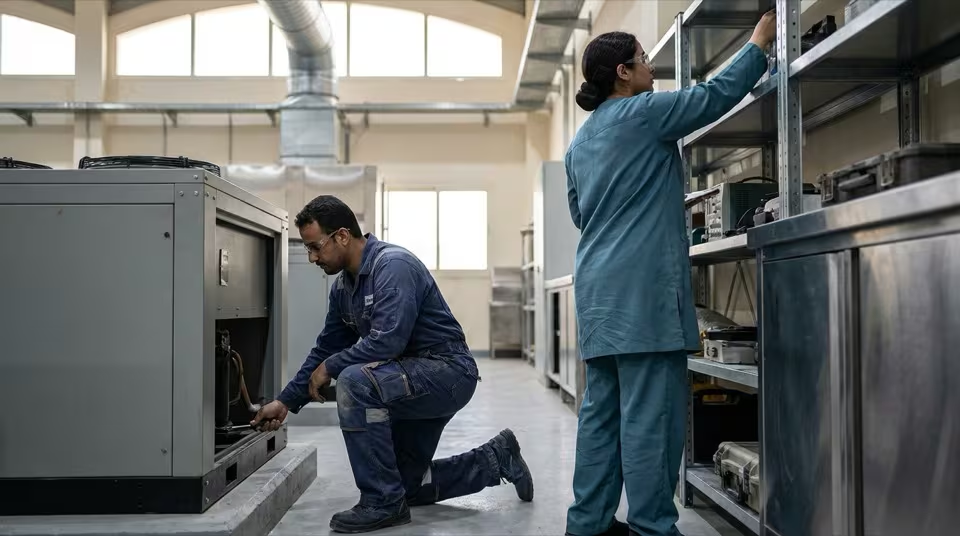
Sizing is where megaproject workwear budgets die. Stock nobody can wear is not a rounding error; it sits in a container until demobilisation and then gets written off. Three habits prevent most of it. First, measure rather than ask. Self-declared sizes are unreliable at any scale and worse across languages; run fit sessions at mobilisation with a physical size set and record chest, waist and inseam, not a letter. Second, build your own size curve. A workforce drawn from South Asia, Southeast Asia, the Levant, Africa and Saudi nationals does not distribute like a European curve, so order the first drop with a deliberately conservative assumption at the extremes, then rebuild the curve from what was actually issued and re-forecast before the second drop. Third, hold the extremes centrally. Very small and very large sizes should sit in one buffer under the main contractor, not scattered across subcontractor stores where they become invisible. Two details save recurring cost. Keep leg-length options where the garment allows it — hemming at camp never appears in the tender but appears every month afterwards. And specify women's garments as their own blocks for engineering, QA/QC, HSE, medical and administrative staff on site; a scaled-down men's pattern fits nobody. Where workers prefer more coverage, list longer tunic lengths and looser cuts as standard options rather than special requests needing a change note.
Identification Across Subcontractors Without Chaos
Four parties want something different from the same garment. The client wants one coherent look across the whole site. HSE wants trade and role legible at a distance. The subcontractor wants its own name visible. HR wants to know who is standing in front of them. Resolve it as a hierarchy rather than a compromise. The base garment colour belongs to the project — one family, held constant for the duration. The employer gets a fixed secondary marker: a chest patch, a sleeve panel or a contrasting yoke, defined inside the standard so it cannot drift. Everything that changes often — trade, role, area, permit status, visitor or new-start status — belongs on hard hats, stickers, badges, armbands and vests, because those can be changed in a day and a garment cannot. Choose marking methods for how they survive laundry. Embroidery holds up to industrial washing better than heat-transfer print, which cracks and lifts; woven or printed sew-in labels are the right place for size and care information. Then decide the laundry model before deciding how personal the marking gets: if garments return from camp laundry into a shared pool, individual names make them unusable for the next worker and quietly destroy your re-issue rate. One boundary worth stating plainly: garment identification is not access control. Gates, badges, permits and induction records own that. A uniform tells you what someone is doing, not that they are authorised to do it.
Fabric for Heat, Dust and Industrial Laundry
Site conditions in the Kingdom are known quantities: heat, long solar exposure, abrasive dust, long shifts, and then industrial washing at the camp. That is why polyester-cotton blends dominate — polyester carries abrasion resistance and dimensional stability, cotton carries comfort and moisture handling. And contrary to a common assumption, cotton gains strength when wet, which is part of why cotton-rich workwear tolerates aggressive laundering; the trade-off is greater shrinkage and slower drying. Do not assume all cellulosic fibres behave alike. Lyocell holds its strength well when wet, whereas viscose specifically loses a substantial part of its strength wet — which is why viscose has no place in site workwear that passes through a camp laundry. On colour: dark shades hide soiling but show salt and dust bloom; mid tones sit better in the client's photography and brand boards. Whatever you choose, sign off a sealed physical colour reference and require colourfastness testing by the method your specification names, because sun and repeated industrial washing shift shade over a multi-year programme. Finishes — durable water repellent, soil release — are fabric performance features. They protect the cloth and make laundering easier, and nothing more; no finish makes a garment safer for the person wearing it. Where hot work, chemical exposure or arc risk is in scope, that is a separate certified product category with its own conformance evidence, not an upgrade to standard workwear.
Replacement, Ramp-Down and Stock You Will Write Off
Replacement is where the budget leaks quietly. Start by settling the issue model: personal issue with worker responsibility, or a pooled model with centralised camp laundry. Then write the exchange rule: old-for-new at a defined issue point, with a simple damage and wear assessment — without it, re-issue rates drift upward month by month. Put issue points where workers actually are — camp, gate, site store — not in the head office building. Plan in drops rather than one buy: a mobilisation drop, then replenishment driven by real issue data and new-hire intake. Hold buffer stock at the main contractor at a level that matches your ramp curve, not spread across every subcontractor store where it becomes invisible and unmanaged. Ask the supplier to commit in writing to a lead time per drop and to reserving fabric from the same lot for the project's duration; lead times move with fabric availability, dye lots, decoration and volume, so treat any verbal figure as an estimate until it is in the contract. Plan the ramp-down before you need it: unissued stock at demobilisation is a write-off, and project-specific colours and logos have no resale life. On sourcing, in-Kingdom manufacturing shortens the distance between a sizing problem on site and the machine that fixes it. UNEOM has manufactured in Saudi Arabia since 2013, works to ISO 9001:2015, and holds OEKO-TEX Standard 100 certification. Where your contract carries local-content expectations, confirm how your client defines and evidences them.
Frequently asked
- How many workwear sets should each worker receive on a megaproject?
- There is no correct number to quote in the abstract; it follows your laundry model. If garments go through camp laundry on a fixed cycle, you need enough sets to keep one in wear while another is being washed, plus a margin for turnaround slippage. Personal-responsibility models usually need more. Settle the laundry cycle first, then set the issue quantity, and write both into the subcontractor's obligations.
- Should the main contractor buy centrally, or let each subcontractor purchase?
- Both models work; mixing them carelessly does not. Central purchasing gives you one colour, one size curve and one point of accountability, but it puts the cash flow and the stock risk on the main contractor. Devolved purchasing spreads the cost but produces shade drift and silent non-compliance. The common middle ground is a mandatory specification plus a short list of approved suppliers, with each subcontractor ordering against it.
- How do we handle sizing for a workforce of many nationalities?
- Measure, do not ask. Run fit sessions at mobilisation with a physical size set and record chest, waist and inseam rather than a letter size. A single European size curve mis-fits a mixed South Asian, Southeast Asian, Levantine, African and Saudi workforce, so build your own curve from the first cycle's real issue data, keep leg-length options open, and specify women's blocks separately instead of scaling men's patterns.
- Can one colour scheme keep every subcontractor identifiable?
- Yes, if you layer it. Give the project one base garment colour, give each employer a fixed secondary marker such as a chest patch or sleeve panel, and push the information that changes often — trade, role, permit status, visitor status — onto hard hats, badges, armbands and vests. Garments are slow and expensive to change; headgear and badges are fast and cheap.
- Who decides whether flame-resistant or high-visibility workwear is required?
- Your project's HSE function and the technical specification your client issued — not the uniform supplier. Protective categories are task-driven, and they are certified product categories with their own conformance evidence, which the supplier must provide at delivery. Untreated cotton is not a substitute for a certified flame-resistant garment. Confirm the requirement with your HSE lead and your own competent adviser before it enters a purchase order.