
Saudi Sizing & Fit Engineering Guide
Why imported size systems fail Saudi body grades — and how UNEOM's 14-grade fit system actually works.
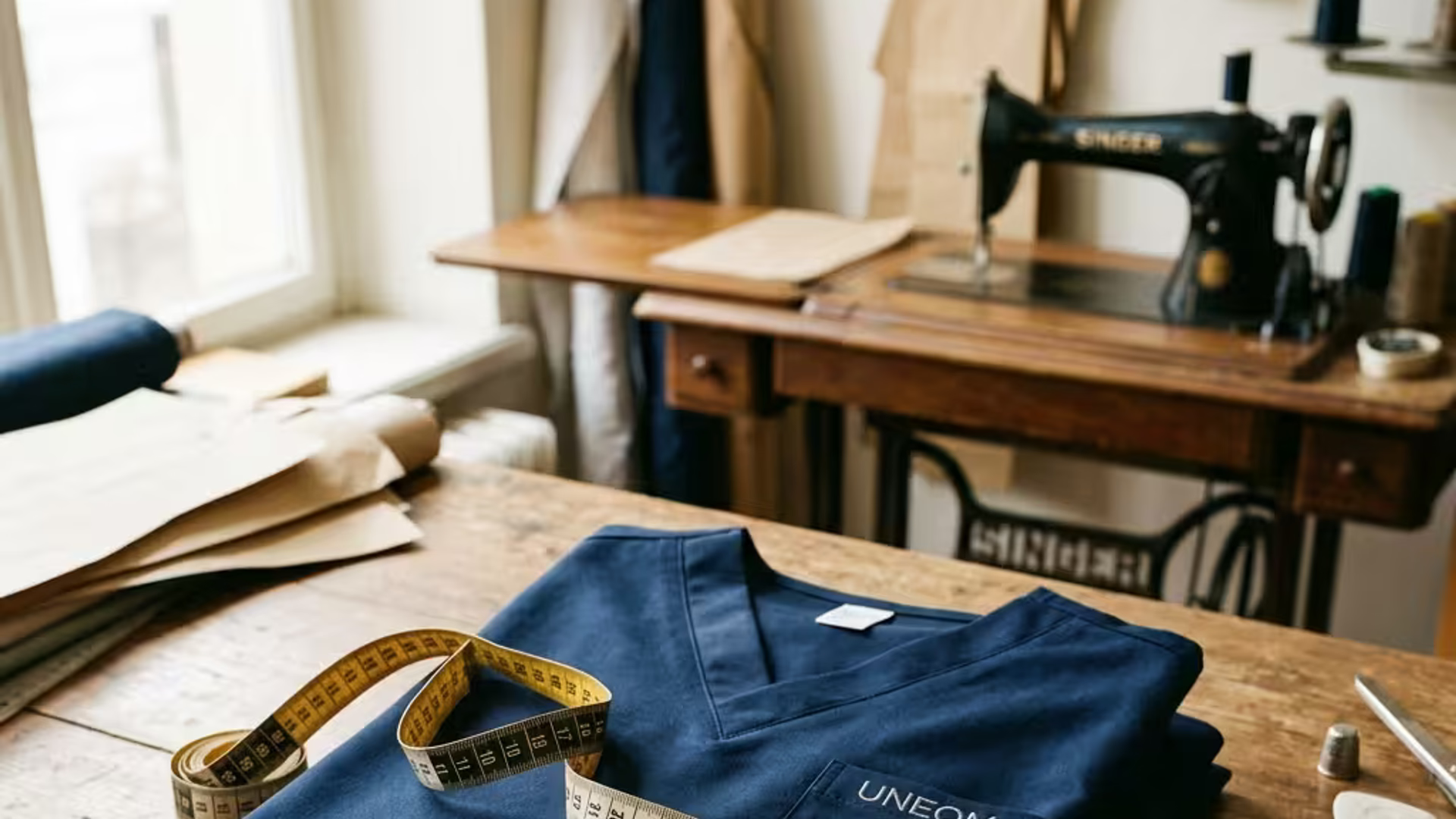
The "S/M/L/XL" sizing imported from European catalogues was never designed for Saudi body grades. UNEOM's 14-grade system was built from 12 years of Saudi enterprise fittings — and it shows up most visibly in the things people don't notice.
Why imported sizing fails
European S/M/L/XL grading assumes a Northern-European anthropometric baseline. Saudi body proportions differ in 3 measurable ways: torso-to-leg ratio is longer, shoulder-to-waist drop is steeper in male formal wear, and hip-to-waist ratio in female healthcare uniforms requires different ease engineering. The result: imported size charts over-fit 40% of wearers in at least one dimension. A scrub that fits the chest but restricts the shoulder during a 12-hour nursing shift gets modified by the wearer — scissors, pins, rolled sleeves. Every modification voids the compliance certification on that garment. UNEOM tracked 12 years of Saudi fitting data across 500+ enterprises to build the 14-grade system.
The 14-grade system
UNEOM's 14-grade fit system replaces S/M/L/XL with a matrix: 7 body-frame grades (A through G) × 2 length grades (Standard and Tall). Each grade has documented chest, waist, hip, shoulder, arm-length, and inseam measurements calibrated to Saudi anthropometric data. Grade D-Standard is the most common in corporate environments. Grade B-Tall is the most common in security. Grade F-Standard dominates healthcare nursing programmes. The system eliminates the "between sizes" problem: 92% of wearers fit within a single grade without alteration, compared to 58% with imported S/M/L/XL systems. For enterprises with 100+ employees, UNEOM conducts on-site fitting sessions with trained technicians — 15 minutes per person, results mapped digitally for reorder automation.
On-site fitting workflow
UNEOM's on-site fitting session follows a 5-step protocol: Step 1 — digital measurement capture (chest, waist, hip, shoulder width, arm length, inseam) using calibrated tape and digital recording. Step 2 — grade mapping via the 14-grade algorithm. Step 3 — sample fitting with the assigned grade in the specified fabric. Step 4 — adjustment validation (if the sample fits within ±1cm tolerance, the grade is confirmed). Step 5 — digital profile creation for each employee, enabling 48-hour reorder dispatch without re-measurement. The entire session takes 15 minutes per person. For a 200-person company, UNEOM typically deploys 2 technicians over 3 days. The digital profiles persist — when new hires join, HR submits basic measurements and the system auto-assigns the grade.
Joiner-kit logistics for new hires
A joiner kit is the uniform package dispatched to a new employee before their first day. Without a joiner-kit SLA, new hires spend 2–4 weeks in non-compliant interim wear — a compliance gap that HCIS auditors flag and MoH inspectors note. UNEOM's Programme Management tier guarantees 48-hour joiner-kit dispatch. The system works because the digital fitting profile is pre-built: HR submits height, weight, and basic measurements via the UNEOM portal; the 14-grade algorithm assigns the grade; the kit ships from the nearest regional warehouse (Riyadh, Jeddah, or Dammam hub). For high-turnover roles — retail, hospitality housekeeping, and security — the joiner-kit SLA is the single most important contract term after pricing.