
Embroidery vs Screen Print vs Heat Transfer: Choosing a Uniform Logo Method
A B2B comparison of uniform logo methods — embroidery, screen print, heat-transfer vinyl, dye sublimation and woven badges — by durability, cost, minimums, fabric fit and sector use.
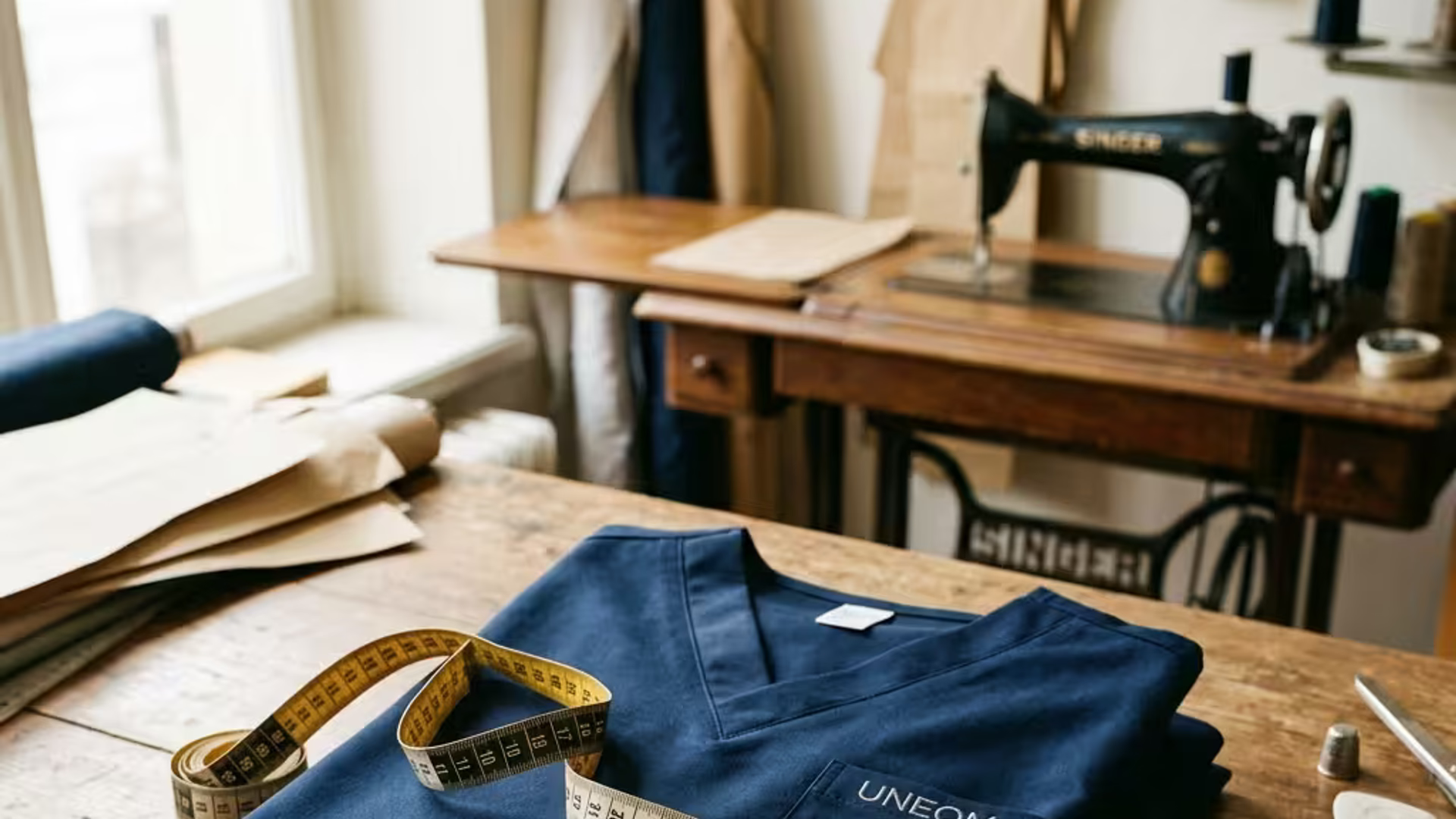
Choosing how to apply your logo to a uniform is a procurement decision, not just a design one. Embroidery, screen printing, heat-transfer vinyl, dye sublimation and woven badges each behave differently on durability, cost, minimum quantities, fabric suitability and finish. This guide compares the methods so you can match branding to garment, sector and laundering reality.
Why the branding method matters
For an enterprise uniform programme, the logo application is where design intent meets daily wear. The same crest can look premium or cheap, survive years of industrial laundering or peel within months, depending on the method chosen. The debate of embroidery vs screen printing uniforms usually frames the decision, but heat-transfer vinyl, dye sublimation and woven badges each fill specific gaps. The right choice depends on garment construction, fabric composition, wash frequency, colour count, order size and the impression you want to project. In Saudi Arabia, where uniforms face intense heat, frequent laundering and high visibility across healthcare, hospitality, aviation and industrial sectors, durability and consistency carry real cost implications. Treating branding as part of the specification, rather than a final flourish, prevents reprints, replacements and brand inconsistency. This guide compares each method on the criteria procurement and HR teams actually weigh.
Embroidery: durable, premium, structured
Uniform logo embroidery stitches the design directly into the fabric with thread, giving a raised, tactile, premium finish that reads as quality. It is the most durable common method: stitched thread does not crack, fade or peel, and it withstands repeated industrial laundering well, which makes it the default for corporate shirts, polos, jackets, caps and aprons. Embroidery suits woven and knit fabrics and heavier garments, and it handles smaller logos and text cleanly, though very fine detail and large solid areas are harder to reproduce in thread. Cost behaves by stitch count rather than colour, so multi-colour logos carry no real penalty, but large or dense designs raise the price. Set-up involves digitising the artwork once, after which unit cost is stable. Minimum quantities are generally modest, making embroidery practical for both small batches and full rollouts.
Screen print and heat transfer: flat, colourful, scalable
Screen printing pushes ink through a mesh stencil, one screen per colour, producing a flat, smooth finish ideal for large or vivid graphics on t-shirts, event wear and lightweight cotton garments. The screen print vs embroidery trade-off is clear: printing reproduces gradients and big artwork that thread cannot, but a print sits on the surface and can fade or crack over many washes. Because each colour needs a screen, set-up favours large runs and simple colour counts, so minimum quantities tend to be higher. Heat-transfer uniform branding instead applies a pre-cut vinyl or printed transfer with heat and pressure. It needs no screens, suits very small runs, names and numbers, and reproduces fine detail, but adhesion depends on correct application and the bond can lift over time, especially on technical or high-heat-exposed fabrics.
Dye sublimation and woven badges
Dye sublimation infuses dye directly into polyester fibres, so the design becomes part of the fabric with no surface layer to crack, peel or fade. It produces full-colour, photographic, edge-to-edge graphics and is unmatched for all-over patterns, sportswear and bright polyester garments, but it only works on polyester or polyester-rich light-coloured fabrics, which limits it on cotton blends and dark cloth. Woven badges, by contrast, are manufactured separately on a loom, then stitched or heat-sealed onto the garment. They render fine detail, small text and intricate emblems more crisply than embroidery and give a clean, formal, consistent look well suited to security, aviation, hospitality and institutional uniforms. Badges also let one stock garment carry different department or rank insignia. Both methods broaden the toolkit beyond the core embroidery and print options, each solving a specific durability or detail requirement.
Matching method to garment and sector
No single method wins everywhere; the right answer follows the garment and the sector. Healthcare scrubs and lab coats, laundered aggressively and often, reward durable embroidery or woven badges over surface prints that degrade. Hospitality and corporate shirts, jackets and aprons typically use embroidery for a premium, lasting impression. Aviation and security uniforms favour woven badges and embroidery for crisp insignia and formality. Industrial and high-visibility workwear needs application that survives heat, abrasion and frequent washing, so embroidery or carefully specified transfers suit better than light prints. Promotional t-shirts and event wear, where vivid graphics and lower cost matter more than years of service, are natural territory for screen print or sublimation. Caps, bags and small accessories usually take embroidery. Mixing methods across a single programme is common and sensible, applying each where its strengths align with how the garment is worn and cleaned.
Specifying branding in your uniform programme
Treat the branding method as a written specification, not a verbal preference. Supply vector artwork with defined colours, and confirm placement, size and colour reference for every garment type, since the same logo may need different treatment on a polo versus a high-visibility jacket. Ask your manufacturer for a pre-production sample on the actual fabric, then wash-test it the way the garments will really be laundered before approving the full run. Consider colour count, order volume and reorder frequency together, because the method that is cheapest for a one-off promotional batch is rarely the most economical across years of replacements. As a Saudi in-Kingdom manufacturer since 2013, working to ISO 9001:2015 and OEKO-TEX Standard 100, UNEOM specifies and applies branding as part of a managed programme, helping teams match each uniform branding method to garment, sector and laundering reality.
Frequently asked questions
Which is more durable for uniforms, embroidery or screen printing?
Embroidery is generally the more durable of the two. Because the design is stitched from thread rather than printed onto the surface, it resists cracking, fading and peeling and holds up well to repeated industrial laundering. Screen printing produces brighter large graphics, but the ink sits on the fabric surface and can crack or fade over many wash cycles, especially under heavy commercial laundering.
What is the best logo method for high-heat Saudi work conditions?
For uniforms exposed to intense heat, abrasion and frequent washing, embroidery and woven badges are usually the most reliable, since neither relies on a surface adhesive that heat can weaken. Heat-transfer vinyl can lift over time on technical or high-heat-exposed fabrics. Always request a sample on the actual garment fabric and wash-test it under real laundering conditions before approving a full production run.
Does heat-transfer uniform branding work for small quantities?
Yes. Heat-transfer uniform branding is well suited to small runs because it needs no screens or large set-up, making it economical for low volumes, individual names and numbers, and fine detail. The trade-off is durability: the transfer bonds to the surface and can lift over time, particularly on technical fabrics or garments exposed to high heat, so it is less ideal for heavily laundered, long-service uniforms.
When should I choose dye sublimation over embroidery or printing?
Choose dye sublimation when you need full-colour, photographic or all-over graphics on polyester or polyester-rich light-coloured garments, such as sportswear or bright performance pieces. The dye becomes part of the fibre, so there is no surface layer to crack or peel. It is not suitable for cotton-heavy blends or dark fabrics, where embroidery, woven badges or screen printing remain the stronger choices.
How does logo colour count affect cost across methods?
It varies by method. Screen printing uses one screen per colour, so more colours raise set-up cost and favour simpler designs and larger runs. Embroidery is priced mainly by stitch count, so multi-colour logos carry little penalty. Dye sublimation and digital heat transfers handle full colour without per-colour charges. Match colour count, order volume and reorder frequency together when comparing total programme cost.