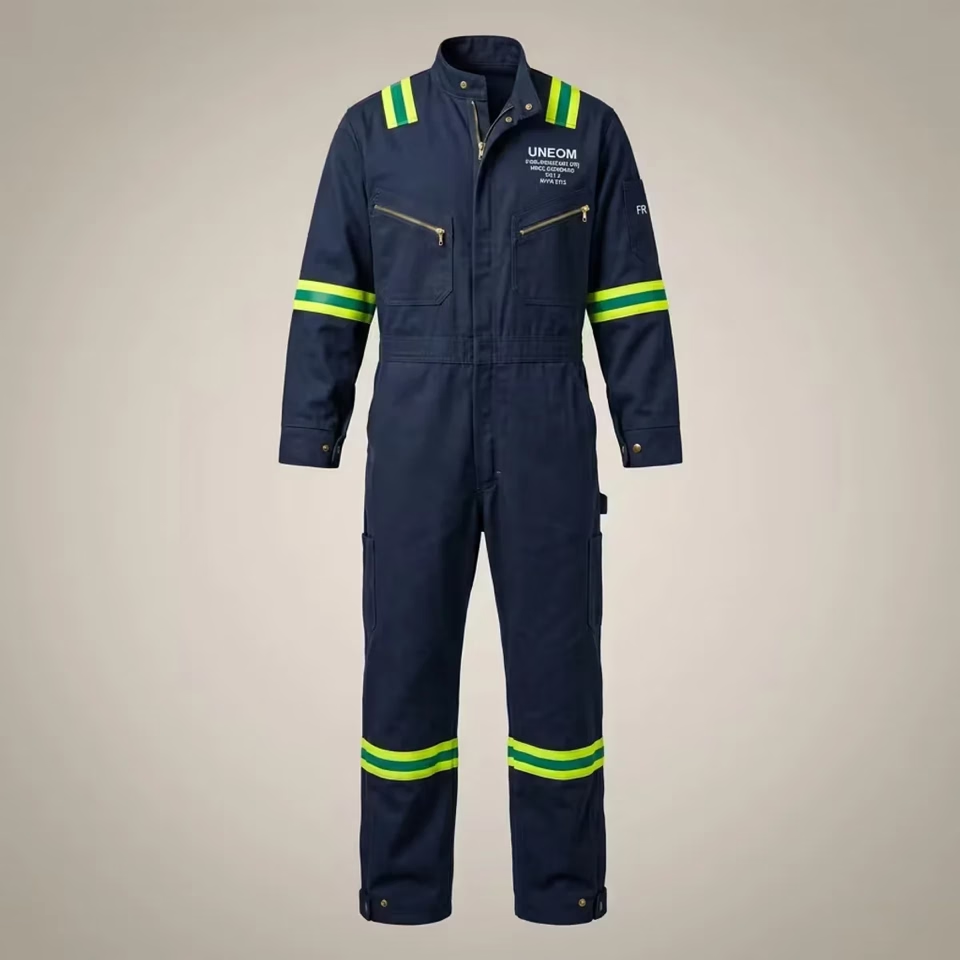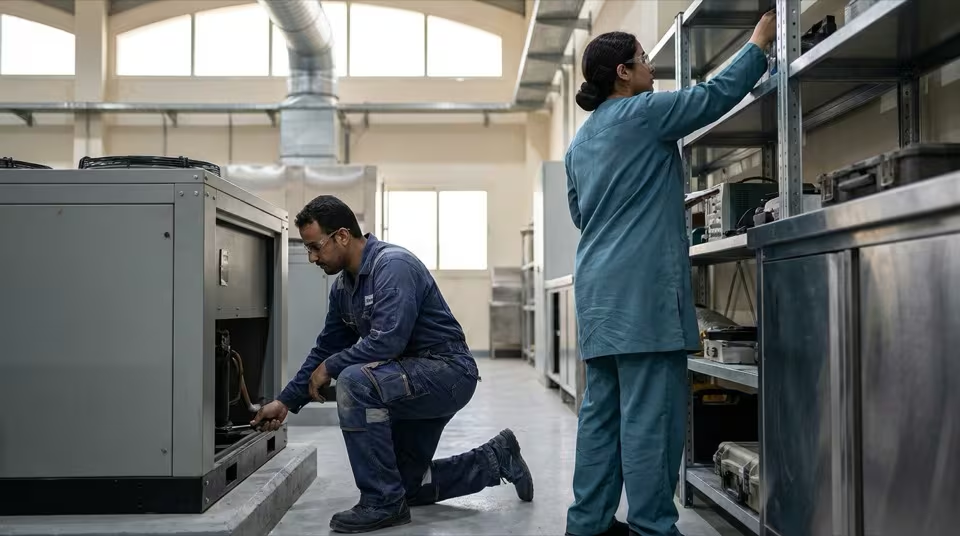
Sustainable Uniform Fabric in Saudi Arabia: Recycled Polyester, Cellulosics, and How to Verify Claims
A procurement guide to sustainable uniform fabric in Saudi Arabia: what recycled polyester and cellulosics really deliver, why service life matters most, and how to verify supplier claims.
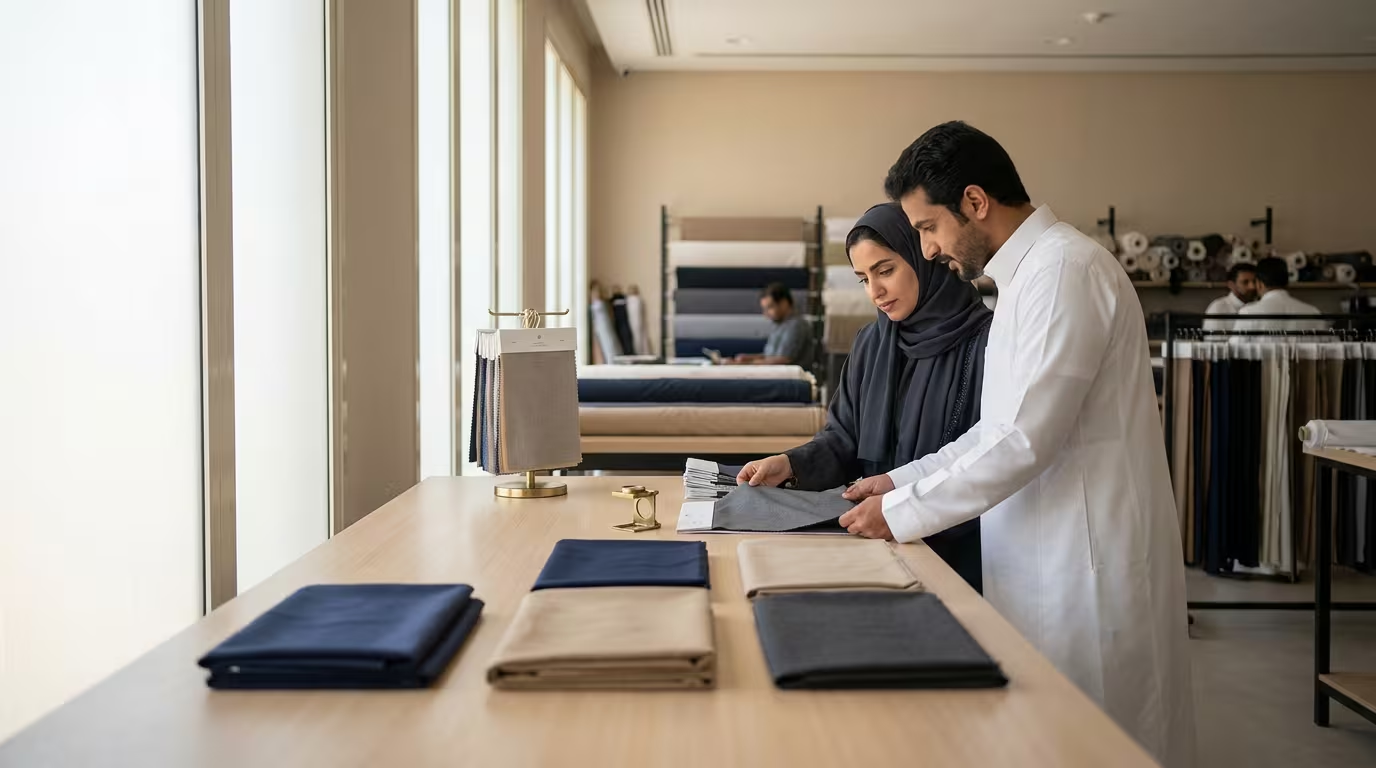
Sustainable uniform fabric is far easier to claim than to prove. Recycled polyester, lyocell, and organic cotton now appear in Saudi tender documents, often carrying numbers nobody can verify. This guide explains what these materials actually do, where the trade-offs sit against durability and heat, and how to test what a supplier tells you.
What sustainability really means
Sustainability in corporate uniforms is not a single property of a fabric; it is the sum of choices across fibre origin, manufacturing, use, and disposal. A buyer who narrows the question to "is it recycled?" will miss most of the impact. A uniform is a product with a long use phase: it is worn, washed, ironed, repaired, replaced. The energy and water consumed while the garment is in service, the number of replacements a programme buys over a contract cycle, and the fate of the garment at end of life all sit inside the sustainability picture alongside the fibre itself. Treat sustainability as a programme attribute rather than a fabric attribute, and the decisions change. You start asking how long a garment survives industrial laundering, whether the fit is accepted well enough that staff keep wearing it, whether damaged items can be repaired instead of discarded, and whether the supply chain is short enough to avoid repeated long-haul shipping. Those questions are answerable with evidence. "Green fabric" alone rarely is.
Recycled polyester, honestly
Recycled polyester is the most common entry point into sustainable uniform fabric, and it is a genuine one, but it deserves an accurate description. Most recycled polyester in workwear is mechanically recycled from post-consumer PET bottles: the material is cleaned, chipped, melted, and extruded into new filament or staple fibre. Chemically recycled and textile-to-textile routes exist and are growing, but availability, cost, and lead time differ by mill. Performance is broadly comparable to virgin polyester, because it is the same polymer; where differences appear, they are usually in consistency — dye uptake, shade matching between lots, and fibre length in mechanically recycled staple. What recycled content does not change is equally important: it does not make the fabric more breathable, does not reduce microfibre shedding during washing, and does not make a polyester-cotton blend easier to recycle at end of life. It also says nothing about dyeing and finishing chemistry, which is where a large share of textile impact sits. Recycled content is a real improvement in feedstock, not a blanket environmental claim.
Cellulosics and comfort
Cellulosic fibres — cotton, viscose, modal, and lyocell — are the other half of the conversation, and they behave very differently from polyester in Saudi conditions. They absorb moisture rather than wicking it away, which many wearers experience as cooler and more comfortable in dry heat, though a saturated cotton shirt in humid coastal air can feel heavy and slow to dry. Lyocell is produced in a closed-loop solvent process in which the solvent is recovered and reused, which is its main environmental argument; conventional viscose is chemically more intensive, and wood pulp origin matters, so buyers can ask whether the pulp carries recognised forestry certification. The trade-offs are practical: cellulosics generally wrinkle more, shrink more, and abrade faster than polyester, and regenerated cellulosics such as viscose lose strength when wet, which matters under industrial laundering. That is why most uniform fabrics are blends. A blend buys comfort and durability together, at the cost of recyclability, because separating fibres at end of life is difficult. In a modest, layered uniform worn through a Saudi summer, that compromise is usually the right one.
Durability as the real lever
The most under-used sustainability lever in uniform procurement is service life. A garment that survives twice as many wash-and-wear cycles halves the number of replacements a programme buys, and every impact embedded in fibre production, dyeing, cutting, sewing, and shipping is halved with it. This is why a durable conventional fabric can outperform a fragile fabric with impressive recycled content: the green feedstock is spread across a shorter life. Durability in workwear is not one property. It includes abrasion resistance at cuffs, seats, and knees, seam strength and stitch density, colourfastness to repeated industrial washing and to strong sunlight, dimensional stability so the garment still fits after laundering, and closure hardware that outlasts the cloth. Garments also fail for non-technical reasons: poor fit, uncomfortable hand feel, and an unflattering cut push staff to stop wearing items long before the fabric is worn out. Ask suppliers for wash-test evidence and, better, run a wear trial in your own environment before committing to a full rollout.
The Saudi operating context
Saudi conditions reshape the sustainability calculation. Summer heat across much of the Kingdom means fabrics must manage heat load, which favours lighter weights, more open constructions, and moisture management — and lighter fabrics are inherently less abrasion-resistant, so weight reduction carries a durability cost that has to be balanced deliberately. Modest cuts use more cloth per garment and often add a second layer, so breathability and drape matter more than the fibre label. Strong sunlight is hard on colour, and dark corporate shades fade visibly, which drives replacement even when the cloth is still sound. Water is a scarce resource here, so laundering frequency, wash temperature, and whether garments need ironing carry real weight; an easy-care finish that removes ironing from the routine can matter more than feedstock. Vision 2030 and rising ESG reporting expectations have turned sustainability into a documented procurement requirement rather than a marketing preference, and manufacturing inside the Kingdom, as UNEOM has done since 2013, shortens the supply chain and replenishment cycles, reducing freight and the over-ordering that ends as unused inventory.
Verifying supplier claims
Claims are cheap; evidence is not. Start by asking what exactly is certified, by whom, and for which products. A certificate should be issued in the name of the company you are buying from, be current, and name the materials or articles in scope — a mill's certificate does not automatically cover the garment maker downstream. For recycled content, recognised chain-of-custody schemes such as the Global Recycled Standard and the Recycled Claim Standard operate through transaction certificates that follow each shipment; ask for the certificate covering your order, not a logo on a brochure. Understand the limits of each mark. OEKO-TEX Standard 100, which UNEOM holds, certifies that tested components have been screened for harmful substances: a chemical safety assurance, not a recycled-content or carbon claim. A quality management standard such as ISO 9001:2015, which UNEOM also operates under, governs process consistency, not environmental performance. Treat unverifiable percentages and unsourced statistics as warning signs, and ask instead for durability and colourfastness test reports — service life is the sustainability argument you can actually audit.
Frequently asked
- Is recycled polyester as durable as virgin polyester for workwear?
- Broadly yes, because it is the same polymer, so strength and abrasion behaviour are comparable. Differences usually show up as consistency rather than performance: shade matching between production lots and fibre uniformity in mechanically recycled staple. Judge any specific fabric on its own test evidence and a wear trial in your sites, not on the feedstock label alone.
- Does OEKO-TEX Standard 100 mean a fabric is sustainable?
- No. It confirms that tested components have been screened for harmful substances, which is a chemical safety assurance for the wearer. It does not certify recycled content, carbon footprint, water use, or labour conditions. It belongs in a responsible specification, but no supplier should present it as an environmental or recycled-content claim on its own.
- Recycled fabric or longer-lasting fabric — which is the better choice?
- Usually the longer-lasting one. Every replacement garment carries the full impact of fibre production, dyeing, making, and shipping, so extending service life cuts total consumption more reliably than switching feedstock. The ideal is both: recycled or responsibly sourced content in a construction that survives repeated industrial laundering and stays comfortable enough that staff keep wearing it.
- Are natural fibres automatically the sustainable choice in Saudi heat?
- Not automatically. Cotton is comfortable and absorbent but water-intensive to grow, and it wrinkles, shrinks, and abrades faster than polyester, which shortens service life. Lyocell adds a closed-loop production advantage yet shares those wear limitations. Most Saudi uniform programmes settle on blends, trading end-of-life recyclability for the comfort and durability the environment demands.
- What should I ask a supplier before accepting a sustainability claim?
- Ask which certificate covers which product, whether it is issued in the supplier's own name and still valid, and for chain-of-custody transaction documents tied to your specific order. Then ask for colourfastness and abrasion test reports, and request sample garments for a wear trial in your own sites before approving a full rollout.