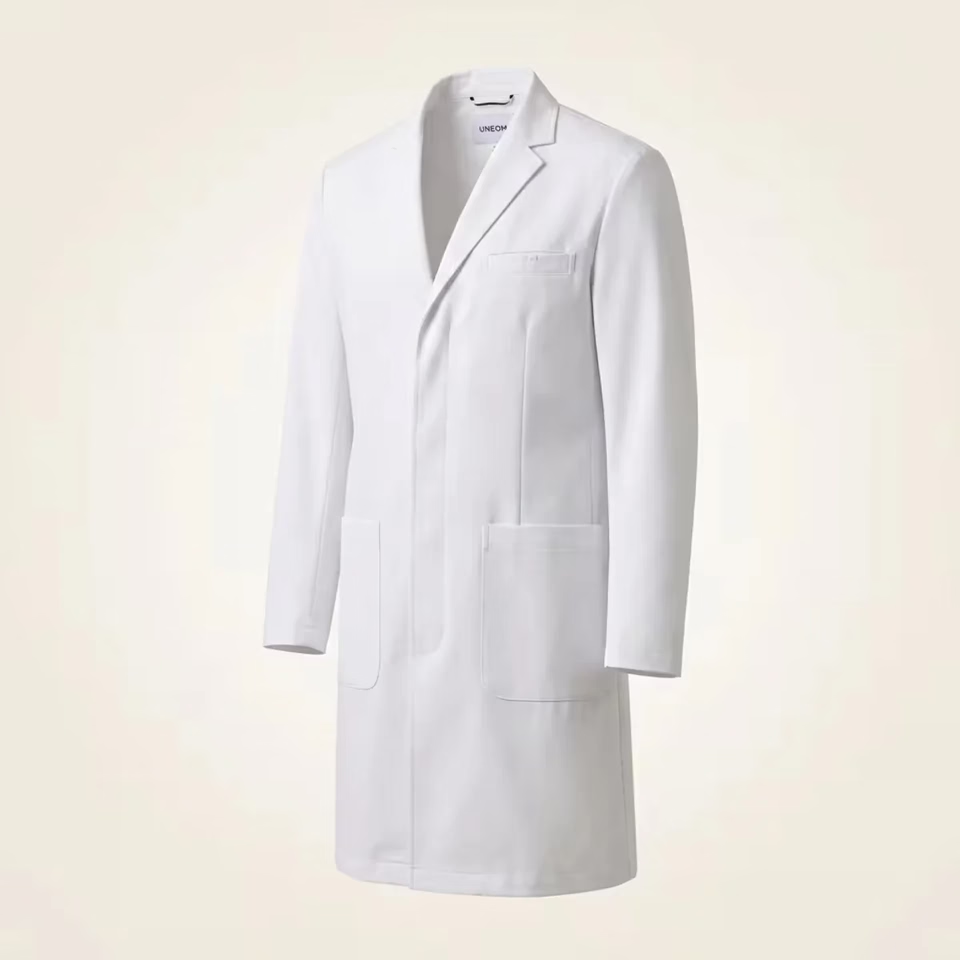
How to Choose the Best Scrubs for Hospital Laundry
Industrial laundering destroys scrubs faster than wear does. Here is how fibre, construction, seams and finishes decide survival, and when to retire a garment.
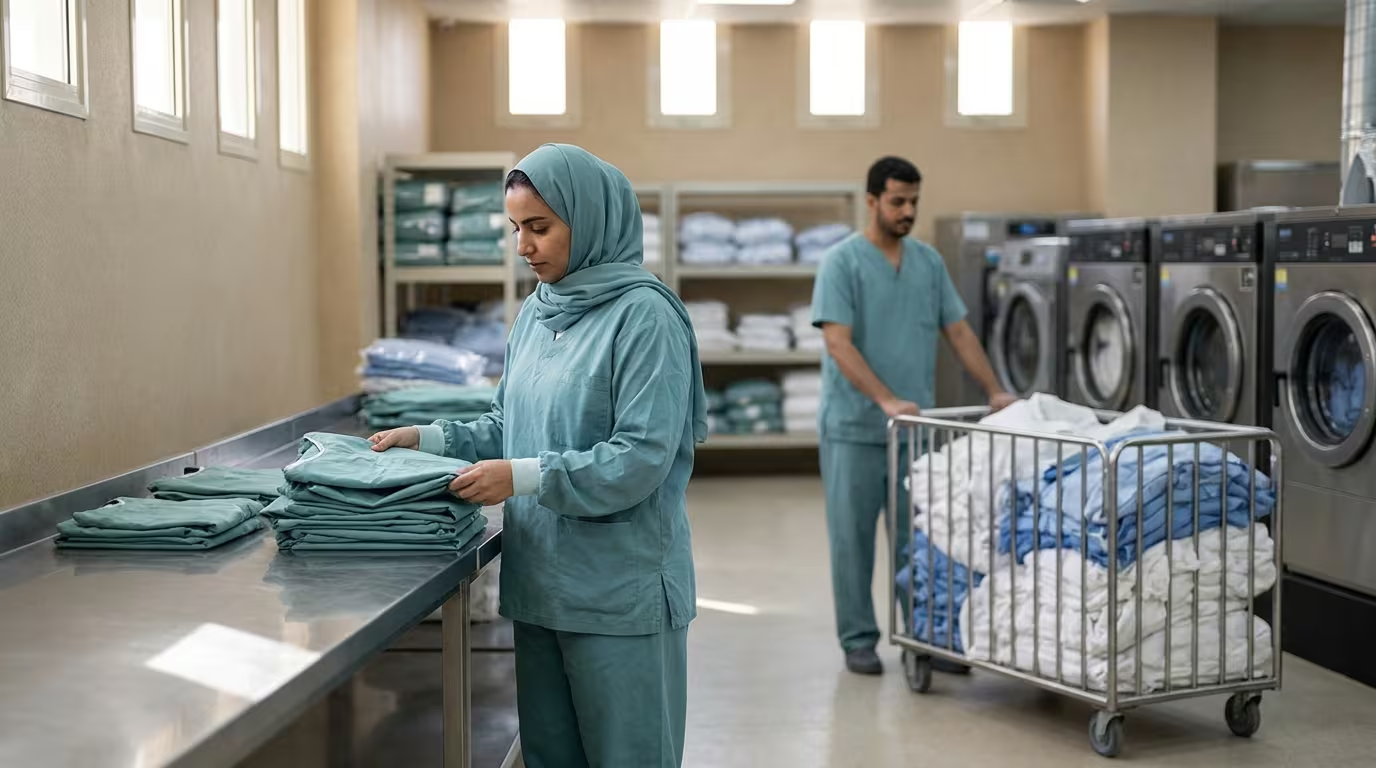
Scrubs rarely fail because staff wore them out. They fail in the laundry, where heat, alkaline chemistry, oxidative bleaching and industrial drying attack fibres, dyes, elastane and stitching in every cycle. Choosing scrubs that survive means specifying the blend, construction, seams and finishes for that environment, then setting honest retirement criteria before the fleet looks tired.
Why Scrubs Die in the Laundry
A hospital scrub set lives a short, violent life, and most of that violence happens after the shift ends. Institutional laundering combines several stresses that a domestic machine never applies together: sustained wash temperatures well above household practice, strongly alkaline detergents, oxidative or chlorine-based bleaching on soiled and stained loads, long mechanical agitation, high-speed extraction that creases fabric under load, and tunnel or tumble drying at temperatures chosen for throughput rather than fabric care. Many facilities also finish garments through steam pressing. Each of these acts on a different part of the garment. Heat and moisture together drive dimensional change and set creases. Alkalinity and bleach attack dyes and certain fibres. Mechanical action abrades surfaces, opens seams and encourages pilling. Extraction and drying stress elastic components. The practical consequence for a procurement team is simple: a scrub that feels excellent in a showroom tells you almost nothing about how it will look after a season in your contracted laundry. Specify for the wash process first, and for handfeel second.
Fibre and Blend Choices
Fibre choice sets the ceiling for durability. Polyester is the workhorse of institutional garments because it is dimensionally stable, resists abrasion, holds disperse dyes tightly, and tolerates repeated alkaline washing and hot drying with comparatively little loss of strength. Cotton is more absorbent and cooler against the skin, but cellulose is the fibre that oxidative and chlorine bleaching attack, and it is the fibre that shrinks and creases. A polyester-dominant blend therefore behaves better in a hospital laundry than a cotton-dominant one, while a cotton-rich fabric buys comfort at the cost of appearance retention. The genuinely fragile component in modern scrubs is elastane. It gives the stretch clinicians now expect, and it is the first thing to go: chlorine, high dry heat and residual body oils all degrade it, and once recovery is lost the garment bags at the knee and seat long before the fabric wears through. If your laundry chlorinates, either specify a chlorine-tolerant stretch route, keep elastane content modest, or accept a shorter service life and budget for it.
Construction, Dye and Finish
Two fabrics with the same blend can behave completely differently, because construction decides how the yarn meets abrasion. Filament and long-staple yarns leave fewer fibre ends at the surface, so they pill less than short-staple, loosely spun alternatives; tighter, denser constructions resist snagging and seam slippage; and a fabric that is too light will go translucent long before it tears, which in a clinical setting is a coverage failure, not a cosmetic one. Dye chemistry matters just as much. Disperse dyes on polyester generally hold colour under repeated institutional washing better than reactive dyes on cotton, which is why cotton-rich navy and teal scrub sets tend to fade and grey first, and why two intakes of the same colour can stop matching on the ward. Finishes deserve the same scepticism: soil-release, antimicrobial and fluid-repellent treatments are consumables, not permanent properties, and most deplete with laundering. Ask any supplier whether a claimed finish is durable to industrial laundering, over what service window, and what evidence supports it, then confirm it against your own wash trial.
Shrinkage, Fit and Wash Trials
Shrinkage is the complaint that reaches HR fastest, because it arrives as a sizing problem rather than a fabric problem. Fabrics relax and consolidate when heat and moisture release the tension built in during weaving, knitting and finishing, so untreated goods lose length and width in the first wash cycles and keep drifting for several more. Compacting or pre-shrinking treatments reduce residual movement, but nothing removes it entirely, and cotton-rich knits move more than stable polyester wovens. The failure mode is predictable: sleeves and inseams shorten, tunics ride up, and staff who were fitted correctly at rollout ask for a larger size within months. Manage it as a specification issue. Ask suppliers to state how dimensional change is tested and to what standard, insist that fit samples are assessed after laundering rather than straight from the bag, and run a trial through your own contracted laundry using its real chemistry and cycle before you commit to a fleet order. Where growth is expected, set tolerances in writing with the supplier and grade patterns accordingly.
Seams, Threads and Trims
Garments usually fail at joins, not in the middle of a panel. Thread is the cheapest component and the most common weak point: a core-spun polyester thread carries the strength and chemical tolerance the industrial wash demands, whereas cotton-wrapped or all-cotton threads abrade and are attacked by bleach, so seams open while the fabric is still sound. Stitch type and density matter next. Overlocked side seams alone are less secure than a safety-stitch or a chain-stitched and covered construction, and the points that concentrate load, including pocket corners, vent tops, fly ends, crotch junctions and drawcord exits, need bar tacks rather than optimism. Elastic waistbands are quietly vulnerable, because dry heat is unkind to elastomers; a drawcord with a stable waistband tape usually outlives an elastic-only channel. Trims fail visibly: printed labels crack, heat-applied logos lift at the edges, and cheap snaps corrode or lose their spring. Embroidery, executed with the right backing and thread, typically survives institutional laundering better than heat transfers, which is worth knowing before you standardise departmental identification.
Retirement Rules and Program Control
Every scrub program needs written condemnation criteria, otherwise garments stay in circulation until someone complains. Retire on evidence you can see: thinning or translucency when held to the light, greying and colour drift that breaks departmental colour coding, persistent staining, surface pilling, seam slippage or open stitching, elastic that no longer recovers, and hardware that no longer closes. Keep a sealed reference garment as a colour and condition anchor, audit a random sample from each returned batch, and record failures by intake so you can tell a bad wash process from a bad specification. In Saudi facilities the pressure is compounded: long, hot summers, high laundering volumes across expanding multi-site operators, and cuts that must stay modest and opaque through repeated washing, including longer tunics and coverage worn with a hijab. Local manufacturing shortens the replacement loop, which matters when a batch fails mid-contract. UNEOM has manufactured inside the Kingdom since 2013 under an ISO 9001:2015 quality system, with OEKO-TEX Standard 100 certification. Ask any supplier which claims are certified and which are simply marketing.
Frequently asked
- Are polyester-rich or cotton-rich scrubs better for hospital laundry?
- For institutional laundering, polyester-rich fabrics generally hold up better: they are more dimensionally stable, resist abrasion, and keep colour under repeated hot, alkaline washing. Cotton-rich fabrics feel cooler and more absorbent but shrink, crease and fade faster, particularly where bleach is used. Choose the balance your wash process and comfort expectations can both live with.
- Why do our scrubs lose their stretch so quickly?
- Elastane is the least durable component in a stretch scrub. Chlorine bleach, high drying heat and residual body oils all degrade it, and once the fibre stops recovering the garment bags at the knees and seat even though the fabric is intact. Review bleach use and drying heat with your laundry, and specify stretch accordingly.
- How much shrinkage should we expect?
- Ask for it in writing rather than assuming a figure. Dimensional change depends on fibre, construction, finishing and your specific wash and dry cycle, so request the test method and standard the supplier uses, agree an acceptable tolerance contractually, and validate it by laundering fit samples through your own contracted process before ordering a full fleet.
- Do antimicrobial or fluid-repellent finishes last?
- Treat them as depleting, not permanent. Most applied finishes lose performance with repeated industrial laundering, and the rate depends on chemistry, cycle and chemicals used. Ask the supplier whether durability to institutional laundering has been assessed, over what service window, and against which method, then decide whether the finish is worth its cost in your program.
- When should a scrub be retired?
- Retire on visible, agreed criteria rather than age alone: translucency or thinning, colour drift that breaks departmental coding, persistent staining, heavy pilling, seam slippage or open stitching, failed elastic recovery, and hardware that no longer fastens. Put the list in your uniform policy, audit returned batches against a sealed reference garment, and record failures by intake.