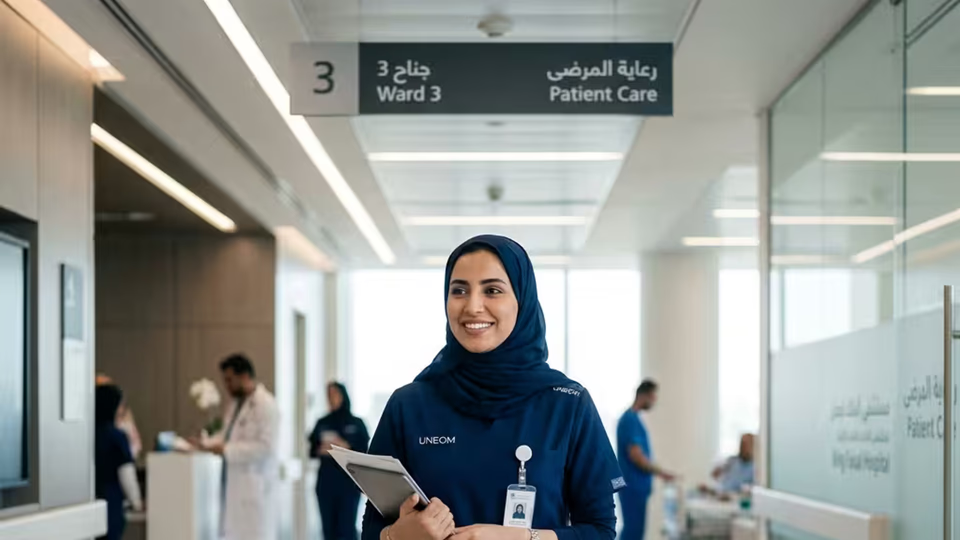
Saudi Healthcare Uniform Standards for Infection Control
Navigating the MoH–SFDA–SASO overlap: what Saudi hospitals actually need from clinical uniforms.
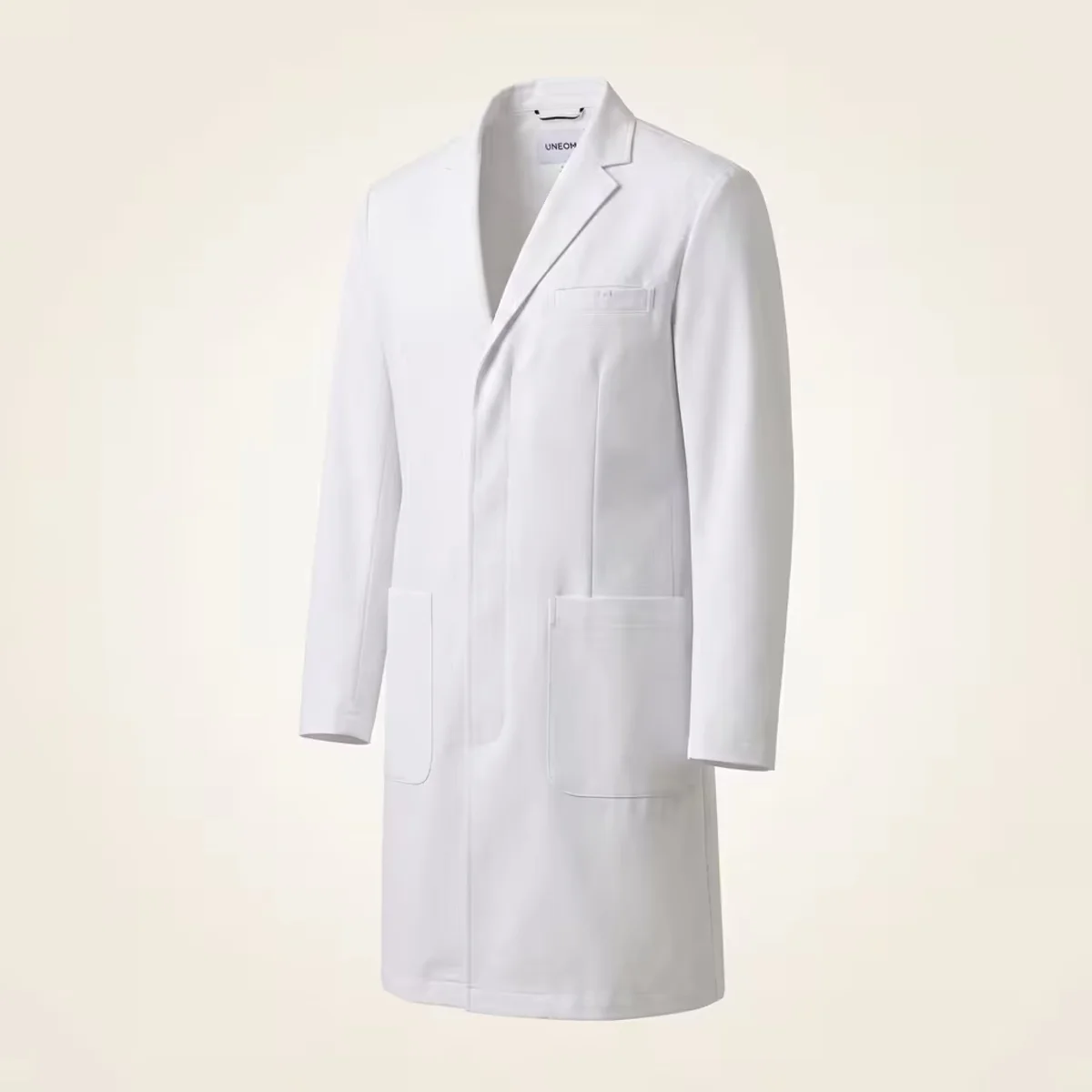
The Saudi Ministry of Health does not publish a mandatory fabric specification for clinical uniforms — and that is precisely what makes procurement decisions difficult. In the absence of a single clear standard, hospitals navigate between the MoH's clinical framework, the SFDA's device classification system, and SASO's textile quality marks, each covering a different dimension of fabric performance. Understanding where these frameworks overlap, where they leave gaps, and how to build a procurement specification that satisfies all three is the difference between a uniform programme that survives a CBAHI audit and one that creates compliance exposure.
What MoH publishes (and what it doesn't)
The Saudi Ministry of Health regulates clinical practice, facility licensing, and infection control protocols. Its National Infection Prevention and Control Manual, updated in 2023, addresses hand hygiene, surface disinfection, waste management, and personal protective equipment in extensive detail. What it does not address with any specificity is the textile composition of daily-wear clinical uniforms. The guidelines state that healthcare workers shall wear clean, appropriate clinical attire and that uniforms shall be laundered at temperatures sufficient to eliminate pathogenic organisms. They specify PPE requirements for isolation procedures but treat the underlying scrubs or lab coat as a facility-level decision. This creates a regulatory gap that hospital procurement teams must fill with internal policy. Most Saudi hospitals default to one of two approaches: adopting CBAHI standards as a proxy, which requires clean and role-appropriate attire but does not specify fabric performance metrics, or referencing international standards such as NHS England's uniform policy or the CDC guidelines. Neither approach is fully satisfactory for Saudi conditions because neither accounts for the combination of climate stress requiring moisture management that European standards ignore, cultural requirements including hijab integration and modest-cut specifications, and laundry infrastructure with industrial wash temperatures and chemical loads specific to Saudi hospital operations. UNEOM fills this gap by specifying performance metrics that exceed the strictest international standard while addressing Saudi-specific requirements: antimicrobial efficacy maintained through 75 industrial wash cycles at 71 degrees Celsius, moisture-wicking rated at 4.0 or higher on the AATCC 195 scale, and UV resistance rated UPF 50+ for staff in facilities with natural-light atriums. These specifications are documented in a format that maps directly to CBAHI audit requirements, giving procurement teams a defensible compliance position.
The SFDA overlap
The Saudi Food and Drug Authority enters the healthcare textile conversation through its regulation of medical devices — a category that since 2021 includes certain textile products used in clinical settings. Specifically, isolation gowns, surgical drapes, and barrier fabrics fall under SFDA medical device classification. Daily-wear scrubs and lab coats do not, unless they make specific medical claims such as antimicrobial protection or fluid barrier. This distinction creates a practical dilemma for procurement: if a hospital purchases scrubs marketed with antimicrobial properties, those scrubs may trigger SFDA classification as a Class I medical device, requiring the manufacturer to hold SFDA establishment registration and the product to carry SFDA listing. Most uniform suppliers operating in Saudi Arabia are not SFDA-registered because their products are classified as textiles, not medical devices. The resolution lies in how antimicrobial performance is described and documented. UNEOM healthcare scrubs incorporate silver-ion antimicrobial treatment bonded at the fibre level during manufacturing — a process that demonstrably reduces bacterial colony formation on fabric surfaces. However, we describe this as a textile performance feature rather than a medical claim, which keeps the product within textile regulation rather than medical device regulation. The antimicrobial performance is verified through independent laboratory testing under ISO 20743 and the test certificates are provided to hospital procurement teams as performance documentation, not as medical device compliance certificates. This approach is technically compliant and practically superior: the hospital gets verified antimicrobial performance without the procurement complexity of medical device purchasing workflows, which in Saudi hospitals can add 8 to 12 weeks to the procurement cycle.
Antimicrobial claims and how to validate them
The antimicrobial textile market is saturated with claims ranging from rigorously validated to entirely fabricated. A hospital procurement officer evaluating scrubs from five suppliers may encounter five different antimicrobial technologies, each claiming 99.9% bacterial reduction. The critical question is: reduction under what conditions, after how many washes, and tested by whom? The gold standard for antimicrobial textile testing is ISO 20743:2021 which specifies three test methods — absorption for fabrics that absorb liquid, transfer for contact-contaminated fabrics, and printing for airborne exposure. A valid claim should specify which method was used because results differ significantly between methods. The test should also be conducted on fabric that has undergone a specified number of wash cycles — testing unwashed fabric is meaningless for a product that will be industrially laundered 75 or more times per year. UNEOM provides hospital procurement teams with a four-point validation protocol. First, request the ISO 20743 test report, not a marketing summary — the full report includes methodology, sample preparation, and raw data. Second, verify the testing laboratory holds ISO 17025 accreditation for textile testing — many claims cite in-house testing that lacks independent validation. Third, confirm the test was conducted after the claimed wash-cycle durability — if the claim is effective for 50 washes, the test sample should have been washed 50 times before testing. Fourth, check whether the antimicrobial agent is EPA-registered for US-origin treatments or EU Biocidal Products Regulation-compliant — registration confirms toxicological review for skin-contact use. Any supplier unable to provide documentation meeting all four criteria should be excluded from consideration. In UNEOM's experience auditing competitor products for hospital clients, approximately 40% of antimicrobial claims in the Saudi market fail at least one of these four validation points.
A procurement checklist
Based on eight years of healthcare uniform procurement across 34 Saudi hospitals, UNEOM has developed a standardised procurement checklist covering five categories. Fabric Performance includes antimicrobial test certificate per ISO 20743 post-wash, moisture management rating at AATCC 195 minimum 4.0, colour fastness to industrial washing at ISO 105-C06 minimum Grade 4, pilling resistance at ISO 12945-2 minimum Grade 4 at 5000 cycles, and dimensional stability with maximum 3% shrinkage after washing. Construction Quality covers reinforced stress points at underarm and seat seams with minimum 2.5kN tensile strength, bar-tacked pocket openings, concealed snap closures that eliminate buttons harbouring bacteria in thread wells, and flatlock seaming on skin-contact surfaces reducing friction irritation during 12-hour shifts. Cultural Compliance addresses hijab-integrated options with secure under-chin closure, tunic lengths providing coverage during bending and reaching at minimum 75cm from shoulder for paediatric nursing, and trouser designs with elasticated waistbands covered by tunic hem maintaining modesty during active patient care. Programme Operations includes size-profiling service with minimum 12-point measurement protocol, 72-hour emergency replacement SLA, quarterly inventory reporting, and annual programme review with clinical staff feedback integration. Supply Chain Integrity covers OEKO-TEX Standard 100 certification verifying absence of harmful substances, supplier SASO registration for textile imports, and documented chain of custody from raw fibre to finished garment. This checklist is used as the evaluation framework in UNEOM tender responses and is available as a downloadable resource for hospital procurement teams. Hospitals maintaining this checklist complete CBAHI uniform-related audit items in an average of 15 minutes versus 2 or more hours for hospitals without consolidated documentation.
Frequently asked
- Does the MoH mandate specific scrub fabrics?
- No — the MoH mandates clinical cleanliness and laundering at 71°C minimum but does not specify fabric composition. The performance gap must be filled by internal hospital procurement specifications.
- Are antimicrobial scrubs classified as medical devices?
- Only if they carry specific medical claims. UNEOM describes antimicrobial performance as a textile feature, keeping the product within textile regulation and avoiding medical device procurement complexity.
- How many washes should antimicrobial treatment survive?
- UNEOM specifies 75 industrial wash cycles at 71°C — approximately 12-15 months of typical hospital use. Test certificates verify efficacy at this threshold.
- What is OEKO-TEX and why does it matter?
- OEKO-TEX Standard 100 certifies that a textile product is free from harmful substances at levels above regulated thresholds — critical for garments worn against skin for 12-hour shifts in clinical environments.
- How does UNEOM support CBAHI audits?
- Through the Unified Compliance File — a four-tab document consolidating fabric specs, MoH alignment, SFDA status, and programme operations into a single audit-ready reference.