PPE Replacement Stock Policy: Building a Buffer That Keeps Work Moving
How to size a PPE buffer stock by your real size curve, define retirement criteria, run a same-shift swap, and document every replacement for audit.
A damaged protective garment is not a uniform problem; it is a stopped task, an unprotected worker, or a supervisor quietly deciding to carry on. A PPE replacement stock policy answers that moment in advance: what counts as retired, where the spare lives, who releases it, and how the swap is recorded well enough to stand up in an audit.
When One Garment Stops a Crew
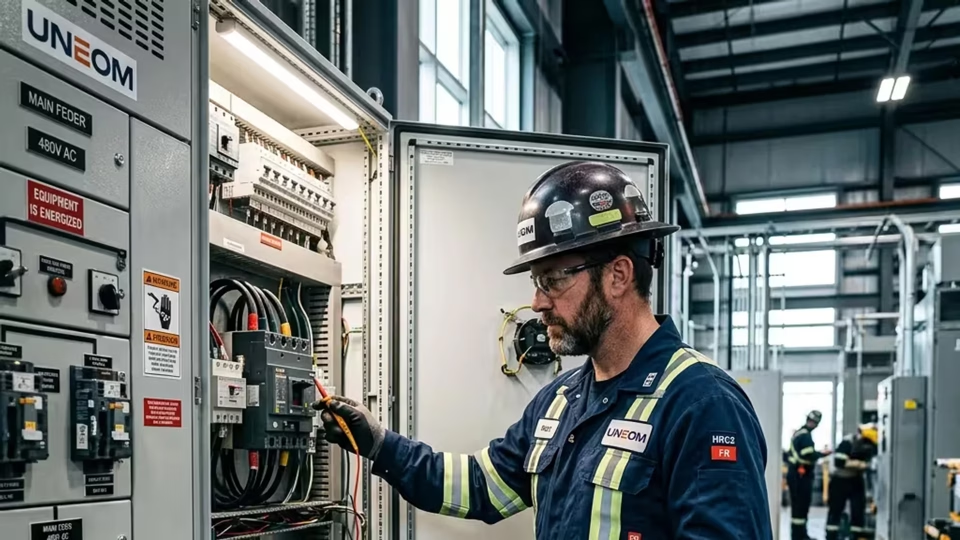
Protective clothing is the only category of workwear where a single damaged item can practically halt a task. A torn sleeve on a flame-resistant coverall, a hi-vis vest whose retroreflective tape has cracked, or a chemical apron with a compromised seam is no longer protective equipment; it is ordinary fabric in a reassuring shape. The supervisor then faces a choice nobody wants to formalise: send the worker home, redeploy them to lower-risk work, or let the shift continue on the quiet assumption that nothing will happen. The third option is the tempting one, not because anyone is careless, but because the alternative, waiting for a replacement that sits in a central warehouse behind a purchase requisition and several approvals, costs the line more than the risk feels like it costs. A replacement stock policy removes that choice entirely. When a correct-size replacement is physically within reach of the supervisor, the compliant decision becomes the fast decision, and the argument ends before it starts.
Build the Buffer Around Your Size Curve
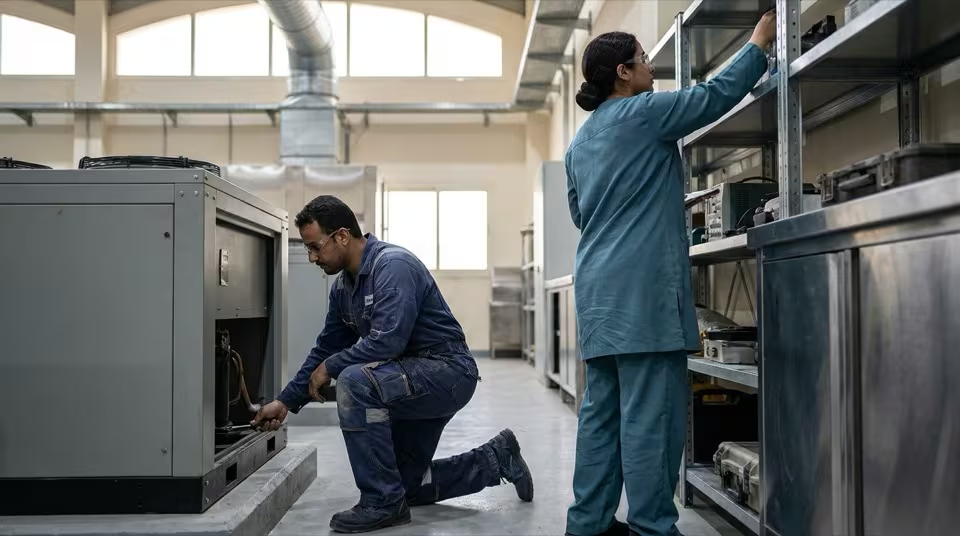
A buffer that mirrors your workforce is small; a buffer that ignores it is expensive and still fails. The starting point is the size distribution from your last full issue, not a flat percentage applied evenly across every size, because a flat rule piles stock at the extremes and starves the middle of the curve where most of your people sit. Weight the buffer toward the roles that consume garments fastest, such as welding, rigging, warehouse handling and any task working against abrasive surfaces or near heat sources, rather than spreading it evenly across headcount. Then check the curve against how the workforce itself is changing: Saudization is bringing new nationals into industrial and service roles, and more women are entering site-based functions, so the sizes and cuts your buffer needs today are not necessarily those the previous purchase order assumed. Women's patterns and modest full-length options belong in the buffer as standard lines, not as special orders that take weeks. Finally, hold the buffer where the work is. A correct garment sitting in a distant central store is not a buffer; it is inventory.
Write the Retirement Criteria Down
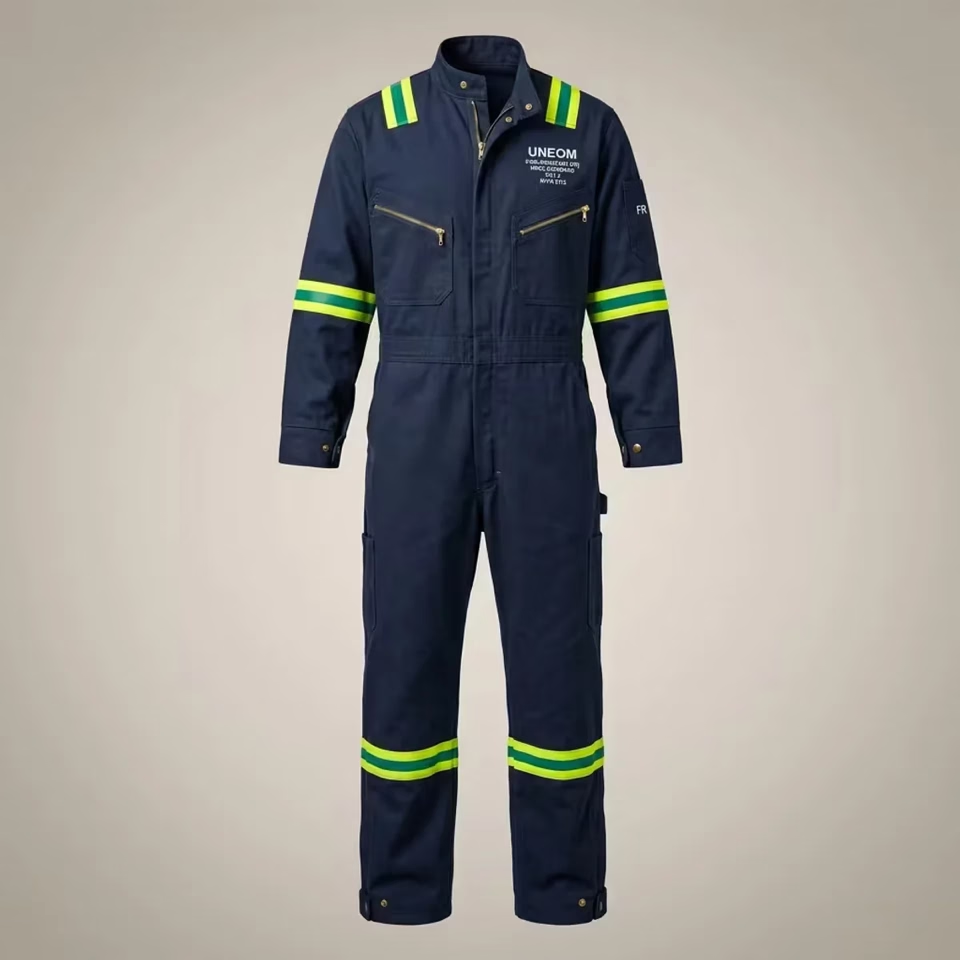
The decision to retire a protective garment should never depend on who happens to be standing at the store counter. Publish criteria, in plain language and supported by photographs, that a storekeeper can apply without escalating: tears, punctures and seam failure; abrasion that has thinned the fabric enough to change its hand; broken or missing closures, because a coverall that will not close is not a closed system; charring, melting, glazing or stiffening after heat or arc exposure; contamination by hydrocarbons or chemicals that cannot be laundered out, which on flame-resistant garments is a genuine hazard rather than a cosmetic one; retroreflective tape that has cracked, lifted or dulled; fluorescent background material that has faded; and any alteration a wearer has made themselves. For anything that needs a precise figure, such as permitted wash cycles, minimum remaining performance, or mandatory withdrawal after a specific exposure, take it from the garment's own care and use instructions, the standard it is certified to, and your site risk assessment, and record that source inside the policy so nobody has to guess twice.
A Same-Shift Swap Path
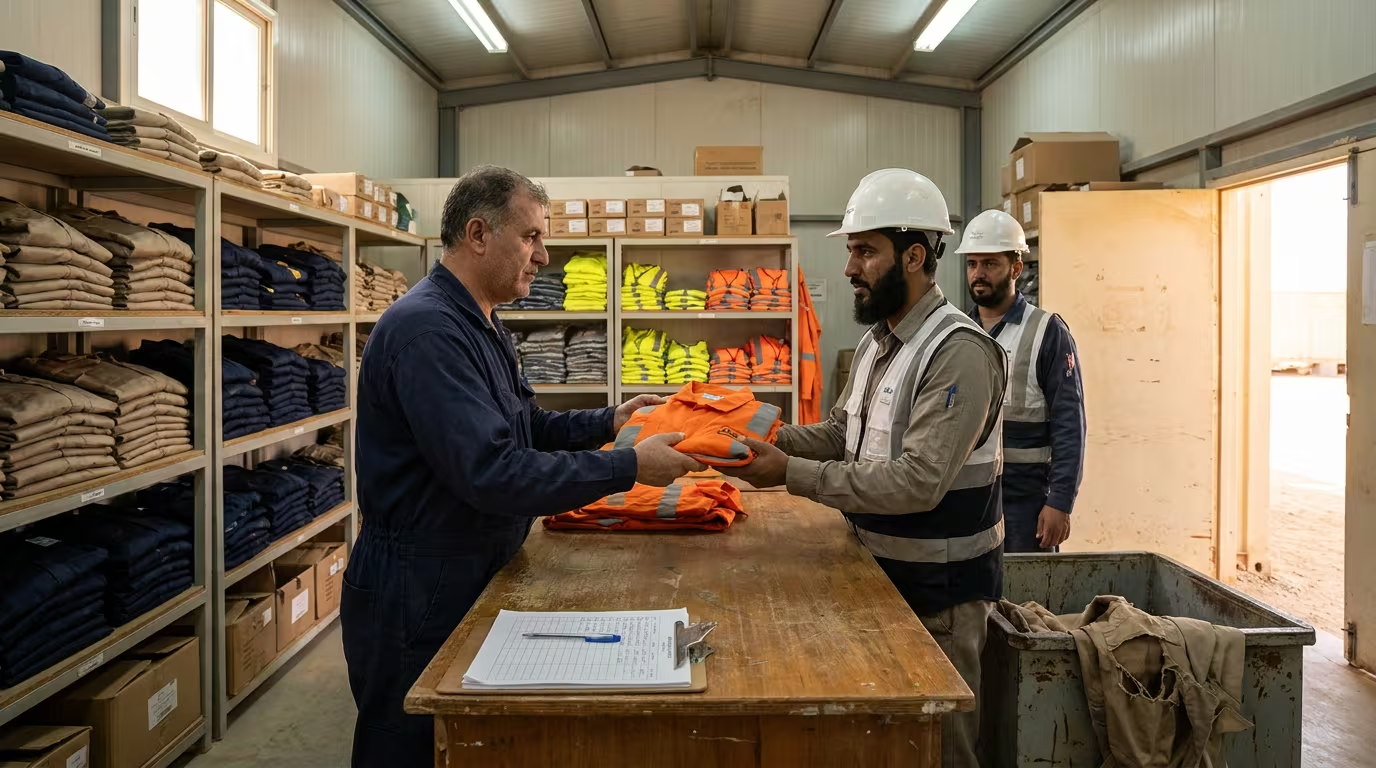
Replacement has to be a different process from annual issue, with different authority and a different queue. In a workable design the shift supervisor or storekeeper can release a replacement immediately, against a one-for-one exchange in which the damaged garment is surrendered and taken out of circulation on the spot. That single rule does most of the work: it keeps the buffer honest, it removes the temptation to hoard a spare in a locker, and it guarantees the retired item cannot drift back onto the floor. Escalation should be reserved for patterns, not for events; a role that keeps destroying garments is a task design or work organisation problem worth a manager's attention, while a single torn coverall is not. Cover the awkward hours deliberately, because night shifts, weekends and remote sites are exactly when the store is locked and a supervisor improvises. And make sure the policy never allows the two quiet defaults that hollow it out: telling a worker to wait for the next annual issue, or letting the cost land on the wearer.
Records That Answer the Audit Question
An auditor is rarely interested in your stock levels. The question is narrower: when this garment stopped protecting this person, how long did they keep working without protection, and can you prove it. Design the record around that. Each replacement should capture the date and shift, the wearer, the item and size, a reason code, who authorised it, and what happened to the retired garment, because a flame-resistant coverall that is condemned and then quietly reissued is a worse finding than having no policy at all. Reason codes are the part most programmes skip and later regret; without them you hold a pile of stock transactions, and with them you hold a map of which roles, tasks and garment details keep failing. Where damage came from an event rather than ordinary wear, cross-reference the incident report, since the garment is often the only physical evidence a near-miss produced. Keep the form bilingual and short enough to complete at the store counter, because a record that slows the swap will not be completed at all.
Keeping the Buffer Replenished
A buffer is a rotating asset, not a shelf you fill once. Set the reorder trigger on the buffer itself, so that drawing a garment out generates the order to replace it instead of waiting for a quarterly review, and expect the draw rate to rise through the hottest months, when heat, sweat and more frequent laundering age fabric faster and bring small failures forward. Two practical things keep a buffer usable over time. The first is specification stability: if fabric, colour and pattern block are re-tendered every year, last year's buffer stops matching this year's uniform, and a worker in a visibly different shade is a worker who will resist wearing it. Agree dye-lot and pattern continuity with your manufacturer in writing. The second is proximity, because a replacement programme is only as fast as the shortest reliable resupply route, which is why domestic production weighs more here than in almost any other uniform category. UNEOM manufactures inside the Kingdom and has done since 2013, works to ISO 9001:2015, and certifies to OEKO-TEX Standard 100.
Frequently asked
- How much PPE buffer stock should we hold?
- There is no universal figure. Work backwards from two things: how quickly your supplier can deliver a replacement in each size, and how often each role actually damages garments. Hold enough of the common sizes in the highest-wear roles to bridge that gap, then review the level against real draw-down and adjust it, rather than adopting an assumed percentage.
- Who should be allowed to authorise a PPE replacement?
- The lowest level that can act within the shift, usually the shift supervisor or storekeeper, against a one-for-one surrender of the damaged item. Escalate only when a pattern appears, such as one role or one design detail failing repeatedly. Requiring manager sign-off for every torn coverall guarantees delay and informal workarounds. Write the authority limit into the policy.
- When should a protective garment be repaired rather than retired?
- Repair is acceptable only where it does not touch the protective function, and only with materials and thread compatible with the garment; an ordinary polyester thread on a flame-resistant coverall creates a new hazard. Damage to seams, closures, retroreflective tape or the protective layer itself normally means retirement. Follow the manufacturer's instructions, and when the answer is unclear, retire.
- What should a PPE replacement record contain?
- At minimum: date and shift, the wearer, the item and size issued, a reason code for the failure, who authorised the swap, and what happened to the retired garment. Cross-reference an incident report where damage came from an event. Reason codes are what later turn a stack of stock transactions into a usable picture of repeat failures.
- Does summer heat change how much replacement stock we need?
- Directionally, yes. Outdoor and hot-work roles mean more sweat, more frequent laundering and stronger ultraviolet exposure, and each of those ages fabric, fades fluorescent background material and stresses seams and closures. Weight the buffer toward those roles ahead of the hot season rather than holding the same mix year-round, and let your own draw-down records set the level.