Poly Cotton vs Cotton Uniform: Choosing the Right Fabric for Saudi Workplaces
An honest comparison of pure cotton and poly-cotton uniform fabrics: how each behaves in Saudi heat and humidity, and which roles each one genuinely suits.
Few uniform decisions attract as much confident opinion and as little evidence as the choice between pure cotton and a polyester-cotton blend. Both are legitimate, and both fail in the wrong application. This guide sets out how each behaves in Saudi heat, humidity and laundering, and how to decide by role rather than by preference.
Two Fibres, Two Behaviours
The comparison starts at the fibre, not the label. Cotton is a cellulosic fibre that absorbs moisture into its core, which is why a cotton shirt feels cool and dry against skin long before it looks damp; it also takes dye readily and develops a soft hand with washing. One property surprises people: cotton is actually stronger wet than dry, which is part of why it survives aggressive laundering. Its weaknesses are equally consistent — it creases, it can shrink unless the cloth is properly finished, and once saturated it dries slowly and clings. Polyester behaves in the opposite direction. It is hydrophobic, so it holds very little water in the fibre and dries quickly, resists creasing, holds its dimensions and colour, and takes abrasion well. Its costs are reduced breathability, a tendency to trap heat and odour, and a thermoplastic nature that softens and melts under high heat rather than charring. A blend is simply an attempt to buy some of each behaviour and to accept the compromise in between.
Where Pure Cotton Wins
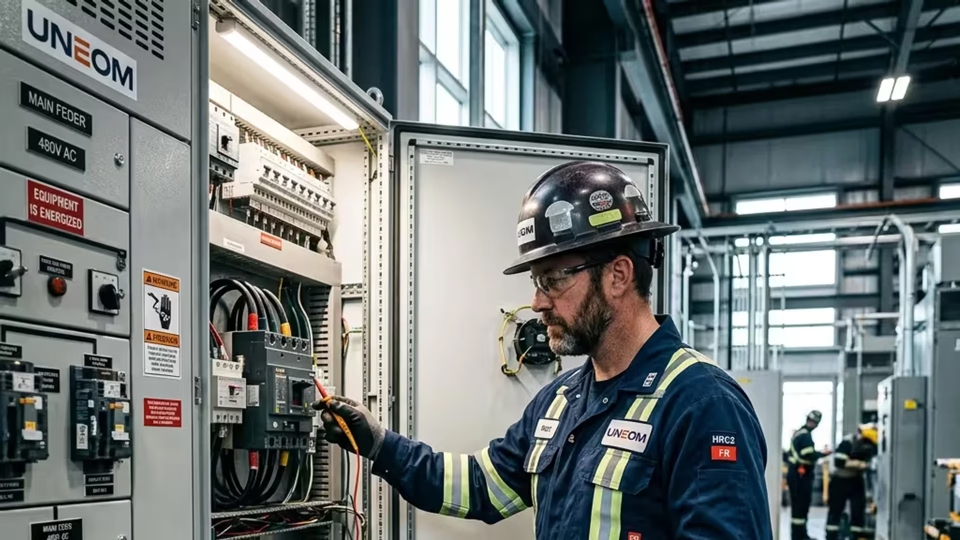
Pure cotton earns its place wherever comfort against skin, heat load and hand feel outrank shape retention. In still, radiant heat — a kitchen line, a laundry, a plant walkway shielded from wind — an absorbent cotton cloth pulls sweat off the skin and lets evaporation do its work, and the wearer reports feeling cooler even if the garment looks wetter. It carries almost no static, which matters in dry indoor air and around fine dust. It is generally kinder to sensitive skin and to workers wearing garments for long shifts, and it is the usual starting point for anyone who reacts to synthetics. It also behaves more predictably near heat and flame: untreated cotton is still combustible and is never a substitute for certified flame-resistant clothing, but it chars instead of melting and dripping onto skin, which is why thermoplastic content is restricted in many hot-work and electrical settings. Where such hazards exist, the deciding document is the site risk assessment and the protection standard it names, not a fabric preference.
Where Blends Earn Their Keep
Blends win on everything that happens after the first wear. Programme managers rarely lose sleep over how a garment feels on day one; they lose it over the shirt that no longer matches its replacement two years later, the trousers that shrank out of size, and the ironing hours a hotel or clinic never budgeted for. Polyester content stabilises the cloth: it holds dimensions through repeated industrial laundering, resists the creasing that makes a front-of-house team look tired by mid-shift, keeps colour closer to the original across seasons and re-orders, and adds abrasion resistance at cuffs, elbows and seat panels where cotton wears thin first. It also dries far faster, which matters where staff launder at home between short turnarounds and where a second set is not always available. For a large multi-site rollout with a long service life, standardised sizing and a fixed brand colour, a well-built blend is usually the lower-risk choice — not because it is more comfortable, but because it stays consistent.
Riyadh Dry, Jeddah Humid
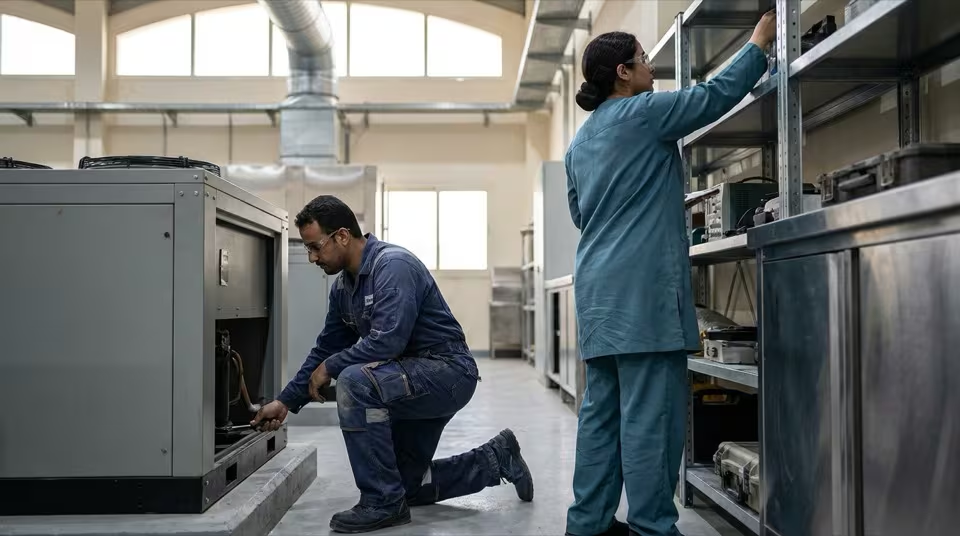
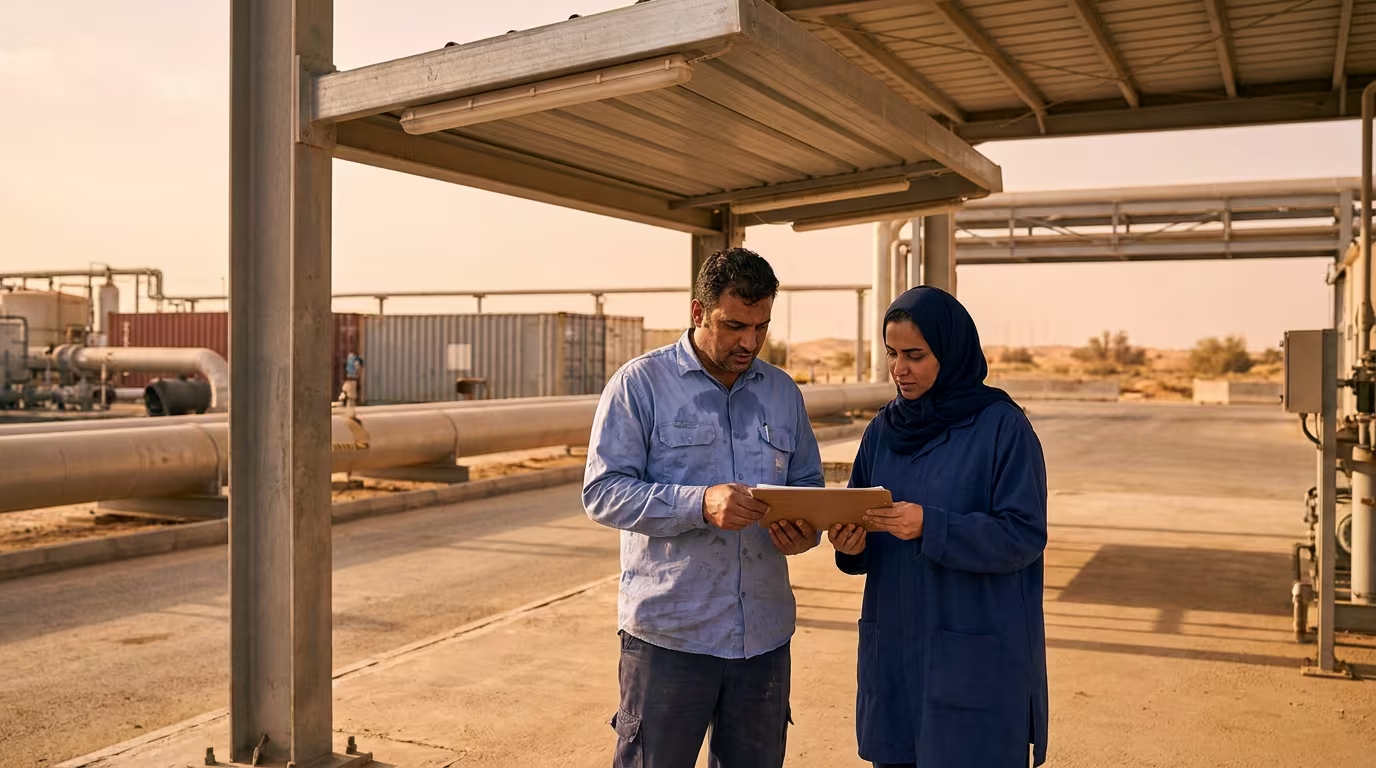
Saudi Arabia is not one climate, and the honest answer changes between regions. Inland, in Riyadh, Buraydah or Hail, summer air is fiercely hot but dry, so sweat evaporates readily; absorbent cotton and a well-engineered moisture-managing blend can both work, and the bigger enemies are radiant load, dark colours and tight cloth. On the Red Sea and Gulf coasts, in Jeddah, Dammam, Jubail and Yanbu, high humidity slows evaporation to a crawl. There, a saturated cotton garment becomes heavy, clings and stops cooling, while a lighter cloth engineered to move moisture to its surface and to keep air circulating tends to recover faster. Modest coverage adds a further layer to the calculation: when arms, legs and torso are fully covered by design, total fabric area, weight and air permeability influence heat strain more than fibre type alone. So does the shift pattern — a technician moving between chilled control rooms and open yards has a different problem from a receptionist who never leaves conditioned air.
Construction Decides More Than Ratio
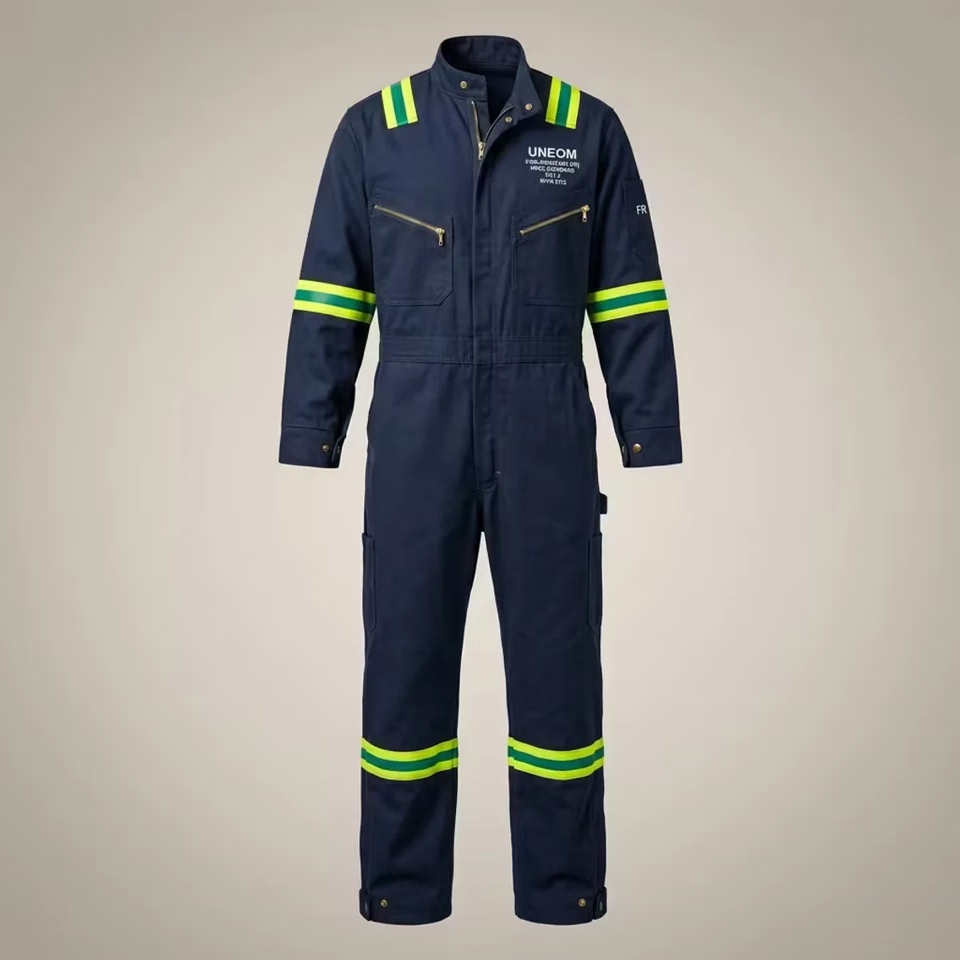
The most common procurement mistake is arguing about fibre percentages while ignoring the cloth. Weight, weave, yarn and finish routinely matter more than the split on the label. A dense, heavy cotton twill can feel hotter and dry slower than a light, open blended poplin; a smooth, air-permeable structure moves heat away better than a thick one of identical fibre content. Yarn quality decides pilling and hand; ring-spun yarns generally feel smoother and pill less than coarse open-end yarns. Finishing decides much of the real-world behaviour: shrinkage control, soil release for kitchens and workshops, moisture management on the inner face, and dye selection for colour that survives repeated washing and strong sunlight. Cut matters too — underarm gussets, back yokes, vent placement and a sleeve that allows air movement change perceived heat more than a few points of polyester. So specify the whole cloth and the finished garment, ask the manufacturer for the full construction detail and test evidence, and treat the blend ratio as one line among many.
Deciding by Role, Then Proving It
A workable rule is to sort roles by what failure looks like. Where the risk is heat strain, skin contact or flame, lean cotton-rich and let the risk assessment set the specification. Where the risk is a faded, misshapen, ironing-hungry uniform across hundreds of staff and several years, lean blended. Where both matter — hospitality floors, clinical corridors, retail teams who step outside — split the wardrobe by layer rather than compromising on one cloth for everything. Then prove it before committing: run a seasonal wear trial across at least one inland and one coastal site, use the summer months rather than a mild week, launder the candidates through your actual laundry process, and record wearer feedback, shrinkage, colour drift and the real reasons garments leave service. Write the tender around performance and care outcomes and named standards rather than a ratio. UNEOM manufactures inside the Kingdom and has done since 2013, works under ISO 9001:2015, and offers fabrics certified to OEKO-TEX Standard 100, so trial cloth and production cloth can be held to the same specification.
Frequently asked
- Is poly-cotton or pure cotton cooler in Saudi summer heat?
- Neither wins automatically. In dry inland heat, absorbent cotton often feels cooler because sweat evaporates freely. In humid coastal air, saturated cotton clings and stops cooling, so a lighter, air-permeable blend engineered to move moisture may perform better. Weight, weave, colour and garment cut influence perceived heat as much as fibre choice.
- Does cotton lose strength when it gets wet?
- No. Cotton is one of the few fibres that becomes stronger when wet, which is part of why it tolerates heavy laundering. That is a property of cotton specifically, not of natural fibres in general; viscose, by contrast, loses considerable strength when wet. Wet strength is a separate question from shrinkage, wrinkling and slow drying.
- What is the best blend for the Saudi climate?
- There is no single correct ratio, and any figure presented as an official standard deserves scepticism. The right answer depends on the role, the region's humidity, the laundering method and the hazard profile. Specify the finished cloth — weight, weave, finish and performance requirements — and validate it with a seasonal wear trial in real conditions.
- Can polyester blends be used near heat, flame or electrical arc hazards?
- Only where the site risk assessment and the applicable protection standard allow it. Thermoplastic fibres can soften and melt against skin, which is why many hot-work and electrical environments restrict them. Untreated cotton is not flame resistant either; genuine protection requires purpose-engineered certified fabric verified against the named standard.
- How do we compare fabrics fairly before a large uniform rollout?
- Trial them side by side under real conditions: the same roles, the same shifts, at least one inland and one coastal site, through peak summer, laundered by your actual process. Track wearer comfort, shrinkage, colour change, seam and abrasion wear, and the reasons garments are retired. Decide on evidence, not on a label.