Turnaround Shutdown PPE in Saudi Arabia: Confined Space Workwear That Arrives on Time
How Saudi plants equip a surging turnaround workforce fast: confined space garment design, contractor sizing, crew identification, heat management and post-shutdown recovery — planned as procurement, not emergency.
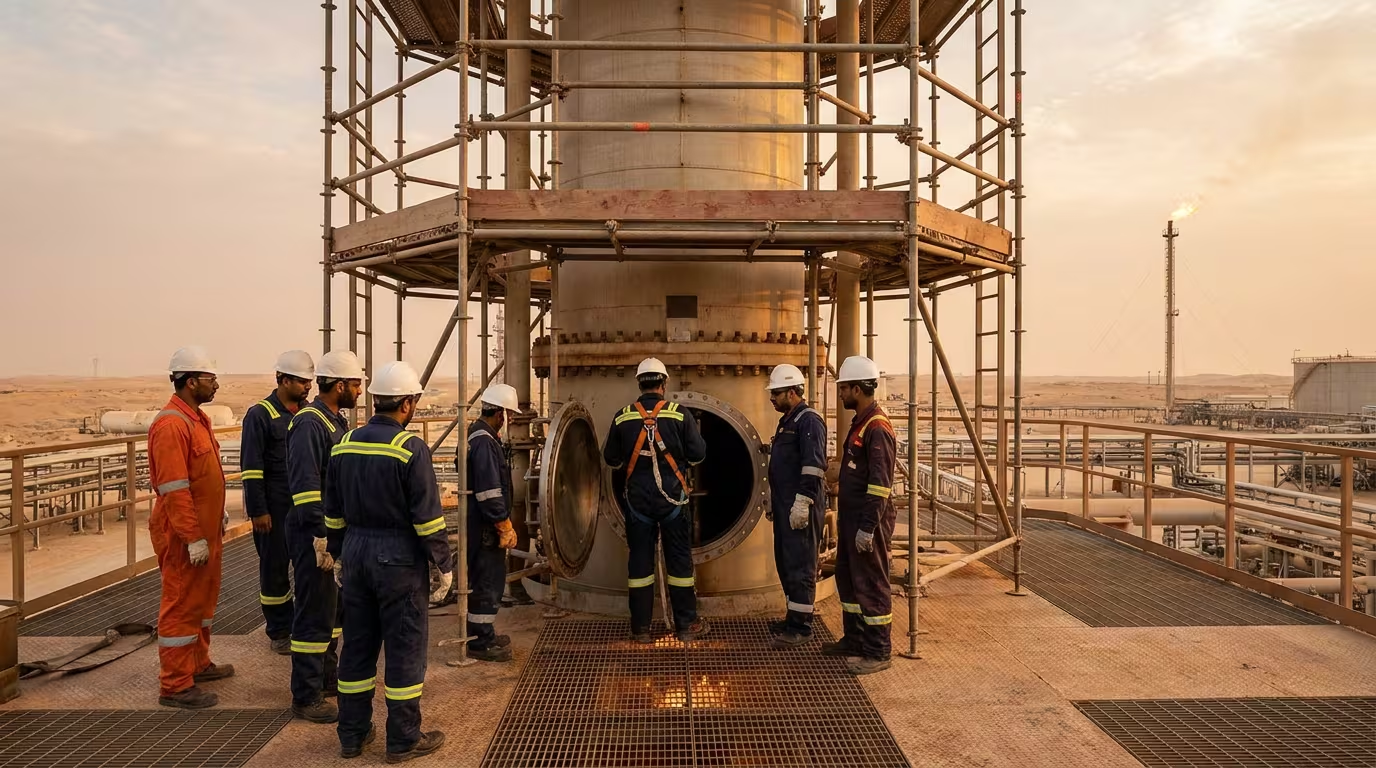
A turnaround multiplies a plant's population for a few intense weeks, and the workwear programme has to absorb that surge without delaying a single entry. This guide covers confined space garment design, sizing contractor crews you have never measured, crew identification, heat load in the Saudi summer, and recovering the kit afterwards without loss.
The turnaround demand spike
A turnaround inverts every assumption behind a normal uniform programme. For most of the year a plant clothes a stable core of operators and maintenance technicians whose sizes, wear rates and replacement cycles are known. Then, for a few concentrated weeks, the site population multiplies as scaffolders, welders, riggers, insulators, blasters, inspectors and vendor specialists arrive from several contractors at once, many of them unknown to the store until they present at the gate. The clothing requirement is not simply larger; it is different in kind. It has a hard start date fixed by the shutdown schedule, a hard end date after which most of the garments have no user, and no tolerance for a shortfall, because a worker without compliant clothing is a worker who cannot be released to the job that the critical path depends on. Treating that spike as a procurement event rather than an emergency is the difference between a mobilisation that absorbs the surge quietly and one that spends its first shifts arguing at the gate.
Dressing for confined entry
Inside a vessel, column or tank, the garment stops being a uniform and becomes part of the entry envelope. Bulk is the first enemy: a coverall that bunches under a full-body harness, or that adds volume at the hips and thighs, makes a manway passage harder and complicates a retrieval that may already be difficult. Snag points are the second: loose flaps, protruding hardware, oversized cargo pockets and long unsecured cuffs catch on internal trays, scaffold clips and tray supports. The third is layering discipline, because a flame-resistant outer garment can be undermined by a synthetic base layer that melts, and a disposable oversuit worn against catalyst dust or insulation fibre is not flame resistant unless it was specified and purchased as such. What actually governs entry — atmosphere testing, permits, attendants, rescue arrangements and the specific protective clothing class required — is set by the site's own confined space procedure and hazard assessment, and the clothing specification should be written to serve that procedure rather than to substitute for it.
Sizing crews you have not met
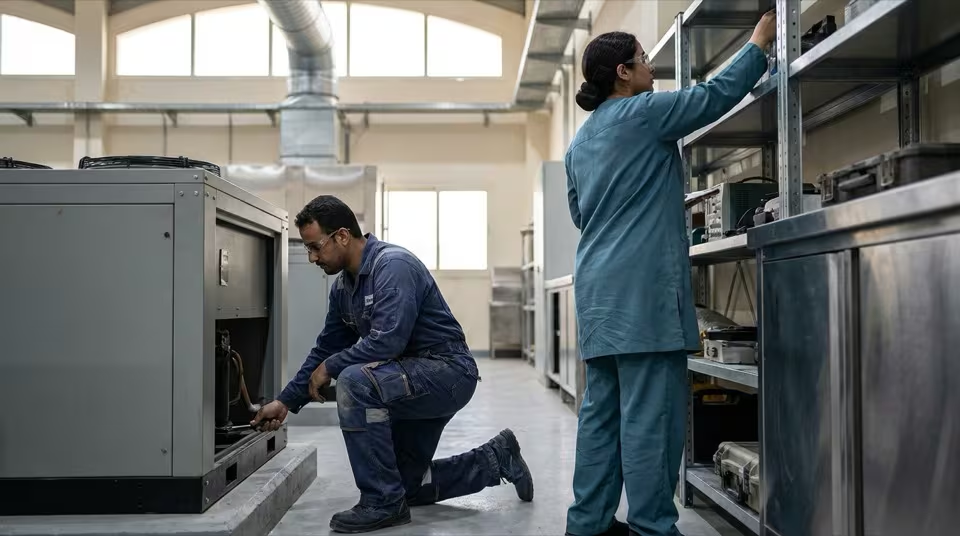
The hardest part of a turnaround kit is that you are sizing a workforce that does not yet exist on any payroll you control. Contractor crews arrive from different countries with different body distributions, and a size curve built from the plant's permanent staff will not fit them. Move sizing upstream: issue one size chart at contract award, circulate a physical fit kit so supervisors measure against real garments rather than a remembered label, and collect sizes as a mobilisation deliverable ranked alongside certificates and inductions. Include women's patterns in the same exercise, because Saudi plants now field women in inspection, laboratory, engineering and coordination roles, and a men's coverall taken in at the waist is neither a good fit nor a safe one; full-length coverage and a generous cut suit modest dress and confined work equally well. Then plan for error: hold an exchange buffer weighted toward the extremes that always run short, and staff an exchange point during mobilisation so a wrong fit is corrected in minutes rather than tolerated, taped and rolled, for the whole shutdown.
Visibility and crew identification
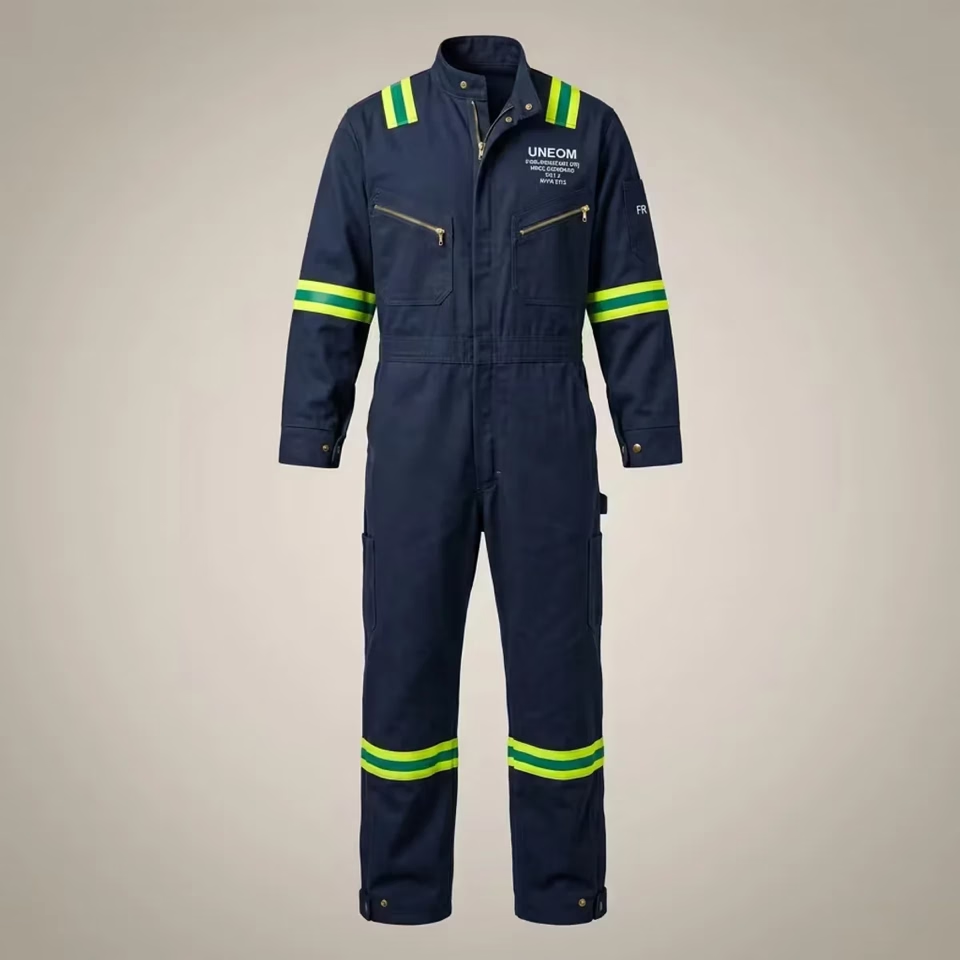
During a shutdown, hundreds of people from many different employers work in overlapping elevations around cranes, man-lifts and moving loads, and the ability to read a crew at a glance is a control, not decoration. Colour blocking by discipline or by contractor, contrasting yokes, distinct back panels and clear name and company identification let a supervisor find their own crew in a congested area and let anyone see immediately who does not belong in a barricade. Hole watch and attendant roles deserve unmistakable identification, since their value depends on being recognised instantly from outside the entry point. Two constraints keep this honest. First, identification must never dilute high-visibility performance: retro-reflective and fluorescent areas cannot be sacrificed to fit a logo or a colour scheme, and the visibility class appropriate to the traffic and lighting conditions is a matter for the site's risk assessment and specification. Second, the scheme must reconcile with the plant's existing colour conventions for helmets, permits and restricted areas, so a turnaround does not import a second, contradictory language of colour.
Heat in a compressed window
Saudi turnarounds are often scheduled around plant economics rather than weather, so crews may work in ambient temperatures of forty-five to fifty degrees while wearing flame-resistant coveralls, harnesses and respiratory protection. No garment cools a worker; hydration, shade, rotation and work-rest cycles do that, and the summer midday restrictions on outdoor work compress an already tight schedule and push more scope into night shift. What clothing can do is avoid adding to the burden. Lighter fabric weights within the specified protection class, breathable constructions, moisture-moving base layers that are themselves flame resistant where the specification demands it, and lighter garment colours for outdoor scaffold and civil work all reduce accumulated heat load. Inside a vessel with no air movement, breathability matters more than anywhere else on site, and every additional layer worn over the coverall for dust or chemical splash should be justified by an actual exposure rather than habit. Night work adds its own requirement, because reflective performance and lighting become the primary means of being seen.
Issue, tracking and recovery
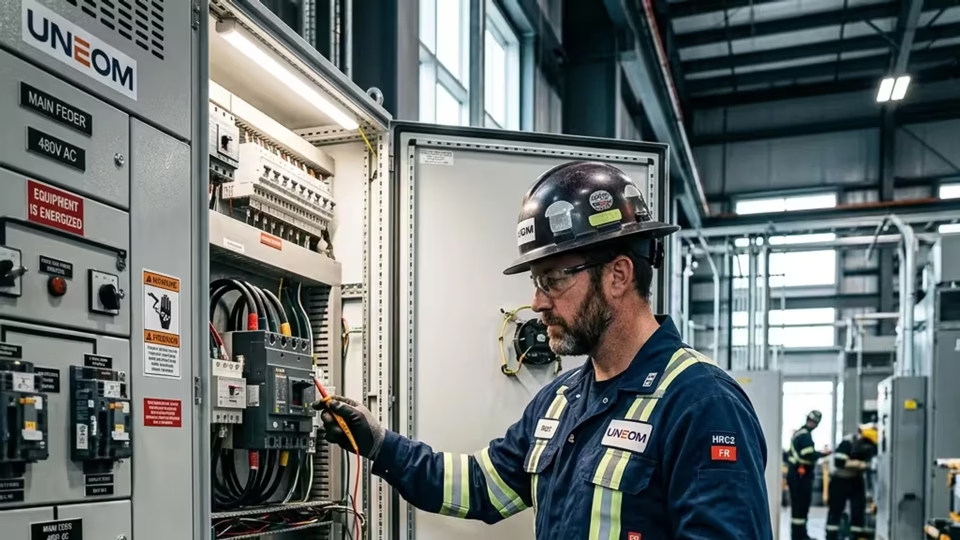
A turnaround wardrobe has an ending, and the ending is where most programmes lose money and control. Garments issued in a rush against a paper list disappear with the crews that leave, contaminated flame-resistant coveralls go home in a bag instead of into controlled laundering or disposal, and the next shutdown starts by buying everything again. Decide the model before mobilisation: issued and recovered, issued and retained by the contractor, or contractor-supplied to your written specification, with a single accountable owner for each option. Record issue against the individual, not the crew, using whatever tracking the site already trusts, and make return a condition of demobilisation clearance in the same way as tools and access badges. Inspect on return, retire garments with damage that compromises protection, and keep serviceable stock cleaned, sized and stored so it becomes the opening inventory of the next event. Manufacturing inside the Kingdom, as UNEOM has done since 2013 under ISO 9001:2015 and OEKO-TEX Standard 100 certification, keeps that replenishment loop short.
Frequently asked
- How far ahead should turnaround workwear be ordered?
- Work backwards from the mobilisation date, not the shutdown date. Size capture from contractors is usually the long pole, so make it a contract deliverable at award. Allow time for sizes to change after crews are confirmed, for an exchange buffer, and for a final top-up once the actual headcount settles a few weeks out.
- What makes a coverall suitable for confined space work?
- Low bulk, minimal snag points, secured cuffs, restrained pocket volume and clean compatibility with a harness and respiratory equipment. Beyond that, the protection class — flame resistance, antistatic behaviour, chemical or particulate barrier — is set by the site's hazard assessment and entry procedure, not by a generic garment description.
- Should contractors supply their own workwear or should the plant issue it?
- Both models work if one of them is chosen deliberately and written into the contract. Plant issue gives uniform appearance, consistent specification and easier identification; contractor supply shifts cost and logistics but requires you to specify, verify on arrival and reject non-conforming garments at the gate rather than after entry.
- Can turnaround garments be reused for the next shutdown?
- Serviceable garments can be, provided return is a demobilisation condition, each item is inspected, and anything with damage that compromises protection is retired rather than reissued. Clean, size-sorted and properly stored stock becomes the opening inventory of the next event; contaminated flame-resistant items follow the site's laundering or disposal rules.
- How do you handle sizing for women on a turnaround team?
- Include women's patterns in the specification from the start rather than altering men's garments. Saudi plants field women in inspection, laboratory and engineering roles, and altered garments lose the fit that protective clothing depends on. Full-length coverage, a generous cut and headwear compatible with helmets should follow the site's own dress and PPE policy.