Winter Workwear in Saudi Arabia: Layering for Industrial Sites
Saudi winter is a real operating condition on northern and central sites, on night shifts, and anywhere wind reaches an open yard — and a single heavy coat is the most common way to get it wrong. This is a practical guide to layering, to moisture under insulation, and to the mobility cost of bulk around machinery.

The first cold week of the year is when uniform specifications get audited by reality. A crew that was equipped carefully for heat turns up at a night handover in hoodies from home, and by the second shift half the issued jackets are in the truck. The problem is rarely that nobody bought anything warm. It is that warmth was bought as one item instead of designed as a system a working body can adjust.
Saudi Winter Is a Procurement Problem, Not a Footnote
Most uniform specifications in the Kingdom are written against summer. That is understandable — the heat season is long, and it is the condition everyone has in mind when the tender is drafted. The result is a wardrobe that fails predictably for a few weeks of the year, in places and at hours that rarely appear in the specification meeting. The exposure is not evenly distributed. Northern and central sites sit through colder nights than coastal ones. Desert air holds little heat after sunset, so the same location can be punishing under the sun and genuinely cold before dawn — the swing across a single shift is what catches workers out, not the seasonal average anyone quotes. Wind across an open yard or an elevated structure strips warmth far faster than still air at the same temperature, and a night crew spends most of its hours in the coldest part of that cycle. Add rain. It is infrequent, but when it arrives it soaks a crew that has no rain layer, because rain was never in the plan. None of this needs numbers to be true, and you should be sceptical of anyone quoting you a design temperature for your specific site without having measured it there. What it needs is one decision: does your winter kit exist as a defined, issued set, or as whatever the worker brings from home? In practice most sites run on the second answer, and it shows in the first cold week.
Why One Heavy Coat Fails a Worker Who Is Actually Working
The intuitive answer to cold is a thick coat. It fails for a specific reason: the worker's own heat output is not constant, and the coat has only two settings — on and off. Watch a full shift. There is a cold start at handover, a long stretch of physical work that produces real body heat, a wait for a crane or a permit, then work again. A single heavy coat is sized for the coldest, most idle moment of that sequence. Twenty minutes into the physical part the worker is carrying too much heat, so he opens the front, pushes the sleeves up, and eventually takes it off and hangs it on a rail. Then the wait comes. He is now damp from sweating inside a shell that could not breathe, and he is colder than he would have been without the coat at all. By the second week the coat lives in the truck and the crew works in whatever it owns. You bought a garment, not warmth. Layering fixes this by making insulation adjustable in small steps: the mid layer comes off before the heavy task and goes back on during the wait, while the outer shell stays on for wind in both states. The practical test of a winter system is not how warm it feels in the store. It is whether a worker can change his insulation while wearing gloves, standing on a scaffold, without walking back to the site office. If he cannot, the system collapses back into a coat that gets abandoned.
The Three Layers, and What Each Fabric Is Actually Doing
A working system has three jobs. Each layer should do one of them properly instead of all three badly. Base layer — moves moisture off the skin. This is not the warmth layer. Its job is to stop sweat sitting against the body, where it pulls heat away during idle periods. Polyester and polypropylene knits move moisture readily and dry fast. Merino wool holds moisture inside the fibre yet still feels warm when damp, and resists odour over a long shift. Cotton is the common default and the weakest choice here — but for a different reason than most people assume: cotton absorbs a lot of water and dries slowly, so it stays wet against the skin. The cotton fibre itself actually gains strength when wet, so the objection is thermal comfort and drying time, not durability. Lyocell holds its strength well when wet and sits comfortably next to skin. Viscose is the fibre that loses a substantial part of its strength when wet, so avoid viscose-heavy base garments under straps, loads and frequent laundering. Mid layer — traps still air. Fleece, a light quilted jacket, or a wool-blend knit. This is the layer that comes off and goes back on all shift, so specify a full-length front zip rather than a pullover neck. Outer shell — blocks wind and water. Its own insulation value is secondary; what matters is that wind cannot strip the still air out of the mid layer, and that the shell can vent — front zip, underarm openings, a mesh-backed yoke — so moisture has a way out.
Moisture Under Insulation Is What Actually Makes People Cold
Insulation works by holding still air. Wet insulation holds water instead, and water carries heat away from the body far more effectively than air does. That is the entire mechanism behind a crew that looks well dressed and is still cold three hours in. The moisture usually comes from the inside. A worker who dresses for the coldest moment of the shift and then starts moving will sweat inside a sealed shell, and that sweat has to go somewhere. If the outer layer neither breathes nor vents, it condenses on the inside face of the shell and soaks the mid layer from within. Habits that cost nothing: - Start slightly cold. If the crew is perfectly comfortable standing at handover, they are overdressed for the first task. - Vent before sweating, not after. Open the shell as exertion begins. - Remove the mid layer for heavy work and carry it, rather than opening everything and putting wind straight onto a damp base layer. The logistics matter as much as the behaviour. A base layer worn through a full shift needs washing before the next one, which means at least two per worker in rotation and a clear answer to who launders them. Wet outerwear needs somewhere to dry between shifts — a hook in a ventilated room, not a closed locker. Sites that skip this end up putting damp kit back onto cold bodies at the next handover, which is worse than issuing nothing.
Bulk, Machinery, and the Layers You Cannot Improvise
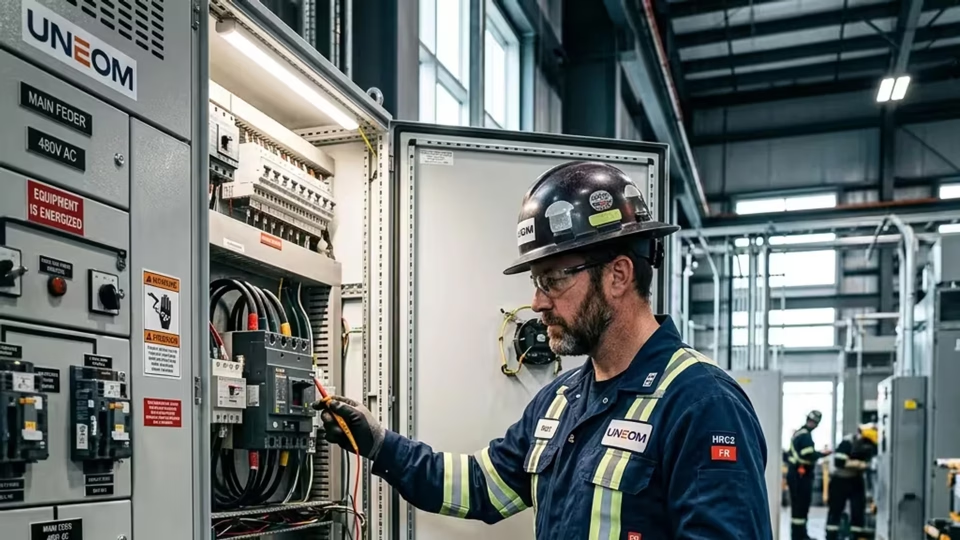
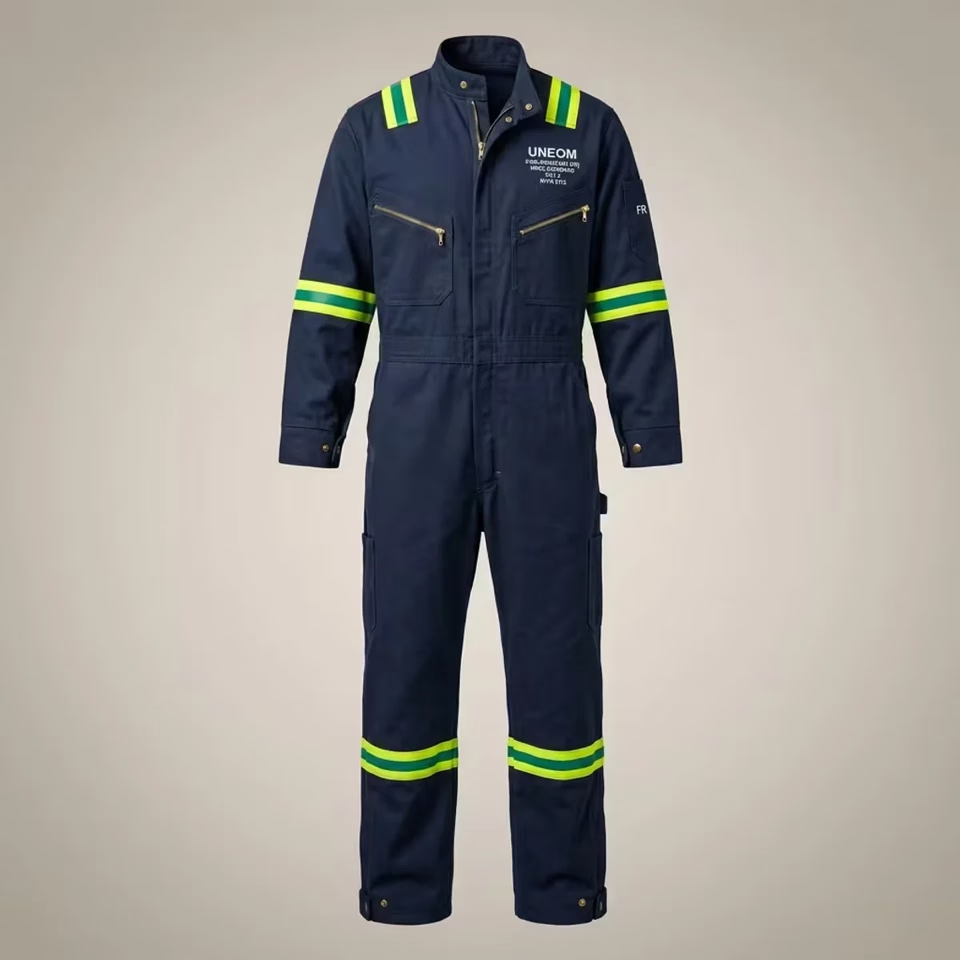
Every layer you add costs reach, grip and awareness. Around rotating machinery that cost becomes a safety question rather than a comfort one. Watch what bulk does. Sleeves thicken, so the cuff-to-glove interface opens up or the glove no longer seats. Shoulders tighten, so overhead reach shortens and the worker compensates by stepping closer to the machine. A loose hem or an open front flaps near a drive shaft or a conveyor nip point. A hood worn under or over a hard hat changes how the helmet sits and how far the worker can turn his head to check behind him. The fit rules follow from that: outer layers cut for movement instead of simply sized up, adjustable cuffs and hem, no dangling drawcords at the waist near machinery, and a length that clears harness attachment points. If the crew wears fall-arrest harnesses, decide deliberately whether the harness goes over the outer layer, and verify it on a real worker rather than on a hanger. A clear reservation: where your site requires flame-resistant clothing, or high-visibility clothing to a defined class, do not assemble the winter system by intuition. Putting a non-FR fleece or shell together with FR coveralls is a decision for your HSE authority and the standard your site has adopted. And a visibility class is a property of the outermost garment actually worn, so a plain jacket over a hi-vis coverall changes what the worker presents. Take both points to your own specification and safety advisor before ordering, not after.
Specifying a Winter Kit That Survives the Buying Process
Winter kit fails on logistics as often as it fails on fabric. A short checklist covers most of what goes wrong: - Order ahead of the season. Sizing, sampling and production do not compress well, and an order placed after the first cold week arrives once the crew has already improvised. - Define the set, not the jacket. Write the issue as base layers with a rotation count, a mid layer and a shell, and state who launders what. If base layers are the worker's responsibility, issue enough of them and put that in writing. - Size on the body over the layers that will be underneath. A shell fitted over a t-shirt in a sizing session will be tight over a fleece in January. Run fittings with the actual mid layer on. - Separate the shifts. Day and night crews on the same site do not need the same kit, and one specification for both means overspending on one group and underserving the other. - Plan storage and return. Seasonal kit that is not collected, cleaned and stored will not reach the next winter, and next year's order will be larger than it should be. On the supply side, ask a manufacturer what it can evidence rather than what it claims. UNEOM has manufactured uniforms inside the Kingdom since 2013, works to ISO 9001:2015, and holds OEKO-TEX Standard 100. Anything beyond documented fact — performance ratings, protective claims, guaranteed service life — should arrive with paperwork you can read, from any supplier, including us.
Frequently asked
- Do Saudi industrial sites really need dedicated winter workwear?
- On many sites, yes — particularly northern and central locations, night shifts, and open or elevated work areas where wind is a factor. The issue is the swing within a single shift rather than the seasonal average. If your crews currently improvise with personal clothing during the cold weeks, you already have a winter kit; it is simply unspecified, uncontrolled and invisible in your budget.
- Can we issue one heavy winter coverall instead of managing layers?
- You can, and it will be worn during the cold start of the shift then abandoned once work begins. A single insulation level cannot follow a worker who alternates between heavy exertion and waiting. Layers mean more items to manage, but they are adjustable in small steps — and that is exactly what keeps them on the body through the shift instead of hanging on a rail.
- Can a winter jacket be worn over flame-resistant coveralls?
- That is not a question an article can answer for your site. Adding a non-FR layer to an FR system changes what the worker is actually wearing, and the decision belongs to your HSE authority and the standard your site has adopted. Ask any supplier for documentation on every layer you intend to combine, and get the combination approved in writing before you order quantities.
- Does a jacket over a hi-vis coverall affect visibility compliance?
- Practically, yes — what counts on site is the outermost garment actually being worn. A plain jacket covering a hi-vis coverall means the worker no longer presents the visibility your site specified. The usual fix is to make the shell itself the compliant high-visibility item, but the class and the requirement come from your own specification, so confirm both there before ordering.
- How many base layers per worker, and when should we place the order?
- Plan at least two per worker so one can be washed while the other is worn — a base layer that goes back on damp defeats the whole system. Decide explicitly whether the site or the worker launders them, and write it down. On timing, start sizing and sampling well before the cold weeks; orders placed after the first cold spell arrive once the crew has already improvised.