Welding PPE Selection Guide: Choosing Protection That Holds Up
A practical welding PPE selection guide for Saudi sites: arc and spatter hazards, why synthetics are excluded, leather versus treated and inherent fabrics, coverage details, and inspection.
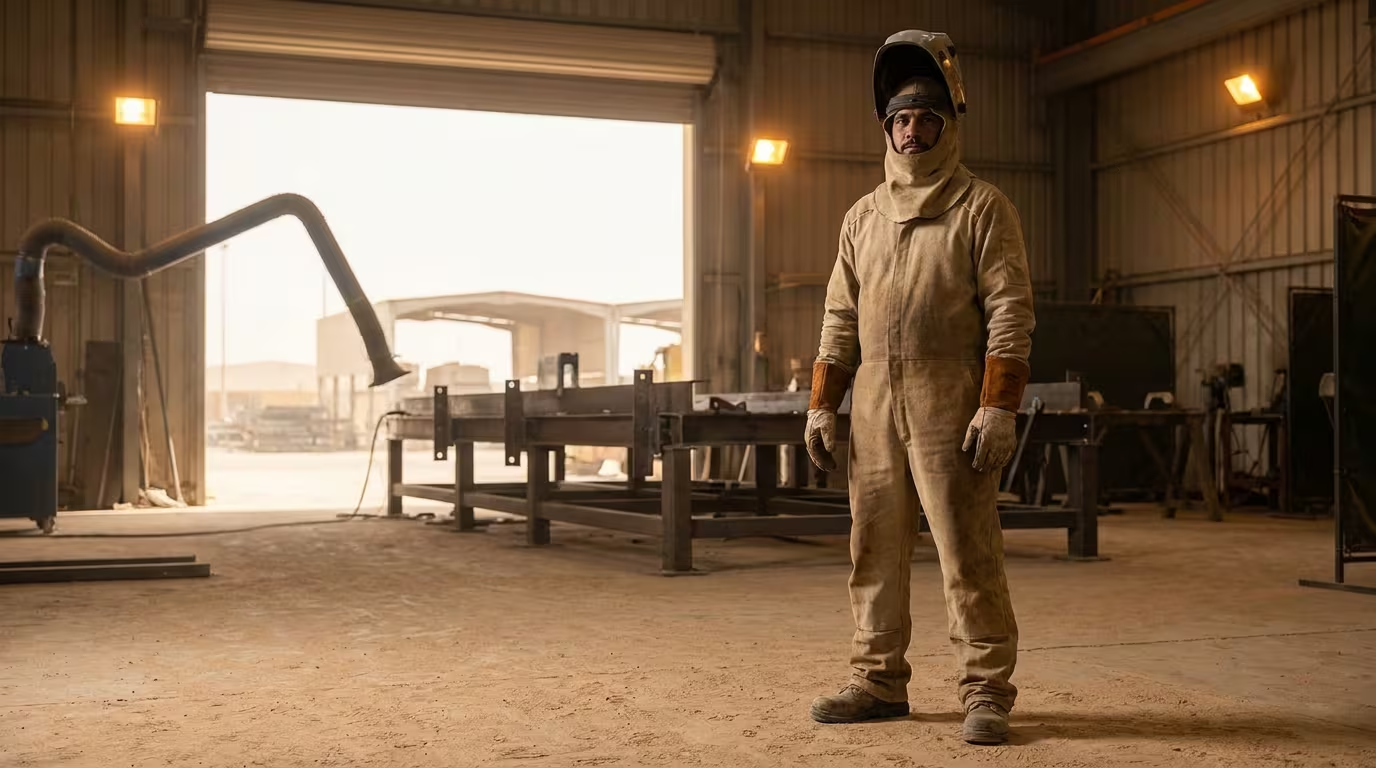
Welding burns rarely come from a fabric failing outright. They come from the wrong fibre, an open collar, a turned-up cuff, or a garment kept in service after damage. This guide walks through the hazards, the fabric families, the coverage details and the inspection habits that decide whether welder protective clothing on a Saudi site actually protects.
What the Arc Throws at Clothing
A welder's clothing is not general workwear that happens to be flame-retardant; it is a barrier against several hazards acting at once. Molten metal spatter leaves the arc at high temperature and lands on the chest, forearms and thighs, where it either rolls off or sits and burns through. Ultraviolet and infrared radiation from the arc degrades ordinary fabric and reddens skin through thin or open weaves. Radiant heat from the workpiece, the preheat torch and the surrounding structure loads the body continuously, not in a single event. Sparks and grinding debris travel further than most supervisors expect, finding cuffs, collars and pocket openings. Hot surfaces and slag underfoot add contact burns to the list. Any one of these is manageable alone; together they explain why welder protective clothing is specified as a system of fabric, closures, coverage and accessories rather than as a single garment. A procurement decision that optimises for one hazard while ignoring the others usually produces a jacket that fails in the field.
Why Meltable Synthetics Stay Out
The single clearest rule in welder clothing is that thermoplastic synthetics do not belong near an arc. Polyester, nylon, polypropylene and most elastane-rich stretch fabrics soften and melt rather than char. Molten spatter or a sustained flame front can fuse them to skin, turning a survivable burn into a complex injury and complicating first aid, because melted fabric has to be removed from the wound. This applies to the visible garment and, just as importantly, to everything underneath it: a polyester T-shirt, a synthetic athletic underlayer or a fleece worn for cool early shifts undoes the protection of an excellent outer jacket. It also applies to details buyers overlook, including sewing thread, hook-and-loop tape, reflective tape, labels and elasticated waistbands. Fibre chemistry is not negotiable here; it is physics, and no finishing treatment makes a thermoplastic behave like a char-forming fibre. The practical procurement action is to write a no-meltable-fibre rule into the specification, extend it to base layers issued or permitted on site, and check the trim and thread on every sample received.
Leather, Treated Cotton, Inherent Fibres
Three fabric families dominate welding jacket fabric selection, and each trades something away. Split leather remains the reference for heavy spatter: it resists molten metal splash, sheds sparks and takes abuse at the shoulders and forearms, but it is heavy, stiff, slow to dry and punishing in summer heat. Flame-retardant treated cotton offers comfort, breathability and familiar handling, chars instead of melting, and is widely accepted for lighter welding and cutting; its limitation is that the finish is a chemical treatment whose durability depends on correct laundering and has a finite wash life. Inherent fibres such as aramids and modacrylic blends carry the flame-resistant behaviour in the fibre itself, so protection does not wash out, and they tend to be lighter for a given level of performance, at higher unit cost. Many sites end up with a hybrid: an inherent or treated-cotton coverall as the base garment, with a leather cape sleeve, apron or bib added for overhead and heavy-deposition work. That layered approach usually beats forcing one fabric to cover every task.
Specifying Against the Standard
Protective clothing for welding and allied processes is covered by the EN ISO 11611 standard family, and that is the right anchor for a specification, but it is an anchor rather than an answer. The standard exists to describe how garments are tested and classified; it does not decide what your welders need. That decision belongs to the site risk assessment, which has to describe the actual processes, welding positions, consumables, deposition rates, duration of exposure and whether work is overhead, in confined space, or alongside live electrical equipment. Write the specification so it states the process and exposure conditions, requires certification to the relevant standard family at the classification appropriate to that assessment, and asks the supplier for the certificate together with the garment's own marking and user instructions. Then verify: request the documentation, read what the marking actually claims, and confirm it matches the tender. Buyers get into trouble when they copy a class designation from another site's tender without knowing which processes produced it. Ask your safety authority or certification body when the assessment is ambiguous.
Closing the Gaps: Neck, Wrists, Feet
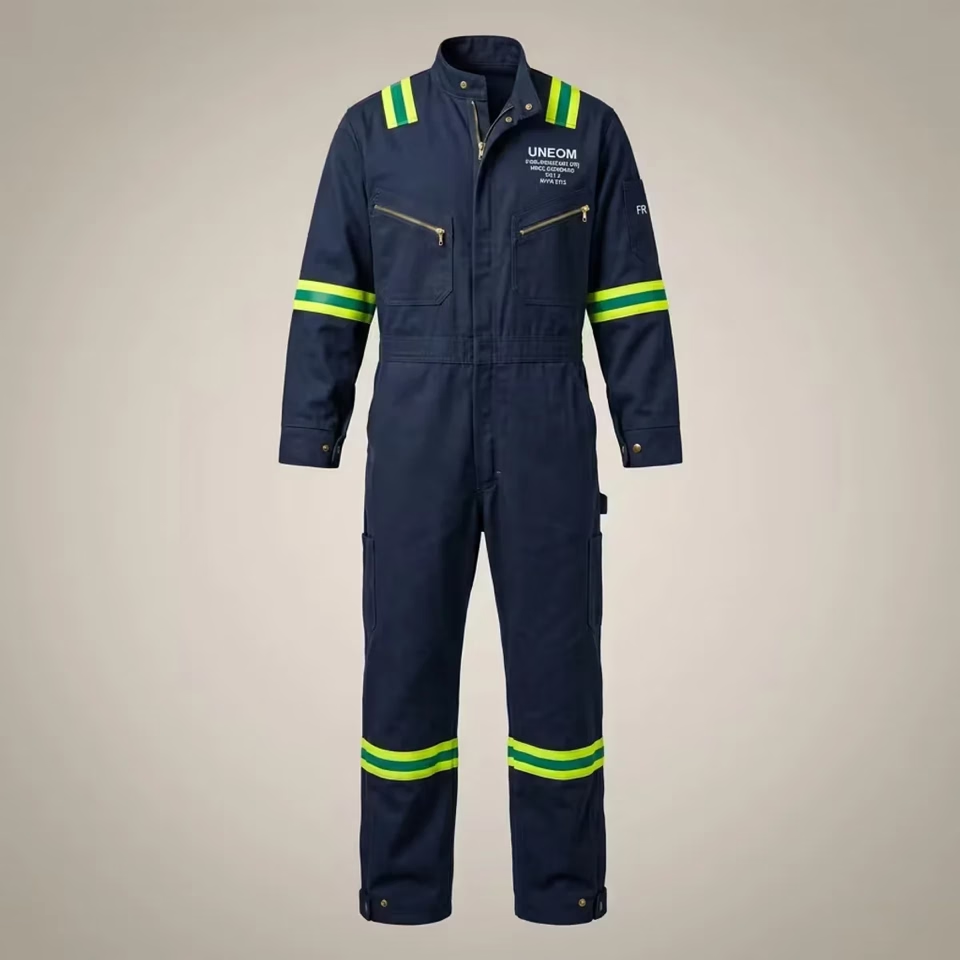
Most burns arrive through openings, not through fabric. Spatter follows gravity and geometry: it rolls down a collar left open, drops into an upturned trouser cuff, lands in a patch pocket and stays there. So the detailing matters as much as the cloth. Collars should stand and close at the throat, with the welding helmet and a flame-resistant hood or neck cover taking the gap between helmet and shoulders. Sleeves must be long enough to overlap gauntlet gloves with the arm raised, not just at rest, and cuffs should close snugly without turn-ups. Front closures need a covering flap over the fastening so no metal fastener touches skin and nothing lodges in the placket. Pockets should be flapped or omitted on the front; open top-entry pockets are spark traps. Trousers go over the boot, never tucked in, with spats or gaiters where deposition is heavy. Finally, boots need lace protection and heat-resistant soles. None of this is exotic; it is simply the difference between a garment that fits the work and one that merely passes a test.
Heat, Inspection and Retirement
Saudi conditions add a second problem on top of the first: the same garment that stops spatter also traps heat, and outdoor summer work in the Kingdom pushes welders toward heat strain long before the shift ends. The answer is programme design, not thinner fabric — scheduling hot work into cooler hours, enforced work-rest cycles, shaded recovery areas, hydration, and cooling accessories worn under, not instead of, the protective layer. Inspection discipline closes the loop. Welding clothing is consumable: burn holes, charred or stiffened areas, thinning at shoulders and knees, broken stitching, failed closures and, most dangerous of all, oil, grease or solvent contamination all mean the garment is no longer doing its job, because contamination can carry flame across fabric that would otherwise self-extinguish. Inspect before each shift, retire on damage rather than on calendar date alone, and never repair with ordinary thread or non-matching patches. UNEOM has manufactured workwear inside Saudi Arabia since 2013 and operates under ISO 9001:2015 and OEKO-TEX Standard 100, which supports consistent replacement supply and sizing continuity across a welding programme.
Frequently asked
- Why can't welders wear polyester or nylon workwear?
- Thermoplastic fibres melt rather than char. Molten spatter can fuse them to skin, deepening the injury and complicating first aid. The rule extends to base layers, sewing thread, tapes and elastic. Specify no meltable fibres in the garment and in anything worn underneath, then verify trim and thread on every sample you receive.
- Is leather better than flame-retardant cotton for welding jackets?
- Neither is universally better. Leather handles heavy spatter and abrasion but is hot, heavy and slow to dry. Treated cotton is more comfortable and breathable, though its finish has a limited wash life. Many sites combine them: a flame-resistant coverall as the base garment with leather sleeves or an apron added for heavy deposition work.
- Which standard covers welding protective clothing?
- Clothing for welding and allied processes falls under the EN ISO 11611 standard family. It defines how garments are tested and classified, but it does not tell you which classification your welders need; that comes from your site risk assessment and process description. Ask the supplier for certification documents and read the garment marking before you award.
- When should a welding jacket be replaced?
- Retire on condition, not on a fixed calendar date. Burn holes, charring, stiffened or thinned areas, broken seams, failed closures and oil or solvent contamination all end a garment's service life; contamination is especially dangerous because it can carry flame across fabric that would otherwise self-extinguish. Inspect before each shift and never patch with ordinary thread.
- How do we protect welders without causing heat stress in Saudi summers?
- Do not thin the protection. Manage the exposure instead: schedule hot work in cooler hours, run enforced work-rest cycles with shaded recovery areas, provide hydration and electrolytes, and allow cooling accessories worn under the protective layer. Correct sizing and lighter inherent fabrics help, but administrative controls carry most of the load.