Pharmacy Staff Uniform Chain Programmes: The Saudi Multi-Branch Playbook
How Saudi pharmacy chains build a uniform programme that separates pharmacist from retail staff, survives frequent washing, and keeps one brand shade consistent across every branch.

Pharmacy chains dress two workforces in one space: clinical staff whose authority customers rely on, and retail staff who sell. A uniform programme has to separate those roles visibly, survive constant laundering, hold one exact brand shade across every branch, and reorder fast enough that a new hire is never out of uniform.
A Hybrid Retail Floor
A pharmacy branch is two businesses sharing one floor. Behind the dispensing counter the work is clinical: prescriptions, patient questions, and counselling that people take seriously because they assume the person answering is qualified. In front of it the work is retail: skincare, baby formula, vitamins, seasonal displays and queue management at the till. Uniform decisions that treat the branch as purely clinical produce a cold, unwelcoming shop floor; decisions that treat it as pure retail quietly erode the authority customers depend on when they ask a real question about a medicine. The workable answer is one visual system with deliberate internal contrast: a single palette, a single construction standard and a single supplier discipline, but visibly different garments for visibly different roles. That balance is a procurement and operations question long before it is a design question, because sizing, laundering, reordering and branch consistency all depend on how many distinct garment types you commit to at the start. Fewer, tightly specified items almost always outperform a wide catalogue.
Who Is the Pharmacist?
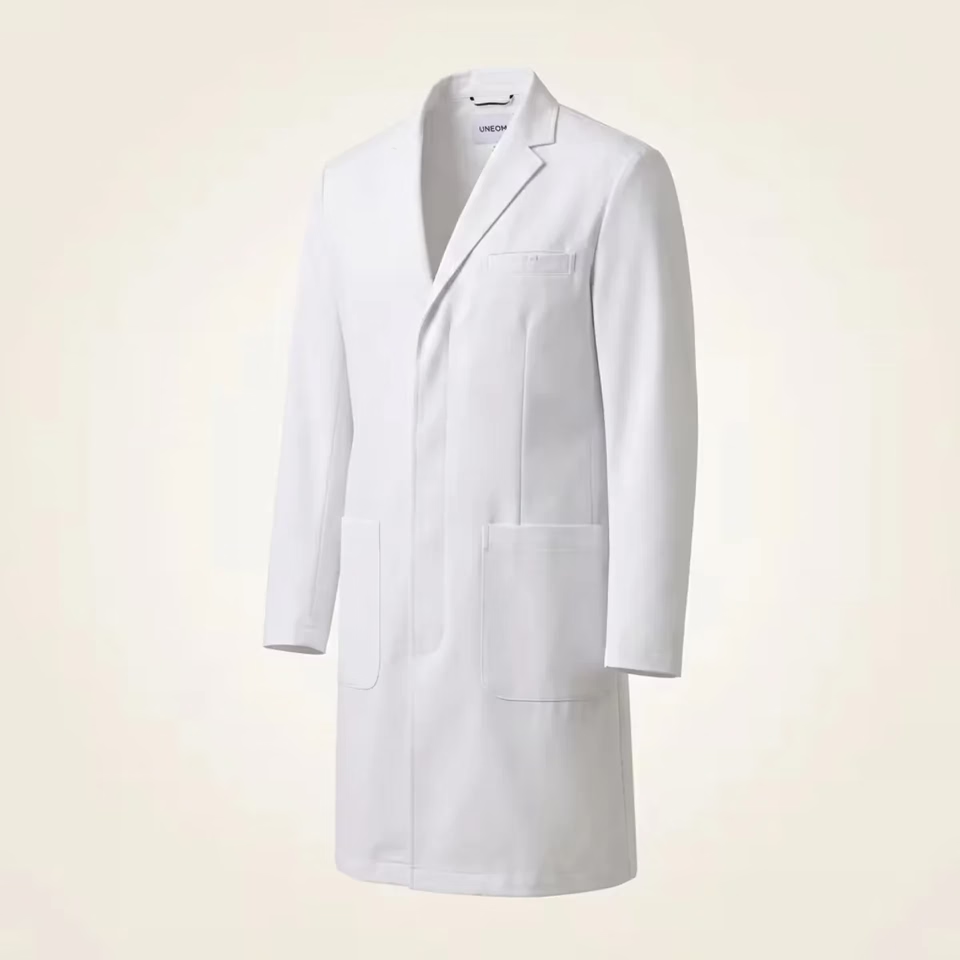
The single most useful thing a uniform does in a pharmacy chain is answer a question the customer is often too polite to ask: who here is the pharmacist? The white or off-white coat still carries that signal more efficiently than any badge, which is why it should be reserved rather than distributed. When beauty advisors, cashiers and stock staff all appear in coats, the coat stops meaning anything and the pharmacist loses a quiet professional advantage. A clean hierarchy usually works best: the pharmacist in a tailored coat over branded workwear; the pharmacy technician or assistant in the same base garments without the coat, or with a shorter one in a different shade; and retail and till staff in a polo, tunic or shirt built from the brand palette. Name and role badges should be legible at counter distance and in both Arabic and English, and the role line matters more than the font. Write the hierarchy into policy so a branch manager cannot improvise it.
Built for the Wash
Pharmacy garments are laundered hard and often, usually at home by the wearer rather than in a controlled industrial plant, and that single fact should drive the fabric specification. White and pale garments are the most exposed: they yellow, they grey, they pick up ink from a pocket pen, foundation from a tester counter, coffee from the back room, and they show every one of those marks. Polyester-rich blends hold shape, resist shrinkage and dry quickly; higher cotton content feels better against the skin and breathes more comfortably but creases and loses crispness sooner. A blended poplin or twill with a soil-release finish is the usual compromise for coats and shirts, and a knit with good pilling resistance for polos. Rather than trusting a marketing claim, agree acceptance levels for colourfastness to washing, dimensional change and pilling with your supplier in writing, referenced to the recognised test methods, and ask for a wash trial on the actual production fabric before the first bulk order. Then print a simple care card and issue it with every garment.
One Shade, Every Branch
Chain identity lives or dies on colour consistency, and colour is where multi-branch programmes fail most often. Fabric is dyed in lots; two lots of the same nominal shade can differ enough that staff standing side by side look mismatched, and the drift becomes obvious when a branch opened last year sits next to one kitted out this month. Sun exposure through a shopfront window accelerates the problem on the garments people wear most. Control it structurally: define each brand colour against a physical reference swatch held by both sides rather than a screen value alone, buy in consolidated runs so a whole rollout comes from as few dye lots as possible, keep a sealed master sample, and re-approve shade before every repeat production. Splitting the same uniform across several suppliers to save on a line item almost guarantees visible variation. UNEOM has manufactured inside the Kingdom since 2013 under an ISO 9001:2015 quality management system, and that documented repeatability is precisely what a chain is buying when it orders the same shirt three years apart.
Modesty, Heat and the Mixed Floor
Saudi pharmacy floors are mixed workplaces shaped by localisation of retail roles, with women working in both retail and dispensing positions, which makes modest cut a functional specification rather than an afterthought. That means full-length sleeves that stay put while reaching to a high shelf, longer tunic and coat lengths, relaxed rather than clinging through the hip, closures and necklines that sit correctly when a woman bends to a low drawer, and colours and weights that work over or under a layer without shadowing. Hijab-compatible collars and a matching scarf option in the brand palette are simple additions that prevent staff improvising with whatever they own. Climate adds a second layer: the branch itself is air-conditioned, sometimes aggressively, but the commute and the walk across a car park in a Riyadh or Jeddah summer are not, so breathable base layers and a light second layer beat one heavy garment. Sleeve behaviour at the hand-hygiene sink is a real consideration too; set it against your own facility policy rather than assuming a hospital rule applies unchanged in retail.
Running It Across Every Branch
A multi-branch pharmacy uniform programme is a logistics product, not a purchase. The parts that decide whether it survives year two are unglamorous: a fixed, coded catalogue where every garment, colour and size has one part number used identically by head office, the warehouse and the branch; a sizing set circulated for physical fitting before the first order, because label sizes mean different things to different wearers; and a documented size curve per role that you refine from actual issue data rather than guesswork. Hold buffer stock in the fastest-moving sizes so a new hire is in uniform on day one instead of week three, and set a written replacement cycle so worn coats leave the floor before a customer notices them. Agree reorder lead times in the contract, separating stocked repeats from new production, and name one owner per region for approvals. For skin-contact garments worn all day, OEKO-TEX Standard 100 certification gives procurement a documented assurance on tested substances, which is worth specifying once and applying to every line in the catalogue.
Frequently asked
- Should every pharmacy employee wear a white coat?
- No. The coat works because it is restricted. When retail assistants, cashiers and stock staff also wear coats, customers lose the fastest way to identify the pharmacist. Reserve the coat for pharmacists and, if you choose, a distinct shorter or differently shaded version for technicians. Everyone else wears branded retail workwear from the same palette.
- How do we stop branch-to-branch colour differences?
- Work from a physical reference swatch approved by both sides, not a screen colour. Consolidate orders so a rollout draws on as few dye lots as possible, keep a sealed master sample at head office, and require shade approval against it before every repeat run. Using one manufacturer for the whole programme matters more than any single specification.
- What fabric suits garments washed several times a week?
- A polyester-rich blend usually wins on shape retention, drying speed and dimensional stability, while more cotton improves comfort and breathability but creases sooner. Coats and shirts commonly use a blended poplin or twill with a soil-release finish; polos need knit with good pilling resistance. Agree wash, shade and shrinkage acceptance levels with your supplier in writing beforehand.
- How many pharmacy branch uniform sets does each role need?
- Base it on wash frequency and shift pattern rather than a fixed rule. Staff who work most days typically need enough sets to keep one in wear, one in the wash and one in reserve, plus a spare coat for client-facing roles. Set the entitlement per role in policy, then adjust from real replacement and laundering behaviour.
- How should we handle uniforms for women on the pharmacy floor?
- Specify modest cut as a requirement, not an option: longer coat and tunic lengths, full sleeves that stay in place when reaching, relaxed fit through the hip, secure closures, and an optional matching scarf in the brand palette. Offering a proper female block, rather than a smaller men's pattern, is what actually delivers fit and comfort.