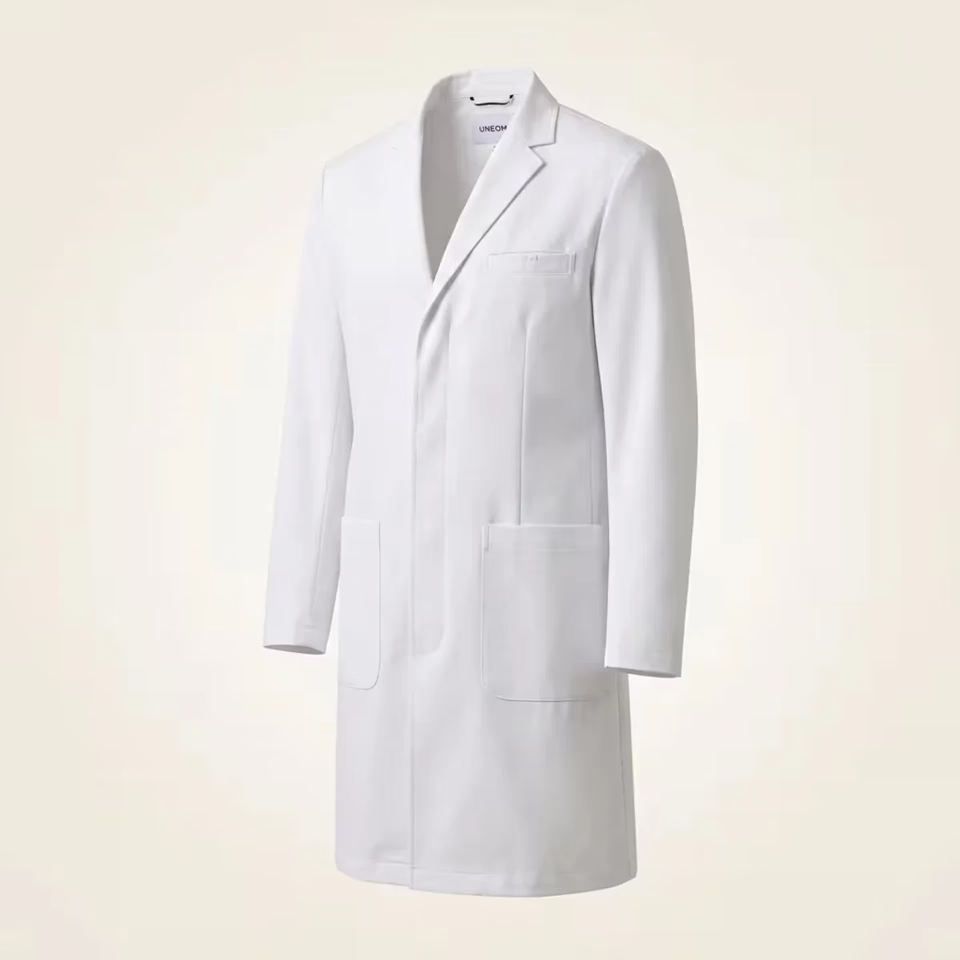
Hospital Patient Gown Supplier in Saudi Arabia: Dignity, Modesty and Laundry Economics
How Saudi hospitals specify patient gowns that protect dignity and modesty, allow clinical access, fit every patient, and survive the laundry loop, reusable or disposable.
A patient gown is worn at a moment when a person controls little else. Get it wrong and you create exposure, complaints and avoidable distress; get it right and it disappears quietly into good care. This guide sets out how Saudi hospitals specify gowns for dignity, clinical access, inclusive sizing and a laundry loop that holds.
Dignity Comes First
A patient gown is the only garment many people wear on the worst day of their year, and they wear it in front of strangers. That makes it a dignity garment before it is a linen line item. The questions that matter most are the ones patients ask silently: does it close at the back, does it stay closed on the walk to radiology, can anyone see through it under ward lighting, and does it open when I sit up. A gown that fails any of these turns an ordinary transfer into an ordeal, and it generates complaints that land in the quality department rather than the laundry. When procurement teams ask us how to choose a hospital patient gown supplier in Saudi Arabia, we suggest they start by having a member of the nursing team walk a corridor in the gown. Ten minutes of that reorders a specification faster than any tender document. Coverage, opacity and secure closure are not comfort extras; they are the clinical experience.
Modesty on the Saudi Ward
Modesty expectations in Saudi hospitals are not an addition to the specification; they shape it from the first sketch. Wards are visited by family, corridors are shared, and many patients, women and men alike, expect coverage of the shoulders, upper arms and lower legs that a classic open-back gown simply does not give. The practical answers are well established: a wrap gown that overlaps at the back instead of gapping, a two-piece top and trouser set, longer sleeves and a longer hem, a second gown worn as a robe, and a head covering offered within the programme rather than improvised from a bedsheet. A modest patient gown also has to work when a patient sits, transfers to a wheelchair or prays, because those are the moments when a poor cut betrays them. None of this requires giving up clinical access, and the common error is treating modesty and access as opposites. Ask patients and nursing staff what they cover with towels today; every towel on the bed is a specification defect you can design out.
Access Without Exposure
The counter-argument to fuller coverage is always speed of access, and it deserves an engineering answer rather than a slogan. Design solves most of it. Openings along the shoulder seam let a cannula, telemetry leads or a blood pressure cuff reach the arm without lifting the hem. Side overlaps open the chest and abdomen with the patient seated. Front-opening styles matter in maternity and breastfeeding, and dialysis, oncology and cardiology each have a recurring access point the charge nurse can name in seconds. Fastening choice carries consequences: ties are inexpensive, laundry-tolerant and endlessly re-knotted by patients, snaps are quicker for staff and kinder to weak hands, and metal components raise questions in imaging areas that radiology should settle before you standardise. The efficient route is two or three styles for the whole hospital rather than a different garment per department, with each unit choosing from that short menu. Clinicians accept a limited menu when they helped write it.
Sizing for Every Patient
Nothing undermines a patient gown programme faster than a single universal size. A garment cut for the average adult leaves a small, frail patient swimming in fabric that catches in wheels and doorways, and leaves a larger patient with a closure that will not meet, which is the one failure that guarantees exposure. Inclusive sizing is therefore a dignity control, not a merchandising nicety. A workable range runs from small through extended bariatric sizes, adds paediatric and adolescent options where those services exist, and grades length as well as girth so tall patients are not left short at the hem. Neck openings, armholes and tie positions have to move with the size rather than staying fixed. In practice, review admission data with your nursing directors, agree the size ratio you will genuinely stock, mark extended sizes clearly so they are found at three in the morning, and hold a buffer of the largest sizes in every ward store rather than centrally alone.
Reusable or Disposable
The reusable versus disposable gown question is usually asked as a price comparison and almost never answered as one. A single-use gown is bought once and discarded once, so its cost sits entirely in purchasing and waste handling. A reusable gown is bought once and paid for repeatedly through washing, drying, pressing, transport, inspection, repair and the replacement of items that never come back. Comparing them honestly means building a cost per patient episode from your own laundry contract, your own waste tariffs and your own observed replacement rate, not from a brochure and not from figures published for a health system with different labour and utility costs. Beyond money, the deciding factors are laundry capacity and turnaround, isolation and outbreak protocols, storage space, sustainability commitments under Vision 2030, and supply-chain resilience, which has become a far more prominent criterion since recent global disruptions. Most Saudi hospitals land on a hybrid: reusable as the ward default, single-use reserved for defined clinical and outbreak situations.
The Laundry Loop and Loss
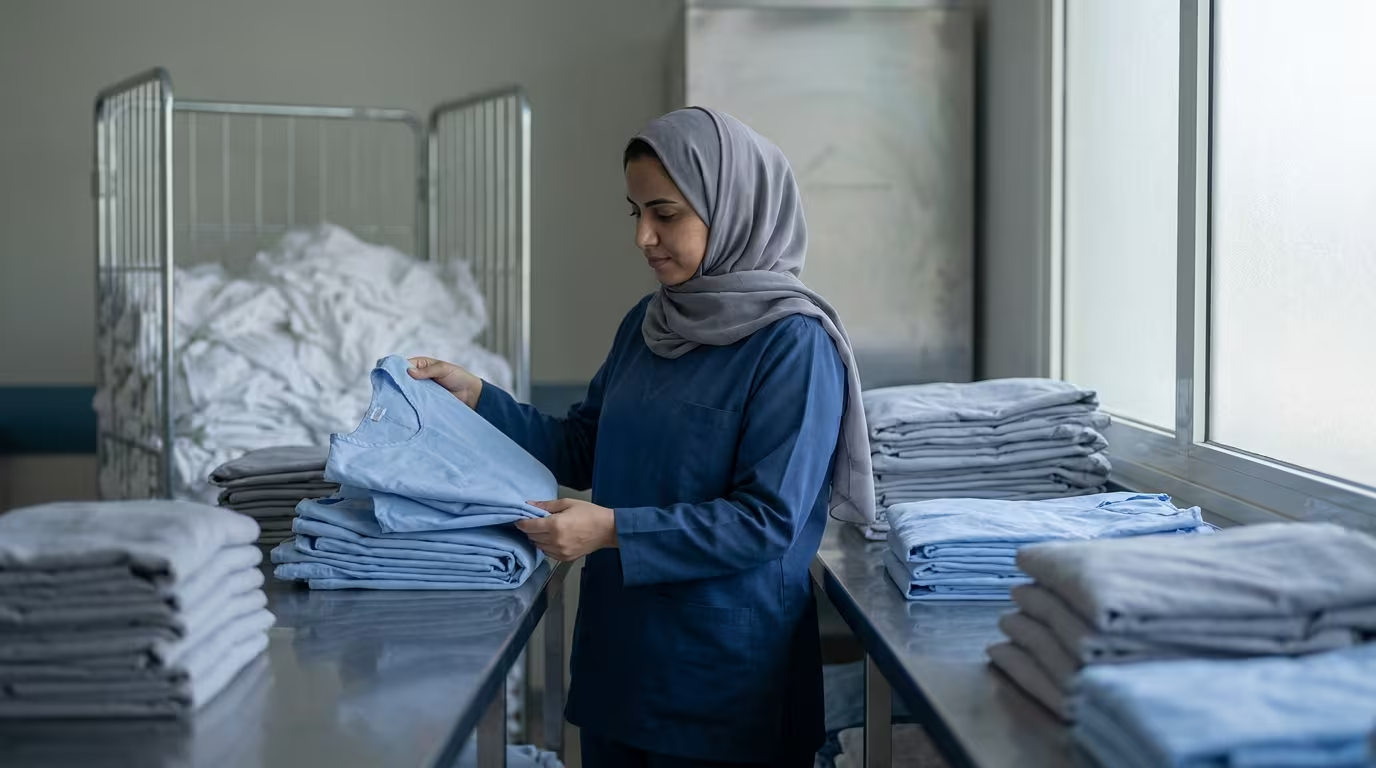
Every reusable gown lives in a loop, ward to soiled linen to laundry to store and back, and the programme's real cost is decided by how many complete it. Fabric choice sets the ceiling: polyester-rich blends hold colour and shape through repeated industrial washing and hot drying, while higher cotton content gives a softer hand and better absorbency at the cost of shrinkage and slower drying. Construction decides the rest, because gowns are rarely retired for worn cloth; they are retired for a torn tie, a stretched neckline or a snap that has pulled through the fabric. Losses concentrate at predictable points: gowns leaving with discharged patients, gowns used as blankets or cleaning cloths, ward hoarding against shortage, and stock nobody is accountable for counting. Fix the count first: par levels per ward, a named owner, and a regular reconciliation of issued against returned. UNEOM has manufactured in Saudi Arabia since 2013 under ISO 9001:2015, using OEKO-TEX Standard 100 certified fabrics for skin-contact garments; we would rather specify a gown that survives the loop than one that photographs well.
Frequently asked
- What should a hospital patient gown supplier in Saudi Arabia be able to show us?
- Ask for garments engineered for industrial laundering rather than retail, a documented quality management system, fabric certification suitable for direct skin contact, a full size range including extended sizes, and the ability to produce modest variants. Then ask for samples to be trialled on a real ward and washed in your own laundry before any volume commitment.
- What makes a patient gown modest without blocking care?
- Coverage that stays closed when the patient sits, walks or transfers: an overlapping back rather than an open one, or a two-piece top and trousers, with a longer sleeve and hem and an optional head covering. Access is preserved through shoulder and side openings, so clinicians reach the arm, chest or abdomen without lifting the whole garment.
- Is reusable or disposable better for our hospital?
- Neither is universally better. Build the comparison from your own laundry contract, waste tariffs and replacement experience, then weigh laundry capacity, isolation protocols, storage, sustainability commitments and supply-chain resilience. Most Saudi facilities settle on a hybrid: reusable as the ward default, single-use reserved for defined clinical and outbreak situations agreed with infection prevention and control.
- How do we stop losing gowns?
- Losses are rarely mysterious. Gowns leave with discharged patients, get used as blankets or cleaning cloths, and pile up in ward cupboards as insurance against shortage. Set par levels per ward, name an owner for each store, reconcile issued against returned on a fixed cycle, and remove the shortage that drives hoarding in the first place.
- What sizes should a patient gown programme carry?
- A range wide enough that no patient is left uncovered: small through extended bariatric sizes, plus paediatric options where those services run, with length graded alongside girth. Agree the stock ratio with nursing directors from your own admission profile, mark extended sizes clearly, and keep a buffer of the largest sizes in every ward.