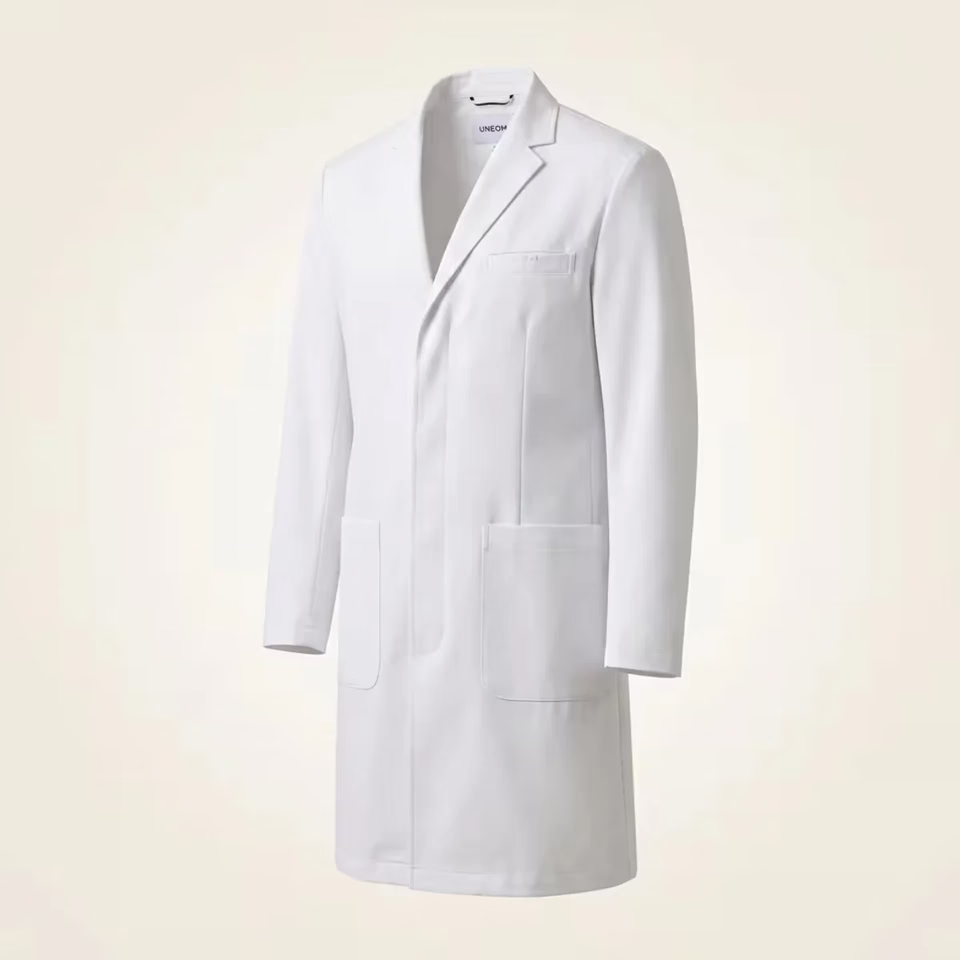
Lab Coat vs Scrub Jacket Difference: Which Layer Fits Which Role
A breakdown of the lab coat versus scrub jacket difference: coverage, length, clinical versus laboratory use, warmth in cold departments, and which Saudi roles need which layer.

Lab coats and scrub jackets are not interchangeable, and the difference is functional rather than cosmetic. One is a barrier layer built to be removed; the other is a comfort layer built to be worn. This guide sorts the two by coverage, department, warmth and removal habits, so each role gets the right one.
Two Layers, Two Jobs
A lab coat and a scrub jacket look like variations on the same idea, which is exactly why procurement teams keep ordering the wrong one. They answer different questions. A lab coat is a barrier layer: it puts something removable between the wearer's own clothes and whatever the environment throws at them, which is why it runs long, closes at the front and covers the forearm. A scrub jacket is a comfort layer worn over scrubs: it adds warmth and a little extra coverage inside an area that is already controlled, which is why it stops at the hip, opens quickly and is cut to move. Framed that way, most of the confusion clears. The useful question is never which garment is better; it is what the wearer is being separated from, and whether that layer is expected to come off quickly, travel a particular laundry route, or simply keep someone warm through a long shift. Role, zone and removal habits decide it, not personal preference.
Coverage and Cut
The physical differences are easy to read once you know what to look for. A lab coat is longer, usually reaching the thigh or below, with full sleeves, a front closure and a cut generous enough to sit over regular clothing rather than replace it. That length is the point: it shields the trousers and the front of the body, the two surfaces most likely to meet a bench edge, a splash or a trolley. A scrub jacket is short, typically ending near the hip, and is designed to sit over a scrub top without adding bulk under the arms or catching on equipment. Closures differ too: snaps and zips on scrub jackets favour speed, while lab coats more often use buttons and, in some specifications, a closure style chosen so the coat can be shed without pulling it over the head. Pockets follow function as well, with the lab coat carrying deeper patch pockets for reference material and the scrub jacket carrying only what a clinician needs to reach in seconds.
Bench Work vs Bedside Work
The clearest sorting rule is where the work happens. Laboratory and laboratory-adjacent roles, from pathology and biochemistry to microbiology sections, factory quality control and university teaching labs, are the natural home of the lab coat, because the risk being managed is contact with substances the wearer does not want on their own clothes. Bedside and ward roles, where the base uniform is already a scrub set laundered on a defined cycle, do not need a coat to protect street clothing, because there is no street clothing underneath. What those roles need is warmth and coverage between tasks, which is the scrub jacket's job. Mixed roles complicate this, and Saudi facilities have many of them: a pharmacist moving between a compounding area and a counter, an infection prevention nurse crossing zones all day, a biomedical technician entering both plant rooms and wards. For these, the honest answer is that the facility's own zoning and dress policy decides, and the uniform programme should follow that document rather than argue with it.
Warmth in Cold Departments
In the Kingdom, the layering problem is inverted. Outdoors, a summer afternoon in Riyadh or Jubail is punishing, yet indoors the same staff spend long shifts in operating theatres, imaging suites, pharmacy clean areas and control rooms that are deliberately kept cold. That contrast is why the scrub jacket earns its place: it is the fastest way to add insulation over a thin scrub top without changing the base uniform or its laundry route. A lab coat can also add warmth, but it was not designed for it, and using a long barrier coat as a cardigan tends to create the wrong habits: staff keep it on into areas where it should have been removed, and it drifts out of its intended zone. Fabric weight matters more than the label here: a heavier knit or a brushed inner face traps more air and holds warmth, while a thin, light jacket will do little, whatever it is called. Specify the warmth you actually want, then choose the garment.
Removal, Laundry and Policy
The most consequential difference is not the garment at all; it is what the facility expects the wearer to do with it. Outer layers are commonly treated as removable, with rules about where they come off, where they are stored and how they are laundered, and those rules vary between hospitals, laboratories, and industrial and academic sites. We do not publish thresholds or requirements here, because the only correct source is your own infection prevention and control policy, your dress code and, where relevant, the risk assessment for the specific area. What a uniform programme can do is make compliance physically easy: closures that open in one movement, a cut that comes off without contaminating the face or hair, colours that make a stray layer visible in the wrong corridor, and enough garments in circulation that nobody is tempted to keep wearing yesterday's. Ask the laundry question before you order: industrial wash, on-site wash or home wash changes the fabric you should specify, and a garment that survives one route may not survive another.
Specifying Both in One Programme
Most Saudi employers end up buying both, and the programme works best when they are specified as one system rather than two purchases. Start from a role map: who is at a bench, who is at a bedside, who crosses zones, who sits in a cold room all shift. Then settle the shared decisions once: sizing that includes a full women's block rather than scaled-down men's patterns, sleeve and length options that respect modesty preferences without creating a separate garment, colour coding that identifies departments at a glance, and fabric that behaves the same in both layers so the outfit does not look assembled from two suppliers. Wear-test with real staff in the real department before committing volume; a jacket that feels fine in a showroom can feel wrong after a full shift in a chilled theatre. UNEOM has manufactured professional uniforms inside the Kingdom since 2013, works to ISO 9001:2015 and offers fabrics certified to OEKO-TEX Standard 100, which matters most when the same programme has to repeat consistently across intakes and sites.
Frequently asked
- What is the main difference between a lab coat and a scrub jacket?
- Purpose and coverage. A lab coat is a long barrier layer worn over clothing, closing at the front and covering the thigh and forearm, intended to be removed and laundered on a defined route. A scrub jacket is a short comfort layer worn over scrubs, mainly for warmth and light extra coverage inside a controlled area.
- When should staff wear a lab coat instead of a scrub jacket?
- Generally when the work is bench-based rather than bedside: laboratory sections, sample handling, compounding areas, quality control and teaching labs, where the layer exists to keep substances off personal clothing. If the role sits inside a clinical zone where scrubs are already the base uniform, a jacket usually makes more sense. Your facility dress policy is the deciding authority.
- Can a scrub jacket replace a lab coat?
- Not as a barrier. A hip-length jacket leaves the trousers and lower body uncovered and is not intended to sit between the wearer and a bench task. It can replace a lab coat that was only ever being used for warmth, which is a common and avoidable misuse. Check the area's risk assessment before substituting.
- Which is better for cold hospital departments in Saudi Arabia?
- For warmth alone, the scrub jacket, because it is built to insulate over a thin scrub top without disturbing the base uniform or its laundry cycle. Look at fabric weight and inner face rather than the garment name, since a thin, light jacket adds very little warmth. Many chilled theatres and imaging suites need a genuinely warmer knit.
- Do staff need to remove the outer layer when leaving a clinical area?
- Often yes, but the rule is set by your facility, not by the garment. Infection prevention and control policies, departmental dress codes and area risk assessments define where an outer layer comes off, where it is stored and how it is laundered. Specify garments that make that rule easy to follow, then train to the written policy.