How to Wash FR Coveralls Without Quietly Destroying Their Protection
FR coveralls rarely fail visibly. Learn how laundering choices, softeners, bleach and residual grease erode flame resistance, and how Saudi programs protect it.
Flame-resistant coveralls almost never announce their own failure. A garment can look serviceable, fit correctly and still have lost the protection it was bought for. Understanding how to wash FR coveralls — and who washes them — is a safety control, not a housekeeping detail, and it belongs inside your written program.
Protection That Fails Silently
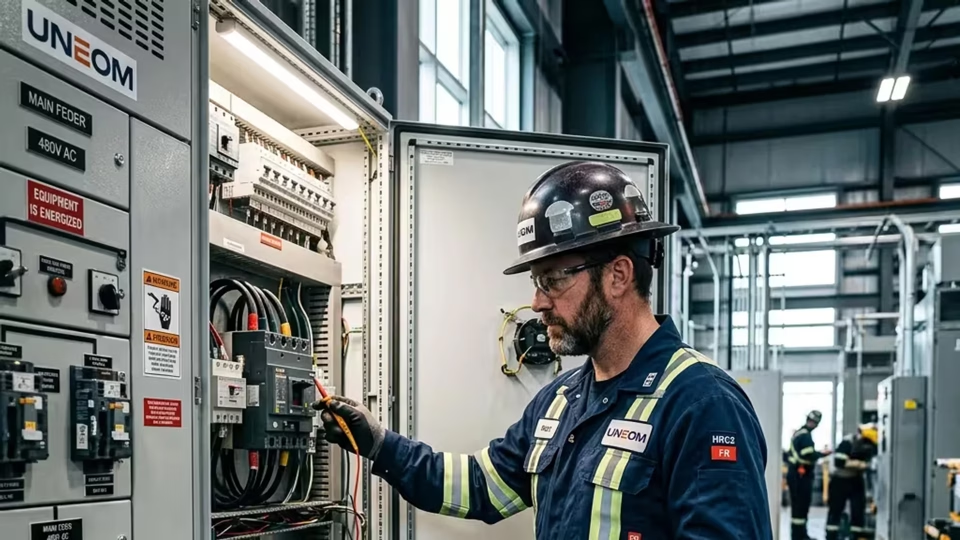
The defining hazard of flame-resistant workwear is that its degradation is invisible. A worn cotton shirt announces itself through thinning fabric and split seams; a compromised FR coverall may look, feel and drape exactly as it did on day one while no longer performing as designed in a flash fire or arc event. Nothing about the garment's appearance reports the state of its chemistry or the condition of the fibre itself. This is why laundering deserves the same procedural discipline your organisation applies to gas detectors or fall-arrest harnesses. In practice, most FR programs in Saudi industrial settings fail not through a single dramatic mistake but through accumulated small ones: a supervisor authorising home washing during a shutdown, a camp laundry adding softener as a courtesy, a garment returning to service with fuel residue that was never fully removed. Each choice is defensible in isolation and corrosive in aggregate. The remedy is to treat the care label and the manufacturer's written instructions as controlling documents, and to write laundering into the program rather than leaving it to habit.
Inherent Versus Treated Fabrics
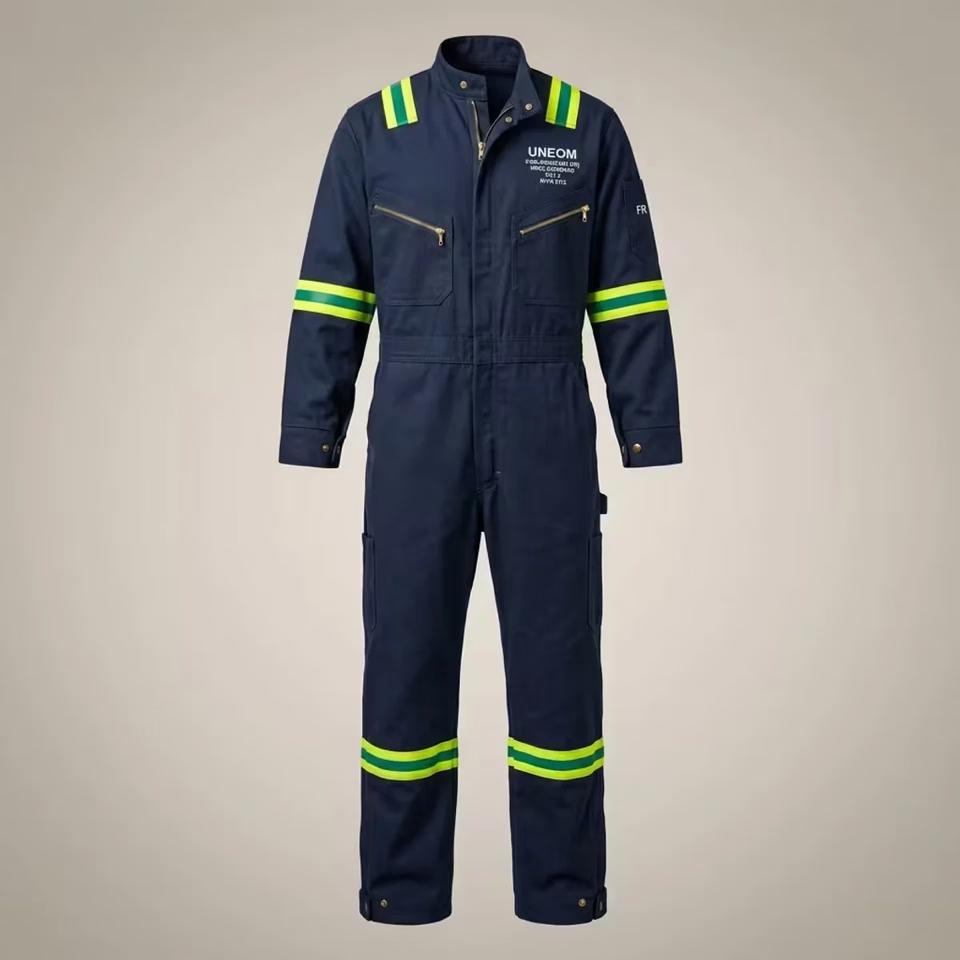
Flame resistance reaches a garment by one of two routes, and the distinction governs everything about how it should be laundered. In inherently flame-resistant fabrics, the property belongs to the polymer chemistry of the fibre itself; it is not applied to the surface and cannot be rinsed away, though the fabric can still be damaged by abrasion, ultraviolet exposure, unsuitable chemistry and heat. In treated fabrics, typically cellulosics such as cotton, a flame-retardant chemistry is bonded to the fibre during finishing; the protection is real and durable when the fabric is cared for as specified, but it exists in a relationship with the fibre that inappropriate washing chemistry can disturb. Buyers frequently assume that paying more for inherent fabric buys immunity from laundering error. It does not. What it changes is the failure mode and the margin for error. Every FR program should record which construction each garment uses, because the answer determines which washing chemistry is acceptable, and that answer comes from the manufacturer, not from general practice.
Softeners, Bleach and the Chemistry Problem
Three categories of laundry chemistry cause most avoidable FR failures, and all three are ordinary products used with good intentions. Fabric softeners work by depositing a film on fibre surfaces; that film is itself combustible and can sit on top of a flame-resistant fabric, giving fire a medium to travel across regardless of what the fabric underneath is made of. Chlorine bleach and many oxidising bleaches attack both fibre integrity and, in treated fabrics, the flame-retardant chemistry itself. Alkaline or high-pH detergents and hard-water conditions can leave mineral and soap deposits that behave much the same way. The practical rule is simple: nothing goes into the wash that the garment manufacturer has not sanctioned, and the care label governs. Saudi water hardness varies considerably by region and source, which makes water treatment a genuine variable rather than a technicality, and it is worth raising directly with your laundry provider. Where a specific concentration, temperature or additive is in question, the manufacturer's written instructions and the care label are the authority, not industry folklore.
Contamination Is a Fuel Load
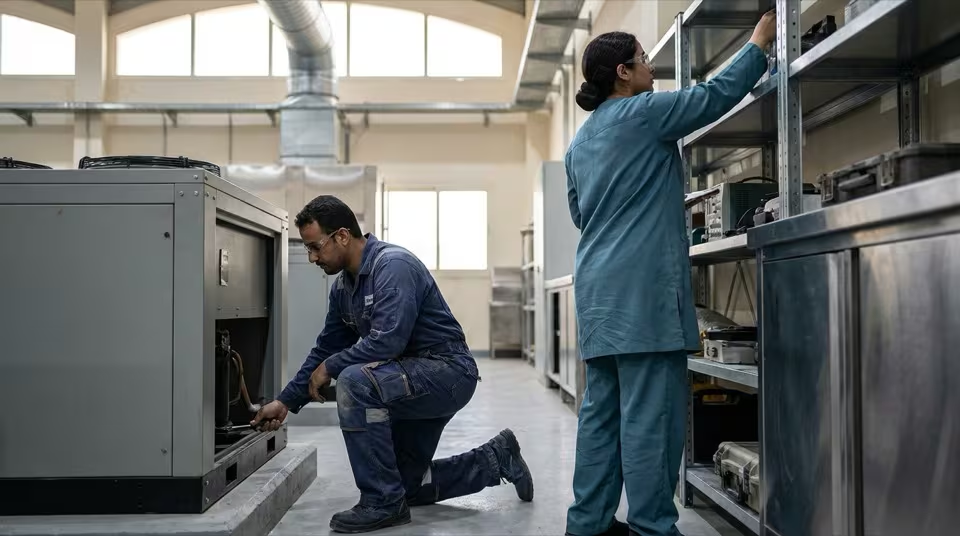
The most underestimated threat to FR performance is not the wash chemistry but what the wash fails to remove. Hydrocarbon contamination — diesel, crude, lubricating oils, hydraulic fluid, greases — is a fuel load carried on the worker's body. A coverall saturated with flammable residue will burn as that residue burns, and the fabric beneath it may never get the chance to demonstrate its flame resistance. In upstream and downstream operations across the Kingdom, this is the dominant real-world risk, and it is precisely the risk that domestic washing machines are least equipped to address. Removing bonded hydrocarbon from a heavy fabric requires mechanical action, correctly selected chemistry, adequate water volume and validated rinsing — a combination a home machine cannot deliver. Heavily contaminated garments should be segregated at the point of removal, never taken home, and never mixed into general laundry where they will redeposit soil onto other garments. If a garment cannot be brought back to a genuinely clean condition, cleaning is no longer the answer; retirement is.
Why Specialist Industrial Laundry Earns Its Place
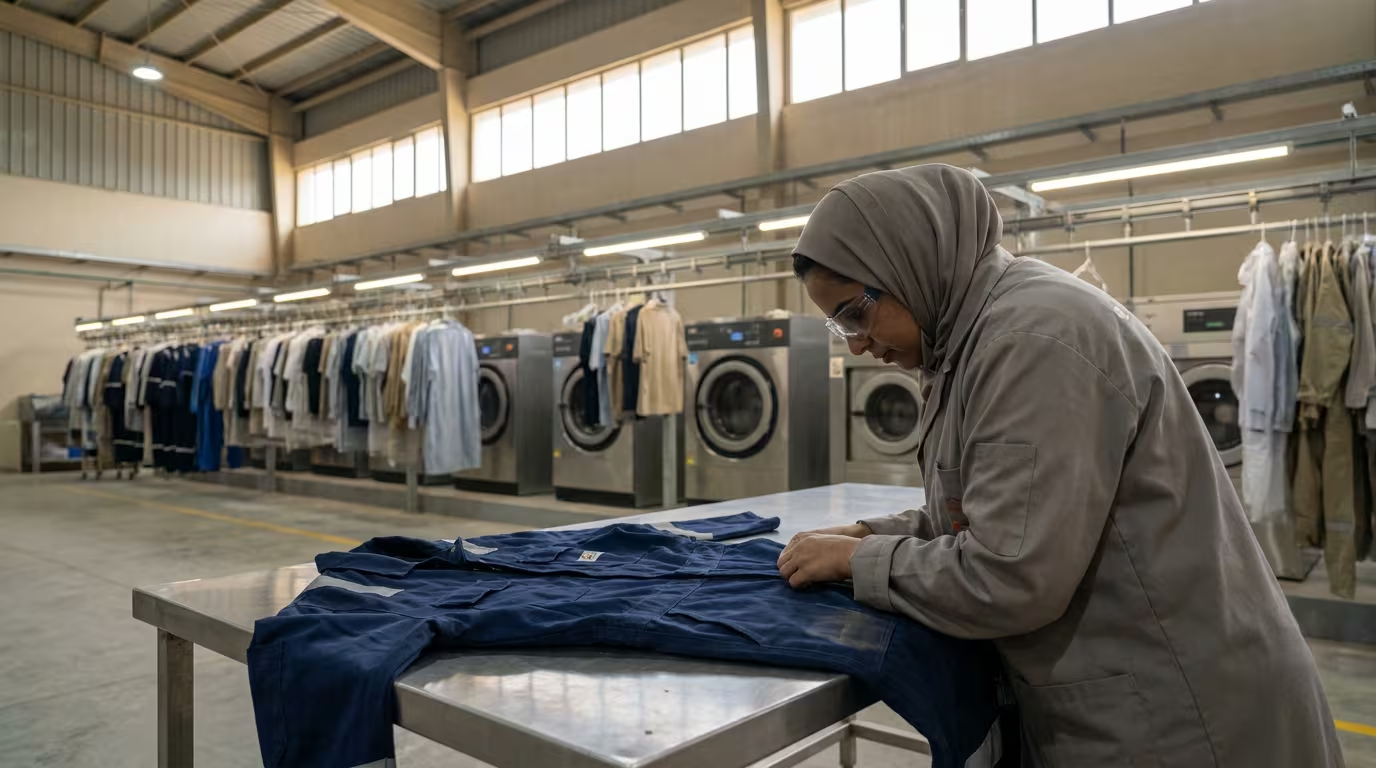
A qualified industrial laundry is not simply a larger washing machine. Its value lies in process control: documented formulas matched to fabric type, monitored water chemistry, calibrated dosing, controlled drying, and records that survive an audit. It also enforces separation, with FR garments processed apart from general workwear and contaminated loads handled without cross-transfer. For a Saudi employer this is also a governance question. When an incident is investigated, the ability to demonstrate that garments were maintained according to the manufacturer's instructions, by a provider working to a documented process, is materially different from asserting that workers were told to wash carefully. Select a provider by evidence rather than assurance: ask how formulas are set for each fabric construction you own, how deviations are detected, how contaminated garments are triaged, how repairs are handled and with what materials, and what happens when a garment fails inspection. Repair matters as much as washing, because patches, thread and closures must be compatible with the garment's protective system, and that specification comes from the manufacturer.
Inspection, Records and Retirement
Laundering discipline only works when paired with a routine that catches garments the wash cannot save. Build inspection into the laundry cycle rather than the worksite, so every garment is examined by someone trained to look for it: thinning or worn areas, holes, char, abrasion at knees and elbows, seam failure, damaged or missing closures, illegible care labels, and staining that suggests contamination survived the process. Any of these is grounds for removal from service, and none of them requires a measurement to justify. Give supervisors explicit authority to retire a garment without seeking approval, because a program that makes retirement bureaucratically expensive will quietly keep failed garments in circulation. Track garments individually or by cohort so wash cycles and issue dates are known, and set replacement planning against that data rather than against budget cycles. UNEOM manufactures workwear in Saudi Arabia and operates under ISO 9001:2015 and OEKO-TEX Standard 100, and we advise clients to build laundering, inspection and retirement into procurement from the outset, before the first garment is issued.
Frequently asked
- Can workers wash FR coveralls at home?
- It is strongly discouraged. Home machines cannot reliably remove hydrocarbon contamination, cannot control water chemistry, and expose garments to softeners and bleach kept in the household. There is also no record of what was done. Where the garment protects against a recognised fire or arc hazard, use a qualified industrial laundry and follow the manufacturer's instructions.
- Does fabric softener really damage flame resistance?
- Softeners deposit a combustible film on the fibre surface. That film can carry flame across the garment even when the fabric beneath it is genuinely flame resistant, and it may also mask soil during inspection. Softeners, dryer sheets and similar additives should be excluded from FR laundering entirely unless the garment manufacturer explicitly permits them.
- Do inherently FR garments need less careful laundering?
- No. Inherent fabrics cannot have their flame resistance rinsed out, which removes one failure mode, but they remain vulnerable to fibre damage, unsuitable chemistry, excessive heat and, most importantly, retained hydrocarbon contamination. The care requirements differ in detail, not in seriousness. Always follow the specific manufacturer's instructions for the fabric you actually own.
- How do we know when an FR coverall should be retired?
- Retire on evidence of damage rather than on age alone: holes, char, thinning or abraded areas, seam failure, damaged closures, an unreadable care label, or contamination that laundering did not remove. Inspect every garment each laundry cycle, and give supervisors clear authority to withdraw a garment immediately without waiting on an approval chain.
- What should we ask a laundry provider before signing?
- Ask how wash formulas are set for each fabric construction you own, how water chemistry is monitored and treated, how FR and contaminated loads are segregated, what happens when a garment fails inspection, and how repairs are performed and with which materials. Request samples of the records they can produce if an incident is ever investigated.