FR Coverall Buyer's Guide for Saudi Oil and Gas Sites
A procurement-grade guide to specifying flame-resistant coveralls for Saudi oil and gas: inherent versus treated fabrics, certification evidence, summer heat strain, fit and replacement planning.
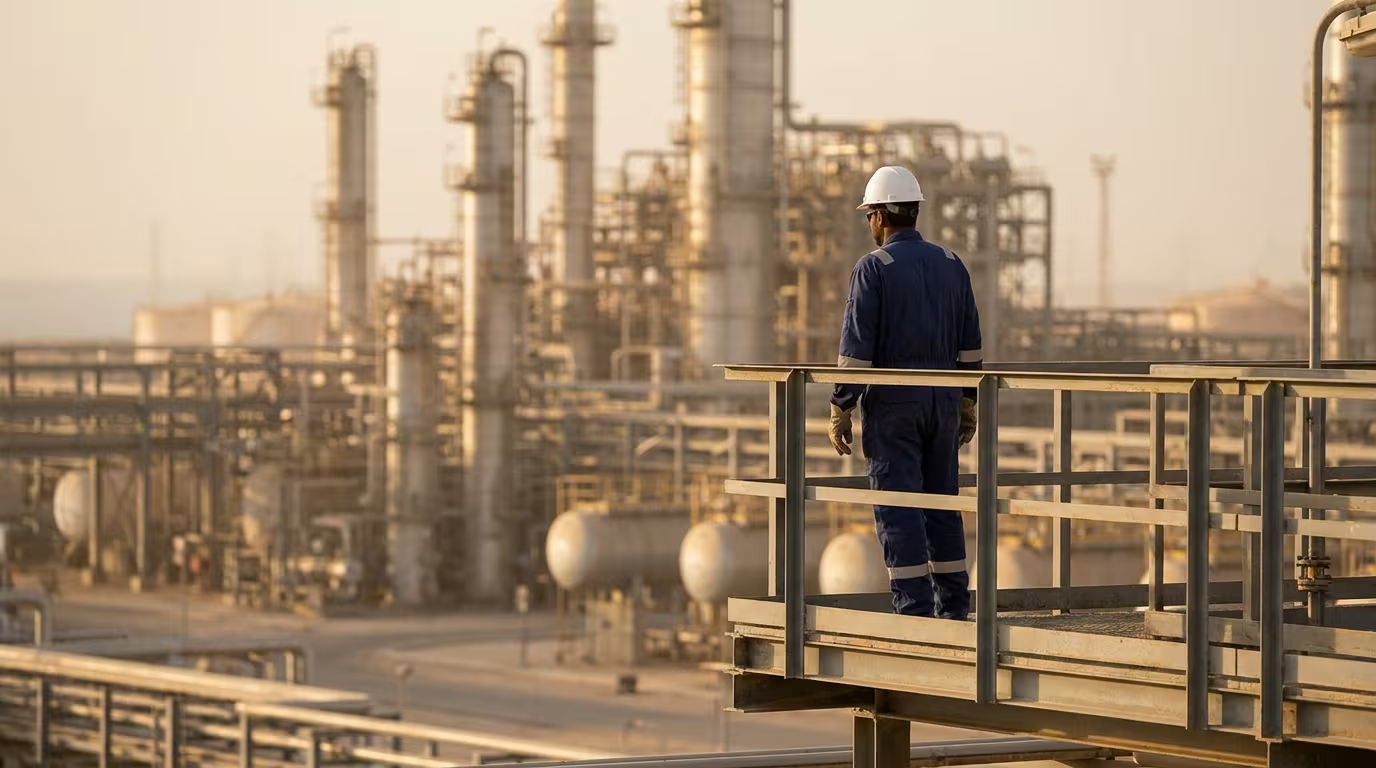
Buying flame-resistant coveralls for a Saudi oil and gas site is a programme decision, not a catalogue choice. The fabric route you pick shapes service life and laundering; the documents you demand shape accountability; and the fit, weight and replacement plan decide whether the garment is actually worn through a long Gulf summer shift.
Start with the hazard
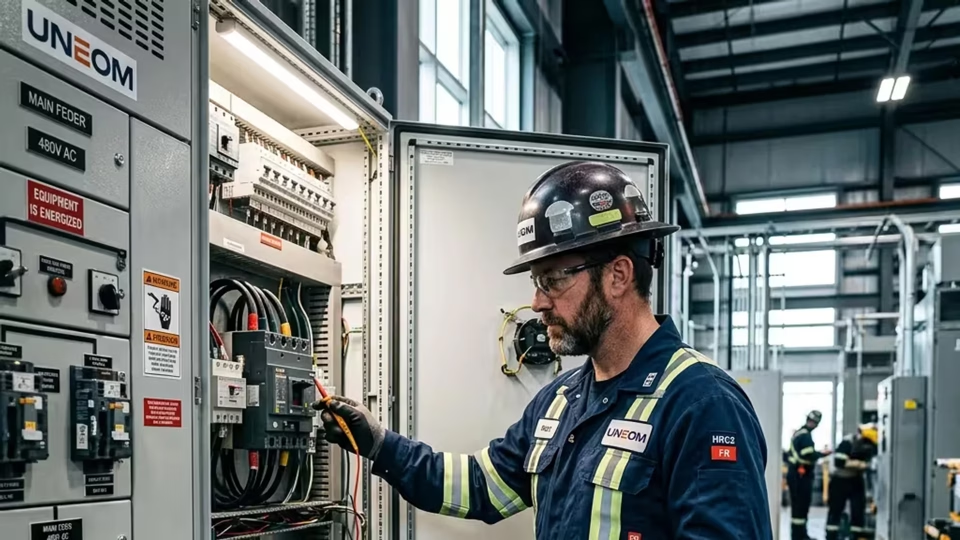
Most FR coverall programmes go wrong at the first step: the requisition names a garment before anyone has named the hazard. Flame-resistant clothing is not a single product class. A worker exposed to a short hydrocarbon flash fire, an operator near an electrical arc, a welder catching molten spatter and a warehouse driver who simply enters a restricted area all face different exposures, and each drives a different specification. Two standard families dominate the conversation in Saudi oil and gas: NFPA 2112 and EN ISO 11612. Treat them as families, not as a grade you can quote from memory. Which one applies, what performance level your contract demands, and how compliance must be evidenced are decisions that belong to your site hazard assessment, your HSE function and the client's contract specification, not to a catalogue page or a supplier's sales sheet. Write the hazard, the reference standard and the required evidence into the tender document before you compare fabrics, and every later argument about weight, price and comfort becomes a manageable trade-off rather than a gamble.
Inherent or treated
Inherent versus treated is the question buyers ask most, and the honest answer is that both routes can produce compliant garments. In an inherent fabric the flame resistance comes from the polymer chemistry itself: aramids, modacrylics and flame-resistant viscose blends carry the property in the fibre, so it cannot be washed out or worn away. In a treated fabric, usually a cotton or cotton-rich construction, a chemical finish is bonded to the fibre during manufacture; the protection is real, and it is designed to survive repeated laundering, but its durability depends on the finish system and on the laundry chemistry it meets in service. That is where programmes fail, not in the laboratory. Bleach, high-alkalinity detergents, softeners and hydrocarbon contamination all attack treated finishes faster than most sites expect, and none of that appears on an invoice. Ask what the fabric actually is, who certified it and against which standard family, then match the answer to how your garments will really be cleaned. Inherent fabrics usually cost more per garment and forgive more in the field.
What to demand on paper
A certificate is not a claim; it is a document with a scope, a date and an issuing body, and it belongs to a specific fabric or garment construction rather than to a supplier's whole catalogue. Ask for the test report behind it, confirm that the article tested matches the article quoted, and check the issuing laboratory and the version of the standard. Be equally clear about what other certifications mean: UNEOM holds ISO 9001:2015 and OEKO-TEX Standard 100, which address quality management and tested textile safety, and neither substitutes for flame-resistance certification against the applicable standard family. Then look past the shell fabric, because sewing thread, zips, snaps, reflective tape, knit cuffs and pocketing must all suit a flame-resistant garment; compliant cloth assembled with melting thread yields a garment that fails. Finally, insist on batch identification, a permanent label that survives industrial laundering, and written notification if the fabric source, construction or finish changes, so a mid-programme substitution becomes a conversation with your HSE team rather than a post-incident discovery.
Heat on the Gulf coast
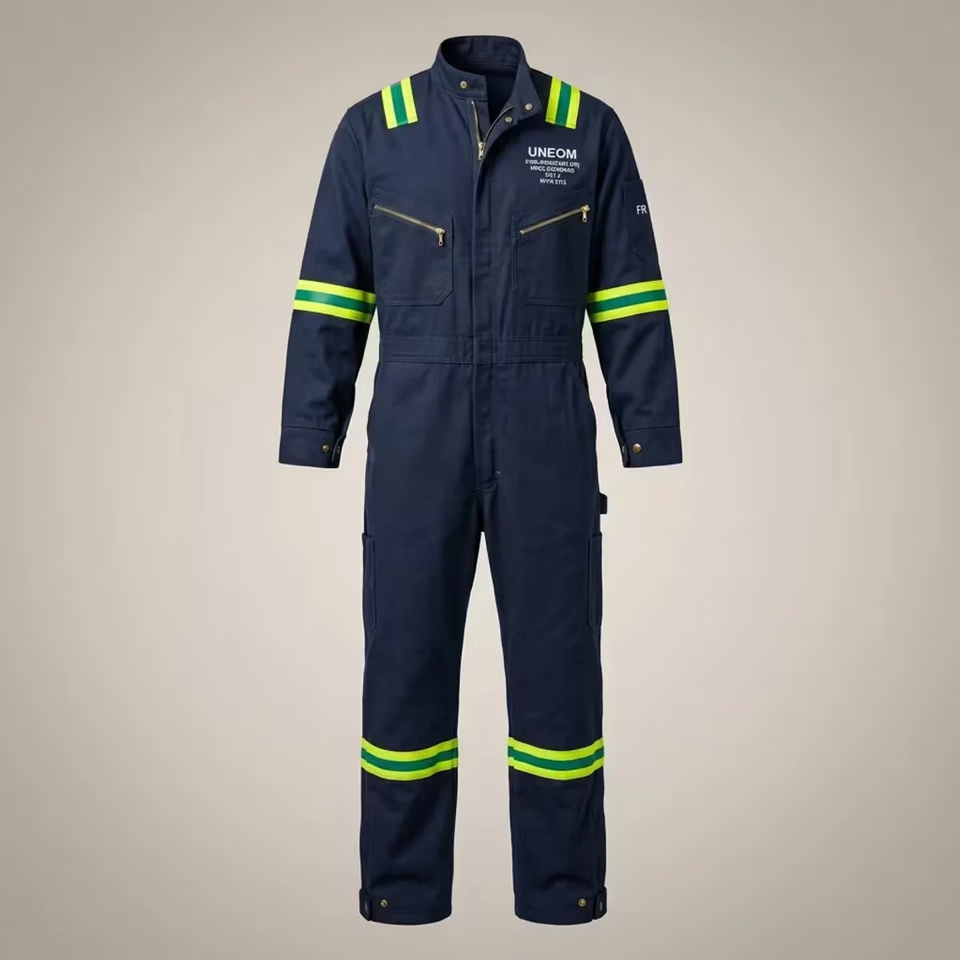
Protection that workers loosen, unzip or leave in the locker protects nobody, and on a Jubail or Dhahran summer shift that risk is constant. Ambient temperatures well into the forties, high Gulf humidity and long outdoor exposure mean heat strain is not a comfort issue but a safety hazard sitting alongside the flash-fire hazard the coverall exists to address. Fabric weight is the first lever: lighter constructions in the same certified family reduce metabolic load, so ask your supplier what the lightest option is that still satisfies your contract specification rather than defaulting to the heaviest cloth on the shelf. Weave and construction matter too, because air permeability and moisture transport differ between fabrics of identical weight. Garment design carries the rest, through action backs, gusseted underarms, vented yokes, articulated knees and appropriate closures. Underlayers deserve explicit policy: fabrics that melt should not be worn against the skin under an FR coverall. Finally, treat shade, hydration, work-rest cycles and acclimatisation as part of the same programme, because no garment can substitute for them.
Fit, sizes and coverage
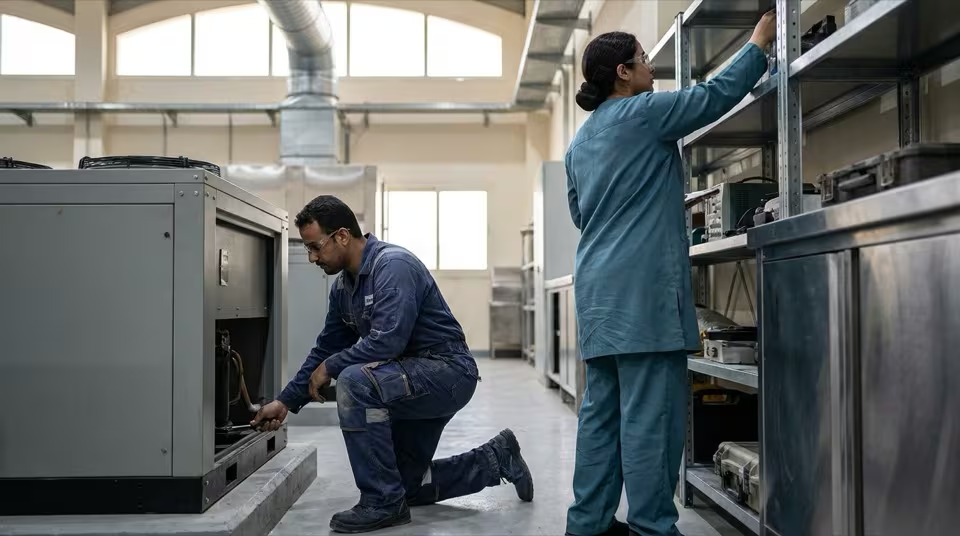
Fit is protective equipment, not tailoring. A flame-resistant coverall works partly by holding an insulating layer of air away from the skin, so a garment pulled tight across the shoulders or back protects less exactly where burns are most severe, while sleeves and legs that are too long create snag hazards around rotating equipment. Specify closures that cover the front placket, cuffs that close properly, and enough length in the sleeve and rise that a worker bending or reaching does not expose skin at the wrist or waist. Saudi sites also need a size range that genuinely fits the workforce, including relaxed cuts that meet modesty expectations, garments for women in roles where a unisex block simply does not fit, and provision for layering in the cooler months. The practical mechanism is a sizing set and a wear trial across shifts, roles and body types before you commit to bulk quantities. UNEOM has manufactured inside the Kingdom since 2013, and local production shortens the loop between a fit complaint and a corrected pattern.
Laundering and replacement
An FR coverall is a consumable with a service life, and the programme that manages that life is worth more than the discount on the first order. Decide before rollout who launders the garments: industrial laundering under a controlled, documented process is generally preferable to home washing, because it protects the fabric from bleach, softeners and unsuitable chemistry and gives you a record. Contaminated garments deserve particular attention, since hydrocarbon or solvent residue on any FR fabric can burn regardless of what the fabric itself does. Build simple, teachable retirement criteria into the programme: holes, tears, worn-through areas, damaged closures, missing or delaminated reflective tape, permanent contamination and repairs made with the wrong materials all take a garment out of service. Repairs must use like-for-like flame-resistant fabric, thread and components. Then plan the unglamorous logistics properly, with an issue record per employee, a rotation so nobody works while their only coverall is in the wash, sizing buffer stock, replacement cadence and a reorder lead time your supplier will actually meet.
Frequently asked
- Should we buy inherent or treated FR fabric?
- Both can be compliant, so decide on service conditions rather than labels. Inherent fabrics carry flame resistance in the fibre and cannot lose it through laundering. Treated fabrics rely on a durable finish whose life depends on wash chemistry and contamination. If you cannot control laundering tightly, inherent usually costs more upfront and causes fewer surprises later.
- Which standard applies, NFPA 2112 or EN ISO 11612?
- Both are recognised standard families for flame-resistant clothing, and the choice is not a matter of preference. It follows your hazard assessment, your operator or client contract specification, and the exposures your workers actually face. Ask your HSE function and the contract owner to name the standard, the required performance and the evidence, then buy to that written specification.
- How long does an FR coverall last?
- There is no universal number, because life depends on fabric, wash process, contamination and the physical wear of the role. Manage it by condition rather than by calendar: retire garments with holes, tears, thin worn areas, damaged closures, degraded reflective tape, permanent contamination or non-FR repairs. Follow the manufacturer's care instructions and your own inspection routine.
- Can workers wash FR coveralls at home?
- It is possible for some garments but hard to control. Home washing invites bleach, softeners and unsuitable detergents, and it moves hydrocarbon contamination into domestic machines. Industrial laundering under a documented process protects the fabric and gives you records. Whichever route you choose, follow the garment's care label and never wash contaminated coveralls with household laundry.
- How do we reduce summer heat strain without losing protection?
- Work within your specification, not around it. Ask for the lightest certified fabric your contract allows, compare constructions for breathability at equal weight, and choose designs with action backs, underarm gussets and articulated knees. Ban meltable underlayers next to the skin. Then support the clothing with shade, hydration, acclimatisation and work-rest scheduling.