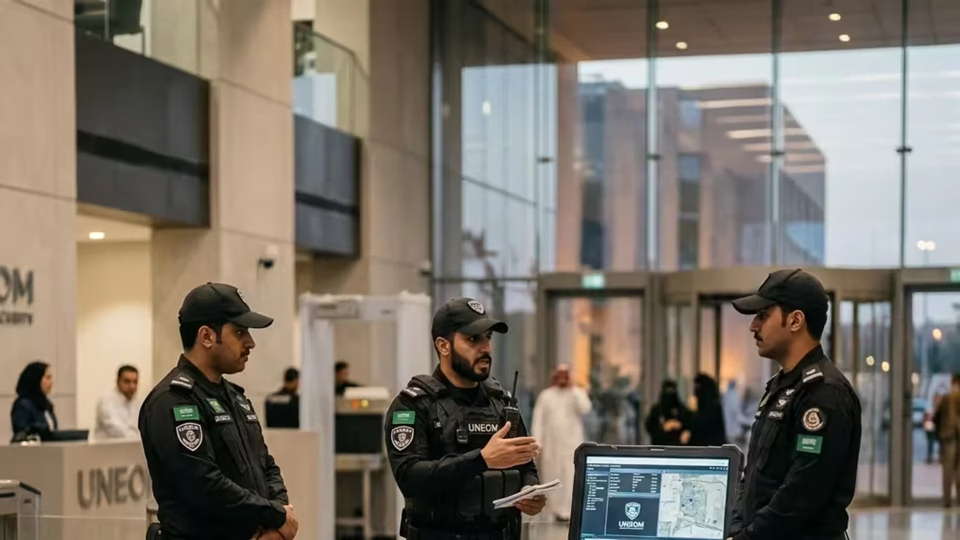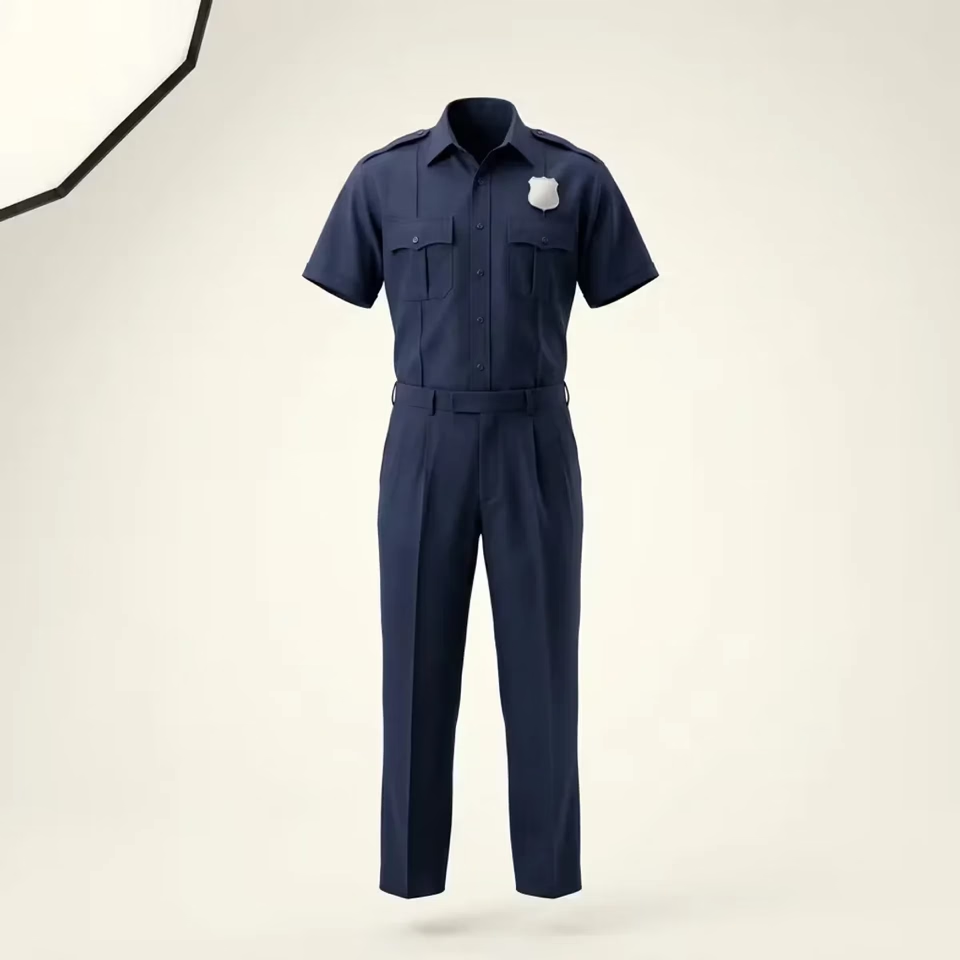
Facility Management Uniform Programs in Saudi Arabia: One Identity, Many Trades
How to build a facility management uniform system in Saudi Arabia that distinguishes cleaning, maintenance, landscaping and reception trades while holding one contractor identity through heat and turnover.
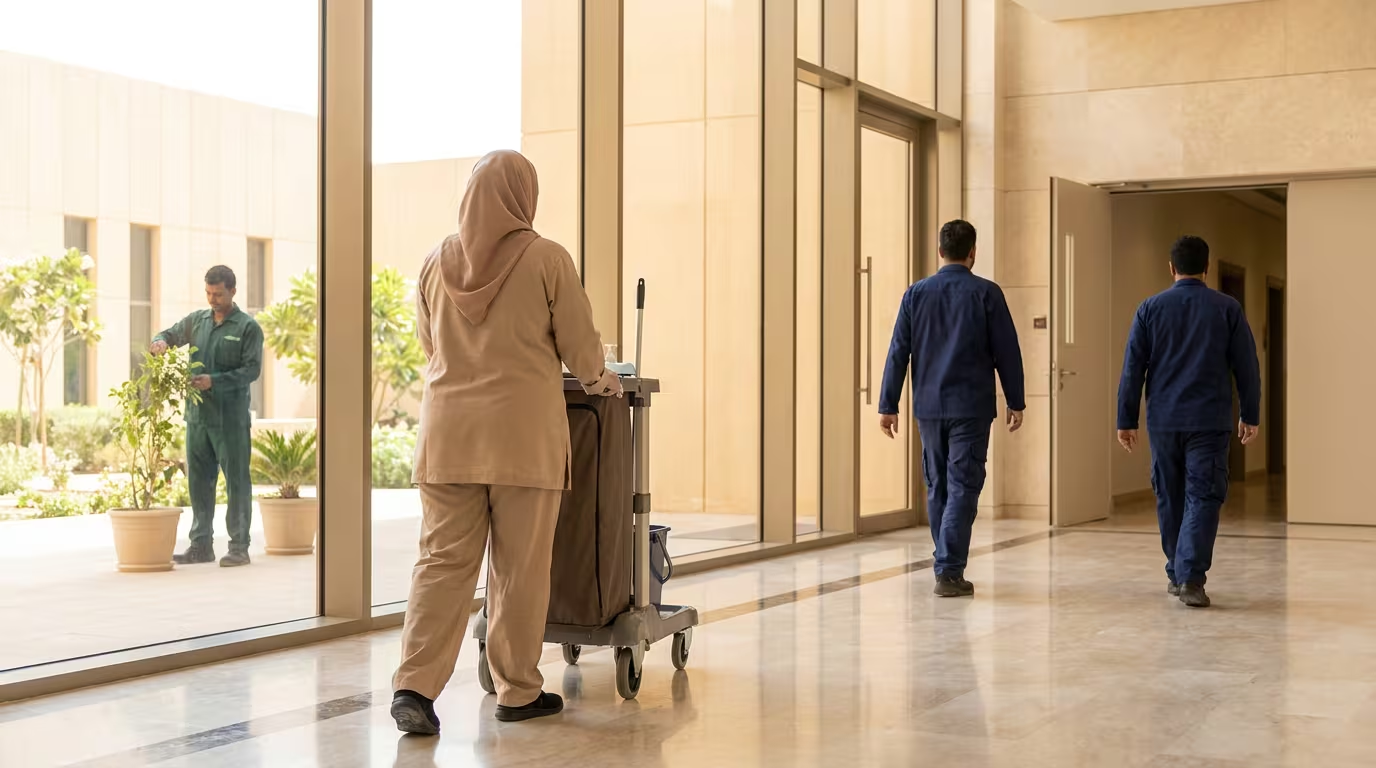
Facility management contracts put cleaners, technicians, plumbers, electricians, gardeners and reception staff under one banner and one supervisor. The uniform has to do two jobs at once: tell an occupant which trade is standing in front of them, and tell everyone which contractor employs them. Here is how to build that system deliberately, from fabric to reorder.
One Contract, Many Trades
A facility management contract usually bundles work that once sat with separate vendors: cleaning teams, MEP technicians, plumbers and electricians, landscapers, pest control, helpdesk and reception. They share a payroll and a supervisor, but they do not share a working day. A cleaner moves through public corridors in front of tenants; a technician spends the shift in a plant room; a gardener works under full sun. If you dress them all identically, you make the contractor look tidy and make the building harder to read: an occupant cannot tell who to stop for a spill and who to call for a failed air conditioning unit. If you dress them as separate companies, you lose the single identity your client is paying for and you complicate stock, laundry and reordering. The workable answer is a system with two layers — a fixed layer that says which contractor this is, and a variable layer that says which trade this is — designed once at the start rather than patched together as the scope grows.
Two Layers of Identity
Build the fixed layer from the elements people recognise at a distance: one base body colour, a consistent logo position on the chest and back, and a shared silhouette family so the whole workforce reads as one team on camera and across a lobby. Build the variable layer from a small set of trade markers — a contrast yoke, a shoulder or side panel, a coloured collar, a distinct badge or cap — and assign one marker per discipline. Keep the marker on the torso, where it stays visible when a technician is bent over a valve or a cleaner is pushing a trolley; a sleeve stripe alone disappears in most working postures. Resist differentiating by text: a role name embroidered on a chest is legible only up close, and in a mixed-language workforce a job title printed in one language quietly excludes readers of the other. Colour and shape carry the message; wording confirms it. Cap the palette early, because every extra trade colour multiplies stock lines, reorder risk and shade-matching problems.
Fabric by Task, Not by Job Title
Trades that share a payroll do not share a hazard profile, and the fabric should follow the task. Cleaning teams launder constantly and meet detergents, degreasers and chlorine-based products, so specify with wash and chemical exposure in mind: bleach attacks cotton and can strip some dye classes, while solution-dyed and carefully selected polyester constructions hold colour through repeated harsh cycles, and a soil-release finish helps shed the oily marks that plain polyester otherwise clings to. MEP and plumbing crews need abrasion and tear resistance, reinforced stress points, closed pockets and a trim fit with nothing loose near rotating equipment. Where the site risk assessment identifies flame or electric arc exposure, ordinary poly-cotton workwear is the wrong answer — untreated synthetics can melt and cling to skin — and you need purpose-built flame-resistant fabric specified against the relevant standard and the client's safety requirements. Grounds crews work in direct sun against thorns and machinery, so favour tightly woven, tear-resistant constructions with full coverage. Front-of-house staff need crease recovery and shade stability, because their garment is the one tenants study.
Heat, Sun and the Saudi Working Day
Outdoor facility work in the Kingdom happens in heat that punishes a careless specification, and summer restrictions on midday outdoor work push the heavy tasks into early morning and late afternoon, when supervisors still need staff identifiable at a distance. Long sleeves are usually the better answer outdoors, not the worse one: covered skin in a light, breathable woven fabric shields against direct sun and radiant load, provided the cut lets air move rather than cling. Fibre behaviour matters here — polyester moves moisture and dries quickly, cotton absorbs more and stays damp longer, and blends sit between the two — so choose deliberately for whether the wearer is soaked in a plant room or dusty in a car park. Teams crossing between chilled lobbies and rooftop equipment need a layer they can add and remove without leaving the uniform system. Modesty runs through all of it: cuts that are not close-fitting, coverage that respects local norms, hijab options in matching fabric with fastenings that cannot snag machinery, and cuffs that open easily for ablution.
Sizing, Turnover and the Issue Desk
Facility management runs on headcount, and headcount churns. A programme that works on paper fails at the issue desk if sizing was guessed. Fit a physical size set across every garment type before bulk production, include the wide range a multinational workforce actually needs, and record each person's size against their file so replacements do not restart the conversation. Define a kit per role — what a cleaner receives, what a technician receives, what a receptionist receives — and write it down, because undefined kits drift into inconsistency within a single season. Decide the laundering route early: garments washed at home behave differently from garments processed industrially, and the route shapes both fabric choice and how many sets a person needs to stay presentable across a shift pattern. Set replacement triggers on condition rather than the calendar alone, and give supervisors a simple way to flag a worn garment. Finally, close the loop on returns; branded workwear that leaves with departing staff becomes an access and reputation problem for contractor and client alike.
Specify Once, Reorder Forever
Treat the uniform as a controlled specification rather than a purchase. Record fabric construction, the trade colour assignments, logo artwork with placement measurements, the size chart and a garment code for every line, then keep a sealed physical sample and a retained colour reference. That reference is what protects you at reorder, because shade drifts between dye lots, and a lobby holding two slightly different blues undoes the identity you paid to build. Run a wear trial across trades and across a full summer before committing to volume; a fabric that reads well in a showroom behaves differently after a season of plant rooms and car parks. Plan for the contract lifecycle too — mobilisation, headcount growth, rebadging, demobilisation — because facility management portfolios rarely stay still. Manufacturing inside the Kingdom shortens that loop and supports Vision 2030 local content ambitions; UNEOM has produced uniforms in Saudi Arabia since 2013 under ISO 9001:2015 quality management, with OEKO-TEX Standard 100 certification, which tests textiles for harmful substances against skin.
Frequently asked
- How do we distinguish trades without losing one contractor identity?
- Split the design into two layers. A fixed layer — base colour, silhouette and logo placement — identifies the contractor. A variable layer — a contrast yoke, panel colour, collar or cap — identifies the trade. Keep the trade marker on the torso so it stays visible in working postures, and keep the number of trade colours small to protect stock and reordering.
- Should cleaning and maintenance teams wear the same fabric?
- Usually not. Cleaning garments face frequent laundering and contact with detergents and chlorine-based products, so colour retention and soil release matter most. Maintenance garments face abrasion, snagging and tools, so tear strength, reinforcement and closed pockets matter more. You can hold a common look across both while specifying different constructions underneath it.
- Are long sleeves practical for outdoor FM teams in the Saudi summer?
- Generally yes. Covered skin in a light, breathable woven fabric shields against direct sun and radiant heat, provided the cut lets air move instead of clinging. The problem is a heavy or tight sleeve, not the long sleeve itself. Pair it with proper headwear, scheduled breaks and the working-hour rules that apply on your site.
- How many uniform sets should each employee receive?
- There is no universal number. Set it from your laundering route, shift pattern and how dirty the role gets: an industrially processed kit rotates differently from garments washed at home, and a technician in plant rooms soils faster than a receptionist. Define it per role in your own policy, then review it after the first season.
- What happens to uniforms when a facility management contract changes hands?
- Plan it before mobilisation. Keep a controlled specification with artwork, colour reference and sizing so rebadging becomes a change of branding rather than a redesign. Collect garments from departing staff, because branded workwear circulating outside the contract is an access and reputation risk. Local manufacturing shortens lead times when headcount moves quickly.