Bulletproof Protection Technologies: Material Science Behind Modern Body Armour
Aramid versus UHMWPE versus hybrid systems — performance comparison under Saudi operating temperatures.
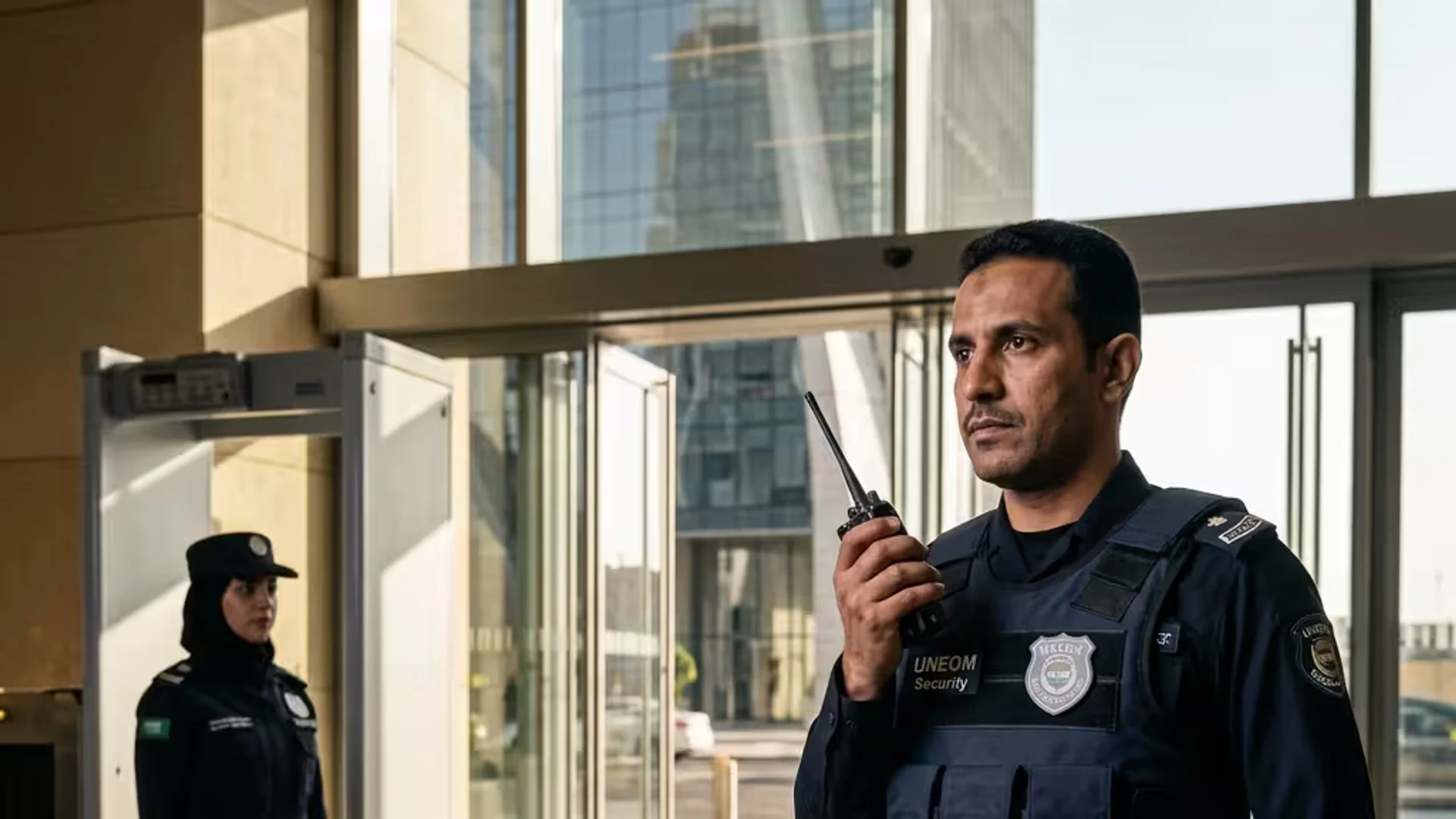
Body armour selection for Saudi security operations is complicated by a factor that most international testing standards do not address: extreme heat. The two dominant ballistic fibre technologies — aramid-based systems such as Kevlar and Twaron, and ultra-high-molecular-weight polyethylene systems such as Dyneema and Spectra — exhibit fundamentally different performance characteristics at temperatures above 40 degrees Celsius. Understanding these differences is essential for procurement officers specifying ballistic protection for personnel operating in Saudi Arabia's Eastern Province, where ambient temperatures regularly exceed 50 degrees and surface temperatures on exposed equipment can reach 80 degrees.
Aramid ballistic systems: heat-stable but heavier
Aramid fibres — marketed under brand names including Kevlar by DuPont and Twaron by Teijin — are the original high-performance ballistic fibres, first developed in the 1960s and refined through six generations of improved performance. Aramid's fundamental advantage is thermal stability: the fibre maintains its mechanical properties at temperatures up to 370 degrees Celsius, meaning that ambient temperatures of 50 degrees have zero measurable effect on ballistic performance. A Kevlar panel tested at 50 degrees Celsius provides identical stopping power to the same panel tested at 20 degrees. This thermal stability makes aramid the default choice for Saudi security applications where the ballistic panel may be exposed to extreme heat — concealed carriers worn under dark outer garments in direct sunlight, vehicle-mounted panels exposed to solar heating, and panels stored in unventilated equipment rooms. The aramid limitation is weight: achieving NIJ Level IIIA protection — the highest level for soft body armour — requires approximately 5.5 to 6.5 kilograms of aramid panel weight for a standard male torso panel, depending on the specific aramid generation used. This weight creates a significant thermal comfort burden when worn as a concealed carrier in Saudi conditions, because the panel weight compresses the spacer mesh in the carrier system and reduces the air-channel effectiveness described earlier. UNEOM addresses this through carrier engineering rather than panel substitution: redistributing the panel weight across a wider body area using a structural carrier that includes hip-belt load transfer, reducing the perceived weight on the shoulders by approximately 30%. The cost profile of aramid panels is moderate: a NIJ Level IIIA aramid panel set costs approximately SAR 3,500 to 5,000 depending on coverage area and aramid generation. Panel lifespan is 5 years from date of manufacture under normal conditions, but Saudi heat exposure can accelerate UV degradation of the aramid fibre — particularly if the panel is stored in vehicles with sun exposure. UNEOM recommends an in-service life of 4 years for aramid panels in Saudi conditions, with annual performance verification testing at the two-year mark.
UHMWPE systems: lighter but temperature-sensitive
Ultra-high-molecular-weight polyethylene fibres — marketed as Dyneema by DSM and Spectra by Honeywell — represent the most significant advancement in ballistic fibre technology in the past two decades. UHMWPE's defining advantage is its strength-to-weight ratio: it achieves the same NIJ Level IIIA protection as aramid at approximately 60% of the weight — a standard male torso panel weighing 3.3 to 4.0 kilograms versus 5.5 to 6.5 for aramid. For a security officer wearing a concealed carrier for 10 hours per shift, this 2-kilogram weight reduction is the difference between manageable discomfort and debilitating fatigue. However, UHMWPE has a critical temperature limitation that is directly relevant to Saudi operations: the fibre's melting range begins around 145 degrees Celsius, but its mechanical properties — specifically its tensile modulus — start to decline well before that, but the fibre begins to lose mechanical properties — specifically, its tensile modulus decreases — at temperatures above 70 degrees. At 80 degrees Celsius, UHMWPE ballistic performance is reduced by approximately 5 to 8% depending on the specific fibre grade. While 80 degrees Celsius exceeds ambient air temperature in Saudi Arabia, it does not exceed the temperature that a ballistic panel can reach when stored in a vehicle with windows closed in direct sunlight — interior vehicle temperatures in Saudi Arabia regularly reach 85 to 90 degrees Celsius during summer months. A UHMWPE panel left in a vehicle for extended periods will experience thermal cycling between ambient temperature and 85+ degrees, with each cycle potentially contributing to cumulative property degradation. UNEOM's guidance for UHMWPE panels in Saudi applications includes three mitigations. First, never store panels in unattended vehicles — issue panels from a climate-controlled armoury at the start of each shift and return them at the end. Second, equip the carrier system with a thermal indicator strip that changes colour irreversibly if the panel temperature exceeds 75 degrees, alerting the armoury manager that the panel requires performance verification testing. Third, specify a wear temperature of 50 degrees maximum for the panel interior — achieved through the carrier's thermal management system described in the concealed carrier section.
Hybrid panel systems
Hybrid ballistic panels combine aramid and UHMWPE layers to exploit the strengths of each material while mitigating their respective limitations. The typical hybrid configuration places UHMWPE layers on the strike face — the outer surface that receives the projectile — and aramid layers on the body side. This configuration leverages UHMWPE's superior initial energy absorption for the strike-face function while using aramid's thermal stability and consistent back-face deformation characteristics for the body-side function. The strike-face UHMWPE layers absorb and distribute the projectile's kinetic energy across a wide area through fibre deformation and delamination. The body-side aramid layers manage the back-face signature — the indentation depth on the body side of the panel that, if excessive, can cause blunt-force injury even when the projectile does not penetrate. Aramid exhibits more predictable back-face deformation than UHMWPE, with a shallower and more widely distributed deformation pattern that reduces the peak pressure on the body. The hybrid approach achieves weight savings of approximately 20 to 25% compared to pure aramid while maintaining thermal stability superior to pure UHMWPE. A hybrid NIJ Level IIIA panel set for a standard male torso weighs approximately 4.0 to 4.5 kilograms — between the pure aramid and pure UHMWPE weights. The thermal performance of the hybrid is defined by the aramid body-side layers: the UHMWPE strike face may experience temperature-related property changes in extreme heat, but the aramid body-side layers ensure that the back-face deformation remains within specification regardless of temperature. UNEOM recommends the hybrid configuration as the default for Saudi security operations that require concealed carry — the weight reduction compared to pure aramid significantly improves carrier comfort, while the aramid body-side layers provide the thermal stability assurance that Saudi conditions demand. Pure UHMWPE is recommended only for overt tactical vests used in short-duration, high-mobility operations where weight minimisation is the priority and the operator can control panel temperature exposure.
Saudi procurement and certification requirements
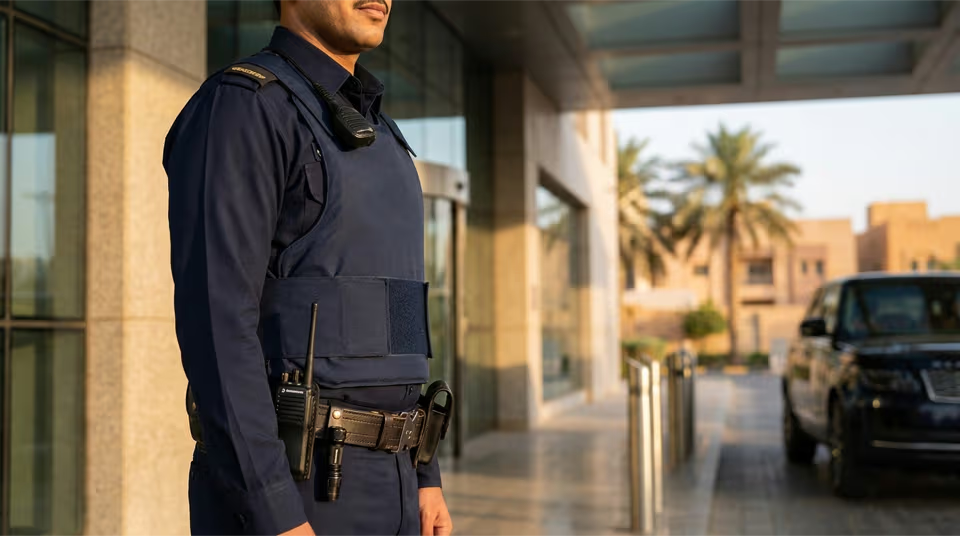
Body armour procurement in Saudi Arabia is regulated under the Saudi Arabian Presidency of State Security licensing framework, which requires that all ballistic protective equipment imported into or manufactured in the Kingdom be certified to either NIJ Standard 0101.06 or NIJ Standard 0101.07, and that the end-user hold a valid PSS licence for the procurement, possession, and use of ballistic protective equipment. UNEOM does not sell body armour directly — we are a uniform and carrier system provider. However, we integrate ballistic panels from licensed manufacturers into our carrier systems, and we navigate the procurement pathway on behalf of clients by coordinating with the client's PSS-licensed security contractor to ensure that the panel procurement, the carrier integration, and the final delivery comply with the licensing framework. The certification requirement has a practical implication for Saudi operations: NIJ testing is conducted at standard laboratory temperature of 21 degrees Celsius and does not include thermal conditioning at Saudi ambient temperatures. This means that a panel certified to NIJ Level IIIA at 21 degrees may perform differently at 50 degrees — particularly relevant for UHMWPE panels as discussed above. UNEOM recommends that clients request supplementary thermal-conditioned testing from the panel manufacturer: ballistic testing conducted after the panel has been thermally conditioned at 50 degrees for 4 hours, simulating a full shift in Saudi outdoor conditions. This supplementary testing is not required by NIJ or PSS, but it provides the operational assurance that standard testing does not. Panel manufacturers who are confident in their product's thermal performance will provide this supplementary testing at nominal cost; manufacturers who resist the request may be signalling that their panel's thermal performance is marginal. The cost of a complete carrier-and-panel system from UNEOM — including the carrier with thermal management, the ballistic panels from the client's licensed manufacturer, and the integration and fitting service — ranges from SAR 5,500 to 9,000 depending on protection level, panel technology, and carrier complexity.
Frequently asked
- Does extreme heat affect body armour performance?
- Aramid is unaffected up to 370°C. UHMWPE begins losing performance above 70°C — relevant for panels stored in Saudi vehicles at 85-90°C interior temperatures.
- Which panel type is best for Saudi concealed carry?
- Hybrid (UHMWPE strike face + aramid body side) — 20-25% lighter than pure aramid while maintaining thermal stability from the aramid body-side layers.
- How long do ballistic panels last in Saudi conditions?
- UNEOM recommends 4 years in-service for Saudi conditions (versus 5-year standard), with performance verification testing at the 2-year mark.
- Do I need a PSS licence to procure body armour?
- Yes — PSS licensing is required for procurement, possession, and use. UNEOM coordinates with the client's licensed security contractor to ensure compliance.
- What is the cost of a complete carrier-and-panel system?
- SAR 5,500-9,000 including thermal-managed carrier, ballistic panels, integration, and fitting — depending on protection level and panel technology.