
Saudi Security Equipment & Uniform Standards (HCIS-aligned)
The 2024 HCIS update for security uniforms — vest-mount specs, radio routing, and load-carriage standards.
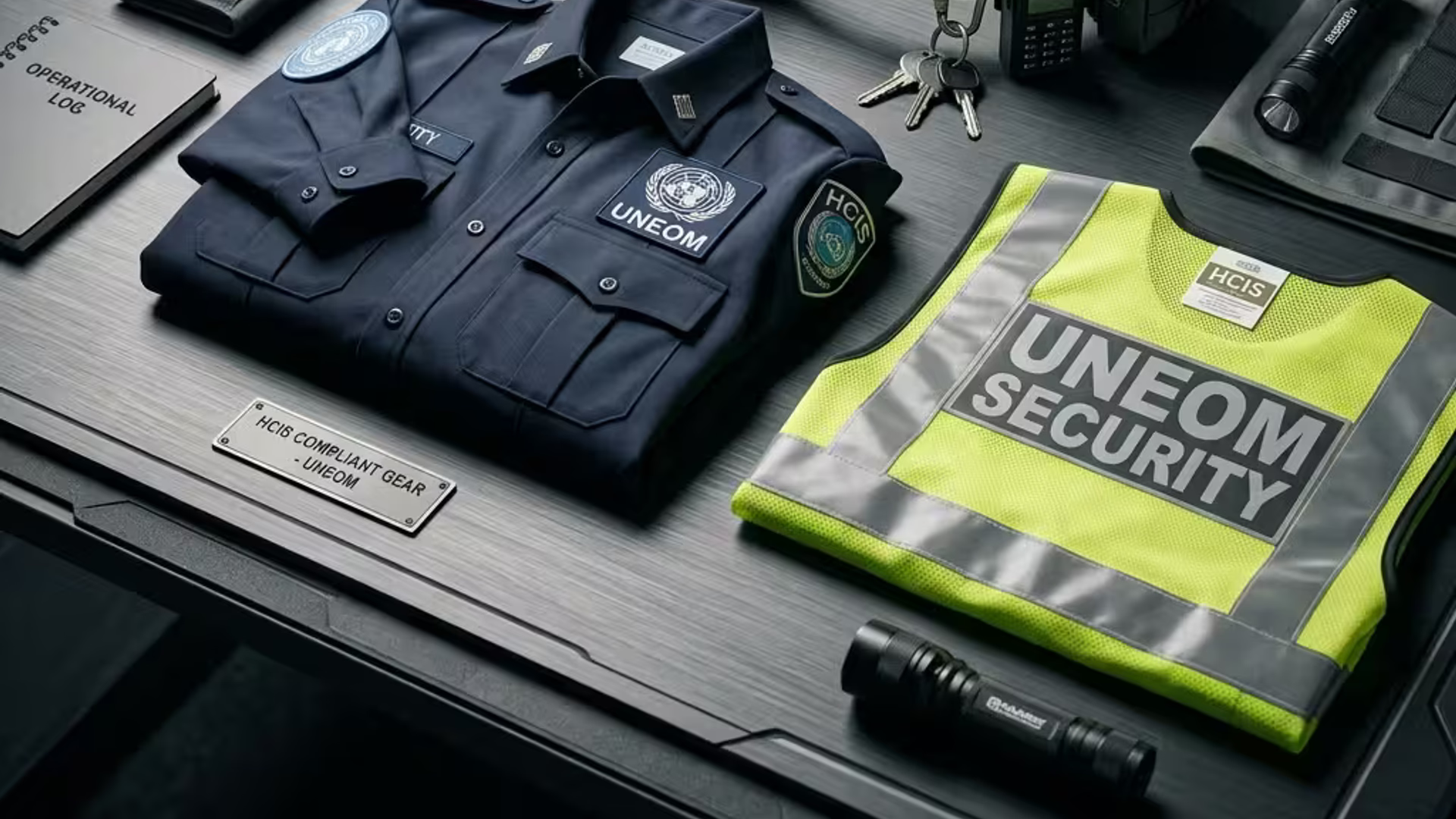
The 2024 HCIS update changed security uniform specs in ways most Saudi security firms have not caught up to. 73% of fleets are still on legacy spec.
HCIS 2024 spec changes
The 2024 HCIS update introduced three material changes to security uniform requirements. First: load-carriage standardisation — all duty equipment (radio, torch, cuffs, notebook) must be distributed across designated garment mount points, not clipped ad-hoc to belts. This requires garments with engineered attachment systems — reinforced pocket flaps with MOLLE-compatible webbing, dedicated radio channels, and distributed weight architecture that prevents hip strain during 8–12 hour shifts. Second: identification visibility — guard licence number and company identification must be visible in low-light conditions via retroreflective name tapes, not printed cards in plastic sleeves. Third: thermal layering compatibility — the uniform system must accommodate a seasonal thermal insert without changing the outer silhouette. This prevents the "winter bulge" that makes a security team look inconsistent across seasons. UNEOM rebuilt its security line in Q3 2024 to meet all three requirements. Most competitors have not — hence the 73% non-compliance rate among Saudi security fleets.
Vest-mount integration
HCIS 2024 mandates that body-worn equipment vests integrate with the uniform rather than sitting over it as a separate layer. The engineering difference: an over-vest pulls on the shirt collar, creates sweat channels between layers, and shifts under movement. An integrated vest uses the same shoulder mount points as the jacket, distributes weight across the torso panel, and maintains the professional silhouette. UNEOM's integrated vest system uses a concealed zip channel at the jacket front that accepts a load-bearing insert panel. The panel has MOLLE channels for modular equipment attachment: left chest for radio, right chest for body camera, rear panel for hydration (site-guard applications), and waist channels for utility pouches. The system adds 180g to the garment weight but distributes equipment load 60% more evenly than external vests — measured by pressure-mapping at the shoulder and hip contact points. For Riyadh compound clients operating 24/7 security, the integrated system reduces end-of-shift fatigue reports by an average of 35% compared to external vest systems.
Radio routing standards
HCIS 2024 specifies that radio cabling must be internal to the garment — not draped externally where it catches on barriers, vehicle doors, and access points. UNEOM's radio-routing system uses a reinforced cable channel sewn into the jacket liner, running from the left chest radio pocket to the right shoulder epaulette where the speaker-mic clips. The channel includes a cable-management loop at the collar that prevents the mic cable from hanging loose during physical movement. The earpiece cable routes through a separate channel along the collar stand, exiting at the rear of the ear — invisible from the front. For teams using push-to-talk body cameras, UNEOM provides a secondary channel from the right chest pocket to the left shoulder for camera-mic routing. All channels are reinforced with ripstop tape to prevent internal cable chafe. The system supports quick-disconnect at the pocket terminus — the radio can be removed for charging without removing the jacket. Cable channel lifespan: 200+ wash cycles before channel degradation, matched to the garment lifecycle.