Event Staff Uniforms for Riyadh Season: Banquet and Catering Kit Planning
How to specify, size, and deliver banquet and event staff uniforms for Riyadh Season programmes — fast turnarounds, agency crews, formal service kits, and post-event recovery.
Riyadh Season contracts arrive with fixed dates and moving headcounts. Banquet, wedding, and conference programmes need large uniform sets fitted fast, worn hard under stage lighting and a full hall, cleaned overnight, and recovered afterwards. This guide sets out how to specify, size, deliver, and reclaim event staff uniforms without losing the deadline.
Plan before the calendar closes
Riyadh Season procurement fails on timing far more often than on design. The gap between a signed venue contract and the first guest arrival is usually shorter than the time a full uniform program needs, and every downstream step — fabric reservation, cutting, embroidery, size sorting, packing by venue — sits inside that window. The practical move is to separate what you can lock early from what genuinely depends on final headcount. Colour, fabric, silhouette, and branding can be approved as soon as the concept is signed; quantities can follow. Ordering a core block against your confirmed base team, then holding a top-up allowance for agency staff, keeps you from re-cutting the whole program when numbers move. Manufacturing inside the Kingdom removes an import leg from the schedule — UNEOM has produced locally since 2013 under a certified ISO 9001:2015 quality system — which matters most when a client changes a colour or adds a second venue late. Ask any supplier to put the sequence in writing: approval date, production start, delivery date, and what happens to the timeline if you change the count afterwards.
Sizing a team you haven't met
Event programs are staffed by people you meet on the first briefing day, not during fitting sessions, so sizing has to be designed as a system rather than a measurement exercise. Build a size curve from the demographics your agency actually supplies, keep the shoulder of that curve deep, and accept that the extremes will be thin. Then let the garments absorb the error: side-adjuster tabs and part-elastic waistbands on trousers, generous but tailored armholes, aprons with long ties that suit a range of body shapes, and vests cut with a back adjuster. Order a swing stock of the most common sizes and hold it at the venue, not in a warehouse across town, because the swap you cannot make on the night is the one that shows in every photograph. Modest-fit options should be part of the size plan from the start, not a late substitution: longer tunic lengths, higher necklines, full-length sleeves, and headscarves in matching fabric so a mixed banquet team reads as one uniform line.
The formal service kit
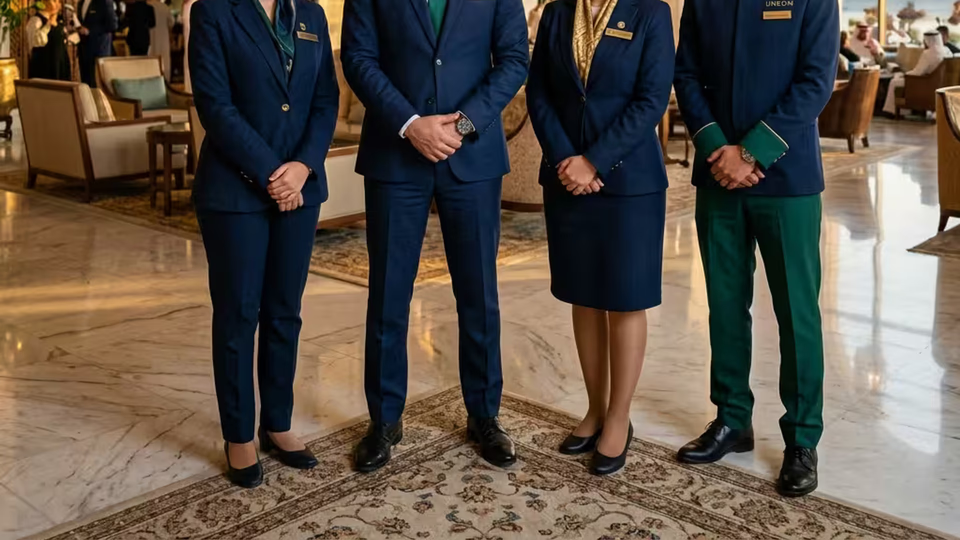
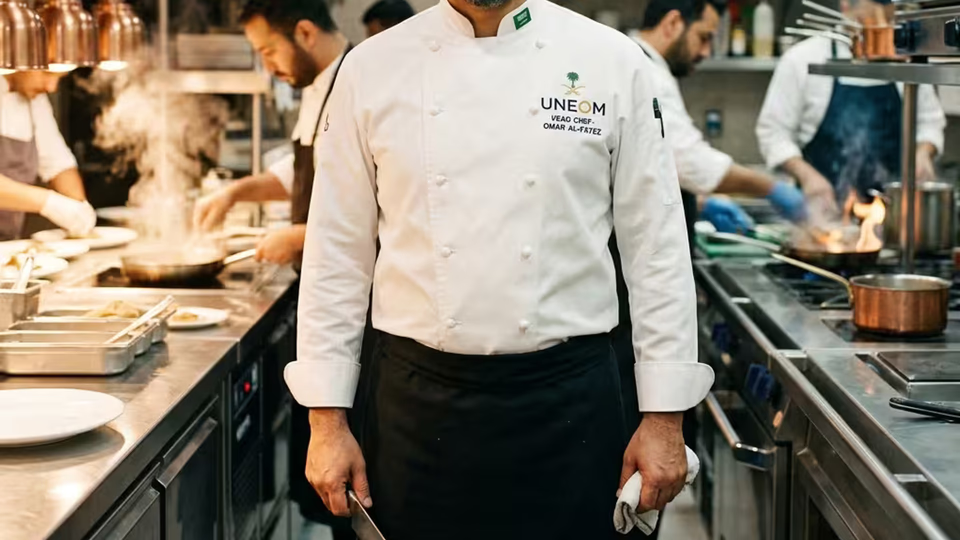
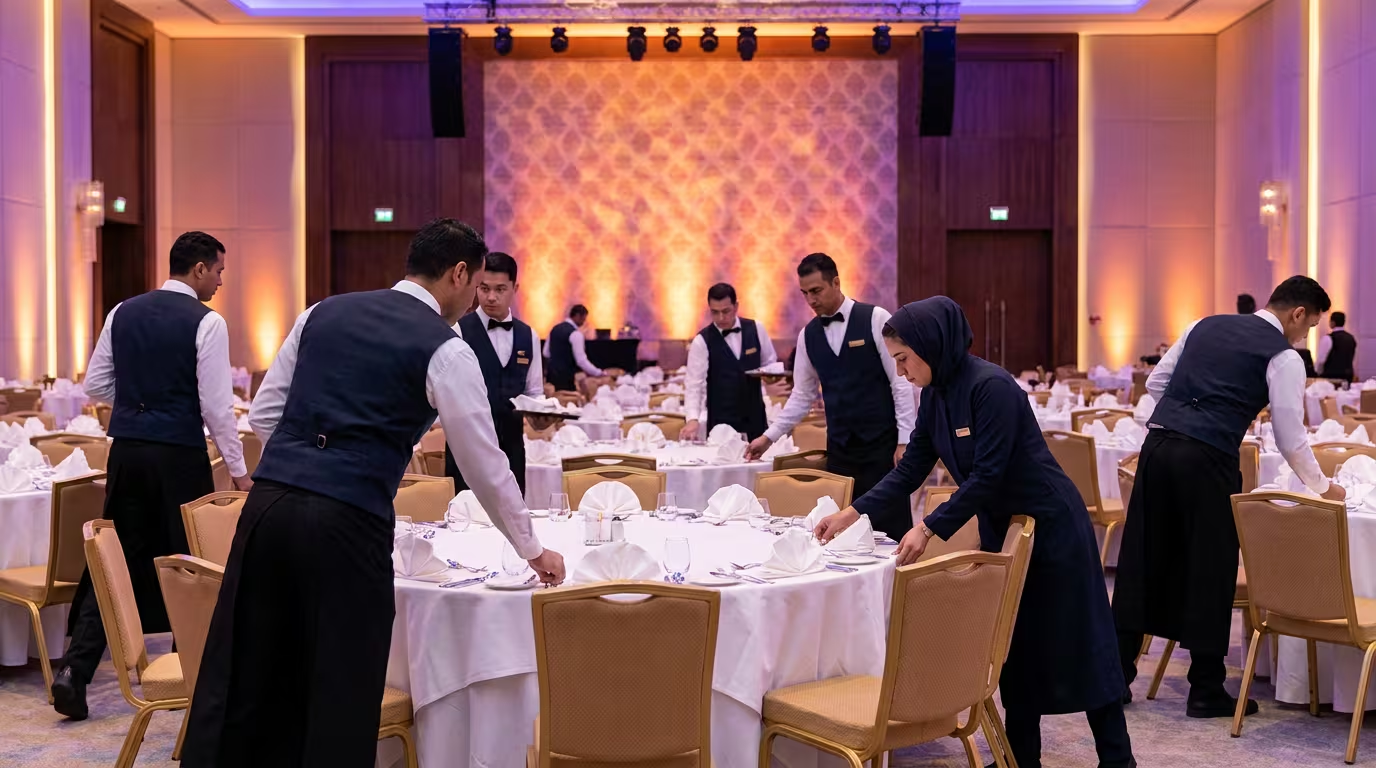
A banquet server uniform is a language the guest reads before anyone speaks, so build it as a set of layers with defined jobs. The shirt carries fit and cleanliness; the vest carries formality and gives you a clean place for a discreet logo or a role colour; the tie or bow tie signals the service register, from a black bow at a gala to an open collar at a lounge activation; and the apron carries the work. Use the layers to separate roles the guest needs to identify — captains, servers, bar and coffee stations, runners, and the event crew moving equipment behind the scenes. A colour-coded vest or apron does this faster than any badge. Keep back-of-house catering staff attire deliberately different in colour so a kitchen porter is never mistaken for a floor server. Name and role tags should attach without piercing the fabric, since pin holes accumulate over reissues and a magnetic or slot-in holder survives more events. Decide the full kit list before quoting, including the small parts nobody counts.
Lighting, heat, and long shifts
Ballrooms and outdoor stages are lit hard, and lighting is unforgiving of fabric. High-sheen finishes flare under spotlights, so a matte or subdued twill usually photographs better than a lustrous satin. Pale shirts need enough opacity that a base layer or a garment seam does not read through under strong light, and very dark shells absorb more of that light as heat, which compounds a room that is already warming as it fills. Comfort here is mostly about moisture and layering. Polyester-rich blends resist creasing, hold a pressed line through a long shift, and dry quickly, while cotton content adds a softer hand against the skin but holds moisture longer and creases faster. Fabric certified to OEKO-TEX Standard 100 has been tested for harmful substances. Whatever the blend, design the kit so the outer layer can come off: a server who can shed a vest between the setup push and the service window stays presentable longer than one sealed into a single heavy garment. Review samples under the lighting they will actually work in, not under office fluorescents.
Stains, spares, and turnaround
Banquet soiling is predictable, which makes it manageable. Oil and butter from plated service, Arabic coffee and cardamom, saffron and turmeric from rice dishes, and dessert syrups account for most of what lands on a server. Oily soil is the harder case on polyester-rich cloth, which is why soil-release finishes and a prompt wash matter more than any promise of stain-proofing; nothing available is stain-proof, and treating a mark quickly beats treating it well the following week. For a multi-night program the real decision is the spare ratio. Plan enough shirts and aprons per person to cover a change mid-shift and a full change the next day, because laundry turnaround between consecutive nights is the point where most event programs break. Aprons take the worst of it and are the cheapest layer to over-order. Confirm that the colours you chose hold up to repeated industrial washing before you commit to a large run, and keep an on-site kit of spare buttons, a steamer, and replacement ties for the failures that always happen.
Getting the kit back
Recovery is where event uniform budgets quietly leak, because a garment that leaves with a temporary worker is a garment you buy twice. Treat issue and return as one controlled process: sign kit out against a named individual with a tagged garment number, state the return point and time in the same document the agency signs, and make return a condition of the final shift sign-off rather than a request made afterwards. Woven or heat-sealed identification survives industrial laundering better than adhesive labels, and a simple numbered system tells you what came back without opening every bag. Build a short refurbishment step into the close-out — wash, press, replace buttons and damaged ties, sort by size, and shelve the kit as a size-graded library rather than a pile of bags. Store it protected from dust and direct light so colours match when you reorder against the same specification. An event crew uniform that is recovered, refreshed, and shelved properly becomes the base stock for the next program instead of a fresh purchase order.
Frequently asked
- How early should we order uniforms for a Riyadh Season event?
- Lock the design as soon as the concept is approved and order a core block against your confirmed base team, holding a top-up allowance for agency staff. Colour, fabric and branding rarely change; quantities always do. Ask your supplier to confirm approval, production and delivery dates in writing, plus the effect of a late count change.
- How do we size temporary and agency staff we haven't met?
- Build a size curve from the profile your agency usually supplies and keep the middle of it deep. Choose garments that forgive error — side adjusters, part-elastic waistbands, long apron ties, back-adjusted vests — and hold swing stock of the common sizes at the venue so a mismatch can be fixed on the night.
- What belongs in a formal banquet server kit?
- Most formal programmes use a shirt, vest, tie or bow tie, and apron, with role signalled by vest or apron colour rather than a badge alone. Add modest-fit options — longer lengths, higher necklines, full sleeves, matching headscarves — as part of the standard kit, and list every small component before requesting a quotation.
- Which fabrics hold up under stage lighting and a warm hall?
- Favour matte finishes over high-sheen cloth, since lustre flares under spotlights. Pale shirts need enough opacity to avoid show-through, and very dark shells absorb more light as heat. Polyester-rich blends resist creasing and dry fast; cotton feels softer but holds moisture. Review approved samples under event lighting, not office light.
- How do we make sure uniforms come back after the event?
- Issue every kit against a named person and a tagged garment number, write the return point and time into the agency's own document, and make return a condition of final shift sign-off. Use woven or heat-sealed identification that survives laundering, then wash, press, repair and shelve the kit by size for the next programme.