
Modest & Abaya-Friendly Hospitality Uniforms in Saudi Arabia: A Buyer's Guide
A programme-management guide to modest hospitality uniforms in Saudi Arabia: integrated-hijab tailoring, full-coverage cuts, abaya-coordinated service wear, and heat-friendly fabrics for hotel and F&B teams.
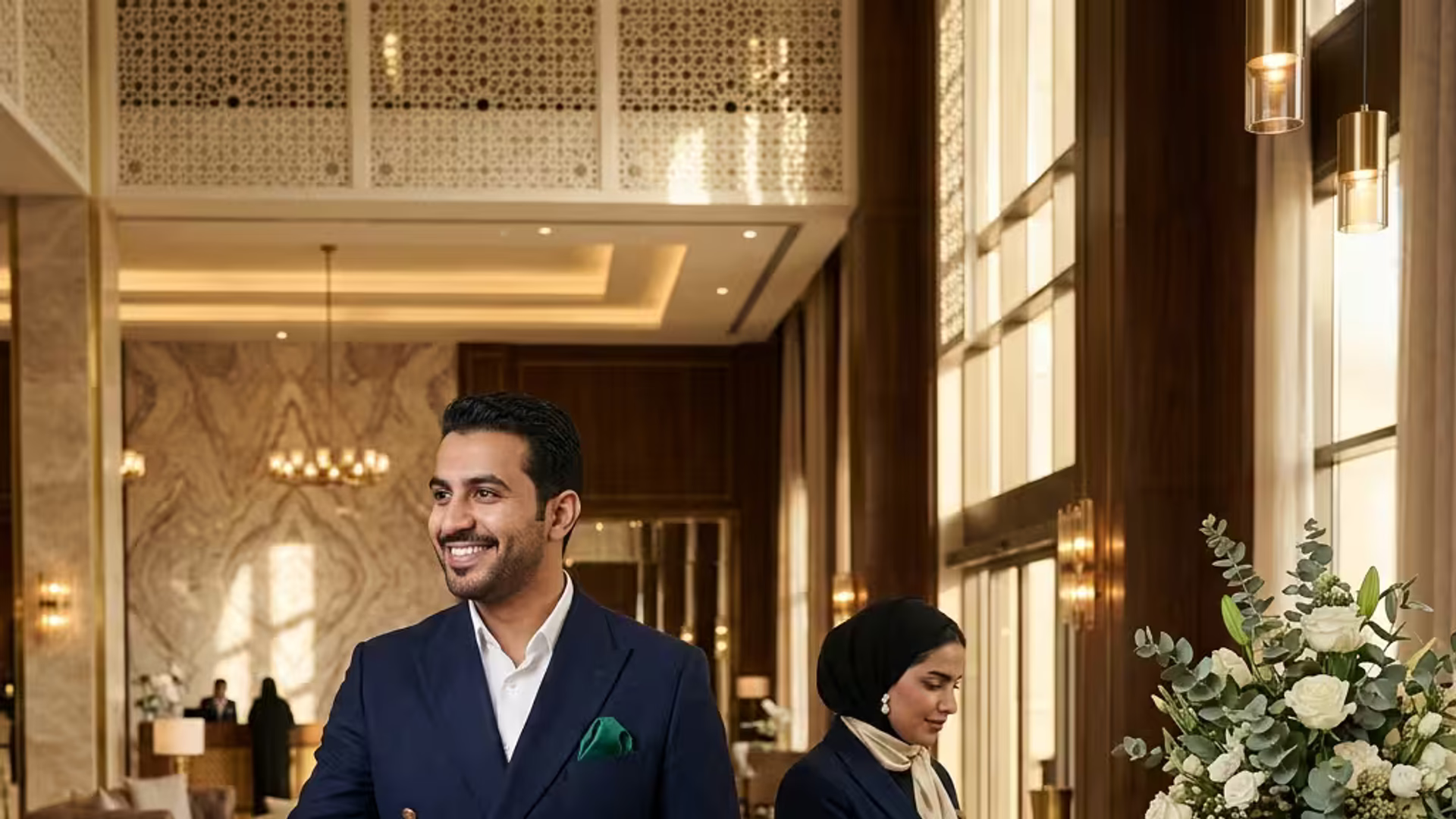
As more Saudi women join hotel and F&B front-of-house roles, employers need service wear that is genuinely modest, brand-polished and comfortable in extreme heat. This guide covers integrated-hijab tailoring, full-coverage modest cuts, abaya-coordinated uniforms, snag-free breathable fabrics, and how to balance coverage with the freedom of movement service work demands.
Why modest service wear is now a procurement priority
Saudi hospitality is changing as Vision 2030 expands tourism and Saudization brings more Saudi women into visible front-of-house roles in hotels, restaurants and cafes. For HR and procurement teams, this means the uniform programme can no longer treat modest dress as an afterthought or a one-off accommodation. Modest hospitality uniforms must be a designed-in standard: full-coverage cuts, hijab-compatible tailoring and abaya-coordinated options offered consistently across a property, not improvised per employee. Treating modesty as a core specification protects brand consistency, reduces ad-hoc alteration costs, and signals genuine respect for staff. It also widens the recruitment pool, since candidates who require modest workwear can see themselves represented in the standard uniform rather than negotiating for it. A well-planned programme defines coverage levels, fabric behaviour and styling rules up front, so every new hire receives appropriate kit on day one. This is procurement discipline applied to a cultural and operational reality, and it pays back in retention and a polished, unified guest-facing appearance.
Integrated-hijab tailoring done properly
A hijab-friendly hotel uniform is more than a scarf added to an existing outfit. Proper integrated-hijab tailoring starts with the collar and neckline: high or stand collars, raised back necklines and generous shoulder coverage ensure the garment reads as complete with the headscarf in place. Many programmes offer a matched or tonal hijab in the same fabric family as the uniform so colours and brand identity stay coherent rather than clashing. For active service roles, a fitted under-cap or a secured wrap style keeps the headscarf stable through bending, carrying and fast movement, avoiding constant readjustment. Fabric for the hijab itself should be lightweight, breathable and non-slip, since a heavy or slippery scarf is uncomfortable over long shifts in warm interiors. Snag-free edges and soft seams matter where the scarf meets jewellery, badges or collars. Done well, integrated tailoring lets a hijab-wearing employee look as crisp and on-brand as any colleague, with coverage that holds throughout the shift.
Full-coverage modest cuts that still look sharp
Modest cuts for hospitality balance coverage with the clean, tailored silhouette a premium brand expects. The core principles are straightforward: longer sleeves that reach the wrist, hemlines that fall below the hip or extend to tunic and maxi lengths, and a relaxed-through-the-body fit that skims rather than clings. A modest waitress uniform might pair a long-sleeve tunic over straight or wide-leg trousers, or use a longer apron and layered cut to add coverage without bulk. The tailoring trick is structure: darts, panels and a defined shoulder line keep a loose garment looking intentional and professional rather than shapeless. Necklines stay high, and front openings are designed so they do not gape when reaching or leaning. Female hospitality uniform ranges in Saudi Arabia increasingly offer these full-coverage cuts as the default rather than a special request, with colour and trim matching the wider team. The result is service wear that meets modesty expectations while still projecting the polish guests associate with quality hospitality.
Abaya-style and abaya-coordinated service wear
Some properties prefer an abaya-style staff uniform for certain front-of-house roles, particularly in concierge, guest relations and fine-dining settings where a flowing, elegant line suits the brand. A service abaya differs from everyday wear: it is cut from durable, colour-stable fabric, tailored for movement, and detailed with brand colours, subtle trim or embroidery so it functions as a uniform rather than personal dress. Where a full abaya is not practical for active service, programmes use abaya-coordinated pieces such as long open-front layers, tunic-and-trouser sets or longline tabards that echo the abaya silhouette while allowing easier movement around tables and kitchens. Sleeves are designed to stay clear of food and surfaces, and hems are set at a safe length to avoid trip hazards on stairs and wet floors. The key is treating the abaya as a managed garment: consistent fabric, consistent length, consistent finish across the team, so the look stays uniform and the brand stays recognisable from guest to guest.
Fabrics for heat, movement and long shifts
Saudi summers push interior and outdoor service environments to demanding levels, so fabric choice is central to any modest uniform programme. Full-coverage garments cover more skin, which makes breathability non-negotiable. The priority is fabrics that move moisture away from the body and dry quickly, so staff stay comfortable through long shifts without visible sweat patches. Blends engineered for performance can deliver this while keeping the structured, professional drape that pure natural fibres sometimes lack. For the hijab and any inner layers, lightweight and air-permeable cloth prevents heat building up around the head and neck. Snag-free, smooth-surface fabrics matter in service settings full of trays, handles, velcro and table edges, where a pull or run quickly looks unprofessional. Colour stability under frequent industrial laundering protects the uniform's appearance over its working life. UNEOM, as an in-Kingdom manufacturer since 2013 holding OEKO-TEX Standard 100 certification, specifies materials with skin contact and laundering durability in mind, which matters most for the layered, close-to-skin garments modest uniforms involve.
Balancing modesty with freedom of movement
Service work is physical: reaching across tables, carrying trays, clearing, bending and moving quickly through tight spaces. A modest uniform must deliver coverage without restricting any of that, and this is where tailoring detail earns its keep. Articulated or gusseted underarms let staff raise their arms fully without the hem lifting or the garment pulling tight. A slightly relaxed body and a small amount of mechanical stretch in the fabric allow free movement while the cut stays modest at rest. Sleeve cuffs should be securable so they stay clear of food, drinks and equipment, and hem lengths are chosen to cover appropriately while keeping stairs and wet floors safe. Secured hijab styles prevent the constant readjustment that breaks the flow of service. The goal is a garment a Saudi woman can wear comfortably through a full shift without choosing between her modesty and her ability to do the job well, which is exactly what a thoughtfully engineered programme delivers.
Building one consistent, brand-aligned programme
The strongest modest uniform programmes are designed as a coordinated system rather than a collection of separate items. That means defining clear coverage standards, an agreed fabric palette and consistent styling rules, then applying them across every front-of-house role so a hijab-wearing host, a modest-cut server and an abaya-coordinated concierge all read as one team. Sizing and fit are central: a genuine size range, including modest cuts as standard, ensures every employee receives appropriate kit without special pleading or last-minute alteration. Brand identity carries through colour, trim and finish so modest options never look like an exception bolted onto the main range. For procurement, this systematic approach simplifies reordering, controls cost and keeps quality consistent as teams grow. As a programme-management manufacturer, UNEOM works with HR and operations teams to specify, sample and supply modest hospitality uniforms at scale, holding ISO 9001:2015 quality management so the same standard arrives in every delivery across multiple properties and seasons.
Frequently asked questions
What makes a hotel uniform genuinely hijab-friendly?
A hijab-friendly hotel uniform is tailored around the headscarf, not just paired with one. That means high or stand collars, raised back necklines and full shoulder coverage so the garment reads as complete, plus a matched or tonal scarf in a lightweight, non-slip, breathable fabric. A secured wrap or under-cap keeps it stable through active service without constant readjustment.
How do modest cuts stay professional rather than looking shapeless?
Structure is the key. Darts, panels and a defined shoulder line keep a fuller, full-coverage garment looking intentional and tailored rather than loose. Longer sleeves and hemlines provide coverage while a skimming, non-clinging fit keeps the silhouette clean. Matching the colour, trim and finish to the wider team ensures a modest waitress uniform looks as sharp and on-brand as any other role.
What is the difference between an abaya-style uniform and an abaya-coordinated one?
An abaya-style staff uniform is a full service abaya cut from durable, colour-stable fabric and detailed with brand colours so it functions as a uniform. Abaya-coordinated pieces, such as long open-front layers or longline tabards, echo the abaya silhouette while allowing easier movement around tables and kitchens, which suits more active front-of-house roles better than a full-length garment.
Which fabrics work best for modest uniforms in Saudi heat?
Because full-coverage garments cover more skin, breathability is essential. Prioritise fabrics that wick moisture and dry quickly, with performance blends that keep a structured, professional drape. Hijab and inner layers should be lightweight and air-permeable to prevent heat building around the head and neck. Snag-free surfaces and colour stability under industrial laundering protect appearance over a long working life.
Can a modest uniform still allow full freedom of movement for service work?
Yes, with the right tailoring. Articulated or gusseted underarms let staff raise their arms fully without the hem lifting, a slightly relaxed body with mechanical stretch allows movement while staying modest at rest, and securable cuffs keep sleeves clear of food and equipment. A stabilised hijab removes constant readjustment, so coverage never gets in the way of doing the job well.