
Five-Star Hotel Spa Programme: Luxury Identity Through Uniform Engineering
A prestigious five-star hotel spa in Riyadh required a 60-staff uniform programme engineered to survive humidity, essential oils, and 300+ annual wash cycles — while maintaining the property's luxury aesthetic identity across treatment, reception, and back-of-house zones.
- Client
- Five-star hotel spa, Riyadh — 60 staff across 3 operational zones
- Duration
- 6 weeks (from fitting to full deployment)
- Headline
- 60 staff
- Scope
- Treatment therapists, reception concierge, back-of-house teams, custom Pantone-matched fabrics, programme contract with bi-annual refresh
The numbers.
mean uniform lifespan in spa conditions — up from 6 months on the previous programme, representing a 133% improvement in garment durability.
about fit inconsistency logged in the 18-month post-deployment review period — a first for the property's operations team.
in uniform-related operational costs against the original budget forecast, driven by extended garment life and consolidated supplier management.
The luxury hospitality challenge
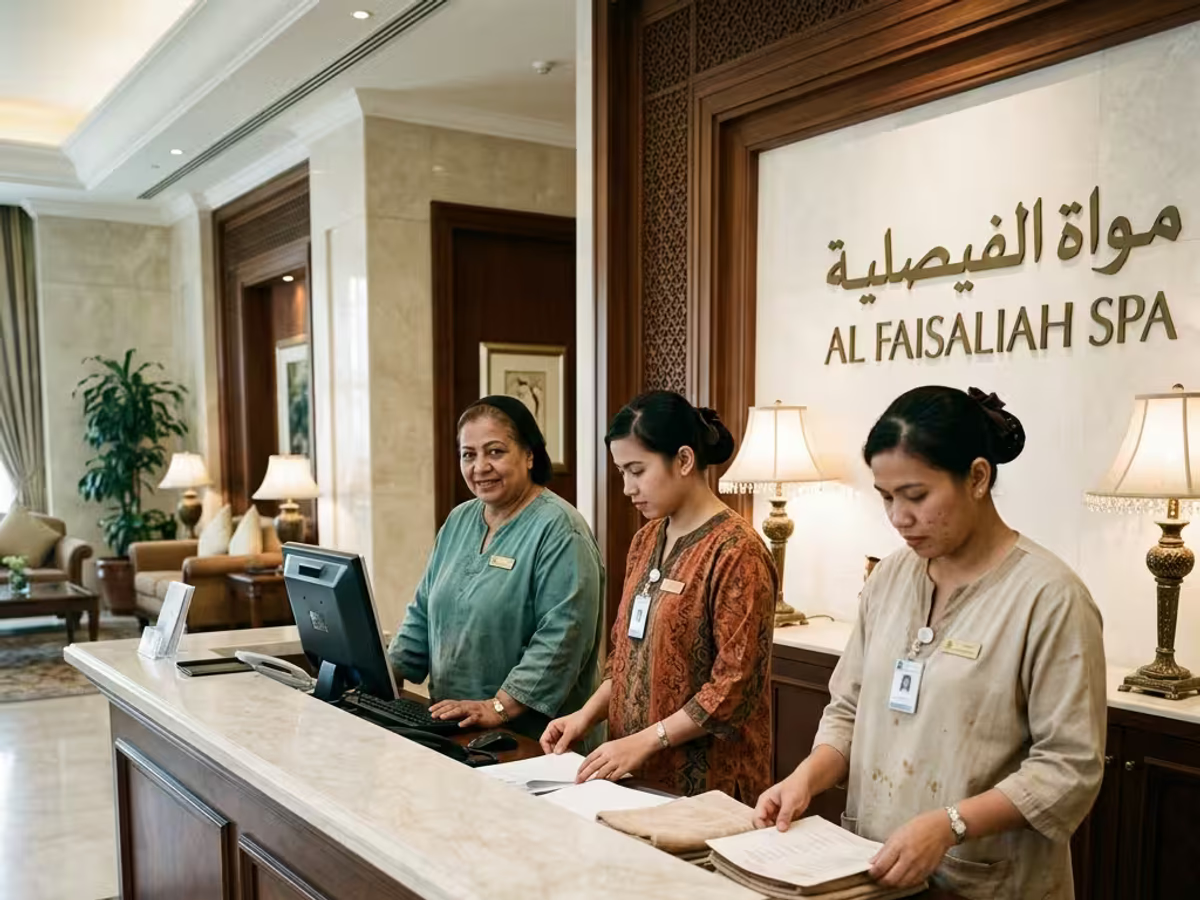
When a new five-star hotel spa in Riyadh's diplomatic quarter began pre-opening operations, their uniform requirement presented a unique engineering challenge: garments needed to perform in three radically different environments within the same facility. Treatment rooms operate at 70–85% humidity with constant exposure to essential oils, massage balms, and exfoliant compounds. The reception area demands formal luxury — garments that convey five-star authority while remaining comfortable through 10-hour shifts. Back-of-house zones (laundry, maintenance, stock management) require industrial-grade durability with no aesthetic compromise visible from guest-facing areas. The property's design director had rejected three supplier proposals before approaching UNEOM, citing an inability to reconcile performance requirements with the property's minimalist, earth-toned visual identity.
Zone-specific fabric engineering
We developed three distinct fabric specifications, each optimised for its operational zone. For treatment therapists: a performance polyester-elastane blend with antimicrobial treatment (silver-ion technology, tested to JIS Z 2801 standards, delivering 99.9% antibacterial efficacy). The fabric features an integrated stain-shield finish resistant to essential oil penetration — independently tested against a panel of 12 common spa oils, with zero staining after 72-hour exposure. For reception concierge staff: a wool-polyester blend (60/40) with Teflon™ stain-release finish, delivering the hand-feel and drape of luxury tailoring while surviving commercial laundry processing at 60°C. For back-of-house teams: a cotton-spandex twill rated for 400+ wash cycles, with reinforced seam construction at stress points (underarm, knee, pocket corners) and a soil-release finish compatible with industrial pre-soak protocols.
Colour system and brand integration
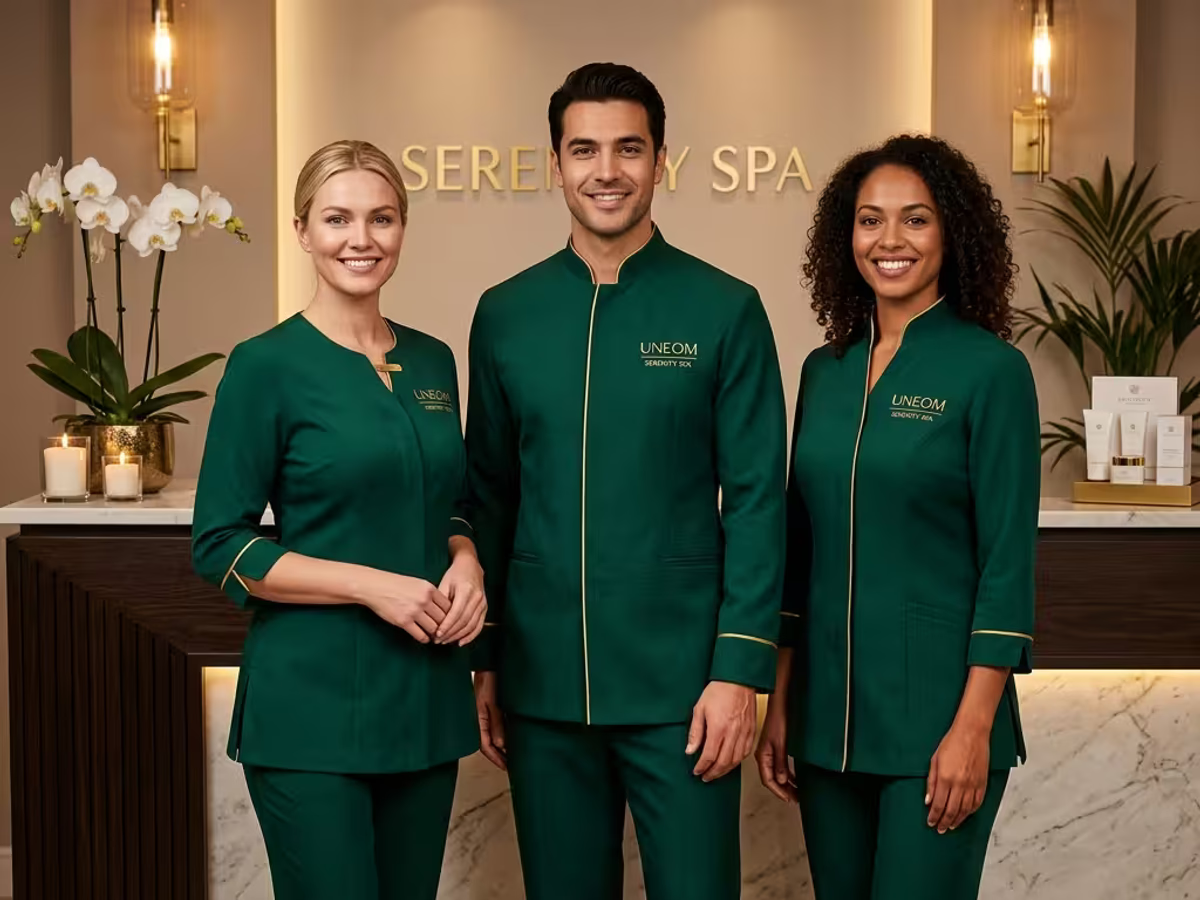
The property's interior palette was anchored to a custom warm sand tone (Pantone 7527 C) with charcoal accents. We matched this precisely across three different fabric compositions — a technical challenge, since polyester, wool, and cotton absorb dye differently. Our dye house produced 14 sample batches before achieving Delta E <1.0 colour consistency across all fabric types under D65 illuminant. The colour matching was further validated under the spa's specific LED lighting profile (3000K warm white) to eliminate metameric shift — a phenomenon where colours appear matched under one light source but diverge under another. Role differentiation was achieved through design elements: therapists wear V-neck tunics with spa-green piping; reception concierge wear blazers with the property crest; back-of-house staff wear crew-neck polos with zone-coded sleeve bands.
Fitting protocol and production
On-site fittings were completed in a single day during the pre-opening phase, working around construction schedules. Our fitting team used 3D body scanning technology that captured 42 measurement points per person — reducing the need for subsequent alterations to under 3% of garments delivered (industry average: 12–15%). The data fed directly into our grading system, generating custom patterns for three body-type clusters identified within the staff population. Production was executed on a 4-week accelerated schedule: yarn-dyed fabric preparation (Week 1), pattern cutting and construction (Week 2), finishing, embroidery, and QC inspection (Week 3), and final pressing, individual packaging, and logistics staging (Week 4). Each garment passed a 26-point quality inspection including seam strength testing (minimum 25N pull force), colourfastness verification, and dimensional stability checks.
Programme architecture and operations
The programme contract was structured around a bi-annual refresh cycle with quarterly interim assessments. Each staff member's kit includes: 5 tunics/blazers, 3 trousers/skirts, 2 outerwear pieces, and a care instruction card in English and Arabic. The joiner-kit SLA guarantees new-hire uniform delivery within 48 hours of HR notification, with standard sizes dispatched from UNEOM's Riyadh buffer stock and custom sizes produced on a 5-day express schedule. The programme also includes a take-back service: retired garments are collected, logged by serial number, and processed through UNEOM's closed-loop textile recycling programme. In the first 18 months, 0.8 tonnes of retired spa uniforms were diverted from landfill through this system.
Operational impact after 18 months
The 18-month programme review revealed operational metrics that exceeded initial projections. Mean garment lifespan reached 14 months in spa conditions — a 133% improvement over the property's previous 6-month average. The operations team logged zero fit-related complaints across the entire review period, compared to an average of 8 per month under the previous supplier. Uniform-related operational costs came in 12% below the original budget forecast, driven by the extended garment lifespan and elimination of emergency procurement. The property's general manager noted that uniforms had become a component of the guest experience score: post-stay surveys showed a measurable correlation between staff appearance ratings and overall spa experience ratings. The programme was subsequently referenced by the hotel group's regional VP as the benchmark for their planned expansion across three additional Saudi properties.