Arc Flash Rating Explained: ATPV, Breakopen and What Procurement Should Ask
What an arc rating measures, how ATPV and breakopen differ, why the required level comes from a site risk assessment, and which supplier documents to demand.
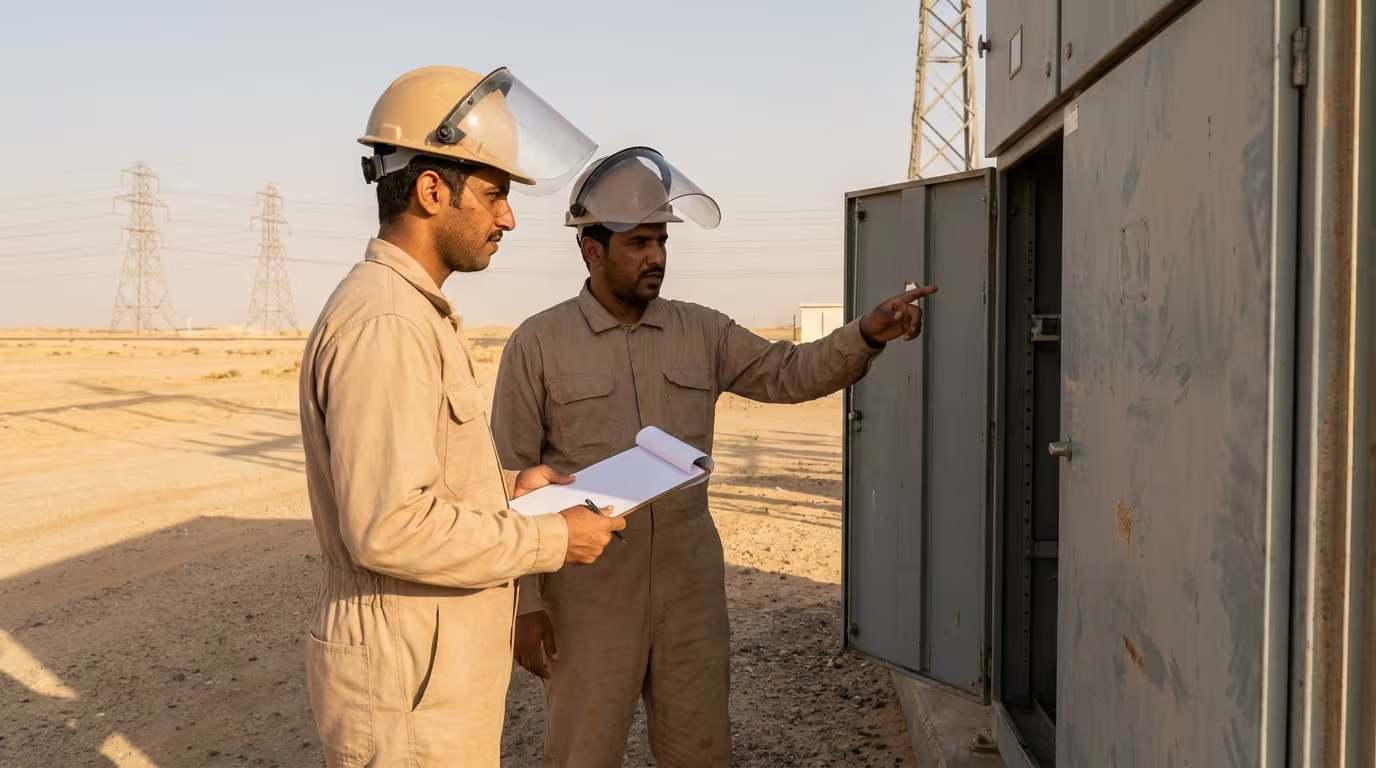
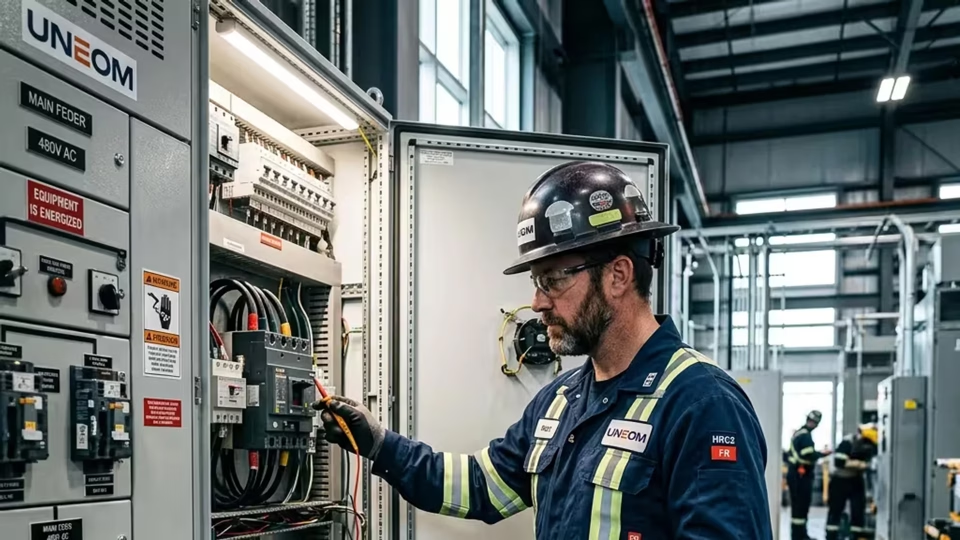
Procurement teams are routinely asked to buy arc-rated workwear without a technical background in electrical safety. This guide explains, in plain terms, what an arc rating measures, how ATPV differs from breakopen, why flame resistance alone is not protection, and why the level you must buy is decided by a site arc flash risk assessment.
What an Arc Rating Measures
An arc rating is not a pass or fail badge and it does not describe how strong a fabric is. It is a laboratory-derived measure of how much thermal energy a material can absorb before the heat passing through it is likely to cause a second-degree burn on the skin beneath. The exposure being simulated is an electric arc: an intense, extremely short release of heat, light, pressure and molten material. Arc ratings are expressed in calories per square centimetre, the same unit used to describe the incident energy an electrical worker could face at a given point in a system. That shared unit is the whole point, because it lets a safety team compare the hazard at a specific piece of equipment with the protection offered by a specific garment. What an arc rating does not do is prevent the arc, protect against shock or electrocution, or guarantee an uninjured worker. It describes one property of one barrier under controlled test conditions, and it is only meaningful when read alongside the hazard it is being matched to.
ATPV and Breakopen
Two terms cause most of the confusion in tender documents. ATPV, the arc thermal performance value, describes the incident energy level at which enough heat is predicted to pass through the fabric to bring a wearer to the onset of a second-degree burn, at a defined statistical likelihood built into the test method. Breakopen, reported as EBT, describes something physically different: the energy level at which the material is likely to open up and form a hole, exposing skin directly regardless of how well the fabric conducted heat. A fabric is tested for both behaviours, and the arc rating a supplier may publish is the lower of the two, because the lower figure is the point at which the garment stops behaving as intended. This is why a specification that simply says ATPV can be answered with a report that lists EBT, and why buyers should ask which failure mode governed the result. Neither term expresses a category, a class or a required protection level; both are properties of a tested material.
Flame Resistant Is Not Arc Rated
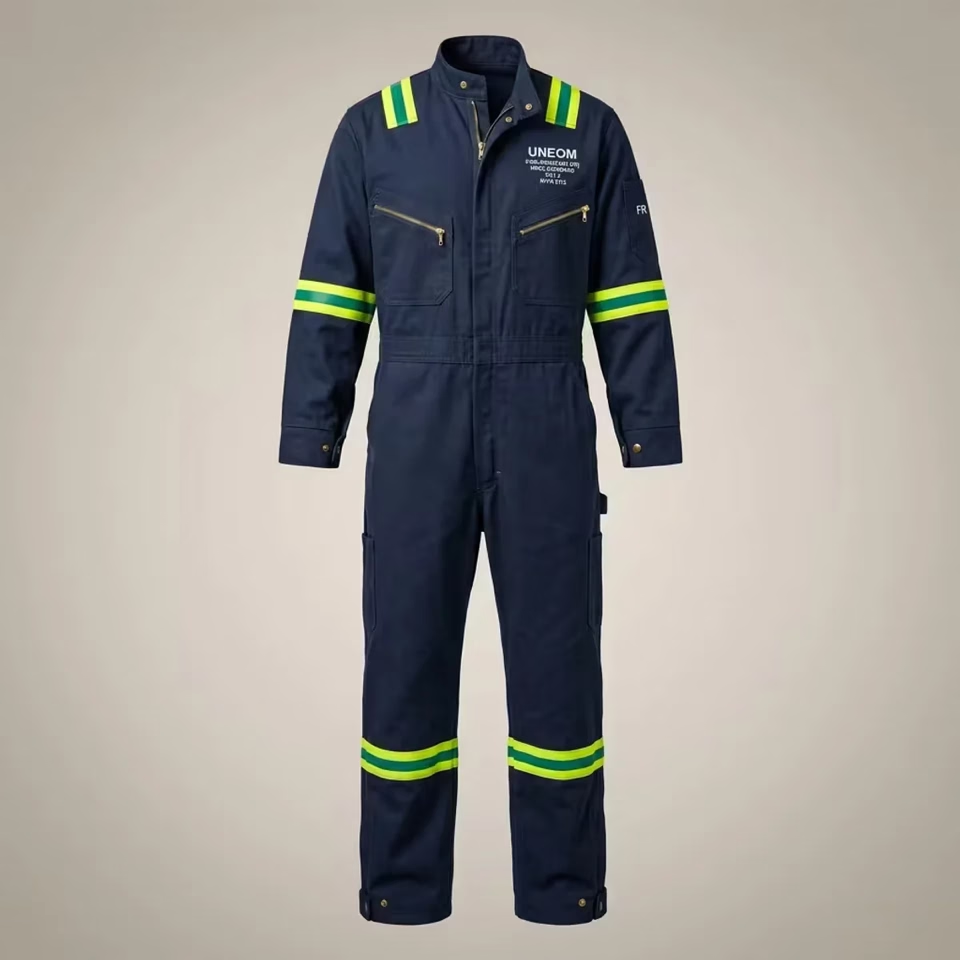
A flame-resistant fabric resists ignition and will not continue to burn once the ignition source is removed. That is a necessary property, but it is a behaviour, not a number, and it says nothing about how much arc energy the material can absorb. Every arc-rated fabric is flame resistant; not every flame-resistant fabric has been arc tested, and an untested fabric has no arc rating to quote. The distinction matters in three practical places. First, garment components: thread, closures, labels, interlinings, reflective tape and any high-visibility background become part of the thermal barrier, and non-arc-rated components can fail before the shell does. Second, base layers: meltable synthetics worn against the skin can melt and adhere during an exposure, which is why natural or arc-rated fibres are specified underneath. Third, layered systems: arc ratings of separate garments do not add up arithmetically, so a multilayer claim must come from testing the combination as a system rather than from summing two datasheets.
The Site Study Sets the Level
The single most important thing a procurement team can understand is that nobody selects an arc rating from a catalogue. The required level is an output of an arc flash risk assessment carried out for the specific installation: the equipment, the available fault current, the protective device clearing behaviour, the working distance and the tasks people actually perform. Standards families such as NFPA 70E, and the IEC 61482 series used in many international specifications, describe how that assessment is structured and how the resulting clothing requirement is expressed, whether through calculated incident energy or through a table-driven category approach. What they do not do is tell a buyer what to order for a plant they have never seen. In practice the assessment produces equipment labelling and a written clothing requirement, and procurement's job begins there: convert that requirement into a specification, buy to it exactly, and refuse substitutions that are justified on price or availability rather than on an equivalent tested rating. Never let a supplier, including us, define the level.
What to Ask Suppliers For
A quotation is not evidence. Ask for the third-party test report itself, issued by an accredited laboratory, and check that the fabric it describes is the fabric being offered: the same construction, weight, fibre blend, finish and, where relevant, the same colour, since dyes and finishes are part of the tested material. Ask for traceability from that report to the production lot you will receive. If the offer is a layered system, ask for the system test, not two separate reports. Request the permanent garment label content in advance, including the standard referenced, the rating, composition and care instructions, and confirm the label survives industrial laundering. Ask what happens to components under repair, which thread and fabric will be used, and whether the supplier accepts garments back for arc-rated repair. Ask for the laundering instructions the rating depends on, since softeners, bleach and hydrocarbon contamination can compromise performance. Finally, ask about quality-system evidence, because consistency between lots is what turns a single good test into a reliable programme.
Specifying for Saudi Conditions
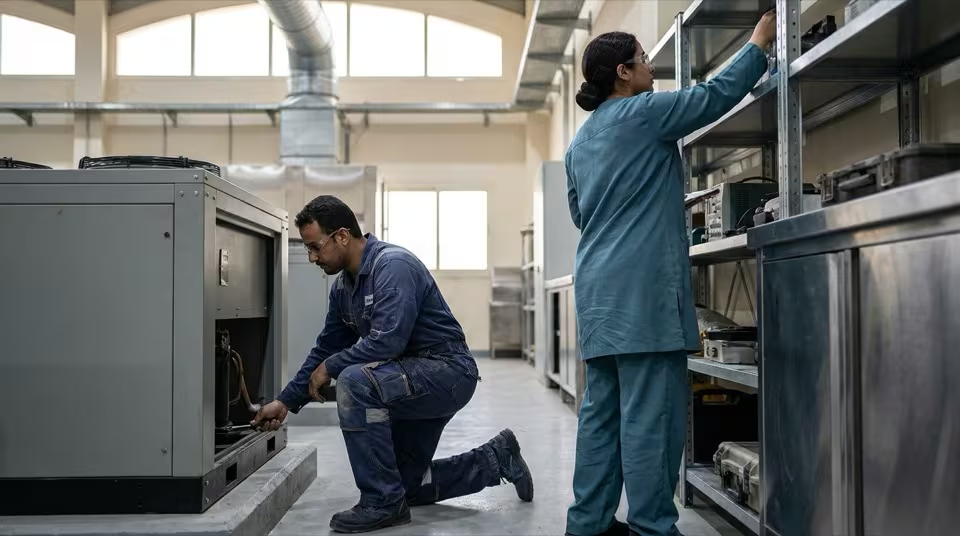
Saudi programmes add a constraint that temperate specifications ignore: heat. Summer work in Riyadh, Jubail or the Eastern Province substations happens in ambient conditions that push workers toward heat stress long before any electrical event occurs, and heavier fabric generally carries more thermal protection but also more heat burden. That trade-off cannot be resolved by lowering the required rating, which is fixed by the risk assessment; it is resolved through fabric selection within the required rating, garment cut, ventilation detailing that does not compromise coverage, and rotation and hydration rules written into the work procedure. Coverage requirements common in Saudi workplaces align naturally with arc-rated design, which already demands closed necklines, full sleeves and covered hardware, and the same logic extends to modest cuts for women in technical roles as Saudization broadens the workforce. Practical programme factors matter too: a full size range including women's fits, reliable replacement cycles, and local production capacity. UNEOM has manufactured inside the Kingdom since 2013, works to ISO 9001:2015, and holds OEKO-TEX Standard 100.
Frequently asked
- What does ATPV mean?
- ATPV stands for arc thermal performance value. It expresses the incident energy level at which a fabric is predicted to transfer enough heat to bring the wearer to the onset of a second-degree burn under the test method's defined conditions. It is a measured property of a specific tested material, not a protection class or a purchasing category.
- How do I know which arc rating to buy?
- You do not decide it, and neither does your supplier. The required level comes from an arc flash risk assessment for your specific installation, covering equipment, fault conditions, protective device behaviour, working distance and tasks. That assessment, carried out by qualified electrical personnel, produces equipment labelling and a clothing requirement. Procurement converts that written requirement into a purchase specification.
- Is flame-resistant clothing the same as arc-rated clothing?
- No. Flame resistance describes a fabric that resists ignition and self-extinguishes; an arc rating is a tested figure describing thermal protection against an arc exposure. Arc-rated garments are flame resistant, but a flame-resistant garment with no arc test has no arc rating to quote. Ask for the test evidence, not the label wording.
- Can I add the ratings of two garments together?
- No. Layering generally increases protection because of the air gaps and additional mass, but the effect is not arithmetic and cannot be predicted from two datasheets. If you intend to claim a system rating for a shirt-plus-coverall or coverall-plus-jacket combination, the combination must be tested together as a system and the report must describe that exact stack.
- Does laundering affect the arc rating?
- The rating belongs to the fabric, and properly specified arc-rated materials are designed to retain it through repeated correct laundering. Damage comes from the process, not the wash count: fabric softeners, bleach, incorrect temperatures and hydrocarbon or solvent contamination can leave flammable residue or degrade the garment. Follow the care instructions the tested performance depends on.