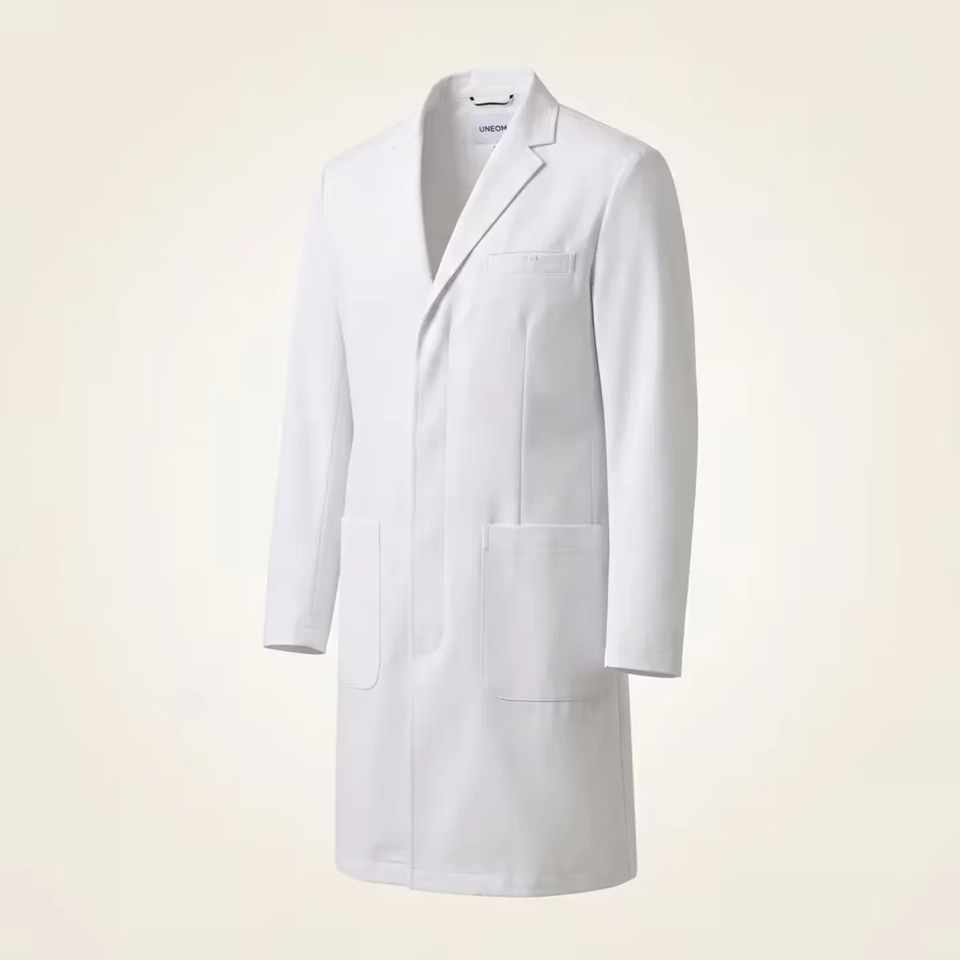
Veterinary Clinic Uniforms in Saudi Arabia: Choosing a Veterinary Clinic Uniform Supplier
Animal hair, scratches and constant laundering make veterinary uniforms their own category. A practical specification guide for Saudi clinics briefing a veterinary clinic uniform supplier.
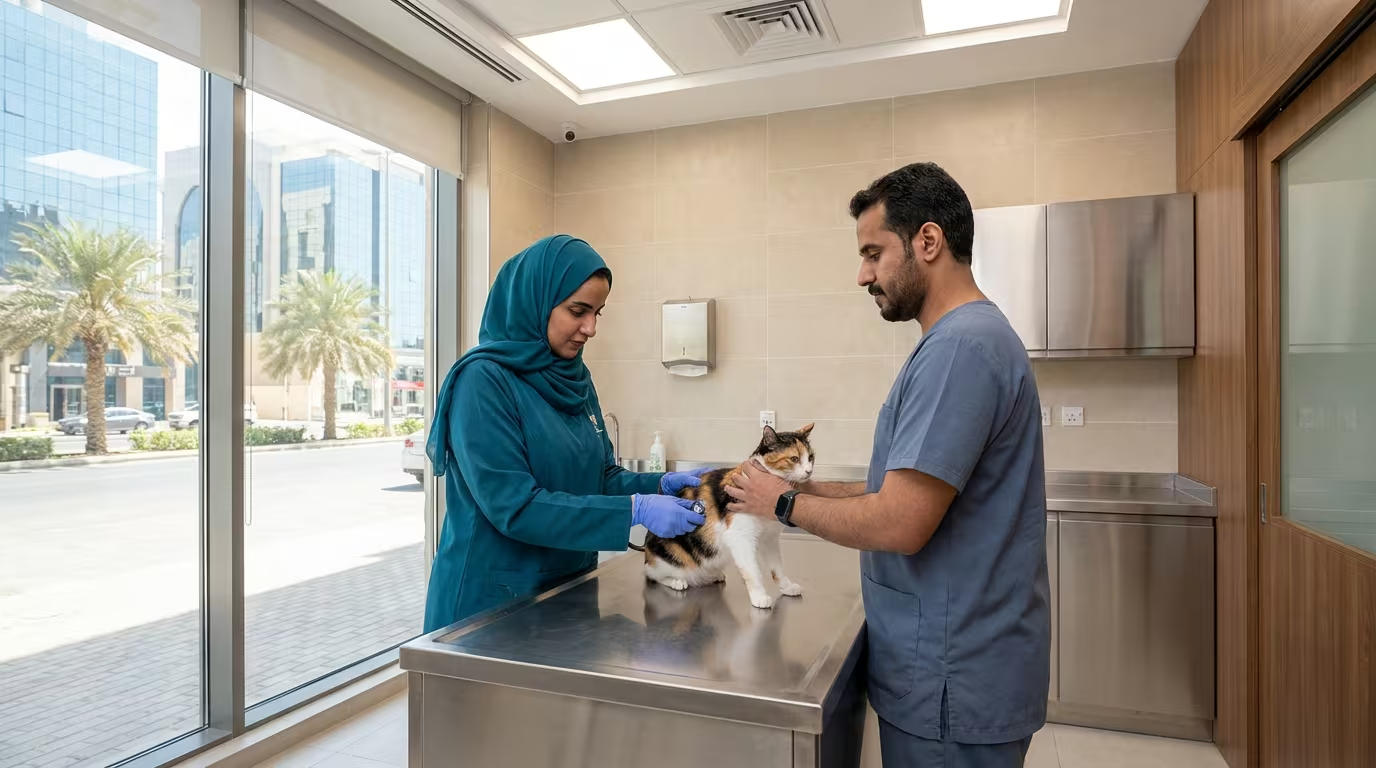
A veterinary clinic sits somewhere between a hospital and a workshop. Staff move from a calm consultation room to a struggling patient in restraint within minutes, wearing the same garment. Hair, claws, saliva and disinfectant all land on it, and it goes back into the wash that same evening. Write the specification around that, and the rest of the program gets easier.
Not a Hospital, Not a Workshop
A veterinary practice borrows a great deal from human healthcare — clinical surfaces, hand hygiene, sterile prep — but the patients bite, scratch, shed and struggle. That combination produces a wear pattern no standard medical scrub range was designed around. In one shift a technician may lift a sedated dog off a table, hold a cat still for a blood draw, hose down a kennel run, then greet an owner at reception. Fur transfers onto every horizontal surface of the garment, claws catch at cuffs and shoulder seams, and the lower front takes water, disinfectant and whatever the patient contributes. Thirty seconds later the same garment has to look composed in front of a paying client. Procurement teams who simply order standard hospital scrubs usually find the gap in the second month, when sleeves have pilled, hems have snagged and colours have gone patchy. The better starting point is to map the actual tasks by role, then write the specification around the two or three that punish fabric hardest.
Fabric That Lets Hair Go
Hair release is mostly a surface-and-static question rather than a fibre-family question. Brushed, napped or loosely spun surfaces give short hairs somewhere to lodge, and once embedded they resist both tumbling and brushing; smooth, tightly constructed faces let the same hair slide off with a wipe. This is why fleece linings, jersey with a fuzzy hand and softly brushed cotton twills tend to disappoint in a clinic, however comfortable they feel on the first wear. Static compounds the problem: in dry, air-conditioned rooms a charged synthetic surface actively pulls light hair towards it and holds it there, so antistatic treatment or a construction that dissipates charge is worth asking about. Colour matters too, and it is a practical decision rather than an aesthetic one — mid tones hide both light and dark coats far better than black or white, which is why so many working clinics drift toward blues, teals and greys. Ask a supplier for hair-release behaviour on the exact fabric you are buying, not on the family it belongs to.
Fluids, Stains and the Laundry Cycle
Veterinary garments meet water-borne soil, oily soil and disinfectant, often on the same shift, and each behaves differently. Absorbent cellulosic surfaces take up watery stains quickly and release them in the wash, while polyester-rich faces repel water but hold oily and greasy soils more stubbornly, which is where a soil-release finish earns its place. Fluid-repellent finishes are useful for splash and short contact, but treat them as a convenience rather than protection: they shed rather than block, they weaken with repeated laundering, and they are not a substitute for a proper barrier garment where a real exposure risk exists. That distinction belongs in your clinic's infection-control policy and risk assessment, not in a fabric brochure. Repeated hot washing, and any disinfectant carried into the machine, will shift colour over time, so fix your laundering assumptions before you choose shades and ask the supplier which finishes survive the wash regime you actually run. Whether garments go home with staff or through a commercial laundry changes the answer completely.
Sleeves, Seams and the Abrasion Map
Draw the wear map before you compare quotes. On veterinary staff the damage clusters in predictable places: cuffs and forearms, where restrained animals push, paddle and claw; the shoulder and upper chest, where a lifted patient rests; pocket corners, which carry scissors, thermometers and phones; and the seat and knees for anyone working at floor level with large dogs. Bar-tacked pocket corners, reinforced or double-needle stress seams and a snag-resistant construction address most of it. Sleeve length deserves a deliberate decision rather than a default: short sleeves keep forearms clean and easy to wash but leave skin exposed to scratches, while longer sleeves protect skin and get soiled and caught more often, so many practices issue both and let the task decide. Anything that dangles is a liability around animals, so keep ties short, avoid loose neck cords, and prefer a breakaway lanyard or a clipped badge. Snag resistance, not tensile strength alone, is what keeps a garment presentable after a difficult patient.
Who Is Who at a Glance
Owners arrive anxious and often cannot tell a veterinarian from an assistant, so visual role coding is a service feature as much as an operational one. Most practices settle on a small palette: one colour for veterinarians, another for technicians and nurses, a third for kennel, grooming and cleaning duties, and a distinct front-of-house look for reception — usually a softer, more tailored garment that reads as hospitality rather than clinical work. Keep the count low, because every extra colour multiplies stockholding and complicates replenishment. Reinforce colour with embroidery, name and role in Arabic and English, since bilingual identification serves local and expatriate clients alike and removes the guesswork about who to address. If the practice runs several branches, lock the coding centrally, or each site will quietly invent its own version within a year. Decide early who wears an outer layer over the uniform for kennel or ambulatory work, and make sure that layer carries the same identification, otherwise the scheme disappears the moment someone puts on a jacket.
Running It as a Program in Saudi Conditions
Heat is the constraint that reshapes the specification. The gap between a cooled clinic and a summer car park is severe, and staff on ambulatory, equine or farm work spend real time outdoors, so breathability and moisture movement matter more here than in a temperate market. Modest-fit options belong in the standard range rather than as an exception: longer tunic lengths, higher necklines, full-length sleeves, and hijab-compatible pieces in the same fabric and colour family so the team still reads as one team. Size the program properly before you commit to volume — a wear trial with the staff who are hardest on garments, a size set on site, and inclusive ranges for mixed Saudi and expatriate teams. Then plan replenishment, because clinics grow, people turn over, and a garment you cannot re-order in the same shade becomes a problem inside a year. UNEOM manufactures inside the Kingdom and has done since 2013, works to ISO 9001:2015, and holds OEKO-TEX Standard 100 certification, which keeps repeat runs and colour continuity close to hand.
Frequently asked
- Which fabrics handle animal hair best in a veterinary clinic?
- Look at the surface, not the fibre name. Smooth, tightly constructed faces release hair with a wipe, while brushed, napped or fluffy surfaces trap it. Static makes it worse in dry, air-conditioned rooms, so ask how the fabric behaves. Mid-tone colours hide both light and dark coats better than black or white. Request a sample and test it against your own patients.
- Do veterinary clinic uniforms count as PPE?
- Generally no. A scrub or tunic is workwear that keeps staff clean and identifiable; it is not a barrier garment. Where a genuine chemical or zoonotic exposure risk exists, the protective item — gown, apron, gloves, eye protection — is specified separately through your clinic's own risk assessment and infection-control policy, not through the uniform range.
- How many sets should each person get, and who launders them?
- Enough that nobody is forced to re-wear a soiled garment before wash day, which in a clinic usually means more sets than an office would need. Decide the laundering route first: home washing and commercial laundering place very different demands on colour and finish, and the supplier should specify the fabric against the route you actually use.
- How should we distinguish vets, technicians and reception staff?
- Use a small colour palette, one shade per role group, reinforced with bilingual embroidery carrying name and role in Arabic and English. Keep reception in a softer front-of-house garment. Limit the number of colours to protect stockholding, apply the scheme centrally across branches, and carry the same identification onto any jacket worn over the uniform.
- What should we ask a veterinary clinic uniform supplier in Saudi Arabia?
- Ask for hair-release and snag behaviour on the specific fabric, which finishes survive your wash regime, reinforcement at cuffs and pocket corners, modest-fit and hijab-compatible options in the same colour family, size sets for a wear trial, and a written commitment on re-order lead time and shade continuity.