National Day Uniform Company Saudi Arabia: Planning Guide for September 23
How Saudi companies plan National Day uniforms: realistic lead times, consistent green, respectful use of national symbols, reusable pieces, sizing for large headcounts and branch-level distribution.
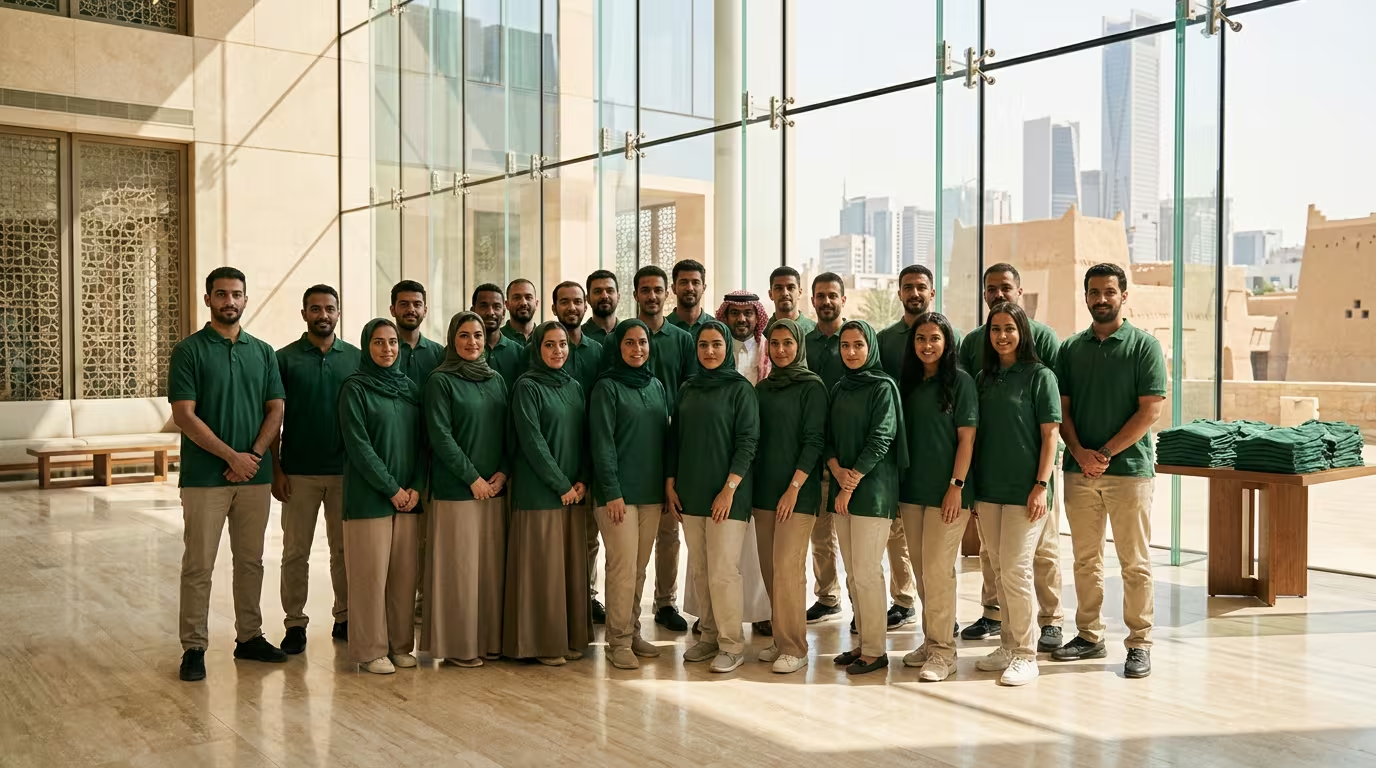
September 23 arrives on the same date every year, yet most national day apparel programmes start far too late. This guide sets out how Saudi employers plan the occasion properly: realistic lead times, a green that stays consistent, national symbols handled respectfully, pieces worth keeping, sizing at scale and distribution that reaches every branch on time.
Start in the Second Quarter
September 23 corporate apparel programmes rarely fail on design; they fail on calendar. The date is fixed, but everything upstream of it moves: concept and artwork approval, a costed proposal, purchase order release, fabric availability in the exact shade you approved, a pre-production sample somebody senior has to sign, then bulk production, decoration, inspection, packing and delivery to every site. Each step carries its own queue, and because employers across the Kingdom are aiming at the same week, capacity is tightest exactly when you need it. Treat this as a second-quarter conversation rather than a late-August scramble. The programmes that end calmly are usually the ones where the concept was agreed before the summer break and written lead times were confirmed with the supplier instead of assumed. Build in a deliberate buffer for one reject-and-remake round, because a wrong shade or a misplaced logo discovered in September has nowhere to go. Ask for a dated production schedule, and hold your internal approvers to it as firmly as you hold the factory.
Getting the Green Right
Green is the obvious choice and the most technically demanding one. Deep, saturated shades are harder to reproduce consistently than mid-tones, and the same nominal green reads differently on cotton jersey, on polyester piqué and on a woven cap panel, because those fibres take entirely different dye chemistries. If the shirt, the cap and the scarf are meant to look like one set in the same photograph, source them within one coordinated production run or design around the variance rather than discovering it on the day. Approve physical lab dips under the light you will actually stand in, never on a screen, and ask what the fabric's fastness to washing and to light has been tested against, so the set survives an outdoor event and a laundry cycle without going patchy. Deep shades also sit against skin through a hot month, which makes substance-testing certification a fair question for any supplier: UNEOM manufactures inside the Kingdom since 2013, works to ISO 9001:2015 and holds OEKO-TEX Standard 100.
Symbols Handled With Care
National symbols deserve deliberate handling rather than a quick clipart decision. The Saudi flag carries the shahada, which places its treatment in the realm of respect rather than graphic design, and the state emblem is likewise not a decorative asset. Before any national symbol goes onto a garment, have an accountable person review the official guidance published by the competent authorities on how the flag and the emblem may be used, and route the artwork through your own legal or compliance function; what other companies appear to have done is not a substitute for that check. In practice most organisations reach the emotional result they want without reproducing either mark: a green colourway, a tonal stripe, Arabic calligraphy of the occasion, an abstracted palm motif, or the company's own logo rendered in a national palette. Those routes approve faster, reuse better and are far less likely to produce an uncomfortable photograph. When in doubt, choose the design that expresses pride without placing a sacred inscription on a work shirt.
Reusable Core, Seasonal Signals
Decide early which pieces are meant to survive the week. Anything printed with a year becomes waste on 24 September, and a slogan tied to one campaign usually follows it. A more durable structure is a small reusable core plus inexpensive seasonal signals: a well-made national day staff shirt in a green that can re-enter normal rotation, worn with caps, lanyards, scarves or pin badges that carry the occasion and cost little to replace. Store the core, issue the accessories. Safety-critical roles need a firmer line. Flame-resistant, arc-rated and high-visibility garments are certified as complete articles, so adding a heavy print, a non-compliant patch or a novelty layer can undermine the protection your risk assessment depends on. For those teams, express the occasion through compliant garments, through items worn away from the hazard, or confirm any modification with the certification holder before committing to it. Pride is never worth a compromised protective garment, and nobody remembers the shirt once an incident has happened.
Sizing at Scale
Sizing is where large seasonal orders quietly go wrong. A workforce of several thousand cannot be dressed from an assumed size curve, so start from your own issue history where it exists and from a physical size set where it does not: real garments, tried on across sites, with the size each person actually chose recorded rather than the size they usually claim. Publish the measurement chart in Arabic and English so people select against centimetres instead of a foreign label convention. Make sure the range genuinely covers everyone, including the largest sizes, and offer cuts that respect modesty preferences — longer body length, longer sleeves, an easy line through chest and hip, necklines that sit high — so nobody has to choose between joining in and being comfortable. Then order a deliberate unallocated buffer across the middle sizes for new joiners, late additions and exchanges, and agree the exchange window with your supplier in writing before production starts rather than negotiating it in the last week.
Reaching Every Branch
The last mile decides whether the day looks organised. Bulk cartons sorted by size and shipped to head office guarantee a chaotic week of internal redistribution; packing per site, and ideally per person with a name and size label, turns arrival into a short handover. Name one coordinator per branch, give them a checklist and a simple way to report shortages, and schedule delivery well ahead of 23 September so there is genuine time to swap sizes and remake anything that came through wrong. Remote plants, industrial cities and project sites need earlier dispatch than the Riyadh or Jeddah offices, and a supplier manufacturing inside the Kingdom shortens that chain considerably against an import clearing a port in the same busy fortnight. Finally, tell people what to wear it with: one line on trousers, shoes, headwear and PPE turns a seasonal branded uniform into a coherent look across the Kingdom instead of a green shirt above whatever each person happened to own.
Frequently asked
- When should a company order National Day uniforms in Saudi Arabia?
- Treat it as a second-quarter decision rather than a September one. Artwork approval, costing, purchase order release, fabric sourcing in the approved shade, a signed pre-production sample, bulk production, decoration, packing and multi-site delivery each take time, and every employer wants the same weeks. Ask your supplier for written lead times and add one buffer round for remakes.
- Can we print the Saudi flag on staff shirts?
- Treat that as a governance question, not a design one. The flag carries the shahada and the state emblem is not a decorative asset, so review the official guidance published by the competent authorities and clear the artwork through your legal or compliance function before committing. Many employers avoid the question entirely with a green colourway, calligraphy or an abstracted motif.
- Should national day apparel be reusable or single-use?
- Split it. Keep a small reusable core — a shirt or polo in a green that can return to normal rotation — and put the occasion onto cheap accessories such as caps, lanyards, scarves or pin badges. Avoid printing the year on the main garment, since that turns a wearable item into waste the following week.
- How do we get sizes right for thousands of staff?
- Use evidence rather than an assumed curve: your own issue history, a physical size set circulated to sites, and recorded self-selections. Publish measurements in centimetres in Arabic and English, cover the full size range, offer modest cuts with longer body and sleeves, and order an unallocated buffer in the middle sizes for late joiners and exchanges.
- Can field staff wear national day shirts instead of their PPE?
- No. Flame-resistant, arc-rated and high-visibility garments are certified as complete articles, and substituting a novelty shirt or adding non-compliant prints and patches can undermine the protection your risk assessment relies on. Mark the occasion through compliant garments, through accessories worn away from the hazard, or confirm any modification with the certification holder first.