The Evolution of Corporate Dress Codes in Saudi Arabia
From thobe-only to hybrid programmes — how Saudi corporate dress codes are evolving with Vision 2030 workplaces.
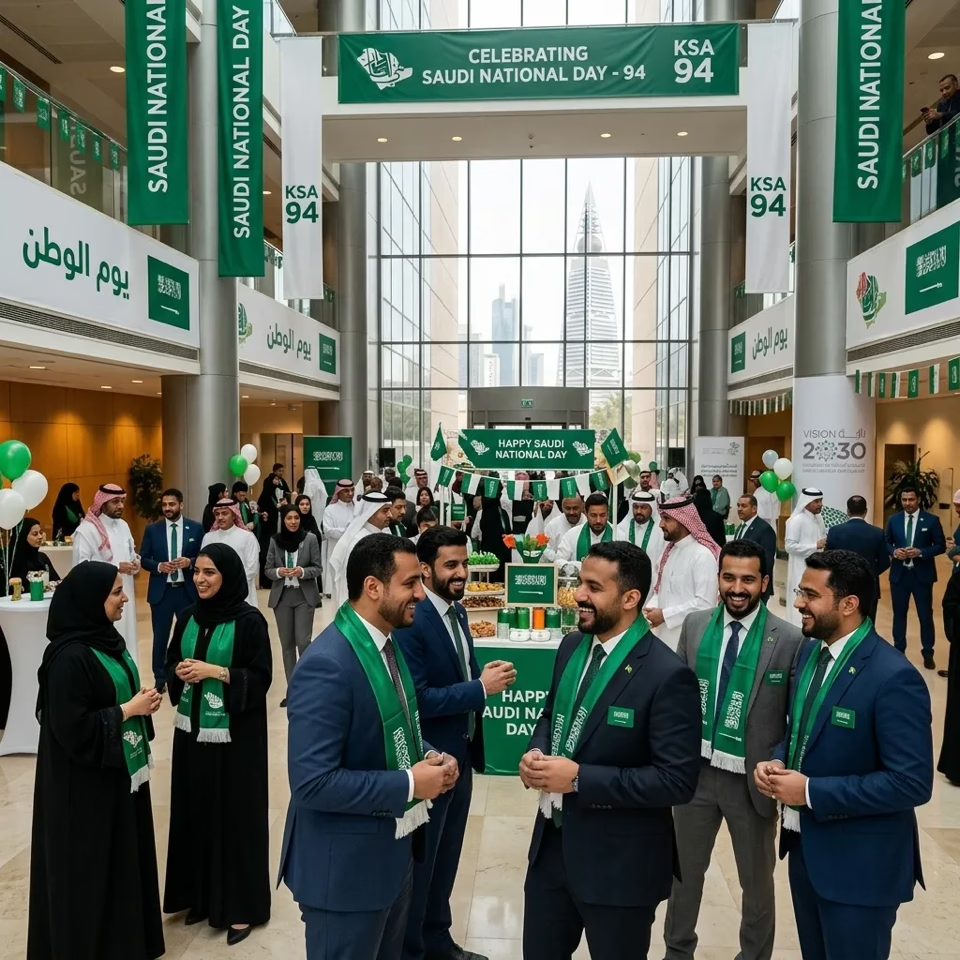
A Saudi boardroom in 2026 can include a CFO in a thobe, a CEO in a tailored navy suit, and a board member in a tailored women's blazer with hijab. The corporate dress code conversation has moved from "what should staff wear" to "how do we run a programme that serves all of them." This shift is not merely cosmetic — it reflects the deepest structural transformation in Saudi commercial culture since the establishment of the modern regulatory framework. Understanding where we came from, where we are, and how to design programmes that work requires examining the intersection of cultural identity, operational efficiency, and brand positioning.
Where Saudi corporate dress was
Before 2016, the Saudi corporate dress code landscape was remarkably uniform in its expectations. Government ministries and national corporations operated under an unwritten but universally understood rule: male employees wore the thobe and shimagh, female employees — where they were present in the workplace — wore the abaya. International companies operating in the Kingdom adopted a modified version of this convention, typically allowing Western business attire for expatriate staff while expecting Saudi nationals to maintain traditional dress. The result was a binary system: you were either in thobe or in a Western suit, and the choice was determined by nationality rather than role or preference. This created significant operational challenges for companies managing diverse workforces. A Saudi bank with 3,000 employees might operate two entirely separate uniform procurement processes — one for national staff thobes (sourced locally, replaced annually) and another for expatriate suits (imported, replaced on a wear-and-tear basis). The cost inefficiency was considerable. Our 2019 audit of a Riyadh-based financial institution revealed that their dual-track procurement spent 34% more per employee than a unified programme would have cost. Beyond procurement, the binary system created brand inconsistency. When a client walked into a branch in Jeddah, the visual identity of the staff depended entirely on the demographic composition of that particular branch — not on a deliberate brand strategy. The uniform told the client who worked there, but not what the company stood for. This was the status quo that Vision 2030 disrupted.
Vision 2030 workplaces
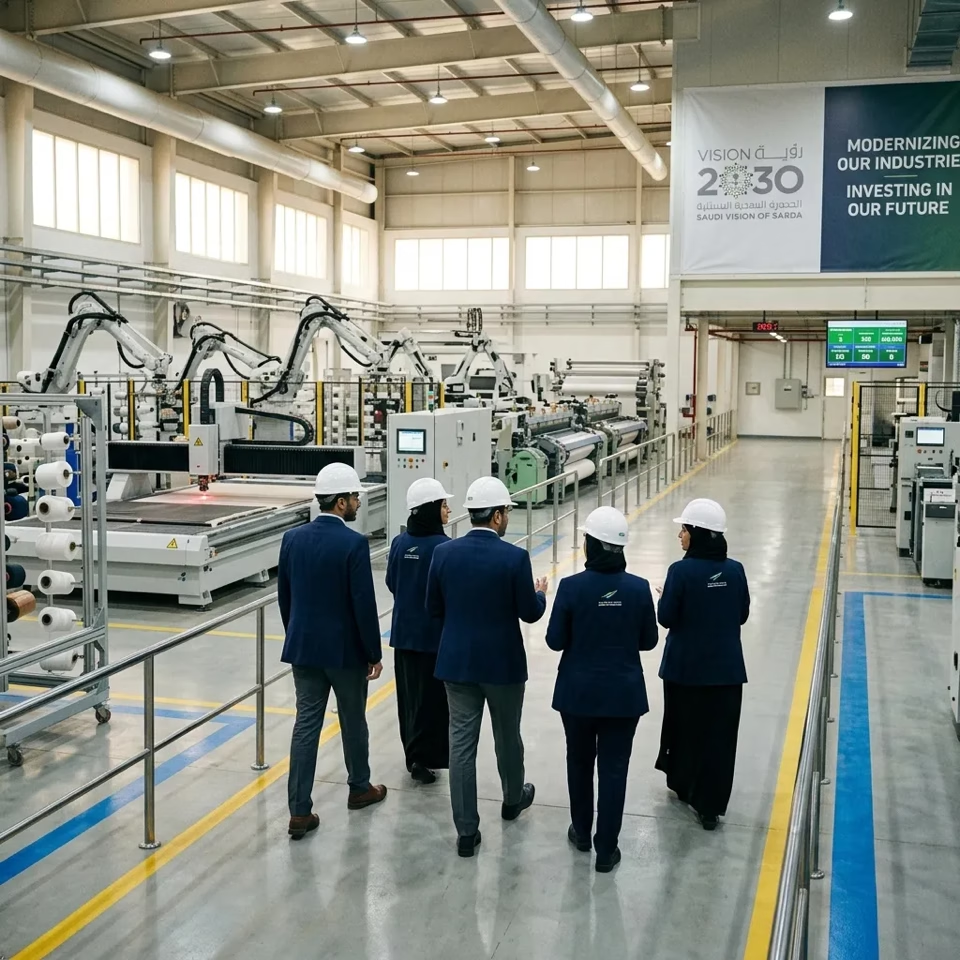
The Vision 2030 economic programme did not explicitly address corporate dress codes, but its structural reforms — female workforce participation targets, tourism sector development, entertainment industry creation, and foreign direct investment diversification — made the old binary system untenable. When a NEOM project team includes Saudi engineers, American consultants, Japanese technology specialists, and British financial advisors working side by side, a dress code built on nationality categories simply cannot function. The Saudi labour market transformation accelerated this evolution dramatically. Female workforce participation rose from 17% in 2017 to over 33% by 2025, introducing millions of women into industries that had never designed uniforms for them. Simultaneously, Saudization requirements brought Saudi nationals into customer-facing roles in retail, hospitality, and aviation that had previously been staffed by expatriates — roles where the thobe was impractical for operational reasons (safety equipment compatibility, kitchen hygiene requirements, airline cabin constraints). The market responded with what we now call "hybrid programmes" — corporate uniform contracts that accommodate multiple dress standards within a single brand identity. A major Saudi airline, for example, commissioned UNEOM to design a programme that included five distinct uniform categories: male Saudi crew (thobe-inspired tunic), female Saudi crew (hijab-integrated tailored suit), male expatriate crew (Western-cut blazer), female expatriate crew (pencil skirt and blazer), and ground operations staff (polo and cargo trouser). All five categories shared the same colour palette, fabric specification, and brand detailing — the passenger experience was unified even though the garments were structurally different. This is the defining feature of the Vision 2030 dress code: unity through design coherence, not through uniformity of garment.
Hybrid programmes: thobe, suit, business casual
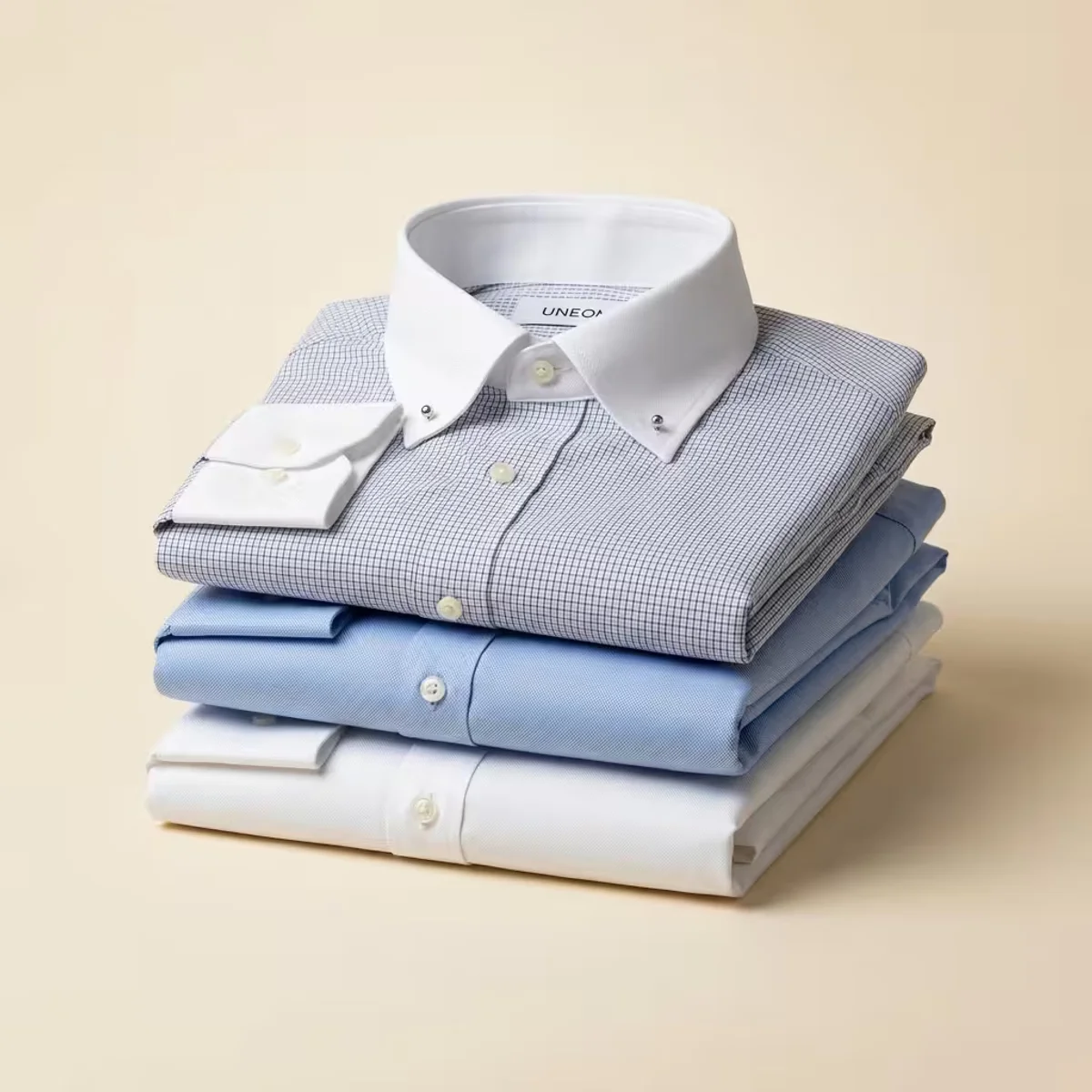
Designing a hybrid programme is substantially more complex than managing a single-garment uniform. The technical challenge is achieving visual consistency across garments that differ in structure, drape, and cultural context. A thobe has a vertical silhouette; a women's blazer has a structured shoulder line; a business-casual polo has a relaxed profile. Making all three read as "the same company" when a client sees them in a lobby requires careful attention to four design anchors: colour precision, fabric hand, hardware consistency, and brand placement. Colour precision means matching Pantone references across different fabric compositions. A navy thobe in 100% cotton will appear different from a navy blazer in poly-wool — different substrates absorb dye differently. UNEOM's lab maintains a library of 340+ dye-lot samples cross-referenced to 12 fabric compositions, ensuring that "company navy" looks identical whether it appears on a thobe or a blazer. This is not a trivial exercise; we reject approximately 8% of production batches on colour deviation alone. Fabric hand — the tactile quality of the textile — must feel premium across all garment types. In the Saudi context, this is particularly important because the thobe is a garment of intimate daily wear; Saudi professionals can distinguish quality thobe fabric by touch alone. When UNEOM designs a hybrid programme, the thobe fabric must meet the same quality expectation that the professional brings from their personal wardrobe, while the blazer fabric must meet international business-wear standards. We typically specify 160-thread-count Egyptian cotton poplin for thobes and 260gsm Super 120s wool-blend for blazers — both premium, both distinct, both unmistakably quality. Hardware consistency means buttons, zips, cufflinks, and badge fittings share a common design language. We commission bespoke hardware runs for programmes over 500 employees, typically in brushed nickel or matte gold, laser-engraved with the client logo at 3mm height. The hardware becomes the visual thread that connects the thobe, the blazer, and the polo. Brand placement follows a strict hierarchy: logo on left chest for all garments (embroidered on thobe, woven patch on blazer, printed on polo), wordmark on collar interior, and CR number on care label. The consistency of placement — same height from shoulder seam, same distance from centre front — creates subliminal brand recognition even when the garments themselves look structurally different.
Programme contract design
The commercial structure of a hybrid programme differs fundamentally from traditional uniform procurement. In the old model, a company issued a purchase order for 500 thobes at X SAR each, received them, and the transaction was complete. In a hybrid programme, the contract is a multi-year service agreement that covers design consultation, size profiling, production, logistics, replacement cycling, and brand evolution. A typical UNEOM corporate programme contract runs 24 months with two key financial innovations. First, pricing is per-employee-per-year rather than per-garment. This incentivises the supplier to produce durable garments (fewer replacements mean higher margins) rather than cheap ones (which generate more reorders). Second, the contract includes a "brand refresh" clause: at the 18-month mark, the client can request design modifications — updated colour accents, new hardware finishes, seasonal accessories — without renegotiating the base contract. This keeps the programme current without the cost and disruption of a full redesign. Size profiling is the operational foundation of any successful programme. UNEOM deploys mobile measurement teams to client sites, capturing 14 body measurements per employee using laser-guided tape systems. The data feeds directly into our pattern-grading software, producing custom size specifications for each garment category. For a programme with 1,000 employees across five garment types, this means managing 5,000 unique size records — a logistics challenge that manual processes cannot reliably handle. The return on this investment is measurable: our size-profiled programmes show a 94% first-fit acceptance rate versus the industry average of 72% for standard-size procurement. The remaining 6% require minor alterations, and fewer than 0.3% need full remakes. Replacement cycling determines how garments are retired and replenished. Most programmes specify a two-set allocation per employee (allowing one set to be worn while the other is laundered) with annual replacement of the primary set and biannual replacement of the secondary. Damaged garments are replaced within 72 hours through a standing inventory held at UNEOM's Riyadh distribution centre. This SLA is contractually binding and monitored via a client-accessible dashboard that tracks inventory levels, replacement requests, and delivery confirmations in real time. The net effect of programme-based procurement is a fundamental shift from transactional purchasing to operational partnership. The client does not buy uniforms; they subscribe to a visual identity service. The supplier does not sell garments; they manage a brand asset. This model is now standard for Saudi organisations with more than 200 employees, and it is the structure that UNEOM has optimised over eight years and 340+ active contracts.
Frequently asked
- Is the thobe still standard in Saudi corporate settings?
- In national-firm executive contexts, often yes. In multinational and Vision-2030 enterprises, hybrid is now standard — the thobe is one option within a managed programme, not the only option.
- Can UNEOM tailor thobes?
- Yes — UNEOM produces tailored thobes within the corporate programme contract, using 160-thread Egyptian cotton poplin with programme-matched colour specifications.
- How are hybrid programmes priced?
- On a per-employee-per-year bundle — UNEOM averages 1,200 SAR/year for executive hybrid programmes including two sets, replacement cycling, and brand refresh at 18 months.
- Are women's blazers part of the corporate line?
- Yes — hijab-compatible women's blazers are programme-priced equivalent to men's suits, designed with integrated headscarf loops and modest-cut specifications.
- Do programmes accommodate different dress codes by department?
- Standard practice — UNEOM programmes deliver role-tier wardrobes within one contract, typically covering executive, customer-facing, and operational tiers with distinct garment specifications.