Restaurant Staff Uniform Guide for Saudi Arabia: Front of House vs Kitchen
How front of house and kitchen uniforms differ in Saudi restaurants: fabric behaviour, aprons, stain and laundry planning, modest options, and specifications that survive daily service.
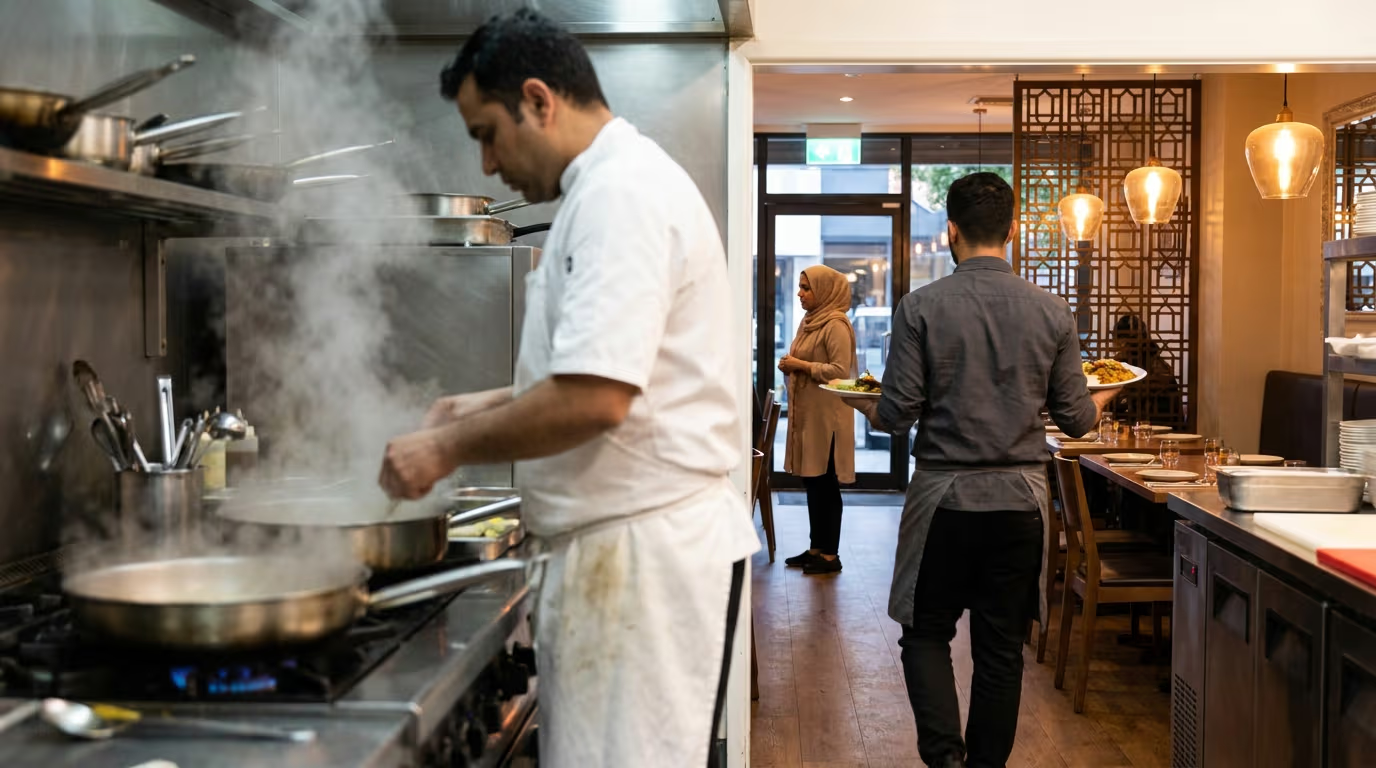
A restaurant staff uniform programme in Saudi Arabia works best when it is written as two specifications, not one. Front of house dresses the brand: cut, colour and finish. The kitchen dresses the hazard: heat, steam, grease and flame. Fabric, apron type, laundry route and modest options all follow from that split.
Two Briefs, One Restaurant
Treat front of house and back of house as separate procurement briefs sharing one brand. The front of house uniform is a customer-facing garment: it is judged on colour accuracy, drape, how it looks after a long shift, and whether it still reads as tailored when the wearer is carrying trays. The kitchen uniform is protective workwear: it is judged on how it behaves near an open flame, a steam table, a fryer or a pass under heat lamps. Those two briefs pull fabric choice in opposite directions, which is why a single house fabric across every role usually disappoints one side. Write them separately, then align them with shared colour, trim and logo placement so the two teams still look like one restaurant. In Saudi venues the split matters more than it does in cooler markets, because kitchen heat load sits on top of ambient summer heat, and front of house staff often move between air-conditioned dining rooms and open terraces within the same shift.
Front of House: Cut and Colour
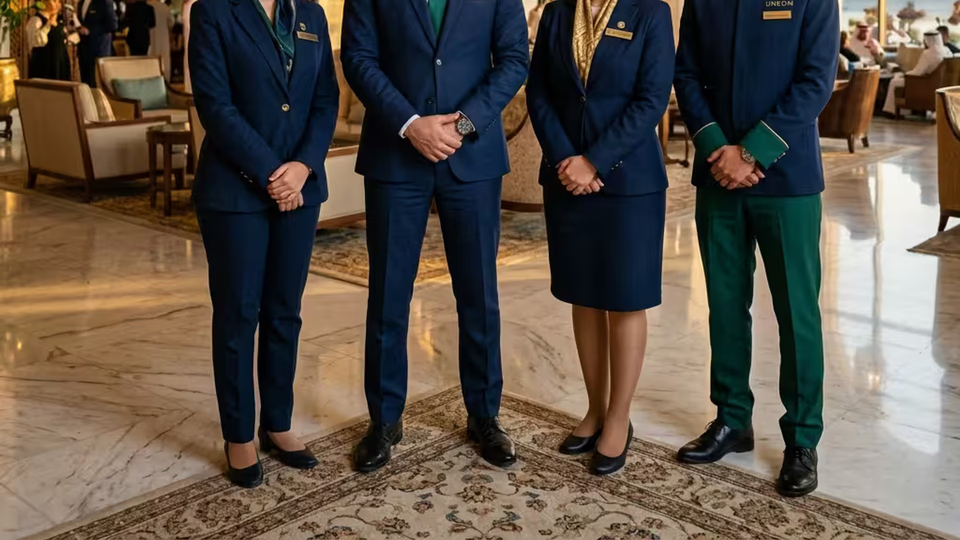
A front of house uniform has to hold its shape through service and still photograph well. Blended fabrics, polyester with viscose or wool and sometimes a small proportion of elastane, give the wrinkle recovery, colour stability and easy care that pure cotton shirting struggles to match under repeated laundering. Weight matters: too light and seams pucker and the garment looks cheap; too heavy and staff overheat, especially on terraces and outdoor seating during summer. Colour is a procurement discipline of its own. Deep brand shades hide splashes but absorb heat outdoors, while pale shirting reads fresh but shows every drop of oil, coffee and sauce. Ask for lab dips and hold approved standards so repeat orders and later sites match the first rollout rather than drifting shade by shade. Then design the detail around the work: sleeves that can be worn neatly, pockets sized for order tablets and payment terminals, reinforced closures, and a consistent badge and logo position that does not shift between shirt, waistcoat and apron.
The Kitchen: Fibre Behaviour First
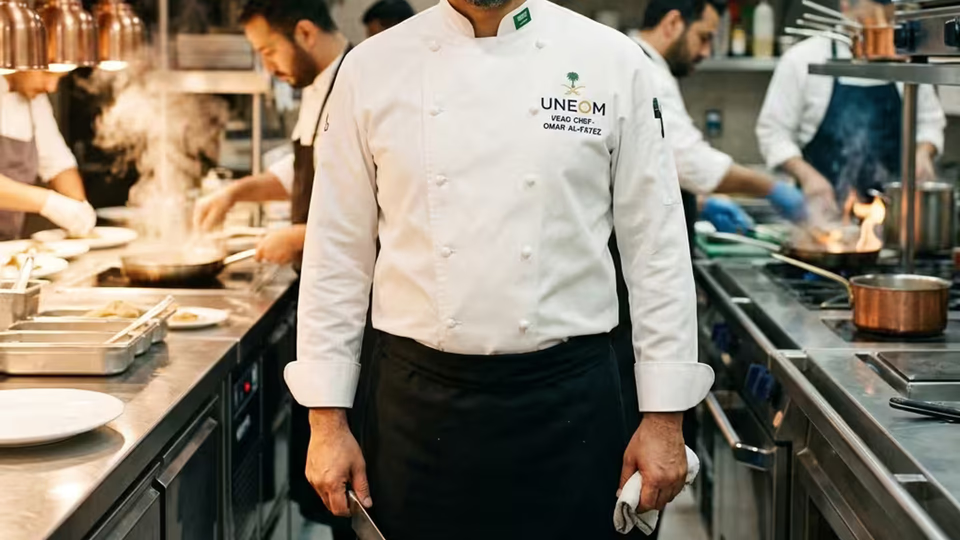
Kitchen staff uniform decisions in Saudi Arabia start with how a fibre behaves under heat, not with how it looks. Thermoplastic fibres such as polyester and nylon soften and melt when exposed to flame or intense radiant heat, and molten fibre against skin turns a small incident into a serious burn. Natural cellulosic fibres such as cotton char instead, which is why cotton-rich cloth remains the default for chef jackets and cook trousers wherever there is open flame, a fryer or a grill. Weight is a second protective decision: a denser cloth buys a moment of insulation against steam and splash, at the cost of comfort in an already hot kitchen. The traditional details exist for the same reason. A double-breasted front gives a second layer over the chest and can be re-wrapped to hide soiling; long sleeves shield forearms from splatter; secured headwear keeps hair contained without loose ends near flame or machinery. Pair the garment with closed, slip-resistant footwear, and keep synthetic base layers out of the kitchen entirely.
Aprons as the Working Layer
An apron is the cheapest protection in the building, and the most under-specified. Treat it as a sacrificial layer whose job is to take the damage the uniform underneath should never take, and to be changed the moment it stops looking clean. Front of house tends to use short waist or bistro aprons that frame the uniform and carry a pen, pad or card reader; back of house needs full bib coverage, because most kitchen splash lands between the chest and the knee. Cross-back straps spread load away from the neck for staff who wear an apron all shift, while a coated or heavily water-repellent apron is the right answer in the dish pit, where the hazard is soaking rather than staining. Keep the safety rules simple and consistent: ties fastened at the front so they can be released quickly, no long loose ends near burners or mixers, and enough clean aprons on the shelf that nobody is tempted to keep wearing a soiled one until the end of service.
Stains, Soil Release and Laundry
Restaurant uniform fabric is ultimately judged in the laundry. Polyester is oil-loving by nature, so cooking oil migrates into the fibre and stays there, which is why plain polyester whites go grey and greasy-looking long before they wear out. A soil-release finish changes that behaviour by helping oil lift during washing, and it is worth specifying on any garment that lives near a fryer or a grill. Cotton-rich cloth takes water-based stains more readily but responds better to hot, alkaline washing. Split the laundry streams accordingly: kitchen garments need heat and detergency to remove grease, while deep-dyed front of house pieces lose colour faster under the same treatment, and chlorine bleach shortens the life of any elastane content. Oil-contaminated textiles also need a proper wash and full cool-down before storage, because inadequately washed oily linen can self-heat. Finally, decide who launders. On-site washing is flexible but inconsistent; a commercial laundry gives repeatable results, and a rental model shifts replacement risk but reduces control over fit and appearance.
Modest Options, Sizing and Rollout
Saudization is steadily moving more Saudi men and women onto restaurant floors and into kitchens, and a uniform that fits only one body type or one dress preference quietly narrows who will take the job. Build modest options into the same design language rather than bolting them on: longer tunic lengths that stay covered when reaching or bending, higher necklines, full-length sleeves in the same cloth, looser cuts through the hip, and a secured head covering that matches the palette. In the kitchen the same principle applies with a safety filter, so head coverings should be close-fitting, cotton-rich and tucked, with nothing loose near flame or moving equipment. Get sizing right before the rollout: run a fit session with real size sets, size men and women separately rather than scaling one block, and hold buffer stock so a new hire is in uniform on day one. UNEOM manufactures inside the Kingdom, has done since 2013, and works to ISO 9001:2015 with OEKO-TEX Standard 100 certified fabric options for garments worn close to the skin all shift.
Frequently asked
- What is the real difference between front of house and kitchen uniforms?
- Front of house uniforms are specified for appearance and comfort: colour accuracy, drape, wrinkle recovery and easy care. Kitchen uniforms are specified for hazard: heat, steam, grease and flame. That leads to different fibres, different weights and different laundry treatment. Keep the brand consistent through colour, trim and logo placement rather than by forcing one fabric on both teams.
- Which fabric is best for kitchen staff uniforms in Saudi Arabia?
- Cotton-rich cloth is the safer default wherever there is open flame, a grill or a fryer, because cotton chars rather than melting onto skin. A modest polyester content can be blended in for durability and shape retention, but the higher the synthetic share, the more carefully you should keep that garment away from direct flame. Balance protection against kitchen heat with breathable weave and frequent laundering.
- How many uniform sets should each employee receive?
- Size the issue around laundry turnaround rather than a fixed number. The usual planning logic is one set in wear, one in the wash and one in reserve, with extra aprons because they are changed far more often than garments. Front of house often needs a larger allocation than the kitchen, because visible freshness is part of the service.
- How do we stop oil stains from setting in restaurant uniforms?
- Act on three fronts. Specify a soil-release finish on garments used near fryers and grills, because polyester holds oil unless the fabric is finished to let it go. Treat and wash promptly rather than at the end of the week. And wash kitchen garments hot and alkaline enough to lift grease, keeping deep-dyed front of house pieces in a gentler stream.
- How can we offer modest uniform options without losing brand consistency?
- Design the modest option in the same cloth, colour and trim as the standard garment, so it reads as one family. Longer tunics, higher necklines, full-length sleeves and matching head coverings do not disrupt a brand; mismatched fabric and colour do. In the kitchen, apply a safety filter: close-fitting, cotton-rich, tucked, nothing loose near flame.