Do Uniforms Affect Guest Satisfaction? How Hotel Uniforms Shape the Guest Experience
A mechanism-level look at how hotel uniforms shape guest perception in Saudi properties: recognition, perceived care, cross-department consistency, staff comfort, and why the effect cannot be isolated.
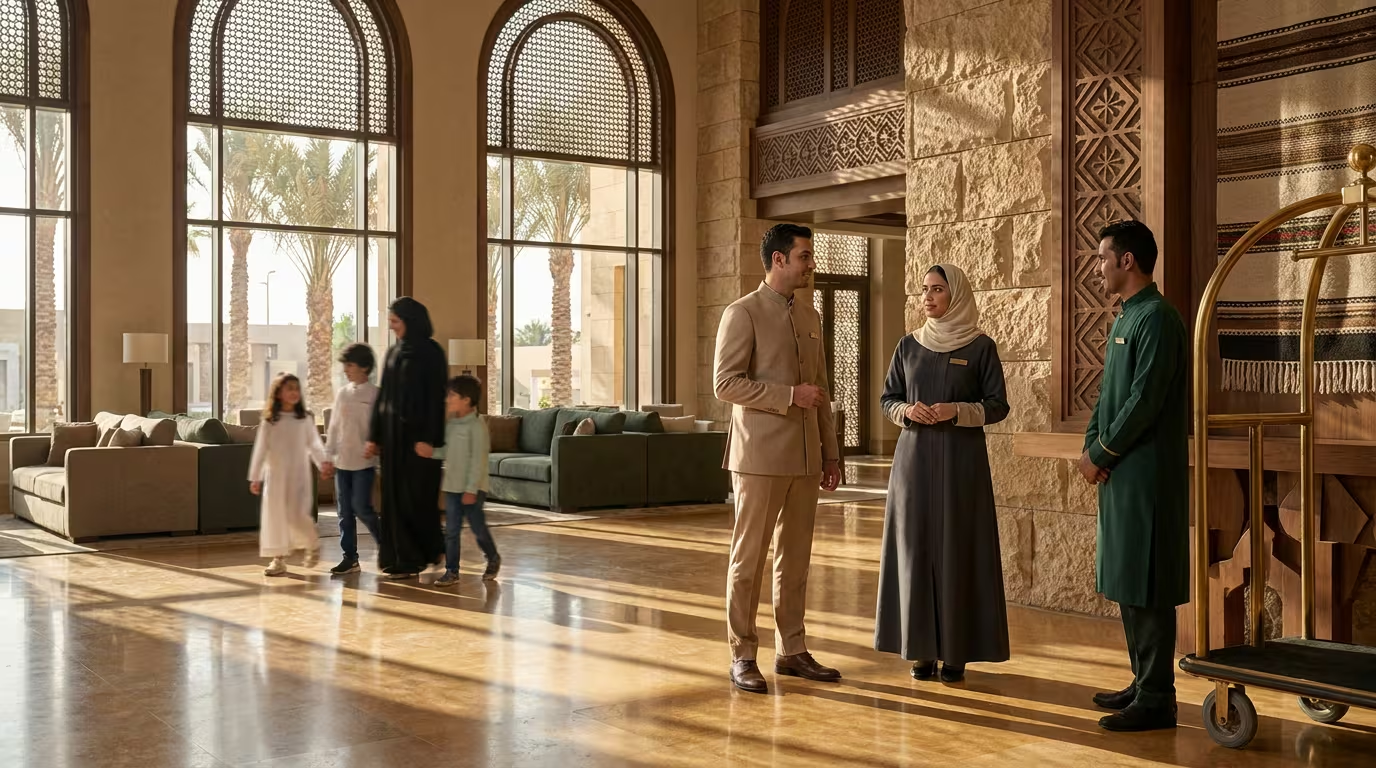
Hotel operators ask whether uniforms affect guest satisfaction, and the honest answer refuses a number. Satisfaction is produced by the whole service system. What a uniform can do is more specific: help guests identify staff, signal care, show operational consistency, and keep employees comfortable enough to serve well in Saudi conditions. Those are mechanisms, not promises.
What Can Honestly Be Claimed
Uniforms sit inside a service system, and that system is what a guest actually rates. A satisfaction score absorbs the wait at check-in, the state of the room, the temperature of the food, the recovery after a complaint, and the tone of every conversation in between. No hotel can lift one garment out of that mixture and assign it a share of the result, and any supplier who offers you a figure for it is inventing arithmetic. What can be described honestly are mechanisms: plausible, observable ways in which what staff wear changes how guests read a space and how staff move through it. Operators notice these things in daily practice, in which questions get asked at which counter, which departments generate confusion, and where a guest hesitates before approaching someone. Treat the rest of this guide as a description of those mechanisms rather than a promise of measured lift. Specify uniforms for reasons you can defend in an operations review, not for a number on a slide.
Recognition Before Conversation
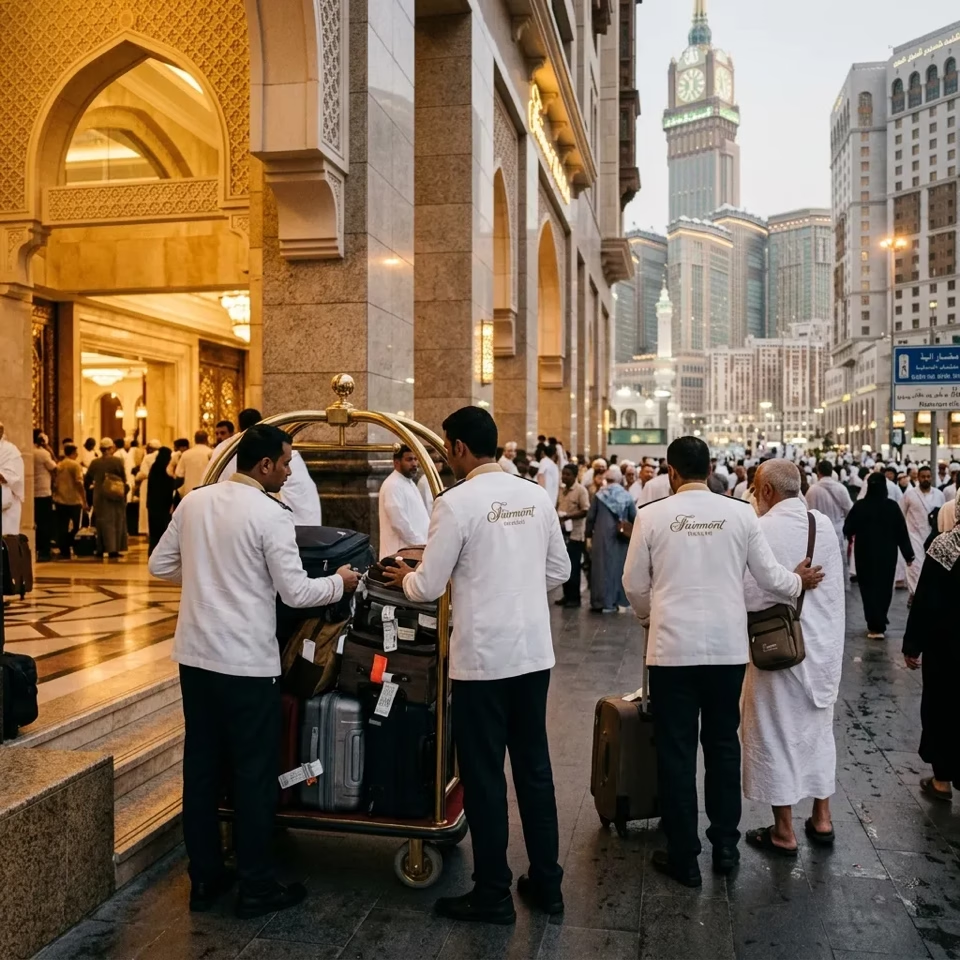
The first job a hotel uniform does is answer a silent question: who here works for the hotel? A guest arriving after a long flight, or a family moving through a crowded lobby during Hajj and Umrah season, scans for someone to approach and needs that scan to succeed quickly. Clear identification reduces the friction of asking the wrong person, and it becomes more valuable as the space grows busier, larger, and more multilingual. Recognition works through contrast with what guests themselves are wearing, and through internal differentiation: front office, concierge, housekeeping, food and beverage, and engineering should be distinguishable at a glance rather than only at conversation distance. Colour blocking, distinct outer layers, and consistent badge placement do more here than intricate detailing that reads only up close. In properties hosting large events or serving mixed local and international traffic, this legibility carries part of the wayfinding load that signage alone cannot handle, particularly in the first minutes after arrival when guests are least oriented.
Condition Reads as Care
Guests rarely evaluate a uniform as design; they read its condition as information about the property's standards. A crisp collar, an unfaded colour, intact buttons, and a hem that has not frayed suggest a house that checks its own details, while pilled fabric, shine at the elbows, mismatched shades of the same garment, or a visibly tired jacket suggest the opposite, fairly or not. This is why specification and program design matter more than logo placement. Fabrics chosen for colourfastness through repeated industrial laundering, weaves that resist pilling at friction points, and colours that forgive the inevitable coffee and sauce marks in food and beverage roles all extend the period during which a uniform still reads as cared for. So does a replacement rule that retires garments on appearance rather than on a fixed calendar, and a par stock level that lets a housekeeper change after a heavy shift instead of finishing the day in a soiled tunic that guests will see in a corridor.
Consistency Across Departments
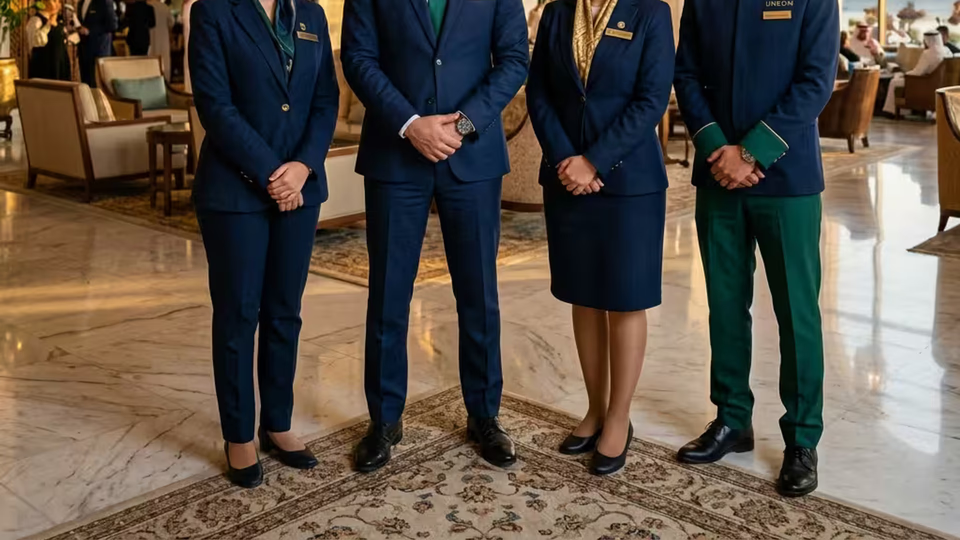
A guest moves through several teams in a single stay and forms an impression of whether the property is run as one operation or several. Uniform consistency is one of the more visible pieces of evidence in that judgement. When the valet, the lobby host, the breakfast server, and the night auditor all look deliberately dressed within a coherent family, sharing a palette, a fabric character, and one standard of grooming and badging, the property reads as disciplined. When outsourced security or contracted stewarding appears in unrelated garments, or when half a department has moved to a new design while the rest wear last year's, the seams in the operation become visible to people who have no reason to think about your contracts. Consistency is largely a supply problem rather than a design problem: complete size ranges including modest-cut options, stock that fits a genuinely diverse workforce, adequate replenishment, and one written standard covering agency staff as well as payroll staff.
Comfort Shapes Behaviour
Staff comfort reaches the guest indirectly but reliably. A doorman standing in Saudi summer heat, a valet crossing an open forecourt, a banquet server carrying trays between a hot kitchen and an air-conditioned ballroom: all of them are managing thermal load while performing hospitality. Fabric that traps heat and moisture, a jacket that restricts reaching, or a collar that becomes uncomfortable by mid-shift changes posture, shortens interactions, and drains the small energy that warm service depends on. Guests do not diagnose the fabric; they experience a slightly flatter greeting. The practical responses are well understood in textile terms: lighter weights and more open constructions for outdoor and hot-zone roles, blends and finishes that move moisture rather than hold it, cuts that allow full arm movement and bending, and modest coverage achieved through drape and layering rather than through heavier cloth. Where women's roles require modest silhouettes, airflow belongs in the pattern itself. Comfort here is an operational input, not a perk.
Where Uniforms Show Up Later
Uniforms outlive the moment they are worn. They appear in guest photographs, in social posts from weddings and conferences, in the background of every image a property publishes, and in the language guests use to describe an experience, since praise and complaints alike often arrive attached to a description of clothing rather than a name. That gives the uniform a second life in reputation channels no one on the operations team controls. It also makes the uniform a recurring element of brand presentation refreshed far less often than marketing collateral, which argues for designs that will still look current several seasons out and palettes that photograph well under the mixed lighting of lobbies, restaurants, and outdoor terraces. None of this can be traced to a rating in isolation. What managers can do is observe: walk the property as a guest would, look at recent guest photographs, ask front-line teams where guests hesitate, and treat uniform condition as a standing item alongside cleanliness and maintenance.
Frequently asked
- Do uniforms affect guest satisfaction in a way you can actually measure?
- Not in isolation. Satisfaction scores absorb waiting times, room condition, food, service recovery, and staff manner all at once, so no honest method separates the uniform's share of the result. What you can describe are mechanisms such as recognition, perceived care, consistency, and staff comfort, and observe them operationally. Specify on reasoning you can defend, not a claimed percentage.
- What matters more to guests, uniform design or uniform condition?
- Condition, usually. Guests read a faded, pilled, or ill-fitting garment as a statement about the property's standards regardless of how good the original design was. A modest design kept immaculate outperforms an ambitious one that has aged badly. Build the program around industrial laundering durability, adequate par stock, and replacement rules based on appearance.
- How should hotel departments be visually differentiated?
- At a glance, not up close. Guests should distinguish front office from housekeeping, food and beverage, and engineering from across a lobby, which favours colour blocking, distinct outer layers, and consistent badge placement over fine detailing. Keep every variation inside one visual family so the property still reads as a single, coordinated operation.
- Does Saudi summer heat really change hotel uniform specification?
- Yes, particularly for doormen, valets, outdoor food and beverage, and anyone moving between hot exteriors and cooled interiors. Weight, construction, moisture handling, and cut all shift for those roles. Modest coverage can be maintained through drape, layering, and pattern rather than heavier cloth, so comfort and appearance standards do not have to compete.
- How can a hotel review whether its uniform program is working?
- Observe rather than attribute. Walk the property as a guest would, check whether staff are identifiable at distance, inspect garments in service rather than in the store, review recent guest photographs, and ask front-line teams where guests hesitate or approach the wrong person. Track sizing gaps and replacement lag as operational indicators.