Hotel Uniform Standards by Star Rating in Saudi Arabia
How hotel uniform standards shift with star rating in Saudi Arabia: fabric quality, tailoring, kit depth and role differentiation, and how four-star properties balance ambition against budget.
Star ratings do not publish uniform specifications, yet guests read staff clothing as a rating in itself. In Saudi hotels the ladder is consistent: fabric quality, tailoring precision, how many sets each employee holds, and how finely roles are distinguished. Understanding those four variables is what lets a property dress to its tier deliberately.
What the rating actually changes
A star rating is a promise about the guest experience, not a published uniform specification, and it is worth separating the two before a procurement brief is written. No classification scheme hands you a fabric weight or a garment count. What the rating does is set the expectation your uniform has to survive: at three stars a guest wants staff who look clean, consistent and identifiable; at five stars the same guest reads the lapel roll, the shirt collar and the shoe polish as evidence that everything unseen is equally controlled. That is why uniform decisions climb with the rating even when nobody writes them down. The practical translation for a Saudi hotel is a ladder with four rungs — material quality, tailoring precision, kit depth per employee, and how many distinct roles get their own look. Each rung costs money and adds programme complexity, and each is visible to a different degree. Deciding where your property sits on all four, deliberately rather than by default, is the whole exercise.
Where fabric separates the tiers
Fabric is the first place the ladder shows, and it shows through hand-feel, drape and how the garment looks in month nine rather than week one. Entry-tier hospitality wear leans on high-polyester blends because they resist wrinkling, hold colour through industrial laundering and cost less per wear; the trade-off is a flatter surface and less breathability against skin. As the rating climbs, specifications typically move toward finer yarns, higher wool or cotton content in jackets and waistcoats, better linings, and finishes chosen for appearance rather than only durability. Saudi conditions complicate the climb, because a doorman or valet stepping between conditioned lobbies and midsummer heat needs a fabric that manages moisture and recovers its shape, not just one that photographs well. The honest answer is that no single blend wins every position, so luxury programmes usually run different fabrics for front desk, restaurant and outdoor roles. UNEOM manufactures inside the Kingdom and holds OEKO-TEX Standard 100, which speaks to what is in the cloth against the skin.
Tailoring and fit
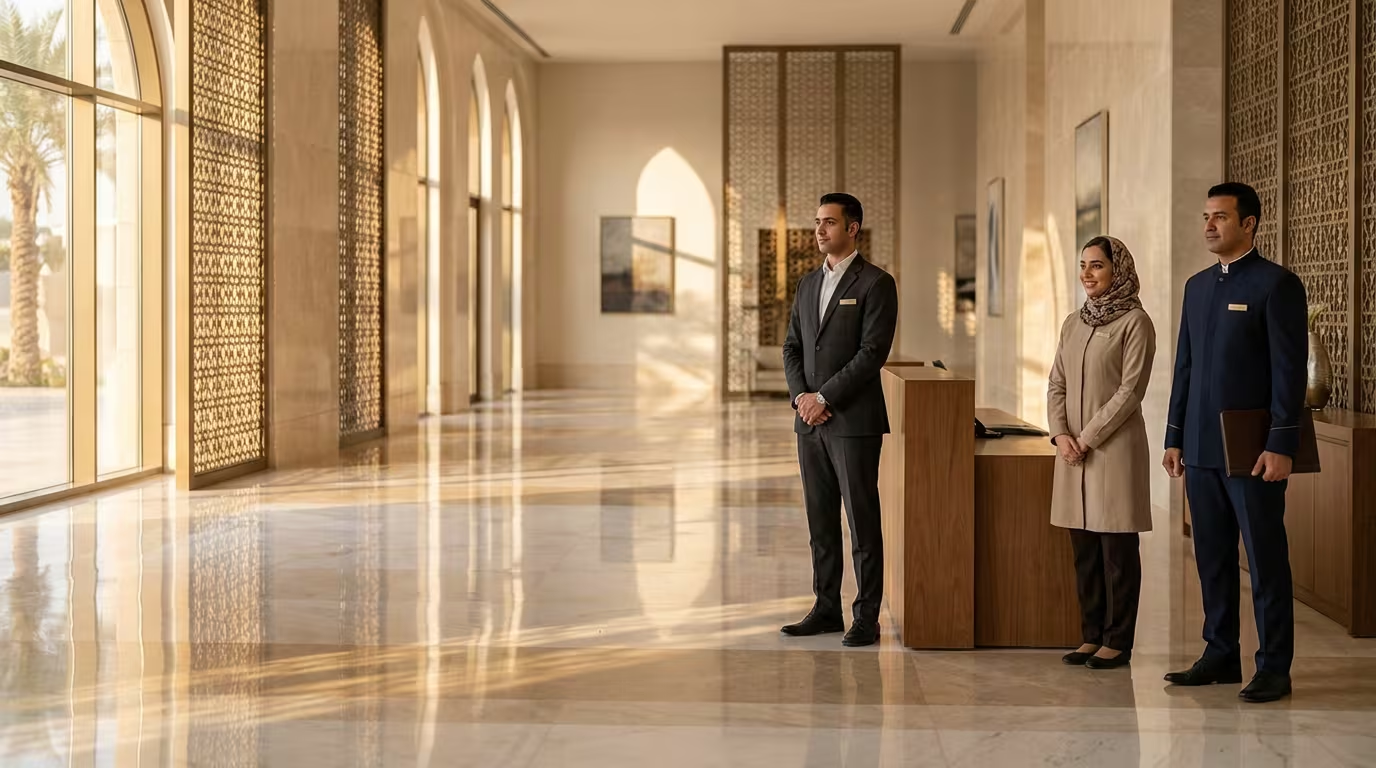
Tailoring is where guests feel a difference they cannot name. A three-star programme is normally built on a standard size grid: staff are fitted to the nearest size, sleeves and hems are adjusted where obvious, and the result is tidy. A five-star programme treats fit as part of the product — a measured fitting for each employee, alterations treated as a scheduled step in onboarding rather than an exception, and a tailoring allowance held for new hires and body changes across the contract. In between, four-star properties often split the difference by tailoring only the roles that stand still in front of guests, such as reception, concierge and fine-dining service, while keeping the rest on graded sizing. Saudi programmes carry an extra fitting dimension, because the size range must genuinely cover a mixed-nationality workforce and a growing number of Saudi men and women entering hospitality, and because modest cuts, longer tunics, wider sleeves and hijab-compatible necklines need to be part of the same fitted system rather than a separate afterthought.
Kit depth and laundry cycles
Kit depth is the least glamorous variable and the one that quietly decides whether a uniform looks like its rating on a busy Thursday night. The arithmetic is simple: the number of sets each employee holds has to cover the shift pattern plus the laundry turnaround plus a buffer for spills, and hot-climate properties burn through shirts faster because staff change more often during summer. Thinner kits force staff to re-wear, and re-worn garments read as tired regardless of how good the cloth was on day one. Luxury programmes therefore tend to issue more sets per person, add role-specific extras such as a second jacket, spare ties or scarves and seasonal outer layers, and build replacement into the contract rather than treating it as an exception. Mid-tier properties can protect the same effect at lower cost by being generous where the garment sits closest to the guest — shirts, blouses and aprons — and disciplined about the outer pieces that are worn less and laundered less aggressively.
Role differentiation and close-range detail
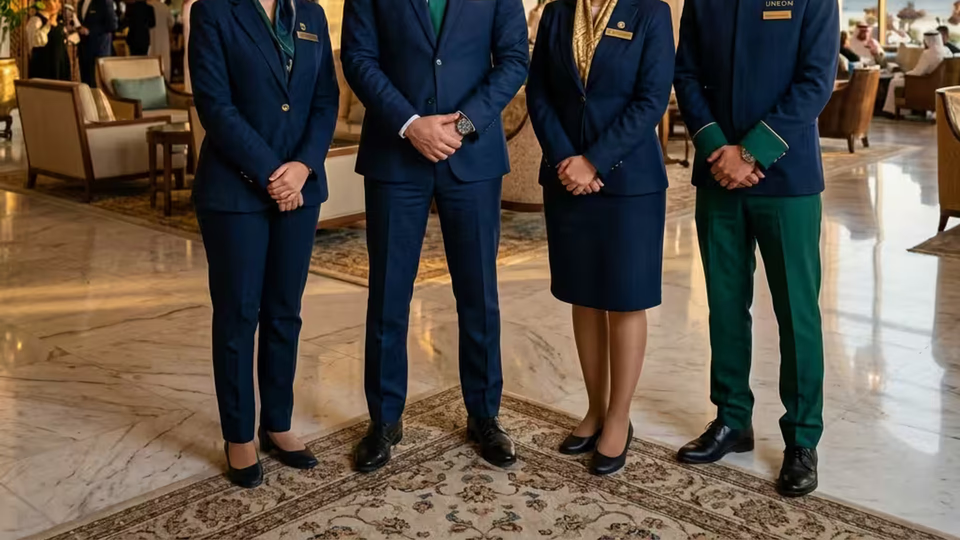
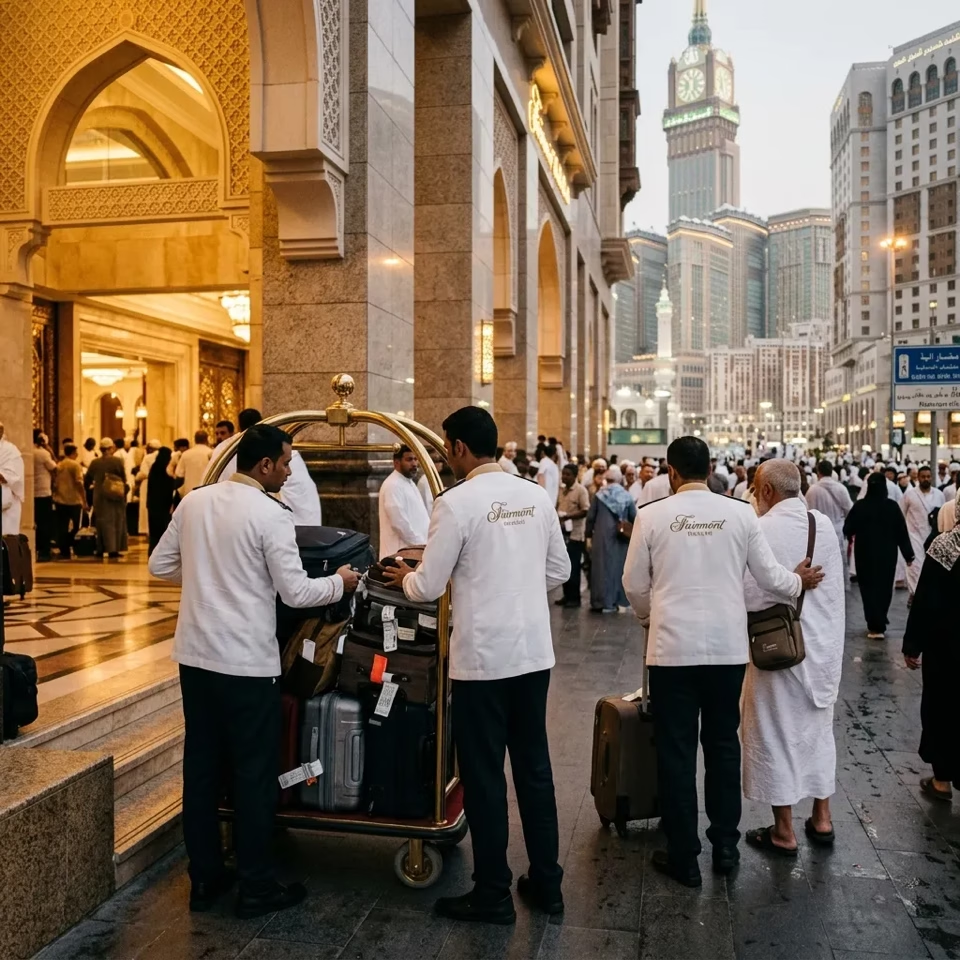
The clearest visual marker of a luxury programme is how many distinct looks it carries. A smaller property may dress reception, food and beverage and housekeeping in three variations of one core design, changing colour or accessory rather than silhouette. A five-star house tends to separate far more finely: doorman, bell and valet, concierge, front desk, lobby lounge, speciality restaurants with their own identity, spa, club floor, banqueting and back-of-house each read differently, and a guest who cannot articulate the system still navigates it correctly. Alongside that sits a layer of detail that only becomes visible at close range — buttons that match rather than approximate, stitching that follows the lapel line, name badges that sit at a consistent height, pressed collars, lint-free dark fabrics, and aprons tied the same way by every server on the floor. None of this is expensive individually. It is expensive to hold consistent across hundreds of staff and thousands of laundry cycles, which is exactly why guests treat it as a proxy for everything else.
The four-star balancing act
Four-star properties face the hardest decision, because their guests carry luxury reference points and their budgets do not. The workable strategy is to spend unevenly rather than thinly. Concentrate quality where dwell time is longest and distance is shortest — the arrival sequence, the front desk, the main restaurant — and accept a plainer, harder-wearing specification for roles a guest passes in seconds. Standardise the base garment across departments and differentiate with accessories, colour and a single well-cut outer layer, which buys visual variety without multiplying patterns, minimums and stock lines. Protect kit depth before you upgrade cloth, because a good fabric worn twice looks worse than a modest fabric worn fresh. And write the boring things into the contract: sizing reviews, replacement triggers, a named person who approves how the uniform is worn, and a repeat-order path that keeps shade and cut consistent as the property ages. UNEOM has manufactured in the Kingdom since 2013 under ISO 9001:2015, and that repeatability is usually what separates a programme that holds from one that drifts.
Frequently asked
- Do star rating systems specify hotel uniform requirements?
- Not in the way procurement teams often assume. Classification frameworks generally centre on facilities, amenities and service delivery, and uniform expectations are interpreted from the standard of presentation a rated property is expected to maintain rather than from a published fabric or garment list. Treat the rating as an expectation level, then write your own specification against it.
- How many uniform sets should each hotel employee receive?
- There is no universal number; it is arithmetic, not a standard. Count shifts per week, add the laundry turnaround in days, then add a buffer for spills and summer changes. Front-of-house roles in contact with food or working outdoors need deeper kits than back-office positions. Set it against your own laundry contract and shift pattern.
- What distinguishes 5 star hotel uniform fabric from mid-tier options?
- Mostly hand-feel, drape and how the garment ages. Luxury specifications tend toward finer yarns, more natural fibre in structured pieces, better linings and finishes chosen for appearance as well as wear. Mid-tier programmes lean on higher-polyester blends for wrinkle recovery and colour retention through industrial laundering, accepting a flatter surface in exchange.
- How should a four-star hotel prioritise uniform spending?
- Spend unevenly. Put the best cloth and tailoring on the arrival sequence, front desk and main restaurant, where guests stand closest for longest, and use a plainer, harder-wearing specification elsewhere. Standardise the base garment and differentiate with accessories and colour. Protect the number of sets per employee before upgrading fabric.
- How do modest options fit into a luxury hotel uniform programme?
- They belong inside the design, not beside it. Longer tunics, extended sleeves, higher necklines, hijab-compatible collars and loose-cut trousers should be drawn from the same fabric, colour palette and tailoring standard as every other variant, so a Saudi employee choosing a modest option looks like part of the same luxury system rather than an exception to it.