Hajj Season Hotel Staff Uniform Planning for Makkah and Madinah Hospitality Teams
How Makkah and Madinah hotels plan, size, issue and replenish hospitality uniforms for a peak season defined by heat, crowding, fast onboarding and a fixed deadline.
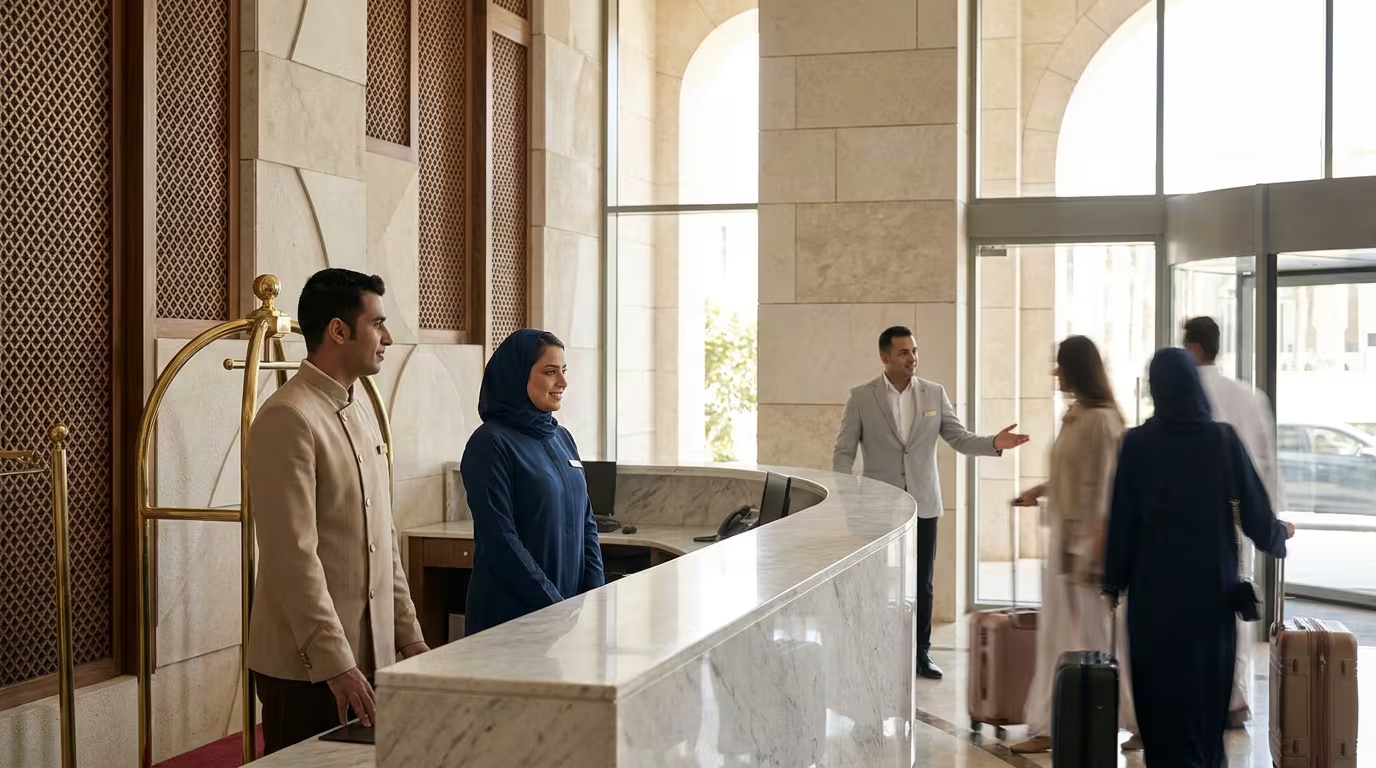
Hajj and Umrah season compresses a year of hospitality pressure into a few weeks. Makkah and Madinah properties feel it first. Headcount rises fast, guests arrive from everywhere at once, and staff work long shifts in heat and crowds. The uniform programme that supports that has to be planned like an operation, not ordered like a product.
Planning Against a Fixed Deadline
A Hajj season hotel uniform programme is unlike any other apparel decision a hospitality operator makes, because the deadline is fixed and immovable. Occupancy in Makkah and Madinah properties climbs toward a defined window, headcount expands sharply with seasonal and contracted staff, and the uniform has to be on the floor before the first arrivals, not somewhere in a production queue. Because the season follows the lunar calendar, it moves earlier through the Gregorian year, which means the same property can face a mild-weather season one year and a punishing summer one a few years later; a garment specification written for one is not automatically right for the other. The practical consequence is that procurement has to work backwards from the opening date through issue, fitting, exchange, delivery, production and approval, and then add contingency at each step. Operators who treat the uniform as an early-year conversation rather than a last-quarter scramble get better fabric availability, better sizing outcomes and far fewer emergency substitutions that break the visual consistency of the team.
Sizing and Issue at Volume
The hardest part of outfitting a seasonal hospitality intake is rarely the design; it is getting the right size onto the right person in the days between onboarding and the first shift. Large seasonal intakes arrive in waves, often close to the season, sometimes with limited advance data on body measurements, and frequently including staff transferred from sister properties or supplied through manpower contracts. A workable programme therefore separates the styles from the size logistics: agree the garment specification early, build a size curve from the property's own historical issue data, hold buffer stock in the middle sizes where demand concentrates, and pre-pack individual kits by name and role so distribution becomes a handover rather than a fitting session. A short, formal exchange window in the first week absorbs the errors that any volume sizing exercise produces. Recording every issue against the employee record also protects the closeout: at the end of the season the property knows what went out, what came back and what needs replacing before the next cycle.
Heat, Crowds and Long Shifts
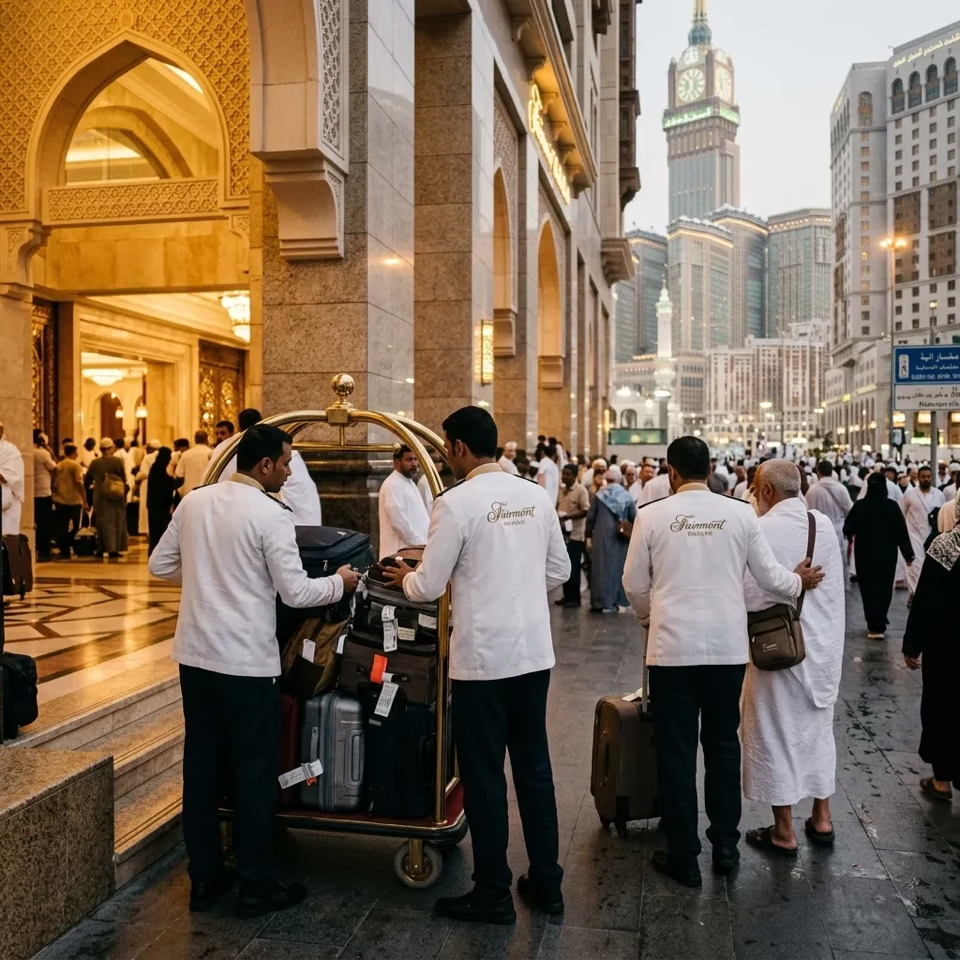
Hospitality work in the districts around the Two Holy Mosques is physically demanding in a way that a standard hotel specification does not always anticipate. Bell staff, doormen, transport coordinators and crowd-facing hosts move continuously between air-conditioned interiors and open forecourts, carry luggage, and work extended shifts across the hottest part of the day. Fabric should follow that exposure profile, not a single house standard. Lighter constructions with an open enough weave to move air, and finishes that carry moisture away from the skin so it can evaporate, matter more outdoors than they do at a reception desk. Pure cotton is comfortable and breathes well but holds moisture and dries slowly, which shows on a long shift; well-engineered blends generally recover appearance faster and hold a pressed look through repeated wear. Cut deserves equal attention: an articulated shoulder and a sleeve that allows a full overhead lift are the difference between a jacket that survives a luggage shift and one that fails at the seam. Colour should balance outdoor heat load against how visibly a garment shows dust and perspiration.
Modesty and Composed Appearance
Properties serving guests in Makkah and Madinah host visitors who arrive in a state of focus and reverence, and the appearance of the service team should support that atmosphere rather than compete with it. In practice this is a design brief rather than a religious pronouncement: UNEOM does not issue guidance on matters of religious observance, and decisions about what is expected rest with the property, its guests and the relevant authorities. What a uniform supplier can do is make the modest option the well-made option. That means coverage that does not depend on the wearer adjusting the garment through a long shift, fabric with enough opacity that a light-coloured shirt stays dignified under lobby lighting, drape that skims rather than clings when a staff member bends or lifts, sleeve and hem lengths written into the specification rather than left to interpretation, and headscarf-compatible collars and necklines for the women who wear them. Styling should be quiet and confident: restrained colour, clean lines, minimal ornament, and a standard of finishing that reads as respect for both the guest and the wearer.
Identification and Language
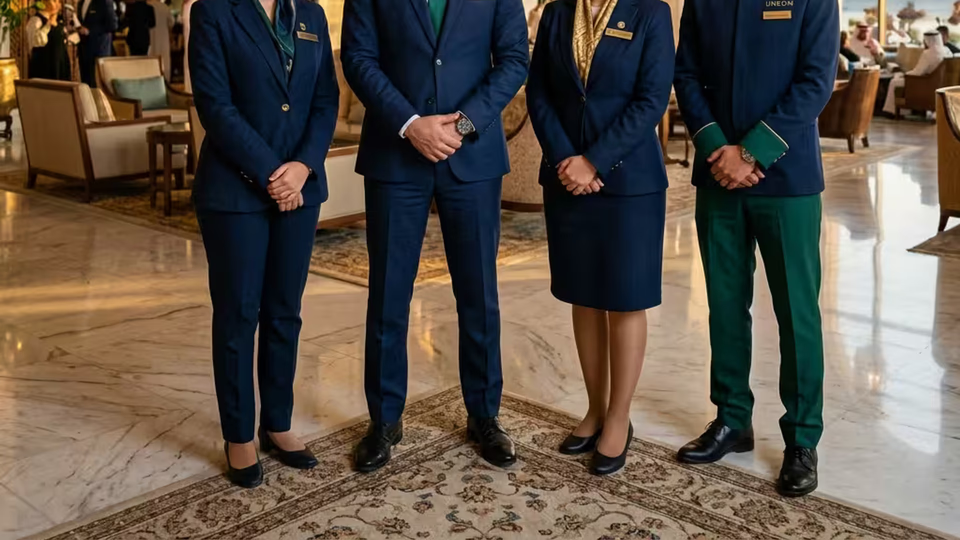
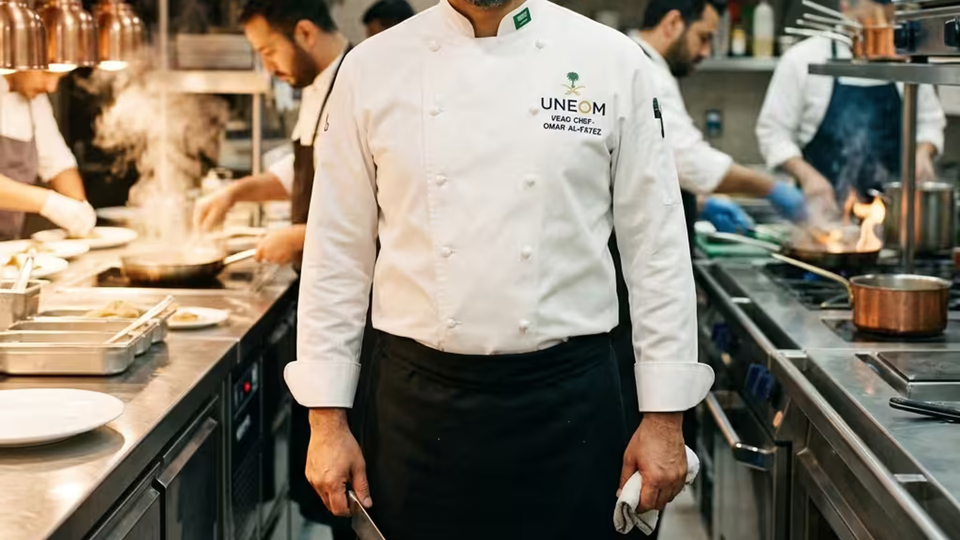
During peak season a hotel lobby in Makkah can hold guests from dozens of countries, many travelling in large groups, many navigating an unfamiliar building after a long journey. The uniform is the fastest wayfinding tool the property owns. A colour or trim system that separates front desk, concierge, housekeeping, food service, transport and group coordination lets a guest identify the right person from across a crowded lobby without reading anything. Name badges carry the second layer: role in Arabic and English, and a clear indication of the languages the wearer speaks, using language codes or coloured markers a guest can recognise at a glance. Group-handling and airport meet-and-greet teams benefit from a distinct high-visibility element, because they work in the most congested spaces and need to be found rather than to find. Consistency matters as much as the system itself; when part of the seasonal team is in a substitute garment because the main order arrived short, the visual language stops working exactly when the property needs it most.
Laundry, Replenishment and Closeout
Peak-season uniforms live a compressed life — worn hard, laundered often and turned around fast, sometimes within the same day — and the specification should reflect it. Colourfastness and dimensional stability through repeated industrial washing matter more than they do in a quieter property, because a team whose garments have faded at different rates looks unmanaged even when every individual is well presented. Each employee needs enough sets in rotation to cover the laundry cycle with margin for a spill or a delay, and the property needs buffer stock in common sizes so a replacement is a store-room transaction, not a purchase order. It is worth agreeing the reorder path with the supplier before the season, including how quickly mid-season top-ups can be produced and how long the fabric and colour will stay available, so next season's intake matches this season's team. At closeout, a structured collection, an honest condition grading and a clear record of what is reusable turn the programme into a repeatable asset rather than an annual rebuild. UNEOM has manufactured inside the Kingdom since 2013, which keeps that reorder loop short.
Frequently asked
- When should a Makkah or Madinah hotel start planning its Hajj season uniform order?
- Work backwards from the first arrival date rather than forwards from today. Approval, production, delivery, sizing, issue and an exchange window each need time, and each can slip. Starting several months ahead protects fabric availability and colour matching with existing stock, and leaves room for mid-season top-ups without an emergency substitution that breaks the team's visual consistency.
- How many uniform sets does each seasonal staff member need?
- Set it from the laundry cycle, not a fixed habit. If garments are collected and returned daily, fewer sets work; if turnaround takes longer or a role soils quickly, more are needed. Add a margin for spills and delays, and hold buffer stock in the common sizes so replacements come from the store room rather than a new order.
- What fabric suits outdoor hospitality roles in peak summer heat?
- Prioritise airflow and moisture management over weight alone. Lighter constructions with an open enough weave move air; finishes that carry moisture away from the skin help it evaporate. Pure cotton breathes well but holds water and dries slowly on a long shift, while engineered blends usually recover appearance faster. Match the choice to actual exposure, indoors or outdoors.
- How should a uniform handle modesty for staff working near the Two Holy Mosques?
- Treat it as a design specification, not a ruling. UNEOM does not advise on religious matters; the property sets its own standard. What the garment can deliver is reliable coverage that does not need adjusting mid-shift, sufficient opacity, drape that skims rather than clings, defined sleeve and hem lengths, and collars that work with a headscarf.
- How can uniforms help guests who do not share a common language?
- Design the uniform to answer questions before they are asked. Distinct colours or trim per department let a guest find the right team from across a lobby. Badges should carry the role in Arabic and English plus a visible marker of the languages the wearer speaks, so a guest can choose whom to approach without a word.