Compound Security Uniform Saudi Arabia: Gate, Patrol and Supervisor Attire for Gated Communities
How to specify a compound security uniform in Saudi Arabia: heat at the gate, night-shift visibility, and clear distinctions between gate officers, patrols and supervisors.
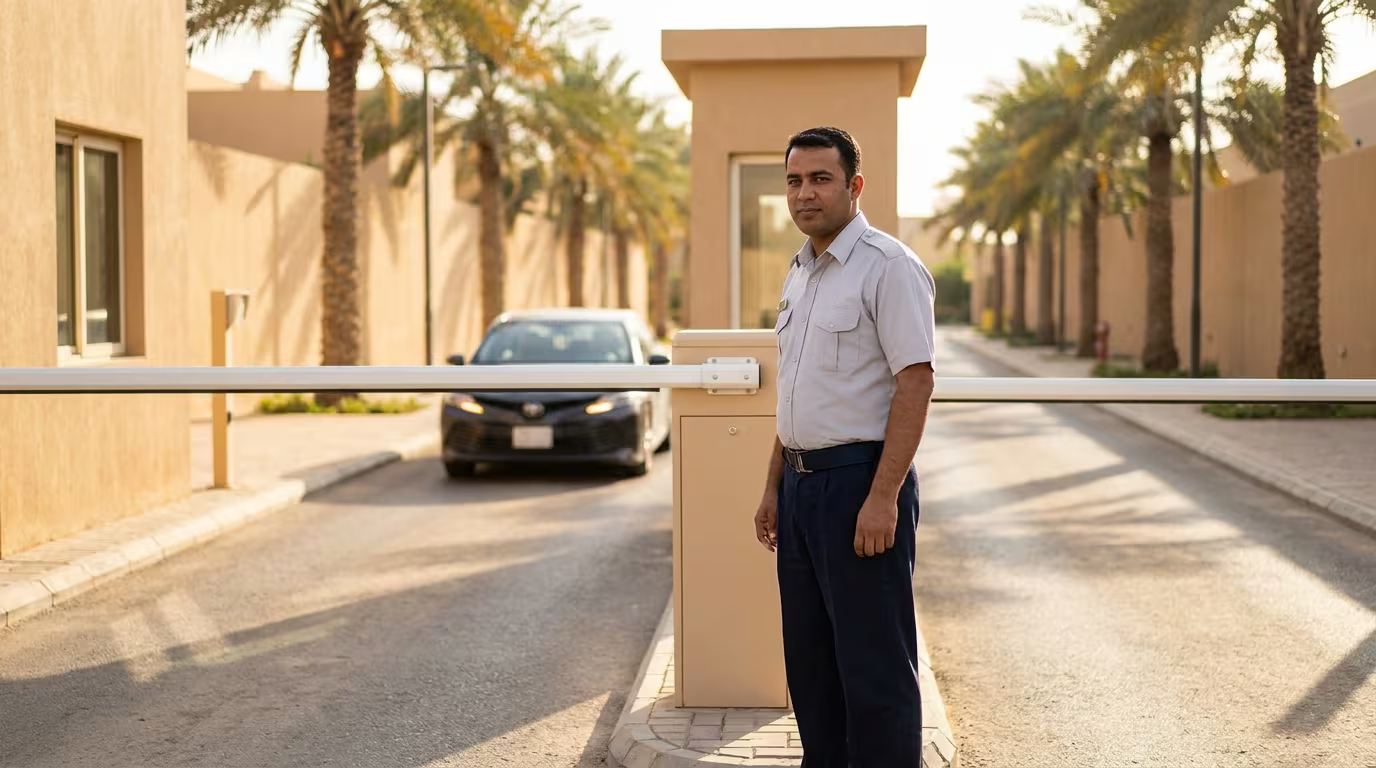
Residential security is a hospitality job with a security spine. Officers at a compound gate are seen daily by the same families, work an exposed post through Saudi summer heat, and patrol after dark. The uniform has to reassure residents, stay wearable in extreme heat, remain visible at night, and show rank at a glance.
A Different Security Brief
A guard at a refinery gate is dressed for hazard; a guard at a compound gate is dressed for people. The same officer greets a resident returning from work, checks a delivery driver, calms a child, escorts a contractor and, occasionally, has to hold a firm line at the barrier. The attire has to carry both halves of that job. Too soft and the uniform reads as concierge, and instructions at the gate lose weight. Too hard — heavy tactical webbing, aggressive dark layering, military cut — and residents feel policed inside their own neighbourhood, which is precisely what a family compound is not selling. The workable middle is a crisp, structured, unmistakably uniform garment in a calm colour, worn well: clean lines, visible identification, consistent across every officer on the roster. Authority in residential settings comes from tidiness and consistency far more than from menace. Before specifying anything, write down what the community's residents and the client's property manager should feel when they see the uniform — then specify backwards from that.
Dressing the Gate Post
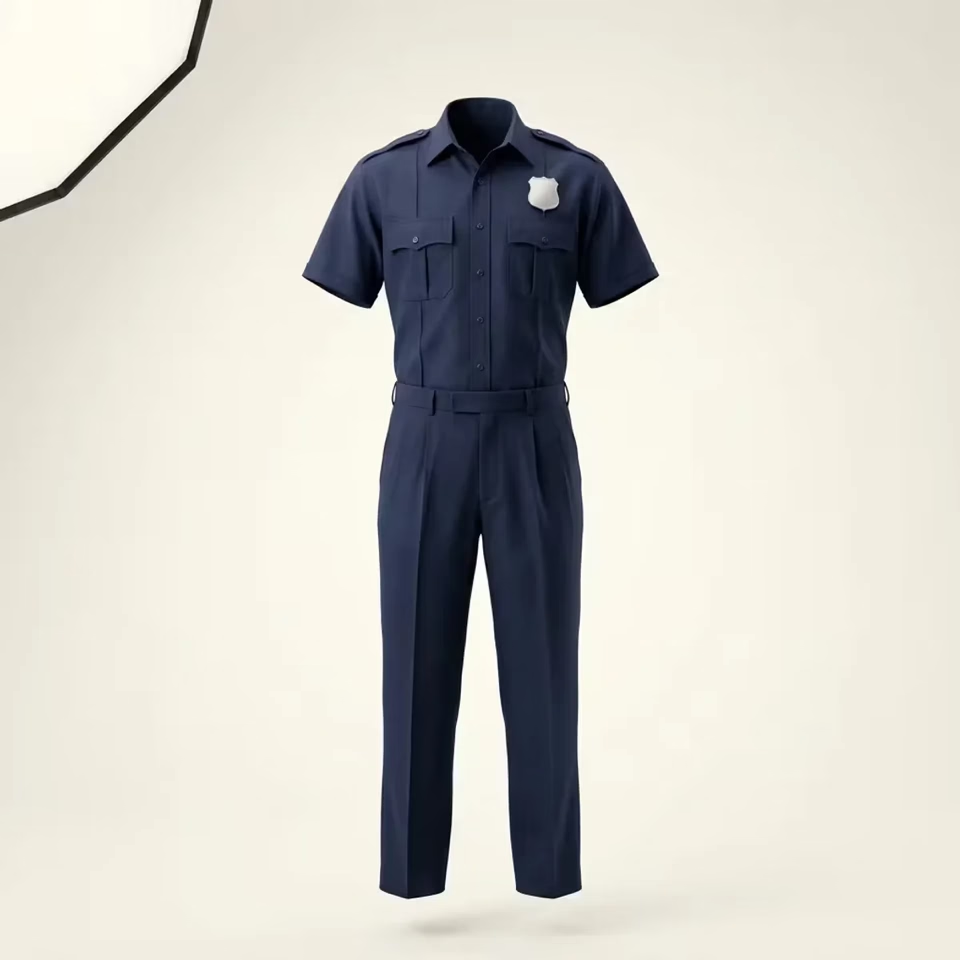
The compound gatehouse is one of the harshest posts in commercial security, and it is harsh in an unglamorous way: not one dramatic exposure, but hour after hour of radiant heat off asphalt, glare off vehicle glass, a booth that may or may not have working cooling, and repeated cycles of stepping into peak afternoon sun and back into conditioned air. Fabric choice should follow that reality. Lighter-weight woven shirting in a cotton-rich blend breathes and absorbs better than a heavy all-synthetic; a well-engineered polyester-cotton blend, though, holds its press through a shift and survives industrial laundering, which matters when appearance is the product. Mesh or eyelet venting under the arms and across the upper back, a slightly relaxed cut through the chest, and trousers with some mechanical stretch all buy comfort without loosening the silhouette. Light-to-mid tones reflect more solar load than deep navy or black, so if the brand palette allows, save the darkest shades for evening shifts. And treat the outer layer as optional — a jacket nobody can wear in July is not a uniform component, it is a cost.
Night Shifts and Visibility
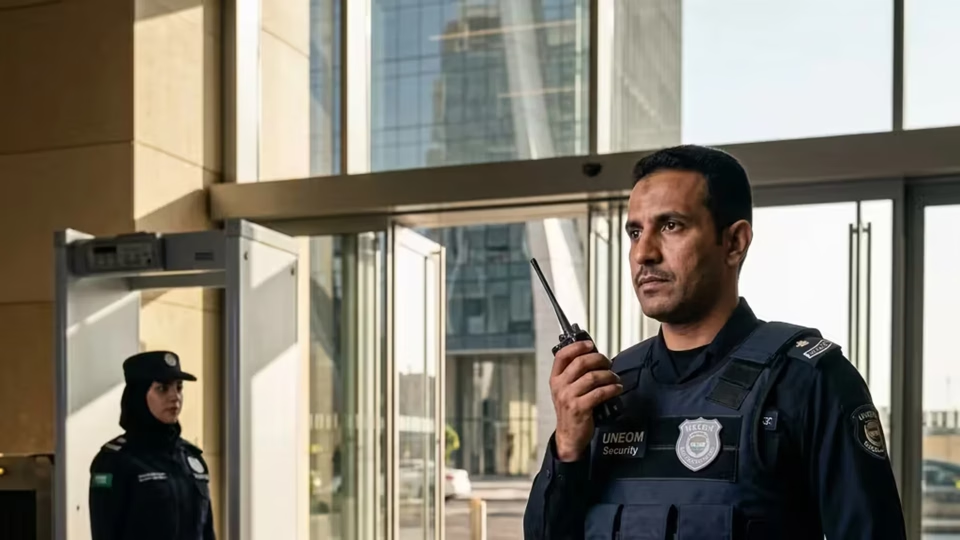
Residential compounds run their most sensitive hours after dark, and that is exactly when a classic dark security uniform disappears. A patrolling officer in near-black, crossing an unlit stretch between villas or stepping around a reversing vehicle at the gate, is both a safety problem and a weak deterrent — nobody is reassured by a presence they cannot see. Retroreflective detailing solves most of it: a band across the shoulders and upper back, segments at the cuffs and lower legs, and reflective piping on the outer layer so headlights and torchlight pick the officer out at a distance. Where officers direct traffic, work near a moving barrier arm, or manage contractor vehicles, a proper high-visibility vest or overlay belongs in the kit rather than a decorative stripe; select the garment against a recognised high-visibility standard and your own site risk assessment, not against instinct. Balance matters too. Residents should not feel they live on a construction site, so keep the loudest visibility items on patrol and traffic roles, and let the daytime gate presence stay smart.
Gate, Patrol, Supervisor
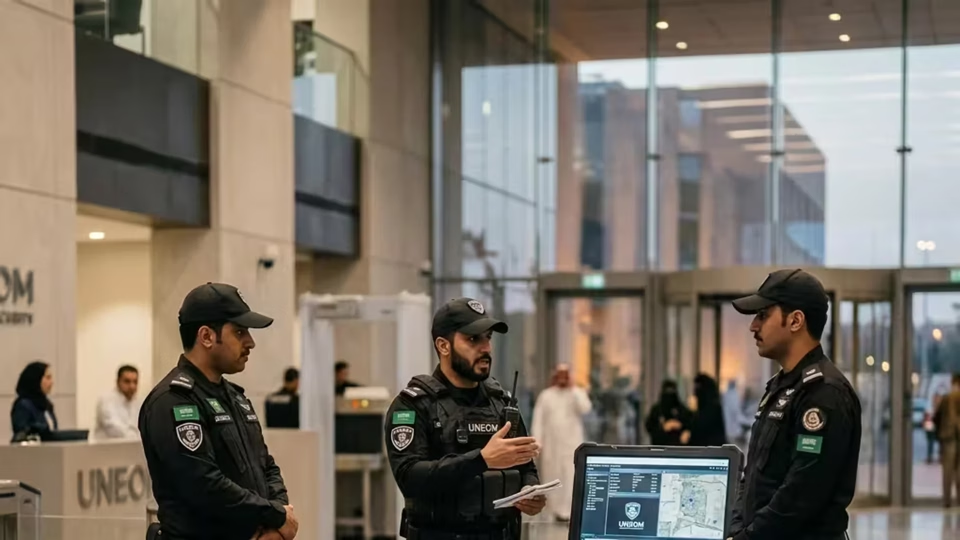
Residents, contractors and delivery drivers need to know at a glance who does what, and the uniform is the fastest way to tell them. A workable hierarchy uses one family, three readings. The gate officer, who is seen most and photographed most, gets the sharpest presentation: pressed shirt, clear name and role identification, a clean cap or none at all, nothing bulky. Patrol officers get the harder-wearing build — reinforced trousers, better footwear allowance, load-bearing belt, and the reflective package described above — because they walk perimeters, climb stairwells and work weather. Supervisors need a quiet marker rather than a costume: a different shirt tone within the same palette, contrast epaulettes or shoulder tabs, a distinctive badge, or a jacket the others do not wear. Keep the differentiator to one or two consistent cues and apply them identically across sites, or the hierarchy stops being legible. One boundary to fix early with your legal and compliance advisers, and with the competent authority: how closely a private uniform may resemble police or other official dress. Design inside whatever answer you are given.
Fit, Modesty and Coverage
Compound rosters in the Kingdom can include Saudi nationals alongside expatriate officers and, in family-facing roles such as reception, visitor handling for women residents and female-only facilities, women officers. A uniform program that only offers a men's block will fail those roles quietly: sleeves that hang, shoulders that sag, a fit nobody looks authoritative in. Specify a genuine women's pattern with its own grading, longer tunic-length shirts that cover the hip, a relaxed straight trouser, generous sleeve coverage, and a headscarf option cut and coloured to match the uniform rather than improvised. Modest coverage should be built into the garment, not achieved by wearing a size too large — loose fabric at the gate reads as untidy and catches on vehicles and barriers. For men, the same principle applies in reverse: cuffs and hems that fit, so the shirt stays tucked through a full shift. Include easy movement for kneeling and stairs, and modest coverage that holds when an officer reaches, bends or lifts a barrier by hand. Fit is not vanity here; it is how authority is read.
Running the Program
Residential contracts are won and lost on presentation, so treat the uniform as a managed program rather than an annual purchase. Size properly at the start: a supervised fitting session with real sample garments beats guessing from a spreadsheet and re-ordering twice. Hold a buffer of fast-moving sizes so a new officer is in correct dress on day one, not a borrowed shirt. Write an appearance standard that says what good looks like — shirt tucked, badge visible and legible, cap worn one way, footwear polished — and make shift supervisors responsible for it, because a specification cannot enforce itself. Plan replacement around the reality that gate uniforms are laundered constantly and fade before they wear out, and that colour drift across a team is more visible to residents than any single worn garment. Finally, decide who owns the program: one accountable coordinator for sizing, stock, quality complaints and reorders. Prefer a manufacturer producing inside the Kingdom — UNEOM has since 2013, under ISO 9001:2015 — so repeat batches and colour matching stay close at hand.
Frequently asked
- What colour works best for a compound security uniform in Saudi Arabia?
- There is no single answer, but a practical split works well: lighter or mid-tone shirts for daytime gate posts, where solar load and sweat show most, and darker tones reserved for evening and patrol. Whatever the palette, keep it consistent across every officer and every site — colour drift is what residents actually notice.
- How should a residential security guard uniform differ from an industrial one?
- Industrial kit is specified against hazards; residential kit is specified against perception. Compound officers need smart, resident-facing presentation, comfortable long-wear fabric, clear identification and controlled reflective detail — not bulky tactical layering. Protective elements still belong wherever a genuine risk exists, but they should follow the site risk assessment rather than a wish for a tougher look.
- Do compound gate officers need high-visibility clothing?
- Wherever officers manage vehicles, direct traffic or work beside a moving barrier, yes — and a proper high-visibility vest or overlay, not a decorative stripe. Select the garment against a recognised high-visibility standard and your own site risk assessment. For posts with no vehicle interaction, discreet retroreflective detailing on the uniform is usually enough.
- How do we distinguish supervisors without changing the whole uniform?
- Use one or two consistent cues inside the same uniform family: a different shirt tone from the agreed palette, contrast shoulder tabs or epaulettes, a distinct badge, or a layer the others do not wear. Apply the cue identically at every site and document it, otherwise the hierarchy becomes guesswork for residents and contractors.
- What should we ask a uniform supplier before ordering?
- Ask for physical samples tried in your climate, a real women's block rather than a scaled men's pattern, colour-batch consistency on repeat orders, and clarity on lead times for reissues. Local production shortens those loops: UNEOM has manufactured in the Kingdom since 2013 under ISO 9001:2015, with OEKO-TEX Standard 100 covering skin-contact assurance.