Best Apron Fabric for a Coffee Shop: Denim vs Canvas vs Twill
Denim, canvas or twill for your café team? A practical comparison of durability, weight, stain behaviour and strap design for Saudi coffee shops running long shifts.
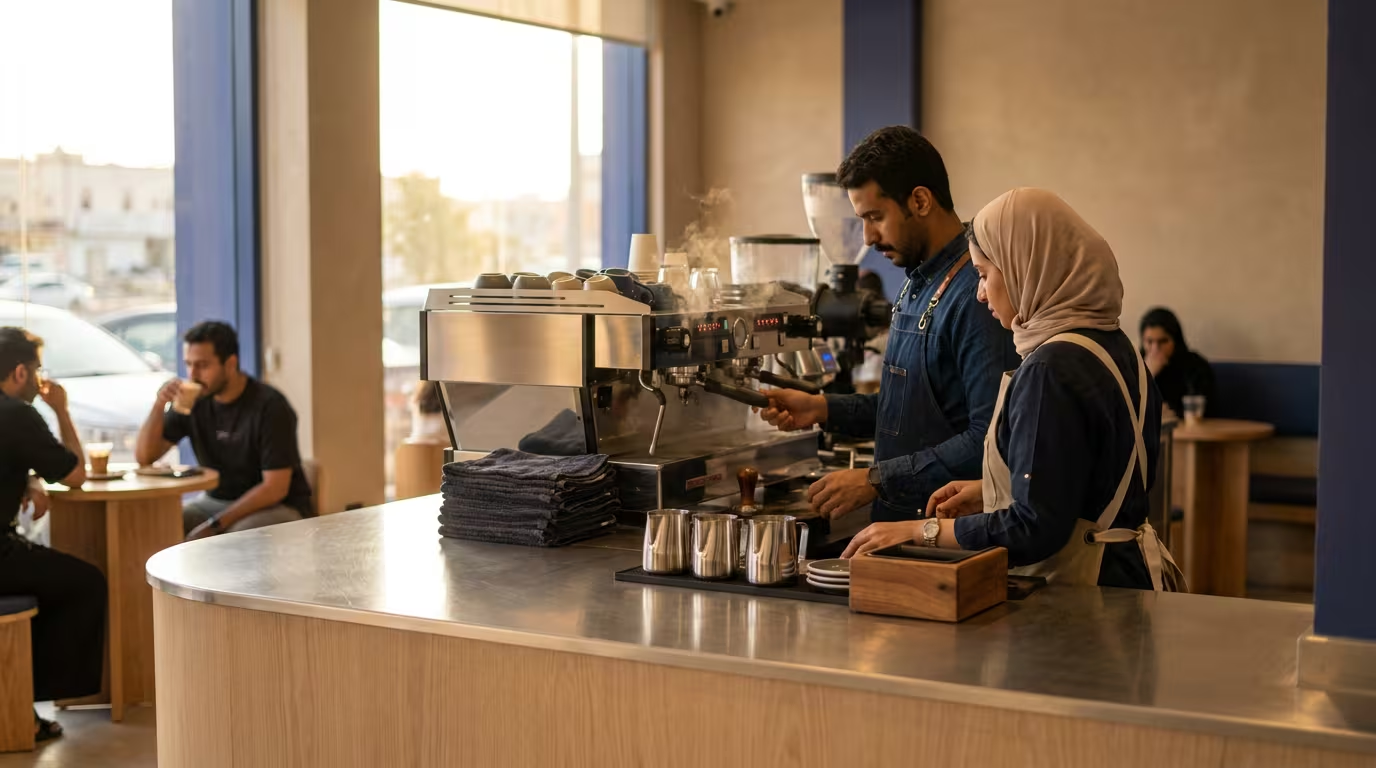
Choosing an apron fabric looks like a taste decision until the first month of laundry. Denim, canvas and twill behave differently under coffee, milk, heat and long standing shifts, and each carries a real trade-off between craft character, structure and comfort. Here is how the three compare for Saudi café operators writing a uniform spec.
What a Shift Does to an Apron
Before comparing weaves, look at what a barista shift actually does to the garment. An apron absorbs abrasion where the body leans into the bar edge, splash from steam wands and knock boxes, milk that dries into the yarn, sanitiser wipes, and the steady load of a cloth, thermometer and phone in the front pocket. In a Saudi café you add a hot micro-climate around the machine, a drive-through window opening onto outdoor heat, and staff crossing a car park at midday between branches. Then add long standing shifts. At that point barista apron material stops being a styling choice and becomes an operations decision with three variables: how much visible character you want as the garment ages, how much structure you need for pockets and a clean bib line, and how much weight the team can carry comfortably from opening to close. Denim, canvas and twill answer those three questions differently, and the honest answer is that no single fabric wins every bar.
Denim: Character That Earns Its Weight
Denim is a warp-faced twill, classically woven with an indigo-dyed warp over an undyed weft, and that construction explains its whole personality. As the surface abrades, the paler yarn beneath shows through, so the apron fades at the hips, pocket mouths and strap anchors and develops the worked-in look that specialty cafés are usually buying. Denim apron durability is genuine: the twill interlacing and plied cotton yarns take rubbing well, and cotton fibre actually gains strength when wet, which suits a garment that is splashed and laundered constantly. The trade-offs are equally real. Apron-weight denim is typically the heaviest of the three families, and that weight is felt in the neck and shoulders late in a long shift, especially with loaded pockets. Indigo also crocks early in life, transferring colour onto white shirts, pale towels and light upholstery, so first washes belong on their own and staff should be told. Confirm the fabric is pre-shrunk, or expect dimensions to move after the first industrial wash.
Canvas: Structure That Holds Its Shape
Canvas, cotton duck in most apron ranges, is a tightly packed plain weave built from plied yarns, and it behaves like a structural material rather than a drapey one. It resists snagging and rubbing, holds a square bib line, and keeps pockets open and upright instead of collapsing around a tamper or a folded cloth. On a busy bar that reads as tidy: the team looks uniform in photographs, and the apron still looks deliberate at the end of service. It is also the most opinionated of the three at the start. New canvas is stiff and needs breaking in over several washes before it moves with the body, and because the weave is dense it holds water, so a soaked canvas apron takes longer to dry than a lighter twill. That matters if your rotation is thin or if the bar runs hot. Canvas suits roasteries, production areas, food prep and heavy back-of-house work, where abrasion and tool carrying outrank the last degree of comfort.
Twill: Lighter and Quicker to Dry
A pedantic but useful point: denim is itself a twill. In buying conversations, twill means the lighter, non-indigo twills, cotton or cotton-rich blends, recognisable by the diagonal rib on the face. That diagonal gives the cloth suppleness, so it drapes rather than stands, wraps with less bulk at the waist, and feels closer to clothing than to workwear across a long shift. Lighter constructions release moisture faster, and a polyester component speeds drying further and resists creasing, which is why twill is the default when a café runs two aprons a day or the laundry turns stock around overnight. The compromises are aesthetic and chemical. Twill will not age into character the way indigo denim does; it stays looking the same until it looks worn. Polyester content also attracts oily soil, so butter, milk fat, chocolate and syrup cling more stubbornly than they would to cotton, and high-abrasion points can glaze or pill. For high-volume, hot, fast-rotation bars, that is usually an acceptable exchange.
Coffee, Milk and the Colour You Pick
Stain behaviour is fibre chemistry plus colour strategy, and colour usually does more work. Coffee is a water-borne, tannin-rich stain that bonds readily with cotton, so an all-cotton apron will hold espresso marks unless they are rinsed early. Polyester resists water-borne staining better but is oil-loving, so milk fat, butter, chocolate and flavoured syrups settle into it and stay. Milk itself is protein and fat together, and heat sets protein, which is why a stained apron should be rinsed cool and never tumbled hot before it is properly clean. Against all of that, the colour you specify decides what anyone actually sees. Deep indigo, navy, charcoal and black absorb the daily reality; heathered or melange yarns break up small splashes; sand, olive and terracotta photograph beautifully on launch day and betray every drip by the second week. Soil-release finishes help with fresh spills, but they are a finish rather than immunity, and they depend on the care regime being followed.
Straps, Fit and How to Specify
Fabric choice is only half the comfort story; the harness carries the rest. A single neck loop concentrates the whole load, cloth and pockets and tools, on the cervical spine, and staff feel it first as a stiff neck at the end of the week. Cross-back straps spread that load across the shoulders and upper back, keep pressure off the neck, and are frequently preferred by team members who wear a headscarf, since nothing is pulled over the head or rests on it. Offer both, with adjustable hardware, a genuine size range for mixed teams rather than one-size, and bib coverage and length that sit comfortably over long sleeves. Insist on bar-tacking at strap anchors and pocket corners, because that is where aprons fail long before the cloth wears out. Then trial two or three candidates for a full week, including laundering, and let the baristas decide. UNEOM has manufactured uniforms inside the Kingdom since 2013, working to ISO 9001:2015 with OEKO-TEX Standard 100 certified fabrics.
Frequently asked
- What is the best apron fabric for a coffee shop?
- There is no universal winner. Denim gives craft character and ages into a patina, but it is the heaviest. Canvas offers structure, abrasion resistance and pockets that hold their shape. Twill is lighter, more supple and dries fastest. Choose by shift length, laundry turnaround and the look your bar is selling.
- Is denim durable enough for daily barista use?
- Generally yes. The twill interlacing and plied cotton yarns handle abrasion well, and cotton gains strength when wet, which suits constant splashing and washing. Aprons rarely fail in the body of the cloth; they fail at strap anchors and pocket corners, so ask for reinforced bar-tacking there and expect visible fading over time.
- Canvas vs twill apron: which is more comfortable on a long shift?
- Twill, in most cases. It is lighter, drapes with the body and releases moisture faster, which matters on a hot bar. Canvas is stiffer and needs breaking in, but it holds its shape and carries tools better. If your team stands all day, choose twill; if they carry equipment, choose canvas.
- Which fabric hides coffee and milk stains best?
- Colour decides more than fibre. Deep indigo, navy, charcoal and heathered yarns disguise daily marks, while pale shades show everything. Chemically, cotton grips tannin-rich coffee stains, and polyester resists water-borne marks but holds oily milk fat and syrups. Rinse cool and avoid hot drying, because heat sets the protein in milk.
- Should we specify cross-back straps or a neck loop?
- Offer both. A neck loop adjusts quickly between people on shared aprons, but it loads the cervical spine across a full shift. Cross-back straps spread weight over the shoulders and keep pressure off the neck, and many team members who wear a headscarf prefer them because nothing passes over the head.