Why Are Chef Uniforms White? The Tradition, the Physics, and the Exceptions
White chef jackets began as a mark of order and hygiene. Here is what the colour still earns in a Saudi kitchen, and where it no longer holds.
Ask a kitchen team why their jackets are white and most will say tradition. Tradition is only half the answer. White survives aggressive laundering, shows soil the moment it lands, and reflects radiant heat outdoors. It also hides nothing, which is exactly why some modern Saudi kitchens are moving away from it. This guide separates the durable logic from the folklore.
Where the Tradition Came From
The origin story is repeated in every culinary school: white jackets were adopted in nineteenth-century French professional kitchens as part of a wider effort to turn cooking into a disciplined, uniformed craft, alongside the brigade structure that still shapes kitchen hierarchy. The account is widely told and broadly plausible, but the specific personalities, dates and motives attached to it vary from telling to telling, and much of the colourful detail should be treated as culinary lore rather than documented fact. What is not in dispute is the effect. A white jacket made cleanliness a public, checkable claim rather than a private assurance, and it made every cook in a brigade visually identical, so status came from the badge, the section and the toque rather than from personal dress. That combination, visible hygiene plus visible order, travelled with French kitchen practice into hotels worldwide, and it arrived in Saudi kitchens the way most hospitality standards did: through international hotel groups, airline catering and institutional food-service contracts. The tradition persists because it kept working, not because anyone re-argued it.
White Makes Soil Impossible to Hide
The strongest practical argument for white has nothing to do with heritage. A white jacket cannot conceal what lands on it. Grease, blood, sauce, oven soot and cross-contact from raw protein all announce themselves immediately, which turns every cook into a self-inspecting surface and lets a sous chef or shift supervisor assess a line at a glance rather than by interrogation. That matters most where hygiene is not only practised but observed: open kitchens and live cooking stations in hotels and malls, hospital and school catering, and any operation subject to routine inspection. Colour, by contrast, buys time, and buying time is precisely the risk. A dark jacket carrying the same soil looks presentable, so the garment stays in service past the point at which it should have been changed, and the decision to change it shifts from evidence to judgement. If you adopt colour, you have to replace visual triggers with a scheduled change-out rule written into the facility's food-safety procedures, and enforce it when nobody can see the reason.
Built for a Punishing Laundry Cycle
Chef jackets live in the harshest laundry environment in any uniform programme, and white is what makes that survivable at fleet scale. Undyed or bleach-stable white cloth can be washed hot and treated with strong oxidative or chlorine chemistry, where the launderer's validated process allows, without the shade drift that turns a coloured fleet into a patchwork of slightly different garments bought in different years. Dyed fabric fades unevenly, fades faster at the cuffs, shoulders and hem where abrasion is highest, and can bleach to an unrecoverable blotch if a bleach-based stain treatment is used in a hurry. White also removes the question of dye transfer onto cloths, worktops and product during handling. None of this is free: repeated aggressive bleaching shortens the life of cellulosic fibres, and heavily brightened whites eventually go grey or yellow. The honest position is that white lets you push the wash process hard and replace garments on a predictable cycle, which is easier to budget and audit than defending a colour that looks tired long before it is worn out.
Heat: What Colour Actually Does
White is often defended as the cool choice, and in Saudi conditions that claim deserves precision. Colour governs how much shortwave solar radiation a fabric reflects, so a white jacket is genuinely cooler than a black one under direct sun: on an outdoor grill station, a rooftop banquet, a poolside service, or the walk between a loading bay and the kitchen door in July. Inside the kitchen the physics changes. Heat from a broiler, tandoor or range arrives largely as long-wave infrared, and at those wavelengths textiles behave similarly whatever their visible colour, while the rest of the load is convective, humid and metabolic. There, comfort is decided by fabric weight, weave openness, moisture management and the airflow the design allows at the back, underarm and cuff, not by the shade. Treat colour as a real advantage outdoors and a marginal one at the pass, and spend your specification effort on lighter constructions, ventilated back panels and a jacket a cook can work in through a double shift.
Why the Front Is Double-Breasted
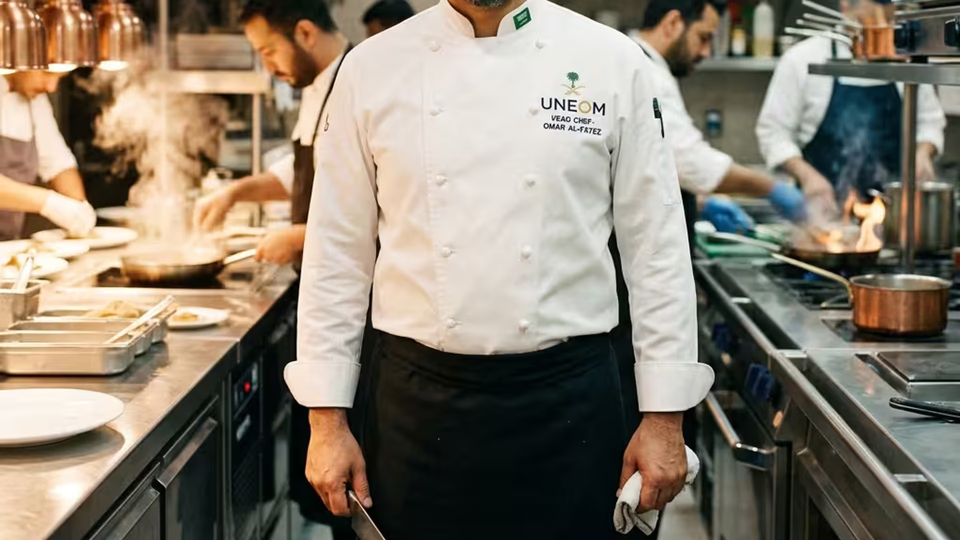
The double-breasted chef jacket is the most functional garment in hospitality and the least understood. Its front panel overlaps, so a cook who catches a splash mid-service can reverse the closure and present a clean face to the dining room without leaving the line, a small thing that matters enormously in an open kitchen where the guest sees everything. The overlap also puts two layers of cloth across the chest and abdomen, the zone most exposed to spitting fat, boiling stock and steam from a lifted lid, and that buffer buys the wearer a moment to step back. The closures follow the same logic: knotted cloth buttons or press studs survive industrial laundering, resist melting, and release quickly if a garment has to come off. The trade-off is heat, because two layers over the torso insulate exactly where a cook is already warmest. That is why lighter fabrics, mesh or vented backs and roll-tab sleeves have become normal, and why a single-breasted jacket is defensible away from the guest's eye.
When to Keep White, and When to Let It Go
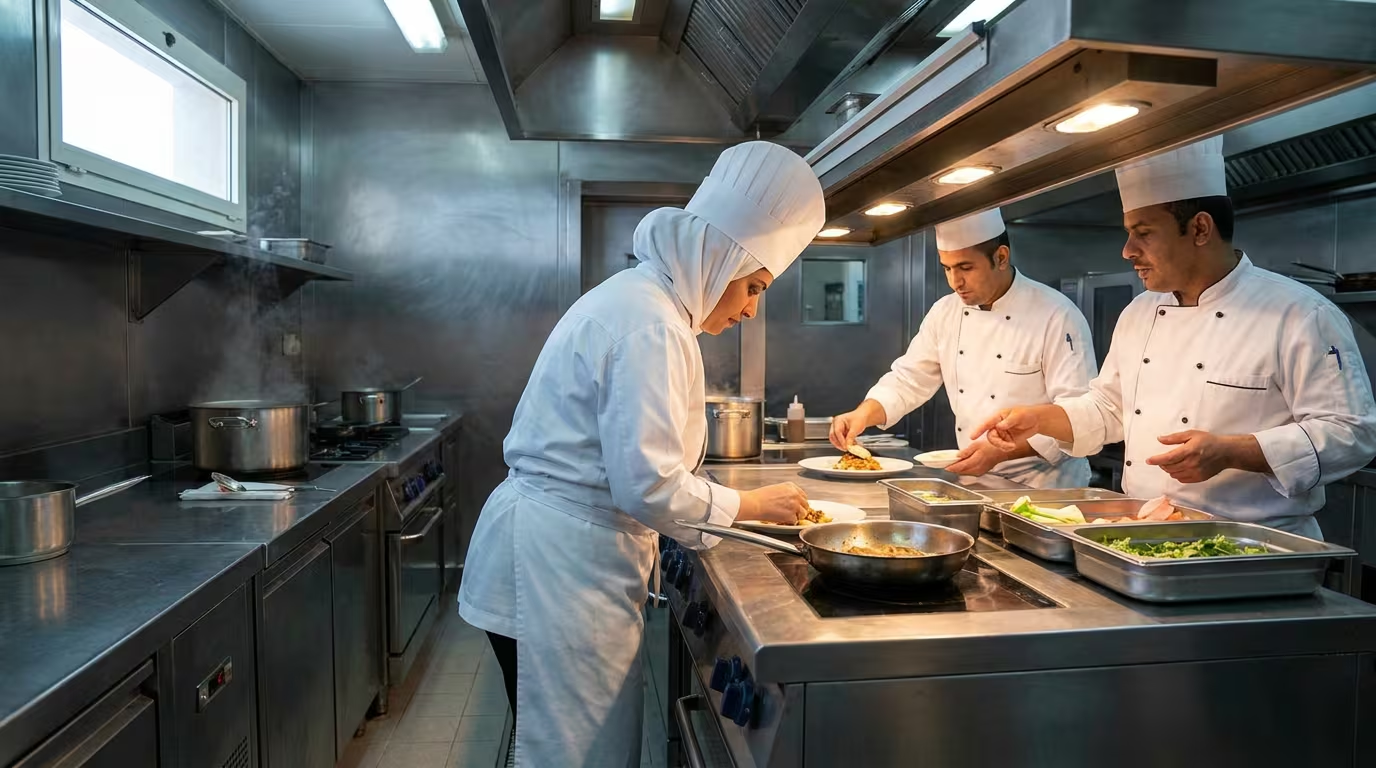
Black, charcoal, denim and printed aprons have moved into casual dining, specialty coffee and chef-driven concepts because uniform is now brand, and a colour that reads as the venue's identity does work white cannot. The decision should be made per zone, not per company. Keep white where hygiene must be visible and provable: institutional and hospital catering, airline and staff feeding, banqueting, and fine-dining lines the guest can see. Consider colour where the brand argument is strong and the risk is managed by a written change-out schedule rather than by eyesight. In Saudi programmes, two more factors decide the spec. Modesty and workforce mix mean the range should include longer-line cuts, full sleeve coverage and headwear that works over a hijab while still meeting hair-containment rules, so Saudi women joining kitchen teams are fitted properly rather than issued a men's size. And the climate means fabric choice outranks colour choice. UNEOM has manufactured uniforms in the Kingdom since 2013 and works to ISO 9001:2015 with OEKO-TEX Standard 100 certified fabrics.
Frequently asked
- Why are chef uniforms white?
- Three reasons that still hold: white shows soil immediately, so hygiene is visible rather than assumed; it tolerates hot washing and bleach without shade drift across a fleet; and it reflects solar radiation outdoors. The tradition began in European professional kitchens, but it survived because each of those functions kept earning its place.
- Is a white chef jacket actually cooler in the Saudi summer?
- Outdoors, yes. White reflects far more sunlight than dark cloth, which matters at grill stations, rooftop banquets and any walk across an open yard. Indoors the benefit is small, because oven and range heat arrives as long-wave infrared and steam. There, fabric weight, weave and ventilation decide comfort, not colour.
- Why is the chef jacket double breasted?
- The overlapping front lets a cook reverse the closure and hide a mid-service splash without leaving the line, and it places two layers of cloth over the chest and abdomen, where fat spits and steam escapes. The cost is insulation exactly where a cook is hottest, which is why vented backs and lighter fabrics matter.
- Can we switch our kitchen to black or coloured jackets?
- You can, provided you replace what white was doing. Write a fixed change-out rule into your food-safety procedure so garments are swapped on schedule rather than when they look dirty, brief supervisors on it, and expect uneven fading, so plan replacement by batch to keep the fleet visually consistent.
- How should a Saudi kitchen range handle modesty and mixed teams?
- Specify the same jacket in cuts that work for everyone: longer-line bodies, full sleeve coverage, higher necklines and sizing developed for women rather than scaled-down men's patterns. Headwear should sit correctly over a hijab while still meeting hair-containment requirements, and fit sessions should be arranged so every member of the team is measured comfortably.