Security Uniform Accessories: Duty Belts, Vests and Load Carriage
How duty belts, load bearing vests and pocket design shape security uniform specification — weight distribution, reinforced attachment points and heat management across a twelve-hour Saudi shift.
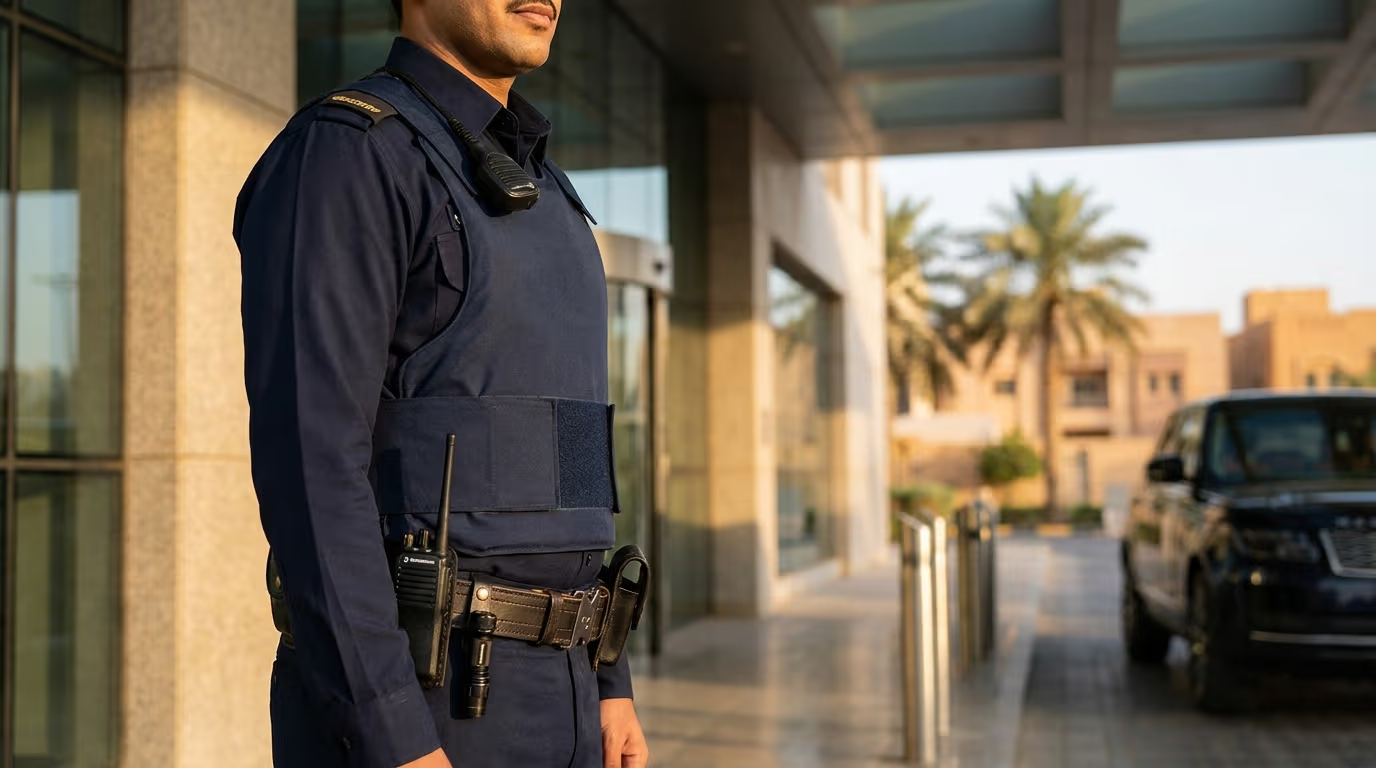
Security uniform accessories are the load-carriage system — duty belt, vest or harness, pouches and reinforced attachment points — that decides how an officer's radio, torch, phone and documentation are carried. Specify them with the garment, not after it: weight placement, seam reinforcement and heat load determine comfort, posture and how long the uniform survives.
The Real Carry List
Before any specification is written, the first task is an honest inventory of what the officer carries through the shift rather than what the equipment list says. On most Saudi sites this means a two-way radio with a spare battery, a torch, a phone used for reporting and patrol scanning, keys or an access fob, a notebook and pen, gloves, and an identity card on a retractable holder. Some posts add handcuffs, a first-aid pouch or a scanning device; what may be carried beyond that is governed by licensing and by the client's own site rules, so confirm the list with the security provider rather than assuming it. The point of the audit is mass and geometry, not the roster of items. A radio is heavy, hard-edged and worn high; a torch is dense and swings with every step; a phone is flat and needs instant access. Once you know the true carry list, the choice between a security duty belt and a vest stops being a style preference and becomes an engineering decision.
Belt, Vest, or Both
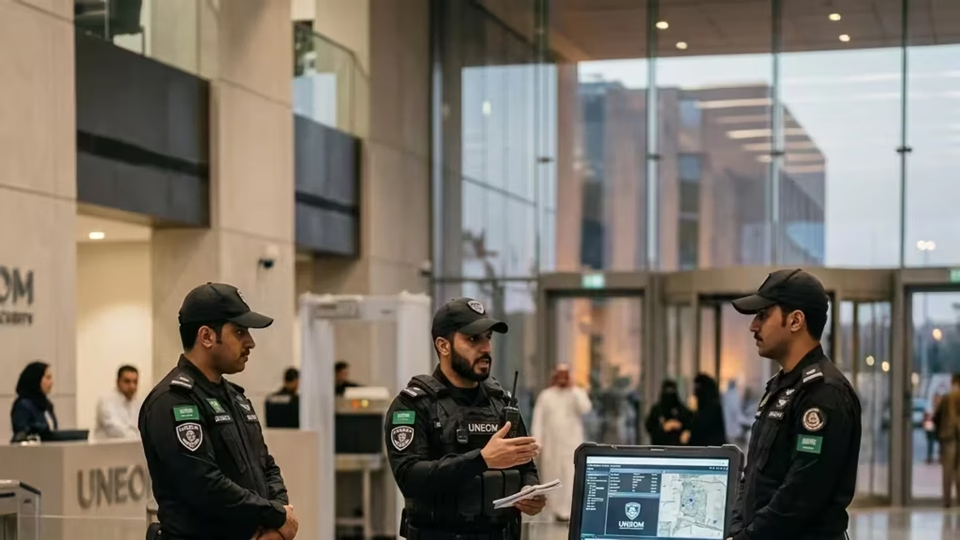
A security duty belt concentrates everything on the waist and lower back. That works for a patrol officer who is mostly upright and needs one-handed access, but it punishes any post that involves long stretches seated in a gatehouse chair or a patrol vehicle, because pouches press into the hips, the belt migrates as the officer moves, and the seat belt crosses hardware. A load bearing vest spreads the same equipment across the shoulders and upper torso, relieves the waist and shortens the reach to a radio, but it adds a layer over the chest and back and, cut in a militarised style, it reads as aggressive in a hotel lobby, a hospital entrance or a corporate reception. Many programmes settle on a hybrid: a lighter belt holding only what must sit at the hand, a discreet harness that transfers part of the weight upward, and a slim carrier made from the same shell fabric and colour as the uniform, so the vest reads as tailoring rather than equipment strapped over a shirt.
Weight, Posture and the Long Shift
Twelve-hour shifts are the norm on most guarded sites in the Kingdom, and the load does not get lighter as the hours pass. The real damage is rarely total mass; it is asymmetry. A radio on one hip and a torch on the other is balanced, but a radio, a phone pouch and a key ring all on the dominant side is not, and the officer compensates by dropping one shoulder and pushing the opposite hip out. Hold that posture across years of shifts and the complaints that reach human resources are entirely predictable: lower back, one shoulder, the neck. Three rules cover most of it. Balance left against right by mass, not by item count. Keep dense objects high and close to the spine rather than hanging below the hip crease where they swing with every step. And give officers somewhere to shed the load, a hook at the post or a rack in the control room, so the body gets relief during breaks and handovers instead of carrying continuously.
Where the Garment Fails
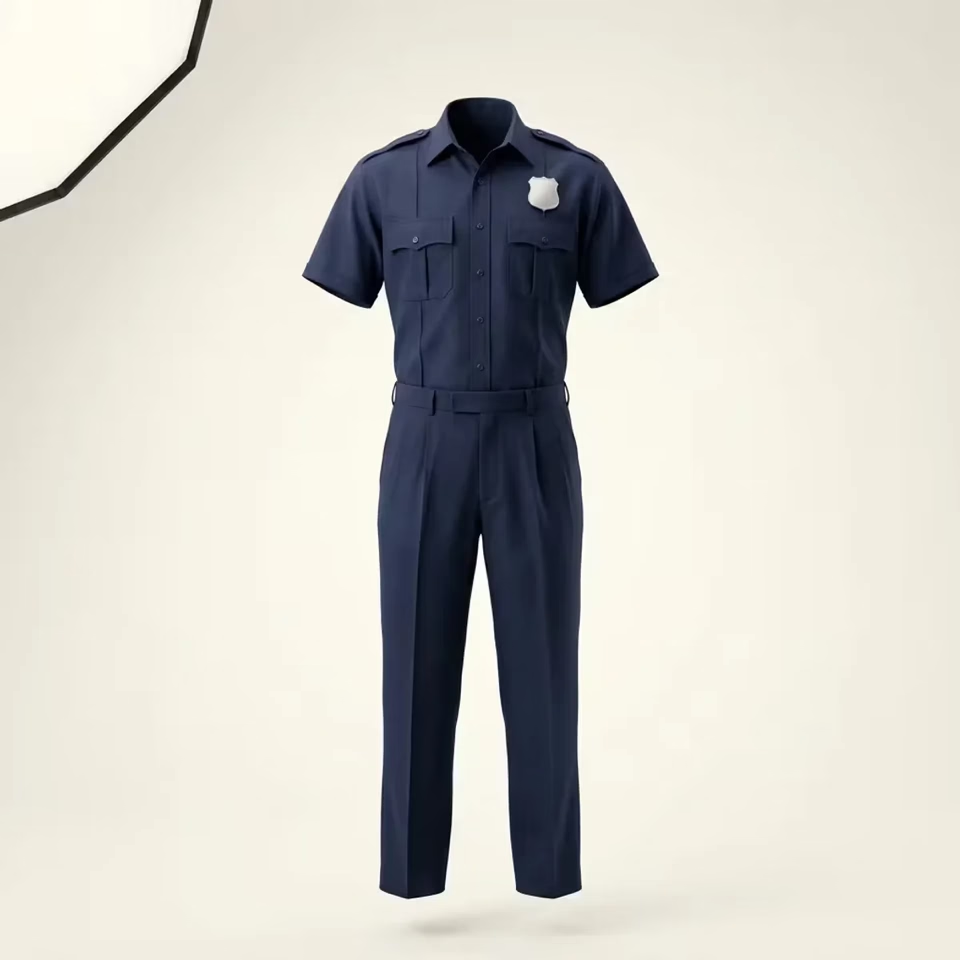
Kit rarely fails first; the garment does, and it fails at predictable places. Standard narrow trouser loops will not hold a wide duty belt, so the waistband needs wide tunnel loops in doubled fabric with bartacks at both ends, positioned so the belt keepers align instead of dragging the waistband into a wave. Radio microphones clipped to a shirt placket tear buttonholes and pull the collar askew, which is why epaulettes and mic loops should be caught in a seam over at least two fabric layers rather than topstitched onto a single ply. Add bartacks at pocket corners and fly, double-needle felled seams at the seat and inseam, and a reinforced panel where a vest edge or belt buckle abrades the shirt. Hardware deserves the same scrutiny: in the humid, salt-laden air of Jeddah, Dammam and Jubail, sweat corrodes cheap snaps and zip pulls long before the cloth wears out, so corrosion-resistant components are a specification line, not a detail.
Pockets, Fabric and Heat
Every well-placed pocket removes mass from the belt, but placement decides whether it is used at all. A chest pocket sitting under a vest panel is dead space; a large thigh cargo pocket swings, catches on vehicle doors and reads paramilitary in a mall or hotel. What works is a small number of deliberate pockets: an angled, flapped bellows pocket for a notebook, a secured phone pocket high on the chest or upper sleeve where a seated posture does not block it, and an internal pocket for documents that must stay flat. Fabric then absorbs the consequences. Polyester-rich blends give the abrasion resistance and shape retention that equipment carry demands, but they sit warmer, so the shirt worn under a carrier should be lighter and more breathable than the one worn without it, with ventilation placed where the vest does not cover, under the arm and across the upper back. On open posts through a Saudi summer, lighter shades absorb less solar heat than deep navy or black.
Specifying the Programme
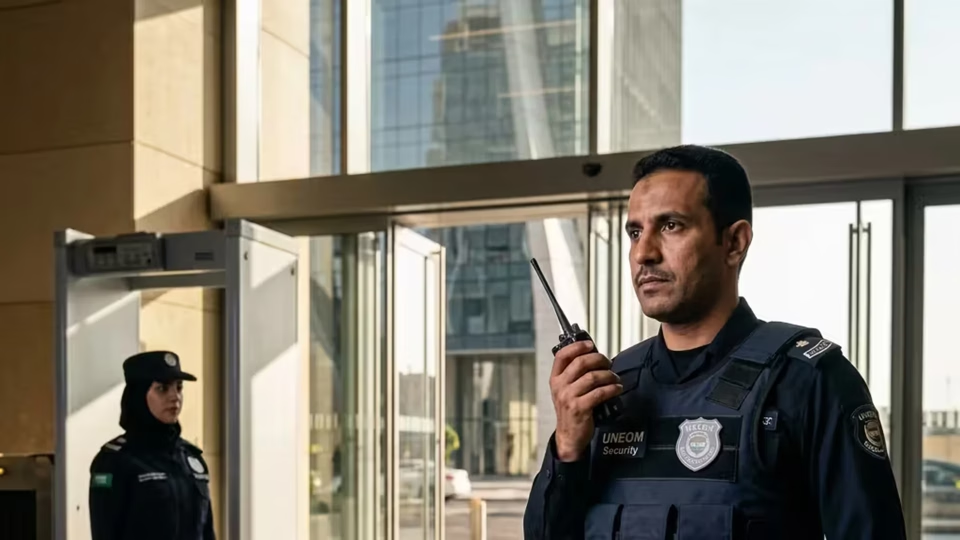
Write carriage into the uniform specification rather than buying a shirt and discovering the belt afterwards. Trial the full combination on real posts at the height of summer, with the actual kit loaded, not an empty vest in an air-conditioned fitting room; a week of live wear exposes the pressure points, the pocket nobody uses and the loop that has already begun to fray. Size the belt independently of trouser waist, because the two are not the same measurement once a vest is worn. Female officers, now a routine part of screening and reception-side teams, need vests cut on a female block rather than a smaller men's pattern, shirt or tunic lengths that stay covering when the arms are raised, and strap paths that do not disturb a headscarf or the collar line. Finally, separate the replacement cycles: carriers and hardware usually outlive the garment, so track which posts consume trousers fastest and reorder against that evidence. UNEOM has manufactured in the Kingdom since 2013, works to ISO 9001:2015, and specifies OEKO-TEX Standard 100 certified fabric for next-to-skin layers.
Frequently asked
- What counts as security uniform accessories?
- The carriage system and everything mounted on it: the duty belt and its keepers, pouches for radio, torch, gloves and documentation, a load bearing vest or harness, epaulettes and microphone loops, ID holders, and the reinforced loops and panels on the garment itself. Restraints and similar items depend on licensing and site rules, so confirm the list with the security provider.
- Duty belt or load bearing vest for a twelve-hour shift?
- It depends on the post. A belt suits mobile patrol officers who stay upright and need fast one-handed access. A vest suits static posts, long seated gatehouse duty and heavier loads, because it moves weight off the lumbar spine. Where the client expects a corporate look, a light belt with a slim, uniform-matched carrier is usually the workable compromise.
- How do you stop a duty belt from destroying trousers?
- Specify wide tunnel belt loops in doubled fabric with bartacks at both ends, aligned to the belt keepers, and a stable non-roll waistband. Add a reinforced panel or heavier cloth where the buckle and pouch clips abrade, and check that hardware resists corrosion. Then track wear by post, because some sites consume trousers far faster than others.
- Does a load bearing vest make Saudi summer heat worse?
- It adds an insulating layer over the torso, so yes, unless the layering is planned. Lighten the shirt worn beneath the carrier, place ventilation where the vest does not cover, under the arm and across the upper back, choose a breathable base fabric that moves moisture, and avoid the darkest shades on open outdoor posts.
- How should equipment carry be adapted for female officers?
- Use vests cut on a female block rather than a smaller men's pattern, so the panels sit correctly without compressing. Keep shirt or tunic length long enough to remain covering when the arms are raised, route straps clear of a headscarf, and check that the belt sits comfortably at the natural waist instead of riding up during the shift.