Hospitality Uniforms and Saudi Cultural Identity
How Saudi hotels translate regional heritage into uniform design without turning staff into costume exhibits.
Saudi Arabia is not one culture — it is a federation of regional identities, each with distinct textile traditions. A hotel in Jeddah draws from Hijazi maritime heritage; a lodge in Abha references Asiri geometric embroidery; a resort in Al-Ula evokes Nabataean earth tones. The challenge for hospitality uniform designers is translating these traditions into modern professional garments that signal heritage without becoming costume. When executed well, culturally grounded uniforms become a competitive differentiator that guests remember. When executed poorly, they become a source of staff embarrassment and guest awkwardness. The difference lies in research depth, design restraint, and cultural consultation.
Hijazi vs Najdi vs Asiri identity
Saudi regional textile traditions are as distinct as the geographies that produced them. The Hijaz — the western coastal strip including Makkah, Madinah, and Jeddah — developed textile aesthetics influenced by maritime trade. Hijazi traditional garments incorporated Indonesian batik patterns, Indian cotton weaves, and East African colour palettes, reflecting centuries of Hajj-driven cultural exchange. The resulting aesthetic is fluid, layered, and richly coloured — qualities that translate into hospitality uniforms through draped fabrics, warm colour palettes featuring deep corals and turquoise accents, and textile patterns that suggest movement without literal reproduction. The Najd — the central plateau including Riyadh — developed a more austere aesthetic shaped by desert trade routes. Najdi textile traditions emphasise clean lines, monochromatic palettes with gold accents, and geometric precision. Traditional garments used heavy cotton and wool with minimal embellishment, communicating authority through simplicity rather than decoration. In hospitality uniform design, this translates to structured garments, restrained colour schemes anchored in cream, navy, and gold, and subtle geometric weave patterns visible only at close range — a design philosophy that works exceptionally well for business-oriented hotels in Riyadh where guests expect understated luxury. The Asir region in the south presents the most visually dramatic textile heritage. Asiri embroidery — known as Al-Qatt Al-Asiri and inscribed on the UNESCO Representative List of Intangible Cultural Heritage in 2017 — features bold geometric patterns in primary colours applied to both textiles and architecture. Translating Asiri heritage into hospitality uniforms requires particular restraint: the patterns are so visually distinctive that full reproduction creates a theme-park effect. UNEOM designs for Asir-region properties extract colour ratios and geometric proportions from Al-Qatt patterns and apply them to accent elements — collar trim, cuff detailing, pocket piping — rather than all-over prints, maintaining cultural connection without overwhelming the garment.
Embroidery details that signal heritage
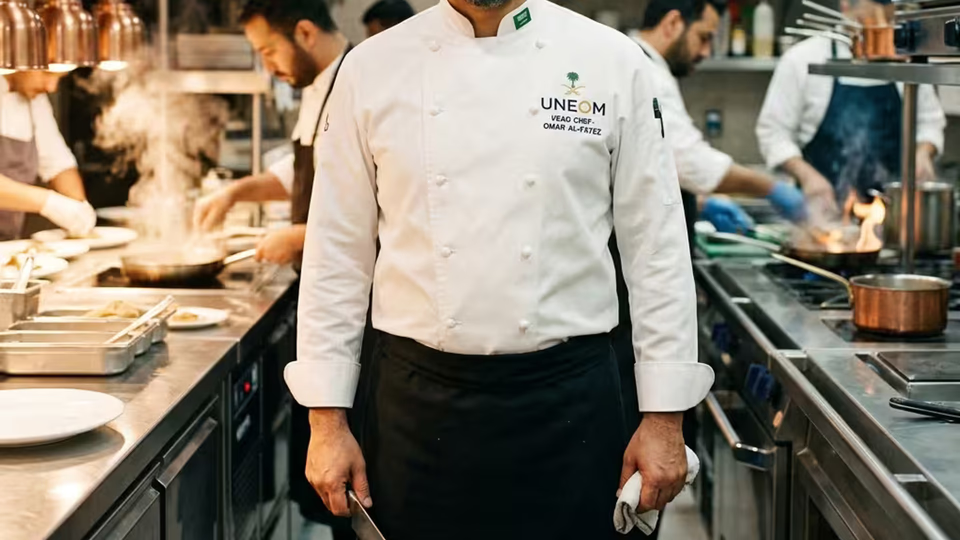
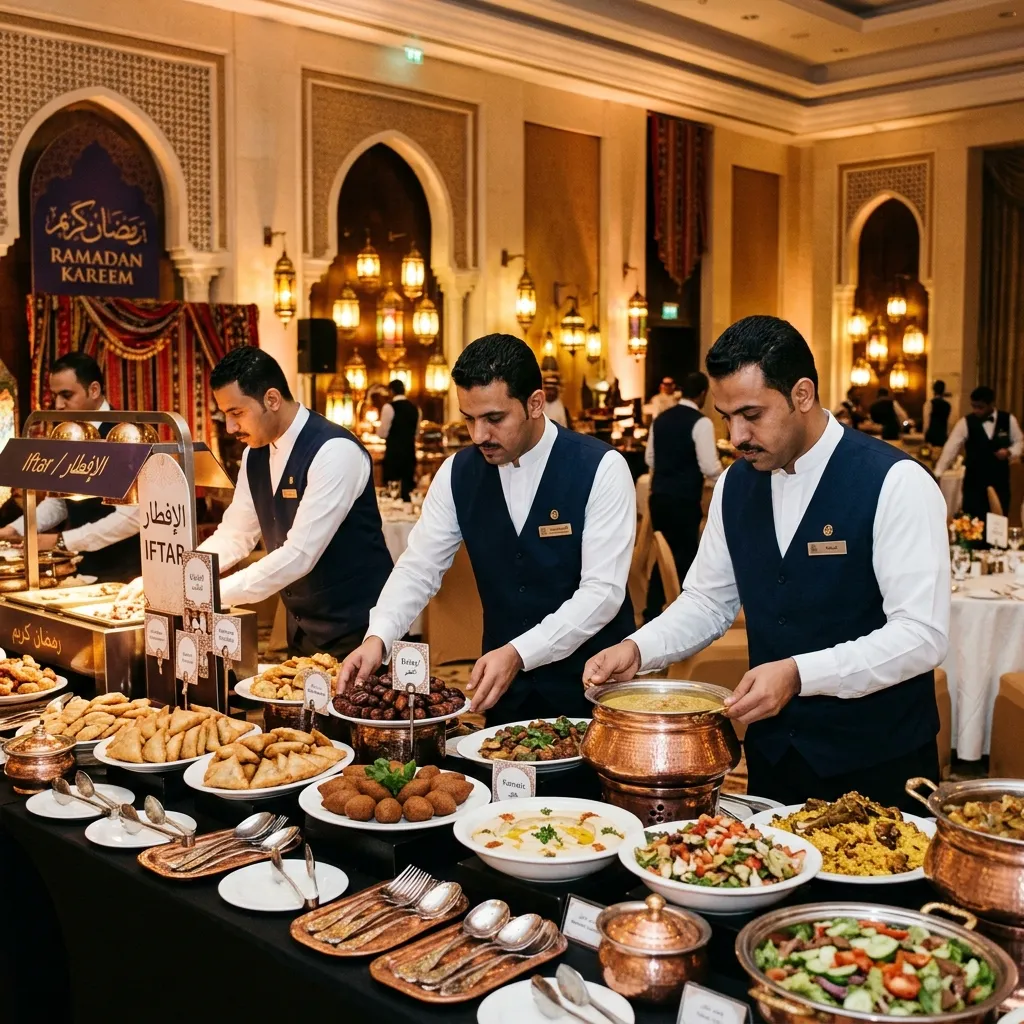
The most effective cultural signalling in hospitality uniforms comes from embroidery — specifically, from embroidery that references traditional motifs at a scale and placement that reads as design accent rather than folk costume. UNEOM maintains a digital archive of traditional Saudi embroidery patterns, compiled through fieldwork and consultation with Saudi heritage specialists and documented with regional provenance, historical context, and usage conventions. Each pattern is classified by region, formality level, and gender association, allowing designers to select motifs that are culturally appropriate for the specific property and role. The translation process follows a three-step methodology. Step one is pattern extraction: isolating a geometric element from the traditional motif — a diamond repeat from Asiri Al-Qatt, a wave line from Hijazi mashrabiya screens, or a star burst from Najdi door carvings. The extracted element is simplified to a 2-4 colour palette compatible with the garment's base fabric and programme colour scheme. Step two is scale calibration: the extracted element is rendered at three scales — accent (4-8mm repeat for collar and cuff trim), feature (15-25mm for pocket flaps and yoke panels), and statement (40-60mm for ceremonial or seasonal garments). Most programme uniforms use accent scale exclusively, reserving feature and statement scales for special-event garments such as national day or Ramadan iftar service. Step three is production method selection: machine embroidery for accent-scale elements producing 200 or more garments at consistent quality, computerised embroidery for feature-scale elements where thread density and colour transition require precision, and hand embroidery for statement-scale elements on limited-edition ceremonial garments. The cost differential is significant — hand embroidery adds 180 to 350 SAR per garment versus 12 to 25 SAR for machine embroidery — but the quality difference is visible and guests notice.
Modern interpretation, not costume
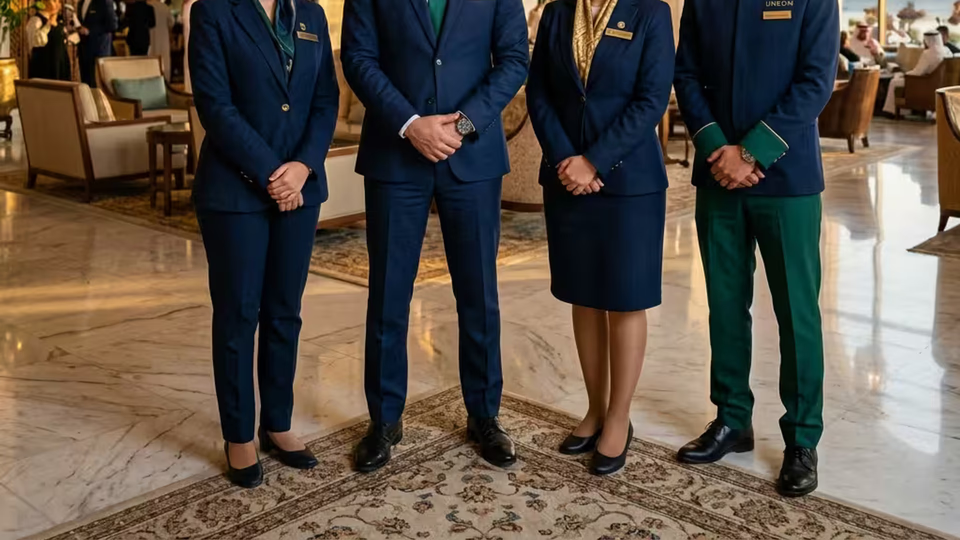
The line between cultural interpretation and costume is thin, and crossing it damages both staff dignity and guest experience. UNEOM uses a simple diagnostic test: if a staff member would feel uncomfortable wearing the garment on public transport home from work, the design has crossed into costume territory. This test eliminates several common hospitality uniform mistakes. Full-length traditional robes for male front-desk staff that restrict movement and create a museum-exhibit aesthetic — these are replaced with tunic-length garments that reference the thobe silhouette without replicating it. Head coverings that mimic specific tribal styles rather than integrating with the staff member's own preferences — these are replaced with programme hijabs or gutras that offer coordinated colour without prescribing cultural affiliation. Literal reproduction of historical textile patterns across the entire garment — replaced with accent-scale references that communicate heritage through design language rather than reproduction. The principle is interpretation, not quotation. A five-star hotel in Al-Ula should evoke the Nabataean aesthetic through earth-toned fabrics, sandstone-inspired colour gradients, and geometric detailing that echoes carved stone patterns — not through garments that look like they belong in a historical reconstruction. The practical test is durability of guest reaction: costume creates a momentary photo opportunity but becomes invisible or irritating over a multi-day stay; interpretation creates a subtle ambient signal that reinforces the property's sense of place throughout the guest journey. UNEOM's cultural consultation process involves three stakeholder groups before any design is finalised. First, property management reviews design concepts against brand positioning and guest demographic profiles. Second, a cultural advisory panel consisting of local heritage experts reviews designs for authenticity and appropriateness. Third — and most critically — a representative group of the staff who will wear the uniforms reviews designs for comfort, practicality, and personal comfort level. This last step has vetoed designs that passed management and cultural review, and it should never be skipped. The people who wear the uniform have the final authority on whether it crosses the costume line.
Programme execution
Executing a culturally grounded hospitality uniform programme involves production challenges that standard uniform manufacturers are not equipped to handle. The embroidery archive, pattern extraction methodology, and cultural consultation process described above require specialised capabilities that UNEOM has developed specifically for the Saudi hospitality market. Production begins with fabric sourcing, which for culturally referenced programmes often involves custom weaving. A Hijazi-inspired programme might require a cotton-silk blend with a specific thread count that produces the fluid drape associated with maritime textile traditions — this fabric does not exist as a stock item and must be commissioned from mills with minimum order quantities of 2,000 metres. An Asiri-inspired programme might require fabric with embedded metallic threads that reference the gold-accented embroidery traditions of the southern highlands — again, a custom commission. UNEOM maintains standing relationships with 14 specialty mills across Turkey, India, and Japan specifically for these custom fabric requirements, with lead times of 8 to 12 weeks from specification to delivery. Colour matching across culturally inspired programmes requires particular precision because heritage colours carry specific meaning. The turquoise associated with Jeddah coral architecture, the ochre of Najdi mud-brick buildings, the indigo of Asiri farming communities — these are not generic design choices but cultural references that local guests and culturally literate international guests will recognise and evaluate. UNEOM matches these colours using Munsell colour notation rather than Pantone, because Munsell provides a perceptually uniform colour space that more accurately captures the subtle warm-cool variations in heritage colours. The programme rollout for a culturally grounded hospitality uniform typically takes 14 to 18 weeks from brief to deployment: 3 weeks for cultural research and design concept development, 2 weeks for stakeholder consultation and design approval, 4 weeks for custom fabric sourcing and sampling, 3 weeks for production, and 2 to 4 weeks for fitting, alterations, and distribution. This timeline is 40 to 60 percent longer than a standard hospitality uniform programme, reflecting the additional research, consultation, and custom production steps required.
Frequently asked
- Can hotel uniforms incorporate regional heritage?
- Yes — through accent-scale embroidery, heritage colour palettes, and fabric selections that reference regional traditions without literal reproduction. The key is interpretation, not costume.
- How does UNEOM research regional textile traditions?
- Through fieldwork, consultation with Saudi heritage specialists, and a digital archive of traditional patterns classified by region, formality, and gender association.
- What is the cost of culturally embroidered uniforms?
- Machine embroidery adds 12-25 SAR per garment; hand embroidery adds 180-350 SAR. Most programmes use machine embroidery for daily wear and reserve hand embroidery for ceremonial garments.
- How long does a cultural uniform programme take?
- 14-18 weeks from brief to deployment — 40-60% longer than standard programmes due to cultural research, consultation, and custom fabric production requirements.
- Who approves the final design?
- Three stakeholder groups: property management, a cultural advisory panel of heritage experts, and — critically — a representative group of staff who will wear the uniforms.