Corporate Abaya for Work in Saudi Arabia: Branded, Tailored and Office-Ready
How to specify a corporate abaya for work in Saudi offices: office-appropriate fabric, a cut that moves, restrained branding, and sizing and lengths that hold across branches.
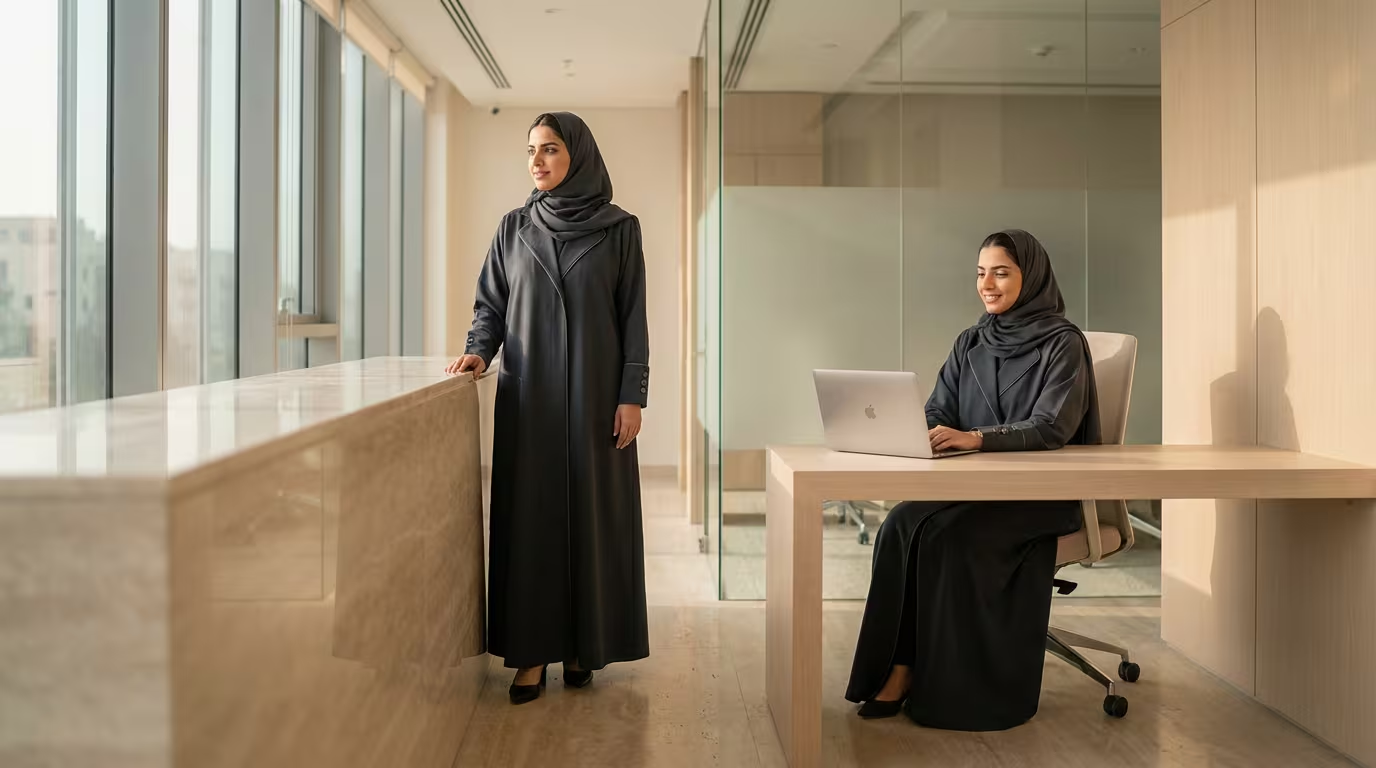
The abaya is often the most visible garment in a Saudi workplace and the least managed. Treated as a uniform item rather than a personal purchase, it can be specified like any other: fabric suited to air-conditioned offices, a cut that allows real movement, discreet brand detailing, and sizing and lengths that stay consistent across every branch.
Uniform Item, Not Personal Dress
In most Saudi organisations the abaya arrives at work as a private purchase: bought individually, chosen by taste, and replaced on no schedule. The moment it appears at a reception desk, a bank branch or a hospital corridor, it becomes part of what the visitor reads as the organisation. Treating it as a managed uniform item changes the questions procurement asks. Instead of picking a style, the team writes a specification: fabric and weight, colour, cut, permitted detailing, length options, care instructions and reorder route. Instead of trusting the market, it seals an approved sample so the tenth order matches the first. Instead of arguing about appearance case by case, it publishes a short standard that staff can read once. This framing is also more respectful of the wearer, because it removes personal judgement from daily supervision and replaces it with an agreed garment the employer supplies, sizes and replaces. Coverage preferences remain a matter for the individual and for facility policy; the programme's job is to make the supplied option comfortable, consistent and genuinely wearable.
Fabric That Suits the Office
An office abaya lives in a narrow band of conditions: a chilled building, a short hot walk from the car park, and a vehicle interior that can be punishing in July. That mix rewards fabric that breathes, drapes and recovers, not the heaviest or glossiest cloth available. Weight and drape decide how the garment falls over a seated body and whether it clings when a chair is pushed back. Opacity is a separate property from weight; a light cloth can be perfectly opaque if the construction is dense and the shade is right, and a heavy one can shadow badly under LED ceilings. Wrinkle recovery decides how the wearer looks at four in the afternoon after meetings. Static and pilling decide how the garment behaves against sleeves, seatbelts and lanyards. Colourfastness and dimensional stability decide whether the garment still matches the wall of colleagues after months of laundering. Polyester-rich blends generally hold colour and shape best; viscose- or cotton-rich constructions feel cooler and softer but crease and move more, so the trade-off belongs in the specification, not in the showroom.
Cut for Sitting and Moving
A working abaya is worn seated far more than it is photographed standing. The cut has to survive desk work, reaching into a filing drawer, carrying a tray, driving between branches and climbing into a shuttle bus. Ease across the shoulder and upper back is what lets the arms come forward to a keyboard without the whole garment riding up; a deeper armhole and a slightly fuller back panel usually do more for comfort than adding width at the hem. Sleeve shape is the single most practical decision. Wide, flowing sleeves catch on desks, door handles, sanitiser dispensers and equipment, so clinical, laboratory, workshop and food-adjacent roles are usually better served by a narrower sleeve with a closed or fastened cuff, specified without changing the overall silhouette. A front opening with concealed fasteners is easier for staff who layer over scrubs or a blazer; a closed style reads cleaner in front-of-house roles. Add discreet side access if staff carry a phone or access card, and set the hem so it clears shoes and stairs safely.
Brand Detail Without Noise
Branding an abaya works through restraint rather than volume. Colour is the loudest signal, and black is not a single colour: different fibres, finishes and dye lots read warm, cool, blue or faded next to each other under the same ceiling light. If the abaya must sit beside a corporate navy, charcoal or house shade elsewhere in the uniform, the shade should be approved from a physical lab dip against the actual fabric, not from a screen. After colour, the effective devices are small. A fine piping or tonal binding at the front edge and cuff, a contrast under-collar, or a single discreet emblem at chest or cuff level will carry an identity without turning the garment into signage. Embroidery needs a light hand on drapey cloth, since dense stitching puckers, stiffens the fall and can shadow through from the reverse; a tonal or single-colour mark usually looks more considered than a full-colour logo. Decide badge attachment in the specification too, so staff are not making holes in a garment the organisation paid for.
Sizes and Lengths
Abaya sizing fails differently from shirt sizing, because two variables move independently: body size and height. Tie length to chest size in a single chart and you guarantee hems that drag on stairs for some staff and sit awkwardly high on others. The workable approach is a published size set combined with a separate length grid, so a wearer chooses her size and her length as two decisions. Get there with a physical fit session using sealed samples across sites, not with a form sent by email; people size themselves conservatively when they cannot try the garment on, and the exchanges land later. Allow for what goes underneath, since an abaya worn over scrubs, a blazer or a heavier winter layer needs different ease than one worn over a blouse. Decide in advance how maternity needs, part-time staff and new joiners are handled, and record every wearer's size and length in the roster so reorders and replacements take a day of admin instead of a second fitting round.
Same Garment Across Branches
Consistency across branches is a supply outcome, not a design outcome. The version issued in Dammam next year has to read as the same garment as the one issued in Riyadh today, and that only happens when the specification is documented and the sample is sealed. Keep a signed physical reference held by both buyer and manufacturer, covering fabric and construction, the colour standard, trims, thread, labelling and care instructions. Ask how fabric continuity and dye lots will be managed between orders, because that is where drift usually enters. Standardise the care label so branch laundries and home washing do not pull the fleet in different directions. Keep one reorder route, so a replacement ordered by a branch manager arrives to the same specification as the original rollout. Behind that sits the manufacturer's own system. UNEOM has manufactured professional uniforms inside the Kingdom since 2013 and works to ISO 9001:2015, with OEKO-TEX Standard 100 certification, which is the level of documentation a multi-site abaya programme should expect to see before it commits.
Frequently asked
- What fabric suits a corporate abaya in Saudi offices?
- Choose by behaviour rather than by name. Office wear needs opacity, good drape, wrinkle recovery and stable colour through repeated laundering. Polyester-rich blends generally hold shade and shape best; viscose- or cotton-rich cloth feels cooler and softer but creases more. Ask for physical swatches, wear-test them in your actual buildings, then write the winner into the specification.
- How do we brand an abaya without it looking like signage?
- Keep it small and tonal. A fine piping or binding at the front edge and cuff, a contrast under-collar, or one discreet emblem at chest or cuff level carries identity without shouting. Dense embroidery puckers drapey cloth and can shadow through, so a tonal or single-colour mark usually reads as more considered than a full-colour logo.
- How should sizing and lengths be organised?
- Treat size and length as two separate choices. Publish a size set and a length grid, then run a physical fit session with sealed samples so staff try garments rather than guessing from a form. Record each wearer's size and length in the roster; reorders, replacements and new joiners then take admin time instead of another fitting round.
- Is a narrower sleeve appropriate for clinical or laboratory roles?
- Often yes. Wide sleeves catch on equipment, dispensers, trolleys and desks, which is a practical hazard in clinical, laboratory, workshop and food-adjacent areas. A narrower sleeve with a fastened or elasticated cuff removes the snag risk while keeping the overall silhouette. Define the variant by role in the specification and let the site risk assessment set the final rule.
- How do we keep branches consistent across reorders?
- Seal a physical reference sample held by both buyer and manufacturer, covering fabric, construction, colour standard, trims, thread, labelling and care. Ask how fabric continuity and dye lots are managed between orders, standardise the care label so laundries do not diverge, and route every reorder through the same specification rather than reopening choices at each branch.