Advanced Fabrics for Healthcare Uniforms: Antimicrobial Engineering and Performance Science
Silver-ion versus copper-oxide versus quaternary ammonium: which antimicrobial technology survives 75°C industrial laundering.
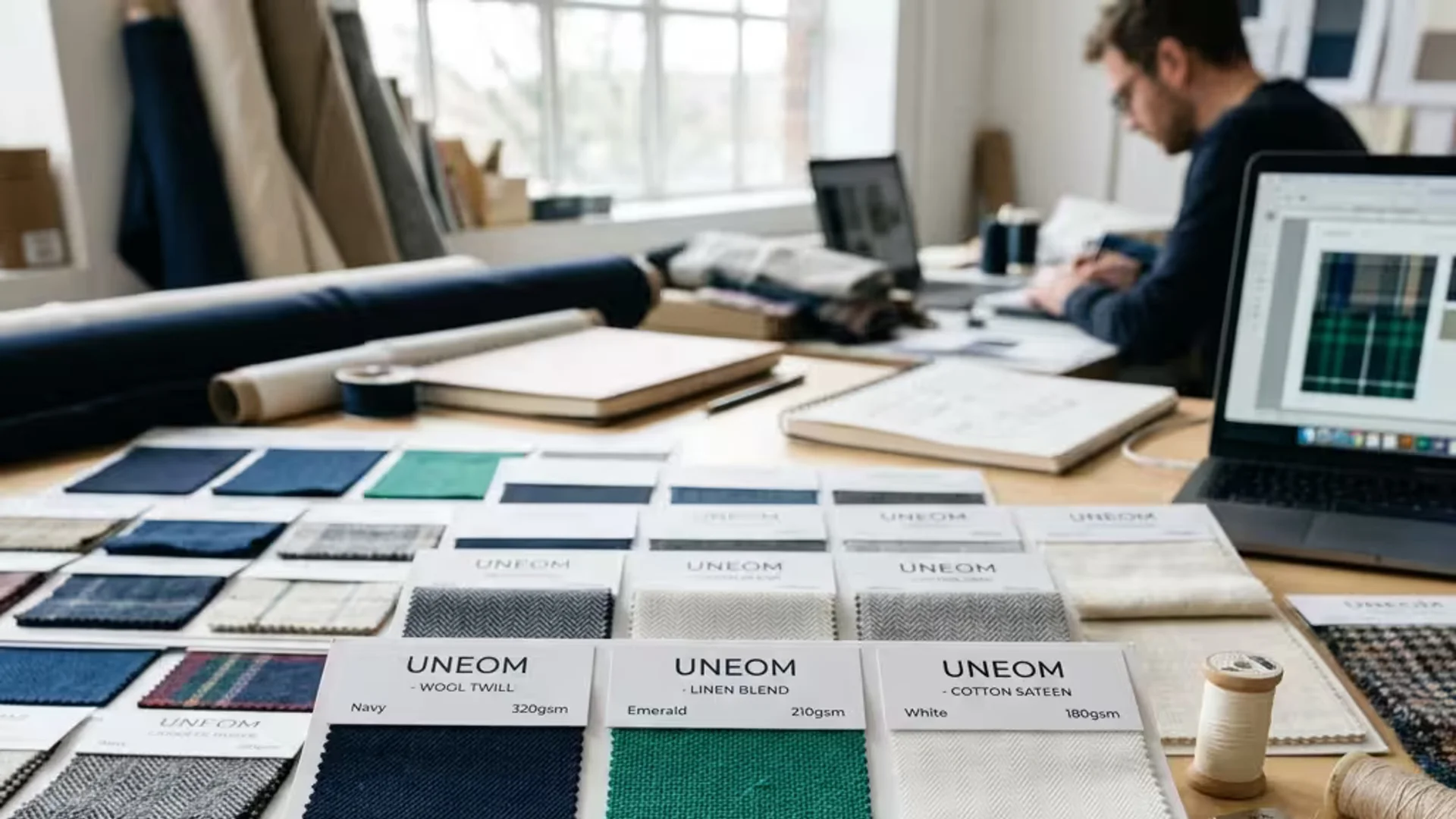
Healthcare uniform fabrics in Saudi Arabia must simultaneously satisfy four competing performance requirements: antimicrobial efficacy to reduce pathogen transmission risk, fluid barrier protection to prevent blood and body fluid penetration, thermal comfort in environments where clinical staff work 12-hour shifts, and mechanical durability to survive industrial laundering at 75 degrees Celsius with chlorine-based disinfectants. No single fabric technology excels at all four — which is why healthcare uniform specification requires understanding the trade-offs between antimicrobial systems and selecting the technology that best matches the clinical environment's specific risk profile.
Silver-ion versus copper-oxide antimicrobial systems
The two dominant antimicrobial technologies in healthcare textiles — silver-ion and copper-oxide — operate through fundamentally different mechanisms and carry different performance profiles. Silver-ion technology works by releasing silver ions from embedded silver compounds in the fabric fibre. These ions disrupt bacterial cell membranes and interfere with DNA replication, providing broad-spectrum antimicrobial activity against gram-positive bacteria, gram-negative bacteria, and many fungal species. The primary advantage of silver-ion systems is their proven efficacy at extremely low concentrations — effective antimicrobial activity is achieved at silver loadings as low as 0.1% by weight of fibre. The primary disadvantage is durability: silver ions are water-soluble and migrate out of the fabric during laundering. Each wash cycle removes approximately 3 to 5% of the silver loading, meaning that after 25 to 30 industrial wash cycles, the antimicrobial efficacy drops below clinically significant levels. For a healthcare garment laundered three times per week, this translates to approximately 8 to 10 weeks of effective antimicrobial life. Copper-oxide technology works differently: copper oxide nanoparticles are embedded in the fibre matrix during extrusion, becoming an integral part of the fibre structure rather than a surface treatment. The antimicrobial mechanism involves copper ions released at the fibre surface disrupting pathogen cell membranes through reactive oxygen species generation. The embedded nature of the copper particles provides dramatically superior wash durability — copper-oxide fibres maintain antimicrobial efficacy through 100 or more industrial wash cycles because the active agent cannot be extracted by water or detergent chemistry. The disadvantage of copper-oxide is colour: the copper particles impart a yellowish tint to the fabric that limits the available colour range. White — the traditional healthcare colour — is not achievable with copper-oxide fibres; the lightest achievable shade is a warm cream. UNEOM's recommendation depends on the clinical setting. For surgical environments where white garments are mandated and garment replacement is frequent, silver-ion technology provides adequate antimicrobial life within the replacement cycle. For long-term care, outpatient clinics, and non-surgical environments where garment longevity is prioritised and colour flexibility is acceptable, copper-oxide provides superior lifecycle antimicrobial performance at a lower total cost of ownership despite higher per-garment pricing.
Fluid barrier performance grades
Fluid barrier performance in healthcare uniforms is classified under AAMI PB70 into four protection levels, each specifying increasing resistance to fluid penetration. Level 1 provides minimal fluid resistance — the fabric resists small amounts of fluid contact but offers no protection against sustained pressure or splash volumes. Level 2 provides low fluid resistance — suitable for low-risk procedures where minimal blood or body fluid exposure is expected. Level 3 provides moderate fluid resistance — the fabric resists fluid penetration under hydrostatic pressure of at least 50cm water column, suitable for moderate-risk procedures. Level 4 provides the highest barrier — the fabric must pass the viral-penetration test that defines the highest AAMI PB70 level, suitable for high-risk surgical and trauma environments. Saudi MoH and facility infection-control policies set barrier requirements by clinical area, with higher levels expected in surgical and trauma environments — verify the level required for each department against the current MoH circular and your own facility policy before writing a specification. However, fluid barrier performance creates an inherent trade-off with thermal comfort: higher barrier levels require tighter fabric constructions that reduce air permeability and moisture vapour transmission. A Level 4 barrier garment provides excellent fluid protection but traps metabolic heat, creating thermal discomfort during extended wear — a significant concern for Saudi healthcare workers completing 12-hour shifts in facilities where ward temperatures are maintained at 22 to 24 degrees but staff movement between wards, corridors, and outdoor areas creates thermal cycling. UNEOM addresses this trade-off through zone-based barrier construction: high-barrier fabric is used in splash-risk zones — the front torso, the forearms, and the thigh area — while lower-barrier, higher-breathability fabric is used in non-splash zones — the upper back, the side panels, and the inner arms. This zoned approach provides Level 3 protection where fluid contact is most likely while maintaining thermal comfort overall. The cost premium for zone-based construction versus uniform single-grade fabric is approximately SAR 25 per garment — the cost of pattern complexity and multi-fabric cutting. Against the comfort and productivity benefits of reduced thermal stress during 12-hour shifts, this premium is justified for any clinical environment where staff retention and performance are priorities.
Saudi MoH compliance matrix
The Saudi Ministry of Health maintains a textile compliance framework that intersects with SFDA medical device regulations for garments classified as personal protective equipment. Understanding which regulatory pathway applies to a specific healthcare garment is essential for procurement compliance. Standard clinical uniforms — scrubs, lab coats, and nursing tunics used for general clinical activities without significant fluid exposure risk — fall under SASO textile standards rather than SFDA medical device regulations. These garments require SASO conformity marking and Arabic-language labelling but do not require SFDA registration. Barrier-rated clinical garments — surgical gowns, isolation gowns, and uniforms with AAMI Level 3 or 4 barrier ratings — fall under SFDA medical device Class I regulations and require SFDA establishment registration, product listing, and conformity assessment. The compliance burden is significantly higher: manufacturers must demonstrate ISO 13485 quality management system certification, provide biocompatibility testing per ISO 10993, and maintain post-market surveillance documentation. Antimicrobial-treated garments occupy a regulatory grey zone: the antimicrobial treatment itself may be classified as a biocidal product under SFDA regulations, even if the garment is otherwise a standard clinical uniform. UNEOM navigates this by using antimicrobial technologies that are integrated into the fibre during manufacturing rather than applied as a surface treatment — a distinction that keeps the garment classified as a textile product rather than a treated article under the current regulatory interpretation. For hospital procurement teams, the compliance matrix determines which garments can be purchased through standard textile procurement channels and which require the medical device procurement pathway with its additional documentation and approval requirements. UNEOM provides a compliance classification for every garment in its healthcare catalogue, clearly identifying the applicable regulatory pathway and providing the documentation package appropriate to that classification. This eliminates the compliance risk that procurement teams face when purchasing healthcare garments from suppliers who do not understand the Saudi regulatory framework — a risk that can result in facility-level non-compliance findings during JCI accreditation reviews or MoH inspections.
Programme specification by clinical department
Healthcare uniform specification should be department-driven rather than facility-wide, because the risk profile, performance requirements, and garment lifecycle differ dramatically between clinical departments. UNEOM's healthcare programme specification identifies five distinct department categories, each with tailored fabric and construction specifications. Emergency departments require Level 3 barrier protection with copper-oxide antimicrobial technology, in dark colours — navy or charcoal — that do not show blood staining during active trauma management. The fabric must withstand 75-degree laundering with chlorine-based disinfection. The construction includes reinforced knee panels for kneeling during floor-level resuscitation and a concealed radio-clip mounting point on the left chest panel. Surgical departments require Level 3 or Level 4 barrier protection — Level 4 for direct surgical team, Level 3 for circulating and instrument staff — with silver-ion antimicrobial treatment in the traditional surgical colours of blue-green or ceil blue. The fabric is specified for single-shift wear with daily laundering at 75 degrees. The construction includes a wrap-back closure system that eliminates the contamination risk associated with pullover scrub tops. Paediatric departments require Level 2 barrier protection — lower risk than adult clinical areas — with the full OEKO-TEX Standard 100 Class 1 certification for skin-contact safety, because paediatric nurses frequently hold infants and toddlers against their uniform. Colour selection emphasises warm, non-threatening tones — soft teal, warm lilac, or gentle coral rather than the institutional blues and greens of adult wards. Outpatient clinics require Level 1 or Level 2 barrier protection with copper-oxide antimicrobial technology for extended garment life, in colours that match the clinic's brand identity. The construction prioritises professional appearance and comfort over barrier performance, with tailored fit options and seasonal weight variations. Pharmacy and laboratory departments require chemical-splash resistance per EN 13034 in addition to standard antimicrobial treatment, with snap-front closures rather than button-front for rapid removal in case of chemical spill. Fabric colour is white or light blue for cleanliness visibility, with stain-release treatment to facilitate removal of pharmaceutical compounds during laundering. Each department specification includes a detailed garment technical sheet that the UNEOM programme manager reviews with the hospital procurement and infection control teams, ensuring specification alignment with the facility's own clinical protocols before production begins.
Frequently asked
- Which antimicrobial technology lasts longest?
- Copper-oxide fibre-integrated technology maintains efficacy through 100+ wash cycles versus 25-30 cycles for silver-ion, but limits colour options — white is not achievable.
- What AAMI level do Saudi hospitals require?
- Barrier levels are set by clinical area rather than facility-wide, with higher levels expected in surgical and trauma environments and the highest level for direct surgical teams. Confirm the required level for each department against current MoH guidance and your facility's infection-control policy.
- Do antimicrobial uniforms require SFDA registration?
- Fibre-integrated antimicrobials (copper-oxide, silver embedded during extrusion) are classified as textiles. Surface-applied antimicrobial treatments may require biocidal product registration under SFDA.
- What is zone-based barrier construction?
- Using high-barrier fabric only in splash-risk zones (front torso, forearms, thighs) and breathable fabric elsewhere — providing Level 3 protection where needed while maintaining thermal comfort.
- How should paediatric uniforms differ from adult clinical?
- Lower barrier (Level 2), OEKO-TEX Class 1 skin-safety certification for infant contact, warm non-threatening colours, and soft-hand fabric finishing.