
QSR vs Fine Dining Uniforms: Which Programme Model Fits Your Saudi F&B Concept?
A B2B comparison of QSR versus fine-dining uniform programmes for Saudi F&B operators, mapping rotation cycles, fabric grade, cost-per-employee, and brand-standard compliance by concept.
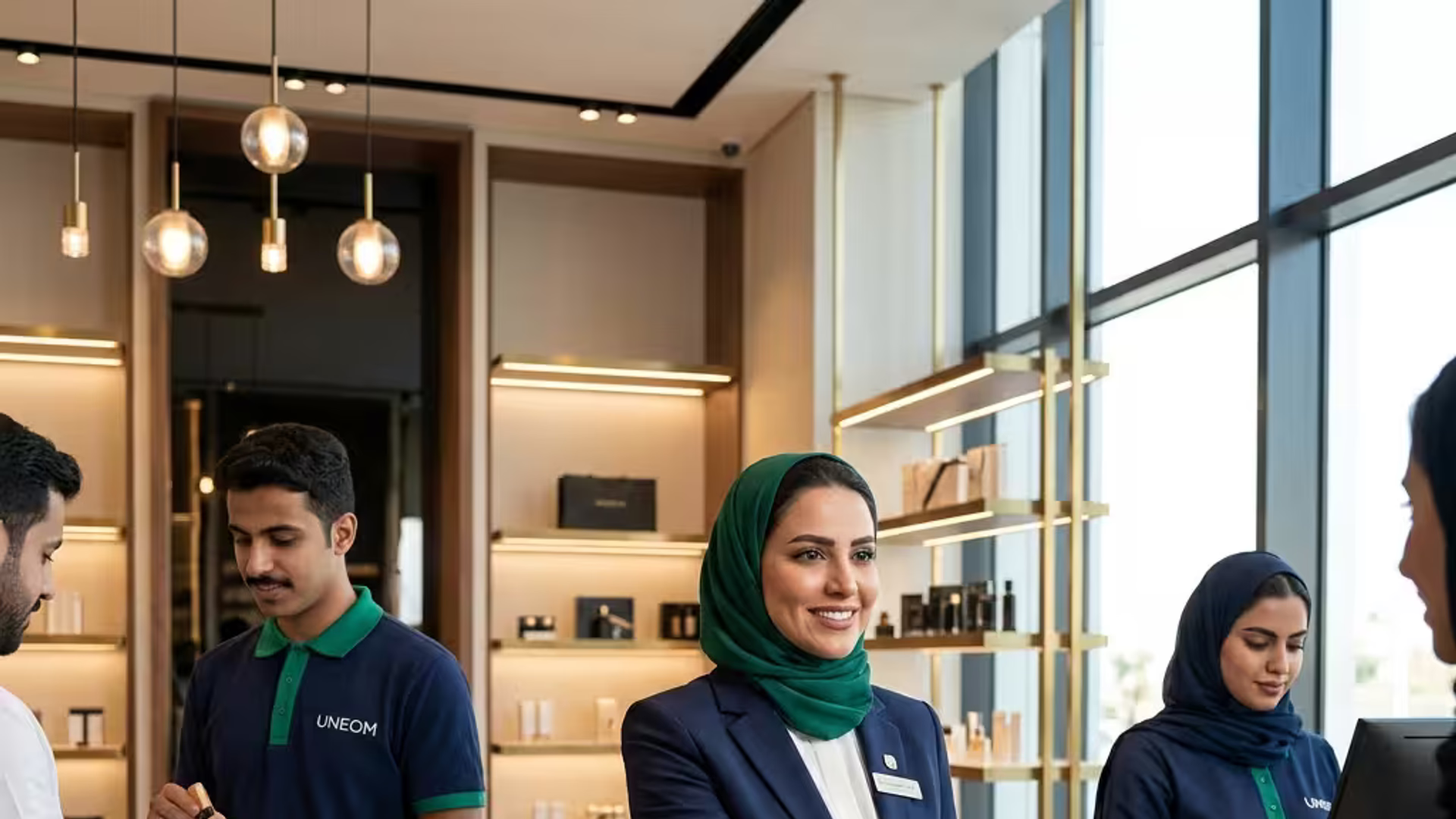
Quick-service and fine-dining restaurants pull uniform programmes in opposite directions. QSR demands high-rotation, low-unit-cost garments built to survive frequent washing and franchise brand-standard checks; fine dining demands low-rotation, high-grade formalwear with bespoke fit and refined finish. This guide maps cost-per-employee, rotation cycles, fabric grade, and brand-standard implications so Saudi F&B buyers choose the right model.
Two Opposite Operating Models
Before comparing fabrics or prices, recognise that QSR and fine dining are not two points on one scale; they are two distinct programme philosophies. A quick service restaurant uniform exists to be replaced cheaply, often and identically: it serves throughput, hygiene turnover and brand recognition at speed. A fine dining waiter uniform exists to be worn rarely-changed and impeccably maintained: it serves atmosphere, perceived value and guest trust. The Saudi market spans both extremes, from drive-through chains scaling across Riyadh and Jeddah to destination restaurants in luxury hospitality districts. Choosing the wrong model is costly in both directions. Specify fine-dining grade for a high-rotation QSR floor and you over-invest in garments that wear out before the fabric earns its premium. Specify QSR-grade polos for a fine dining room and you undercut the guest experience the concept charges for. The first decision is therefore not what to buy, but which programme logic governs the whole specification, from fibre to reorder cadence.
Rotation Cycles and Replacement Cadence
Rotation is the single biggest divider. A fast food staff uniform faces near-daily wash cycles, kitchen grease, frequent staff turnover and high physical movement, so it is engineered as a consumable: predictable, fast to reorder in bulk and short-lived by design. The programme is built around speed of resupply, generous size runs held in stock and simple swap-out when a garment fades or stains. Fine dining inverts this. Garments are worn fewer shifts per week, professionally laundered or carefully handled, and expected to last many months looking presentable, so replacement is occasional and individualised rather than batched. For a Saudi operator this changes how you plan inventory and budget. QSR favours a rolling reorder relationship with buffer stock and tight lead times across many sites. Fine dining favours a smaller, higher-quality core wardrobe with careful fit records per employee and slower, deliberate replenishment. Mapping your true rotation cycle, not an assumed one, prevents both stockouts on a busy QSR floor and over-ordering of premium pieces that sit unused.
Fabric Grade and Construction
Fabric choices follow directly from rotation. QSR garments lean on durable, easy-care blends, typically polyester-rich knits and poplins chosen for colourfastness through repeated washing, wrinkle resistance, quick drying and resistance to pilling and shrinkage. The priority is consistent appearance across hundreds of identical units after many wash cycles, not luxury hand-feel. Fine dining moves up in grade: heavier woven fabrics, finer yarns, structured waistcoats and trousers, often with a higher natural-fibre content or premium blends that drape better and hold a crisp, tailored line. Finish details matter more, lining, buttons, stitching density and pressed seams that read as quality up close. In the Saudi climate, both models must manage heat: breathable constructions and moisture-management finishes help front-of-house staff stay presentable through long shifts in warm conditions. The honest trade-off is that premium fabrics reward low rotation and punish high rotation, while hard-wearing easy-care fabrics excel under heavy laundering but will never deliver a fine-dining hand-feel. Match the fibre to the wash load, not to aspiration.
Cost-Per-Employee, Not Cost-Per-Garment
The most common procurement error is comparing the price of a single polo against the price of a single waistcoat and concluding QSR is simply cheaper. The meaningful figure is total cost-per-employee over a defined period, which folds in unit price, number of garments issued, replacement frequency and laundering. A low-cost QSR garment replaced often, across a large workforce, accumulates differently than a higher-cost fine-dining piece that lasts far longer per employee. Without inventing figures, the logic is clear: QSR spreads modest unit costs across high volume and frequent replacement, so the programme is sensitive to durability and reorder efficiency. Fine dining concentrates higher unit costs on fewer, longer-lived garments, so the programme is sensitive to fit accuracy and finish longevity. For a Saudi multi-site operator, the right comparison models each concept's annual cost-per-head, including buffer stock and wear-out rates, rather than a headline garment price. That framing usually reveals where a cheaper-looking garment is actually more expensive once replacement cadence is counted.
Brand Standards and Franchise Compliance
Brand standards govern both models but in different ways. International QSR franchises typically arrive with a rigid brand-standard manual: exact logo placement, specified colours, approved garment styles and tolerances, often audited. The uniform programme's job is faithful, repeatable compliance at scale, identical polos and caps across every Saudi outlet, consistent embroidery and colour matching that survives washing so that unit forty looks like unit one. The manufacturing challenge is consistency and reorder fidelity, not creativity. Fine dining brand standards are usually about coherence with an interior design language, service tier and culinary identity rather than a franchise rulebook. Here the programme expresses the concept: fabric, cut and detailing chosen to match the room and the price point, frequently bespoke. For Saudi operators, franchise QSR programmes demand a manufacturer who can hold colour and logo standards across large repeat runs, while independent fine dining demands a partner who can interpret a brand into tailored garments. Both require modesty-aware options and Saudi labour realities to be built into the specification from the outset.
Saudi Climate, Modesty and Vision 2030 Context
Two Saudi-specific factors shape both programmes beyond the QSR-versus-fine-dining split. First, climate: summers reaching well into the forties demand breathable, moisture-managing fabrics and constructions that keep staff comfortable and presentable, whether a cashier on a drive-through window or a server crossing a sunlit terrace. Heat management is not a luxury add-on; it directly affects appearance, hygiene and staff wellbeing across long shifts. Second, modesty and workforce composition: programmes should offer respectful coverage options, longer sleeves, looser cuts, hijab-compatible designs, and accommodate a workforce that increasingly includes Saudi nationals under Vision 2030 localisation goals. The Kingdom's fast-growing specialty-coffee scene, events sector and hospitality investment mean concepts now span artisanal cafes, high-volume QSR and destination fine dining, sometimes within one operator's portfolio. A credible uniform programme treats climate adaptation and modesty as default specification parameters, not exceptions, and designs each concept's garments to perform in real Saudi conditions rather than importing a template built for a cooler, different market.
Choosing and Managing the Right Programme
The decision reduces to a few honest questions. How often will the garment be washed and replaced? How large and how distributed is the workforce? Does an external franchise dictate the specification, or do you own the brand expression? How much does the guest pay for atmosphere versus speed? High rotation, large volume and franchise control point firmly to a QSR programme optimised for durable easy-care fabrics, bulk reorder and brand-standard fidelity. Low rotation, premium positioning and brand ownership point to a fine-dining programme optimised for fabric grade, bespoke fit and refined finish. Many Saudi operators run mixed portfolios and need both logics managed coherently under one supplier relationship, with consistent sizing data, reorder discipline and quality control. As an in-Kingdom manufacturer operating since 2013 under ISO 9001:2015 quality management and OEKO-TEX Standard 100 certified materials, the practical path is to model each concept's true cost-per-employee, lock the right fabric grade to its wash load, and build climate and modesty into every specification from day one.
Frequently asked questions
What is the main difference between QSR and fine dining uniforms?
QSR uniforms are high-rotation, low-unit-cost garments such as logo polos and caps, built to survive frequent washing and franchise brand-standard checks. Fine dining uniforms are low-rotation, high-grade formalwear, such as waistcoats and tailored trousers, with bespoke fit and refined finish. The two follow opposite programme logics: consumable consistency at scale versus durable, premium presentation.
How should I compare the cost of a quick service restaurant uniform to fine dining?
Compare cost-per-employee over a defined period, not the price of one garment. Fold in unit price, number of garments issued, replacement frequency and laundering. A cheap QSR polo replaced often across a large workforce accumulates differently than a costlier fine-dining piece that lasts far longer per employee. The headline garment price alone is misleading without rotation cadence.
What fabrics suit a fast food staff uniform in Saudi Arabia?
Durable, easy-care blends, typically polyester-rich knits and poplins, suit fast food staff uniforms because they hold colour through repeated washing, resist wrinkling, pilling and shrinkage, and dry quickly. In the Saudi climate, breathable constructions and moisture-management finishes also matter, keeping staff presentable through long, warm shifts on busy floors and drive-through windows.
Do franchise brand standards change the uniform programme?
Yes, significantly. International QSR franchises usually supply a rigid brand-standard manual specifying exact logo placement, colours, approved styles and tolerances, often audited. The programme must deliver faithful, repeatable compliance across every outlet, with embroidery and colour matching that survive washing. The manufacturing priority becomes consistency and reorder fidelity rather than creative interpretation, so unit forty matches unit one.
Can one supplier manage both QSR and fine dining programmes?
Yes. Many Saudi operators run mixed portfolios, from cafes and QSR to destination fine dining, and benefit from one supplier managing both logics coherently. That requires consistent sizing data, reorder discipline, colour and logo control for franchise runs, and tailoring capability for premium concepts. Climate adaptation and modesty options should be built into every specification regardless of concept.