Reception and Front-Desk Uniforms for Saudi Offices: A Specification Guide
How to specify reception and front-desk uniforms for Saudi offices: formality against air conditioning, modest options, seated-shift construction, visual distinction from visitors, and colour that survives reorders.
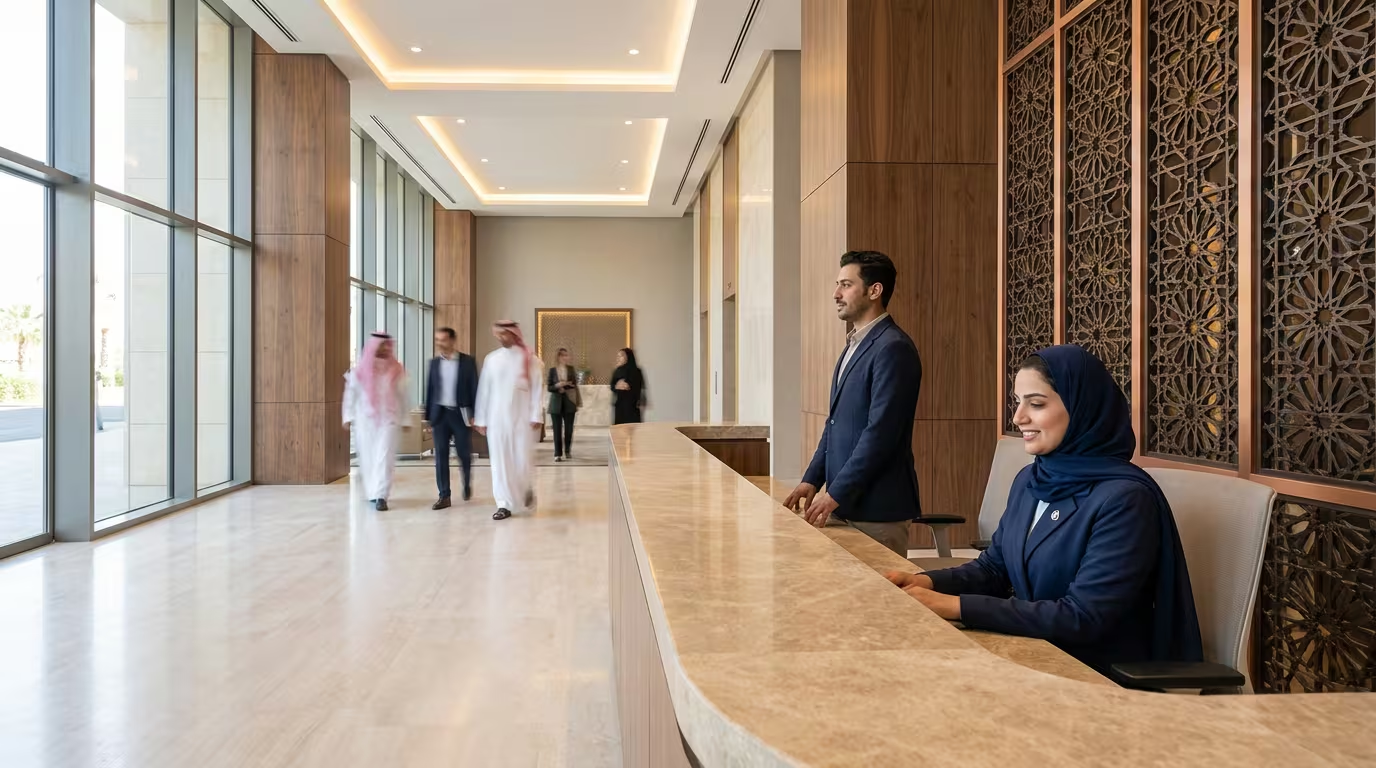
The reception desk is where a Saudi organisation meets its visitors in person, and what the person behind it wears is read before a word is spoken. Getting that right means balancing tailored formality with comfort in a cooled lobby, offering modest choices as standard, and building garments that survive a seated shift.
What the Front Desk Signals
Reception is where an organisation stops being a logo and becomes a person. A visitor arriving at a Riyadh head office reads the desk before anyone speaks: who is staff, who is waiting, whom to approach, and whether the place looks run with care. That reading is intuitive rather than measured, and it is worth designing for deliberately rather than leaving it to whatever each employee owns. A reception uniform in a Saudi office therefore carries a heavier communication load than a back-office dress code. It has to look considered under lobby lighting, hold its shape through a full shift, and stay appropriate when a delegation, an inspector, or a nervous first-time visitor walks through the same door. Treat it as part of the building's finish specification rather than as workwear. The practical consequence is that cloth, colour, cut, and the accessories that go with them should be decided once, documented, and repeated on every reorder, so the desk looks the same in its second year as it did on launch day.
Formality Against a Cooled Room
Most Saudi reception desks sit inside a heavily cooled envelope, which changes the fabric brief entirely. The person at the desk is not fighting outdoor heat for most of the shift; they sit under a diffuser in a space that may run cooler than they would choose, then step into a car park at midday when the shift ends. That combination argues for a mid-weight, structured cloth that holds a tailored line indoors, plus a light layer that can be removed rather than one heavy garment. Polyester-rich blends with viscose or wool give the crease recovery a public-facing role demands, while higher natural content improves hand feel and breathability at the cost of easier care. Very light summer cloths that suit outdoor field roles often look thin under lobby lighting and drape poorly on a seated body. The sensible route is to specify a stable suiting or shirting weight for the visible outer layers, and to solve genuine cold with a cardigan, waistcoat, or lined jacket drawn from the same palette.
Modest Options Built Into the Range
Modesty at the front desk is easiest to handle when it is designed into the whole range rather than offered as a special request. That means longer tunics and over-blouses that cover the hip, sleeves that stay long without ballooning, necklines that sit high enough to be forgotten, and skirts or wide trousers that read as tailored rather than fitted. Opacity deserves specific attention: pale shirting that behaves well in a showroom can turn translucent under bright lobby downlights, so a lining, a fuller construction, or a deeper colourway is often the practical fix. Many women at Saudi reception desks wear a headscarf, and the uniform should meet it rather than ignore it: a supplied scarf in matched cloth gives a coherent look, while permitting personal scarves within a stated colour family respects preference and still holds the palette together. Some organisations add a tailored abaya or a long overlayer in the corporate colour for staff who prefer it. Offer every option openly, and let each person choose without having to explain the choice.
Designed for a Seated Shift
Reception is a seated job, and seated wear behaves differently from standing wear. A jacket that looks clean on a fitting-room stand rides up at the back once someone sits, so back length, vent placement, and armhole height matter more than they would for a standing role. Skirts and trousers need a rise and waistband that stay comfortable through hours of sitting rather than digging in after lunch. The chair itself is an abrasion source: repeated contact between an upholstered seat and the seat of a trouser or skirt brings pilling and shine long before the rest of the garment wears out, which is why smooth, tightly constructed cloths and a modest amount of elastane usually outlast loosely spun alternatives. Crease behaviour is equally visible, because a skirt front or trouser leg folds where the hip and knee bend and stays folded if the fibre has no recovery. Blouses also ride out of waistbands; longer shirt tails, or a cut designed to be worn untucked, spare staff constant readjustment in front of visitors.
Telling Staff Apart From Guests
A corporate lobby is full of people in dark suits, so a reception uniform that is merely smart can disappear into the crowd it is meant to serve. Distinction comes from repetition rather than volume: one accent colour used consistently across a scarf, a tie, a waistcoat, or a contrast placket is read faster than an expensive but generic suit. Name badges help, but only when the type is large enough to read from the far side of the desk and the badge sits in the same position on every garment. Distinction also has to work downwards through the organisation. Visitors routinely approach the wrong person, so security officers, facilities staff, hospitality crew, and reception should occupy clearly separate visual tiers rather than variations of the same navy. A workable rule is to fix one silhouette and one palette per function, and to let seniority show through a small, deliberate marker rather than a different outfit. When the desk is visible from the entrance, that consistency is what tells an arriving visitor where to go before anyone raises a hand.
Matching the Interior, and Keeping It Matched
Reception attire lives against a designed backdrop, so the palette should be chosen in the actual space rather than from a screen. Warm and cool lighting shift how a colour reads, marble and wood undertones can fight a corporate blue, and a shade that photographs well in a brand book can look muddy under lobby downlights. Bring physical swatches to the desk itself, view them at the hours visitors actually arrive, and confirm the choice with whoever owns the interior before committing. Once the palette is fixed, the harder task is keeping it fixed, because dye lots drift between production runs and colour continuity across reorders depends on recorded references and a supplier able to hold them. That is a manufacturing question as much as a design one, and a practical argument for producing inside the Kingdom, where sampling, fittings, and top-up orders move on local timelines. UNEOM has manufactured in Saudi Arabia since 2013 under ISO 9001:2015 and OEKO-TEX Standard 100, and treats a reception programme as a repeatable specification rather than a one-off order.
Frequently asked
- What fabric suits a reception uniform in an air-conditioned Saudi office?
- Mid-weight blends usually work best. A polyester-rich mix with viscose or wool holds a tailored line, recovers from creasing through a seated shift, and launders easily; higher natural content feels better against the skin but needs more care. Avoid very light summer cloths, which look thin under lobby lighting and drape poorly when seated.
- How do we offer modest options without singling anyone out?
- Design modesty into the standard range rather than as an exception: long sleeves, higher necklines, hip-covering tunics, lined or opaque shirting, and tailored trousers or full skirts available to everyone. Add a matched scarf and, where wanted, a corporate abaya or long overlayer. Publish the full option list so staff choose privately, without requesting a concession.
- Should front-desk staff wear a jacket all day?
- Usually not as a fixed requirement. Lobby temperatures vary with door traffic and diffuser position, so a layered set works better: a presentable shirt or blouse that stands alone, plus a jacket, waistcoat, or cardigan in the same palette for cold spots and formal visits. Specify where outer layers hang neatly at the desk when removed.
- How do we keep the reception look consistent across reorders?
- Record the specification, not just the order: cloth reference, colour reference, construction details, trim, and badge position. Ask the supplier to retain approved colour standards and to flag any dye-lot variation before production. Keep a sealed reference garment at the office for comparison, and reorder in batches large enough to cover the whole desk at once.
- How should we plan sets and replacement for front-desk staff?
- Plan by laundering cycle rather than a fixed figure: enough sets that a clean, pressed outfit is always available while others are being washed, plus a spare for spills at the desk. Replace on condition, not calendar, using visible triggers such as pilling on seat panels, shine, hem wear, or colour that no longer matches the team.