Pilot Uniform Rank Stripes: Epaulettes, Wings and What They Signal
How pilot uniform rank stripes work, what epaulettes and wings signal, and how fabric, fit and care decisions shape a flight crew programme in Saudi Arabia.
Stripes on a pilot's shoulder are read instantly and rarely explained. This guide sets out what the common rank convention signals, what the rest of the uniform is made of, how epaulettes and wings are built, and which fabric and care decisions matter in Saudi heat and dry cabin air. Details vary by carrier throughout.
What the stripes signal
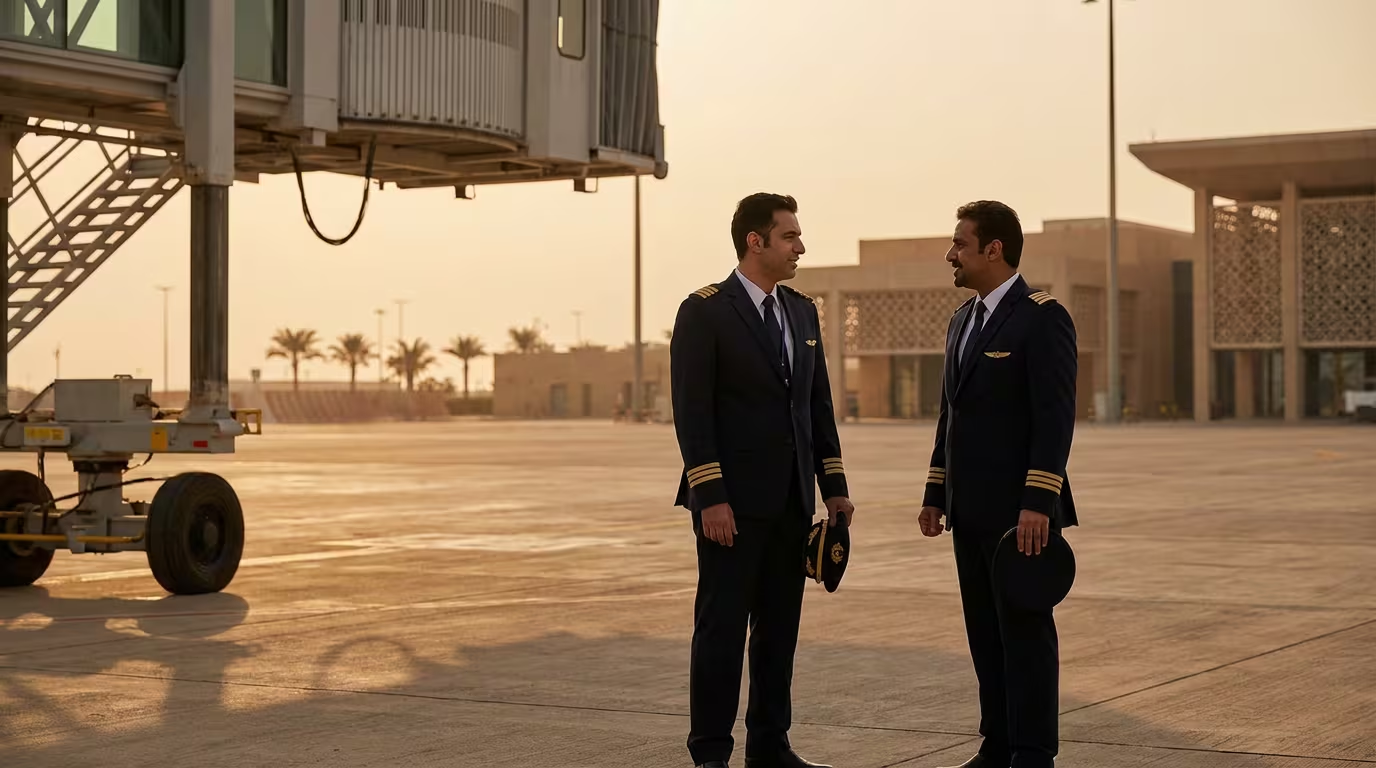
The bars on a pilot's shoulder are a visual shorthand for authority, and almost every airline uses some version of the same idea: the number of bars rises with rank, so the person with the most bars on the flight deck is the one carrying final command. The most widely recognised pattern gives the captain four bars and the first officer three, with fewer for cadets and junior grades, but this is a convention inherited from maritime tradition rather than a single global rule. Each carrier writes its own uniform manual, and that document, not custom, decides how many bars each grade wears, whether the braid is gold or silver, whether relief and cruise grades sit between the standard steps, and how instructors, examiners or fleet managers are distinguished. Some airlines extend the system to cabin and ground grades with different colours or narrower bars. For a procurement team the practical consequence is simple: never assume the pattern. Build the insignia specification from the airline's own approved grade table and artwork.
The components in a flight crew set
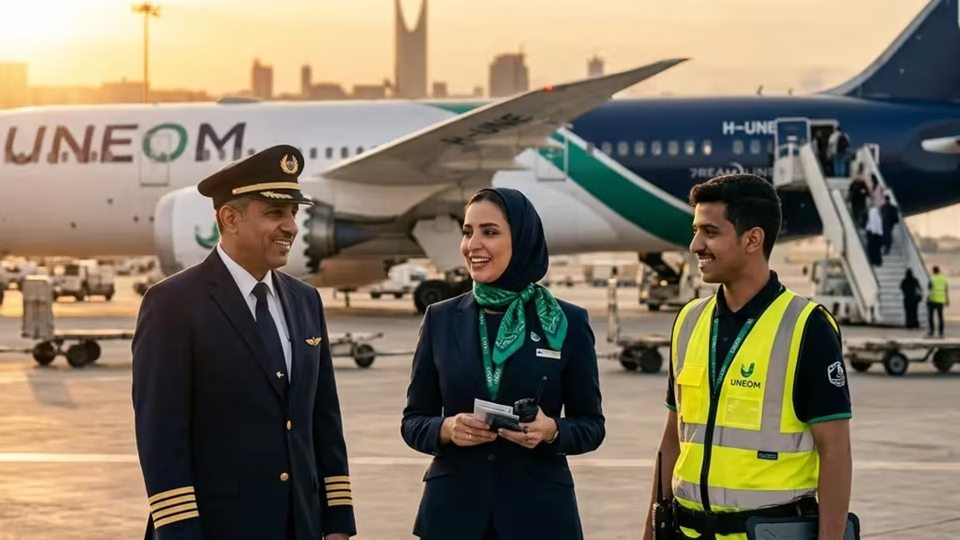
A flight crew uniform is a set of coordinated pieces, and each one carries part of the message. The working core is the shirt, usually white or pale, cut long enough to stay tucked through a full duty and fitted with shoulder straps that hold the removable epaulette sliders. Trousers or a skirt follow the carrier's palette, most often navy, black or charcoal, and are expected to hold a clean line after hours in a seat. The jacket is the formal layer, worn through the terminal and at the gate more than in the cruise, and on many carriers it repeats the rank in braid rings around the cuff. The peaked cap completes the formal look and often carries its own badge and, at senior grades, decorative visor detail. Above the left breast pocket sits the wings badge, the qualification marker rather than a rank marker. Around these sit the tie or scarf, belt, name badge, identity card holder and, for ramp checks, whatever high visibility item the station requires. Placement is a carrier decision, so the manual governs.
Epaulettes, braid and wings up close
Most shoulder insignia is built the same way: metallic or coloured braid woven or sewn onto a stiffened board or a fabric slider that passes over the shoulder strap and locks under the button. Sliders are the practical choice for a working programme because they move between shirts, survive laundering separately and can be swapped the day a promotion takes effect. Jacket rings are sewn permanently, which is why jackets are usually the slowest item to reissue after a grade change. Wings are either a pin-backed metal badge or machine embroidery, and each has a cost: pins leave holes and can catch, embroidery can distort if the base fabric relaxes at a different rate than the stitch. The failure modes are predictable. Braid abrades where a shoulder bag or harness strap rides, metallic yarn dulls with heat and friction, and edges fray before the shirt itself is worn out. Tone matching matters as much as durability, because gold on the shirt slider, the cuff and the cap should read as one colour under terminal lighting.
Fabric for the cabin and the ramp
Flight deck fabric has to satisfy two very different environments in the same duty. On a Saudi apron in high summer the crew steps into extreme heat and glare for the walkaround, then returns to a dry, air conditioned cabin for hours of seated work. That combination sets the brief. Shirts need breathability and moisture movement for the ramp, opacity and shape retention under a harness, and enough recovery to look pressed after a long sector. Trousers take the worst of the seated wear, with pressure and abrasion at the seat and the back of the thigh where a fabric with too much surface sheen begins to glaze. Very dry cabin air also raises static, which is why all synthetic constructions are often softened with a natural fibre component or an antistatic finish. Colour fastness to light deserves attention on the flight deck, where sun through the windows falls on shoulders and forearms. Any flame related requirement should be taken from the carrier's own specification rather than assumed. Skin contact layers are where an OEKO-TEX Standard 100 certification is worth requesting.
Fit, modesty and programme realities
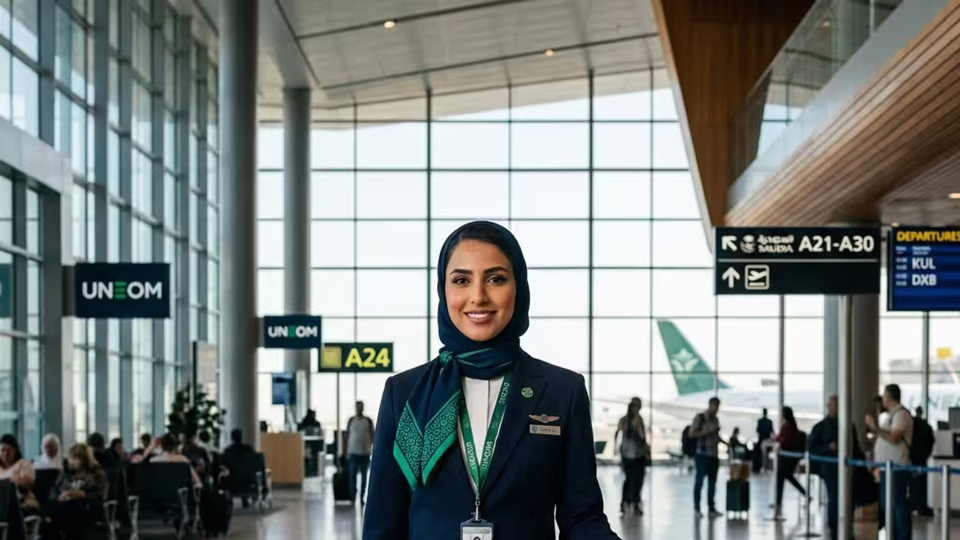
Rank is only legible when the garment fits. A shoulder that is too wide lets the epaulette slider sit at an angle, a collar that gapes undermines the whole formal line, and a jacket cut from a scaled men's block rarely sits correctly on a woman. Serious programmes run live fit sessions, keep separate blocks by gender, hold a made to measure route for outliers, and record every fitted size so that a replacement arrives right the first time. Modesty requirements are handled the same way, as a specification rather than an afterthought: several carriers offer longer line tunics, fuller cut trousers, longer sleeves and a headscarf in the carrier's own colour and cloth, and the correct answer is always the airline's published policy. Saudi programmes also have to scale. Aviation growth under Vision 2030 and steady Saudization mean new intakes and regular promotions, so insignia inventory, size curves and reorder lead time need planning as carefully as the design. UNEOM has manufactured inside the Kingdom since 2013 under an ISO 9001:2015 quality system, which shortens that loop.
Care, replacement and insignia control
Insignia carries authority, so it needs to be controlled like a document, not treated like a trim. Promotions should be issued as a kit with a checked hand back of the old sliders, and every set should be recovered when a crew member leaves or moves grade. On the care side, the braid is the fragile part: direct high heat from an iron flattens and dulls metallic yarn, so a pressing cloth and a conservative setting protect it, and sliders are best removed before laundering. Jackets and trousers keep their line longer on shaped hangers with room to hang, and shirts benefit from washing at a moderate temperature and being hung immediately. Replacement is a condition decision rather than a calendar one, and the usual triggers are visible: glazing at seat contact, fraying cuffs and collars, faded shoulders, a soft or curled epaulette board, dulled braid. Keeping a buffer stock of sliders, wings and shirts stops a small failure from becoming a crew presentation problem on a duty day.
Frequently asked
- How many stripes does an airline captain wear?
- The most familiar convention gives a captain four bars and a first officer three, with fewer for cadets and junior grades. It is a convention rather than a universal rule: the number of bars, the braid colour and any additional grades are set by each airline's own uniform manual, so always confirm against the carrier's grade table.
- What is the difference between epaulettes and sleeve braid?
- Epaulettes are the shoulder markers, usually removable sliders that pass over the shirt's shoulder strap and fasten under a button. Sleeve braid is the same rank shown as rings sewn around the jacket cuff. Sliders move between shirts and can be changed on promotion day; sewn jacket rings cannot, so jackets take longer to reissue.
- Which fabric suits flight crew shirts?
- Look for breathability and moisture movement for the ramp walkaround, opacity and shape retention under a harness, wrinkle recovery for long seated sectors, and good colour fastness to light. Very dry cabin air raises static in fully synthetic cloth, so a natural fibre component or an antistatic finish helps. Confirm any flame related requirement with the carrier.
- Are there modest uniform options for female flight crew?
- Several carriers offer longer line tunics, fuller cut trousers, longer sleeves and a headscarf made in the airline's own cloth and colour, so the modest option reads as part of the same uniform rather than an exception. What is permitted or required is the airline's published policy, so build the specification from that document.
- How often should pilot uniforms be replaced?
- Treat replacement as condition based rather than calendar based. The practical triggers are visible: glazing and shine where the trousers meet the seat, fraying cuffs and collars, sun faded shoulders, a soft or curled epaulette board and dulled braid. A buffer stock of shirts, sliders and wings keeps a small failure off the duty roster.