Airline Uniform Design and Cultural Identity: How Saudi Carriers Define Brand Through Dress
The 14-hour comfort window, modesty-compliant design engineering, and why airline uniforms are the hardest garment specification in the industry.
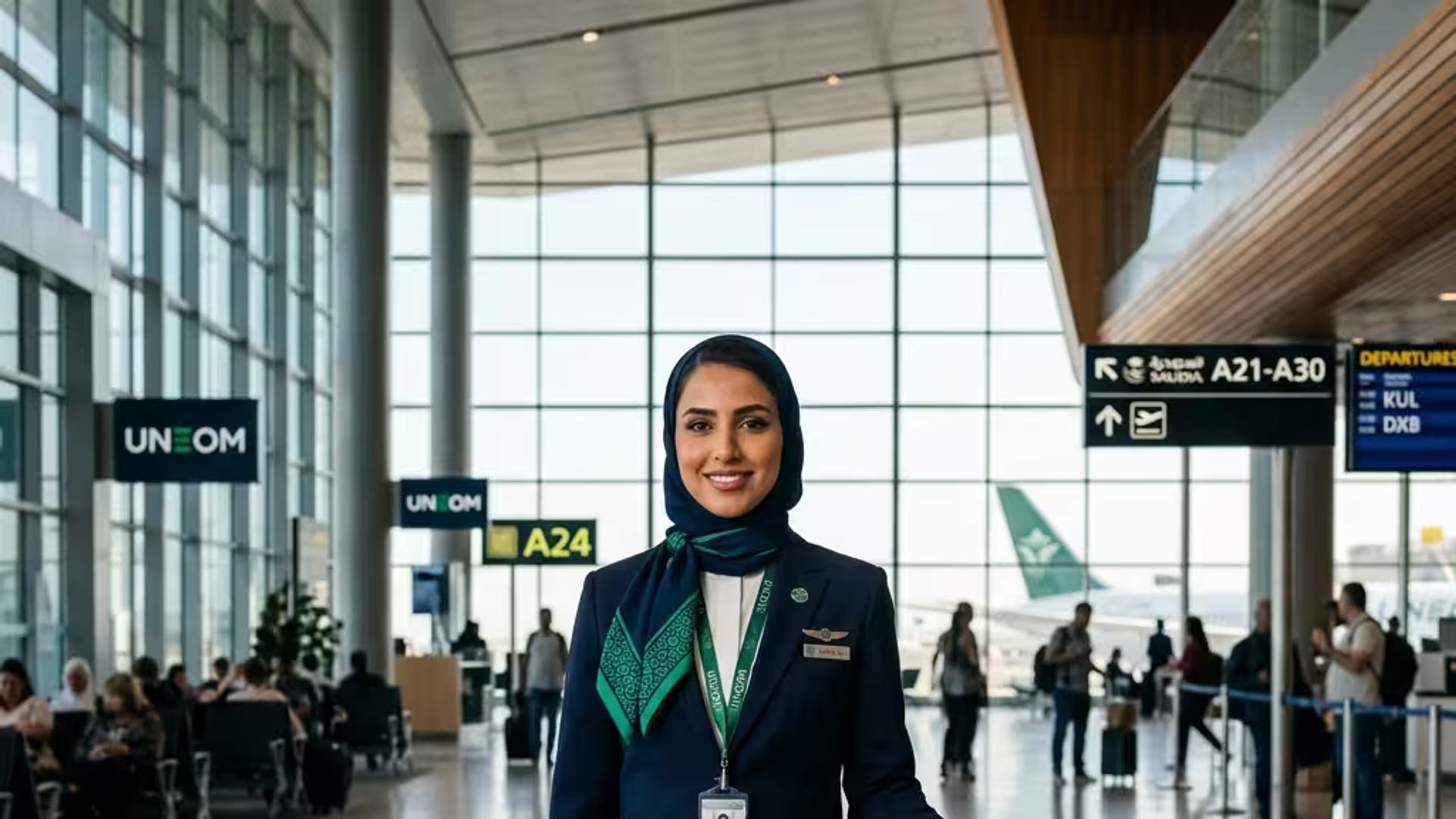
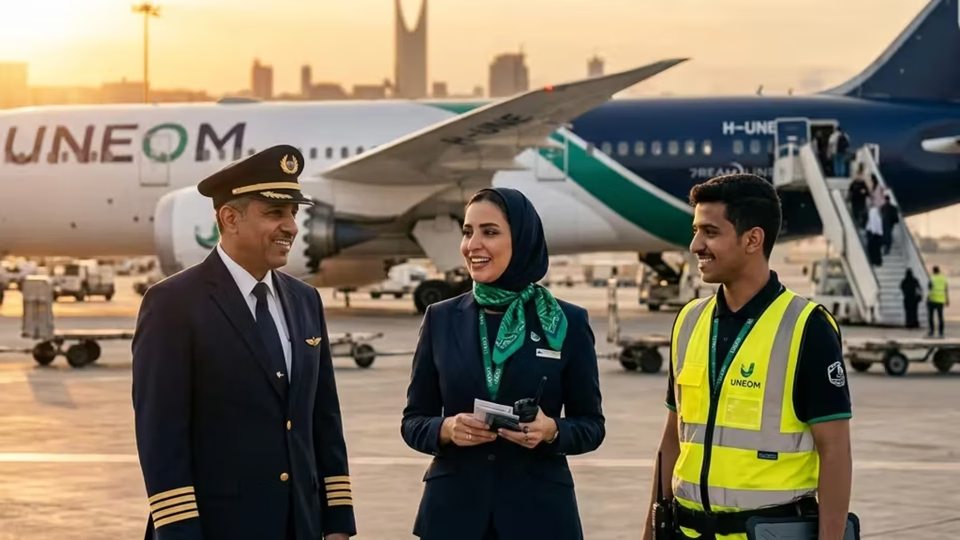
Airline uniform design is arguably the most complex garment specification in the professional wear industry. The uniform must function across a temperature range from minus 15 degrees Celsius on an airport tarmac in winter to 50 degrees in a Saudi summer jetway, maintain impeccable appearance through 14-hour duty cycles, accommodate the full range of cabin crew movements from overhead bin reaching to emergency-slide deployment, and serve as the primary physical expression of a brand identity worth billions. For Saudi carriers, there is an additional dimension: the uniform must embody Saudi cultural values including modesty standards while remaining internationally appealing to a passenger base spanning 150 nationalities.
The 14-hour comfort window
A cabin crew member's duty cycle begins with a pre-flight briefing, continues through boarding, service, and landing operations, and concludes with post-flight duties — a window that routinely extends to 14 hours for long-haul flights. During this window, the uniform must maintain wrinkle-free appearance despite sitting in crew seats, reaching into overhead bins, bending to serve passengers in economy seating, and moving through the pressurised cabin environment where humidity drops to 10 to 15% — lower than the Sahara desert. The pressurised cabin environment creates specific fabric challenges. Low humidity accelerates static build-up, causing synthetic fabrics to cling and natural fibres to become brittle. The cabin pressure equivalent altitude of 1,800 to 2,400 metres reduces blood oxygen levels, making tight-fitting garments more uncomfortable than at sea level. And the recycled cabin air deposits aviation-specific odours — jet fuel vapour, galley cooking fumes, and recycled passenger air — into the fabric, requiring odour-resistant treatment that standard professional wear does not include. UNEOM's airline fabric specification addresses these conditions through a tri-blend composition: 55% wool for wrinkle recovery and natural temperature regulation, 35% polyester for dimensional stability and colour retention, and 10% elastane for mechanical stretch. This tri-blend achieves a wrinkle recovery angle of 280 degrees — meaning the fabric recovers 78% of its original flat appearance within 5 minutes of creasing, compared to 220 degrees for standard wool-poly blends. The elastane component provides 12% stretch that accommodates the reaching, bending, and sitting movements without the fabric developing permanent stretch marks at the knee and elbow. An activated-carbon odour-absorption treatment is applied during finishing — the carbon particles adsorb volatile organic compounds from the cabin environment, preventing the stale-air smell that accumulates in untreated garments during long-haul flights. The treatment remains effective through 40 wash cycles before requiring reapplication.
Modesty-compliant design engineering
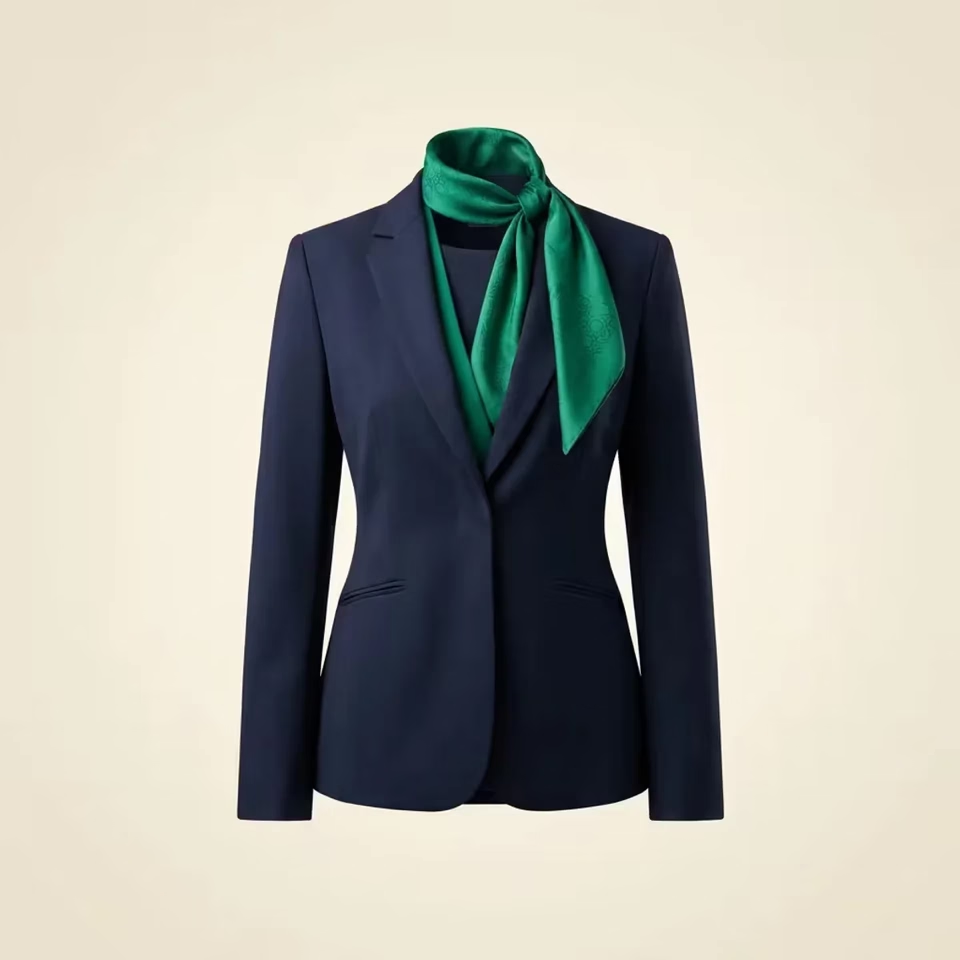
Saudi carrier cabin crew uniforms must comply with modesty standards that differ from those of most international airlines. These standards include: full arm coverage to the wrist, neckline coverage to the collarbone, skirt or trouser length to below the knee, and hijab provision for crew members who choose to wear it. The design challenge is incorporating these coverage requirements without creating the boxy, shapeless silhouettes that characterise many modesty-oriented garments. UNEOM's modesty-compliant design approach uses four engineering techniques. First, structured sleeve construction: the full-length sleeve is constructed with an articulated elbow panel that allows natural arm bending without the sleeve riding up to expose the forearm — a common problem with standard full-length sleeves during overhead bin operations. The elbow panel uses an additional 3cm of fabric ease combined with a curved seam that follows the natural bend of the arm, ensuring the sleeve maintains wrist coverage in all arm positions. Second, neckline architecture: the collarbone-covering neckline uses a stand collar with a 4cm height — high enough to meet modesty standards but low enough to avoid the clerical appearance that higher collars create. The collar is stabilised with a flexible thermoplastic interlining that maintains the collar shape throughout the duty cycle without the rigid, uncomfortable feel of traditional stiff interlinings. Third, tailored length management: the below-knee skirt specification uses a pattern geometry that maintains the specified length during walking and sitting. Standard skirts ride up 5 to 8cm when seated — potentially exposing the knee in a seated passenger-facing position. UNEOM's pattern uses a modified kick-pleat construction with additional ease at the back panel that accommodates sitting without length change. Fourth, hijab integration: the airline hijab specification uses a two-piece system — an under-cap bonded to the neckline of the jacket, and an outer hijab that attaches to the under-cap via concealed magnetic snaps. This system prevents the hijab from shifting during turbulence, galley work, or emergency procedures, and eliminates the need for pins that some airlines prohibit for safety reasons.
Emergency performance requirements
Airline uniforms are regulated by the Saudi GACA (General Authority of Civil Aviation) and must meet emergency performance standards that no other uniform category requires. These standards include flame resistance testing to FAR 25.853 — the fabric must self-extinguish within 15 seconds of flame removal and exhibit a char length of less than 15cm when tested vertically with a 12-second Bunsen burner application. The standard applies not only to the visible uniform fabric but to all components including linings, interlinings, buttons, thread, and decorative elements. This requirement eliminates many fashionable fabric options — metallic threads, synthetic lace, and certain decorative weaves that would enhance the visual appeal of the uniform but cannot pass the burn test. UNEOM's design team works within these constraints by using inherently flame-resistant fibres rather than flame-retardant chemical treatments. The wool component of the tri-blend is naturally flame-resistant — wool fibres char rather than melt, do not drip burning material, and self-extinguish when the flame source is removed. The polyester component is modified to include a phosphorus-based flame retardant copolymer — the flame resistance is built into the polymer chain rather than applied as a surface treatment, so it does not wash out or degrade over the garment's lifecycle. Beyond fabric flame resistance, the uniform must accommodate emergency procedures including slide deployment, emergency exit operation, and passenger evacuation. These procedures require specific body movements — a full overhead reach to access the escape hatch, a deep squat to position at the exit, and a forward bending motion to assist passengers. UNEOM tests every airline uniform design through a full emergency-procedures simulation using trained cabin crew, verifying that the garment does not restrict any mandated movement and does not create a snag or entanglement risk during slide deployment. The simulation is recorded and the footage provided to the airline's safety department as part of the uniform approval documentation.
Brand identity through textile craft
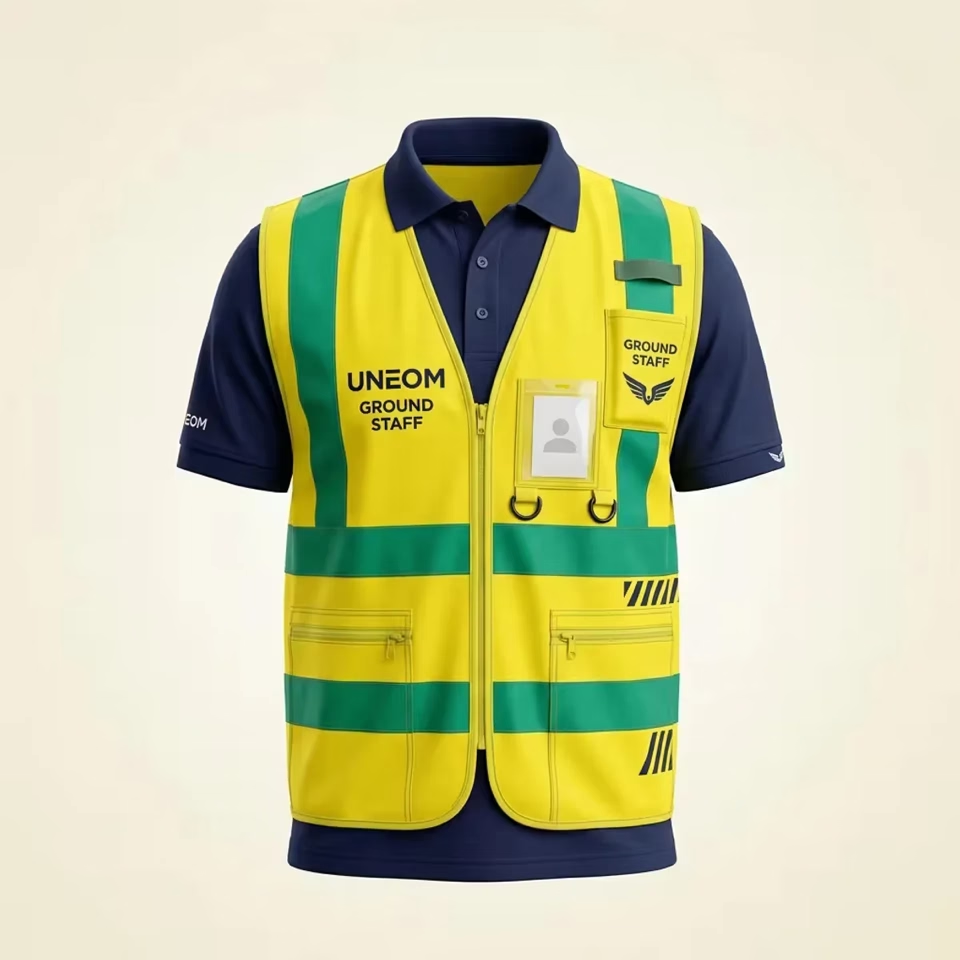
The airline uniform is the most frequently seen physical expression of the airline brand — passengers interact with it for the entire flight duration, in close proximity, and in a context where brand associations are being formed with every service interaction. For Saudi carriers competing in the premium long-haul market against Emirates, Qatar Airways, and Singapore Airlines, the uniform is a critical competitive differentiator. UNEOM's approach to airline brand identity uses what we call textile storytelling — incorporating Saudi cultural references into the fabric and construction in ways that are felt rather than explicitly seen. The fabric itself carries the story: custom jacquard weaving incorporates geometric patterns derived from traditional Saudi architectural motifs — the triangular and diamond patterns found in Najdi building facades, the curved arabesques of Hejazi woodwork — woven into the fabric structure as a tone-on-tone pattern that is visible only at close range or when light catches the fabric at specific angles. This subtle pattern creates a visual richness that passengers perceive as premium quality without consciously identifying its source — the effect is luxury rather than costume. The colour palette for Saudi carrier uniforms draws from the Kingdom's natural landscape: the deep green of the Asir highlands, the warm sandstone of Al-Ula, the midnight blue of the Red Sea coast, and the pearl white of the Arabian Gulf. These colours are specific to Saudi geography and cannot be mistaken for any other airline's palette, creating instant brand recognition that operates independently of logo placement. The finishing details reinforce the brand story: buttons cast in designs derived from Saudi coin motifs, scarf rings in shapes inspired by traditional Saudi jewellery, and embroidery using traditional Saudi geometric patterns rendered in metallic thread that meets FAR 25.853 flame standards. Each element is individually subtle — but collectively, they create a uniform that is unmistakably Saudi in a way that communicates cultural confidence rather than cultural constraint.
Frequently asked
- Why are airline uniforms the hardest garment to specify?
- They must work across -15°C to 50°C, maintain appearance for 14 hours, pass FAR 25.853 flame testing, meet GACA safety requirements, and embody a multi-billion-dollar brand.
- How does UNEOM ensure modesty compliance for airline hijabs?
- A two-piece system — under-cap bonded to the jacket neckline plus outer hijab with magnetic snaps — prevents shifting during turbulence and eliminates pins for safety compliance.
- What fabric does UNEOM use for airline uniforms?
- 55/35/10 wool-polyester-elastane tri-blend with 280-degree wrinkle recovery, inherent flame resistance, and activated-carbon odour absorption effective for 40 wash cycles.
- Does UNEOM test uniforms for emergency procedures?
- Yes — full emergency-procedures simulation with trained cabin crew, recorded and provided to the airline's safety department as part of uniform approval documentation.
- How does UNEOM incorporate Saudi identity into airline uniforms?
- Textile storytelling: tone-on-tone jacquard patterns from Saudi architecture, landscape-derived colour palette, coin-motif buttons, and traditional geometric embroidery in flame-rated metallic thread.