Girls' School Uniform in Saudi Arabia: Modest Design, Graded by Age
How girls' school uniform design in Saudi Arabia grades with age — cut, coverage, heat-ready fabric, opacity, layering and easy care — while school dress policies differ.
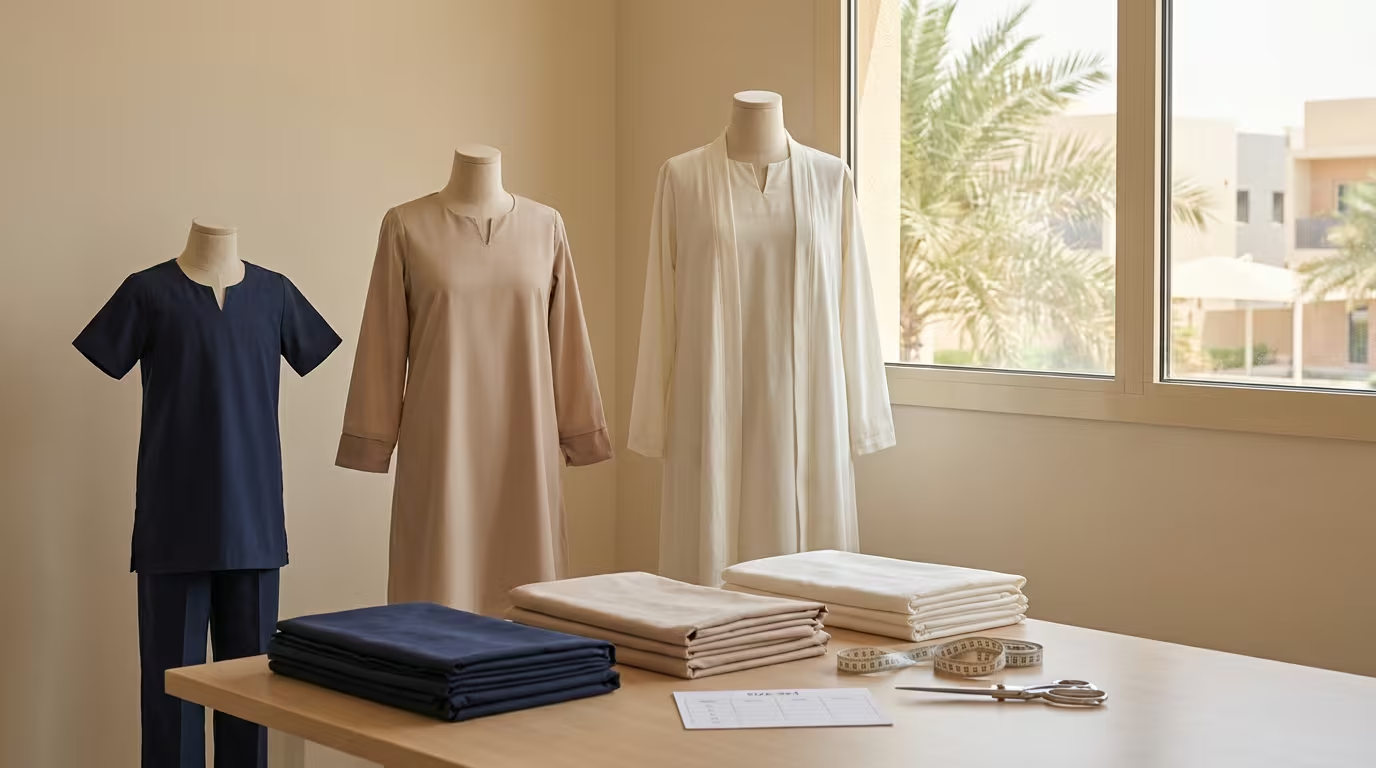
Girls' school uniforms in Saudi Arabia are rarely one garment and never one age. A modest programme works when cut, length, coverage, fabric and layering step up sensibly from primary to secondary, stay comfortable in real heat, and respect the dress policy each individual school writes for its own community. Grading is what makes that possible.
Why grade by stage
A uniform programme that treats a six-year-old and a seventeen-year-old as the same wearer will fail both. Younger pupils spend the day moving — climbing, sitting on the floor, running in the yard — and they need garments that stay in place without constant adjustment. Older students are more self-conscious about fit, drape and how a garment reads when they stand at the front of a classroom. Grading is the practice of stepping cut, length, coverage and closure gradually across primary, intermediate and secondary stages so the uniform grows with the wearer rather than being scaled up like a photocopy. It is also a procurement discipline: each stage becomes its own specification, with its own size set, fabric weight and tailoring notes, rather than one drawing stretched across every stage from first grade to graduation. Policies differ widely between schools in the Kingdom — public, private and international programmes each set their own expectations — so grading should be built around the school's written dress policy and the community it serves, not around assumptions.
Cut, length, coverage
The visible grading levers are few and they are all tailoring decisions. Sleeve length is the first: short or three-quarter sleeves suit the youngest pupils who wash their hands constantly, while longer set-in sleeves with a soft cuff are common as students move up. Hem length follows, moving from mid-calf tunics that clear the floor when a child sits cross-legged to fuller ankle-skirting lengths for older stages. Necklines are kept high and finished with a facing rather than a stretched-out rib that gapes after a term of laundering. Ease matters as much as length: a straight tunic with a gentle A-line release from the shoulder or a yoke seam gives coverage without cling, whereas a body-skimming cut needs a lining or an over-layer to do the same job. Side vents or pleats should give enough room to walk and sit, positioned with the intended under-layer in mind rather than opened as high as the pattern allows. Every one of these choices belongs in a written spec sheet the school signs off, because they are the details parents notice first.
Fabric for heat and movement
Classrooms are air-conditioned; corridors, buses and assembly yards often are not, and a Saudi summer does not negotiate. Fabric choice for girls' uniforms is therefore a comfort-and-durability trade-off rather than a single right answer. Cotton and cotton-rich blends absorb moisture and feel cool against the skin, and cotton fibre actually gains strength when wet, which suits frequent washing; the cost is slower drying, more creasing and gradual shrinkage unless the cloth is pre-treated. Polyester and poly-cotton dry quickly, hold pleats and colour through repeated laundering and resist shrinkage, though the weave or knit structure has to be chosen carefully so the garment moves air rather than trapping it and so surface fuzz does not develop into stubborn pills. Viscose and similar regenerated fibres drape beautifully and feel cool, but they lose strength when wet, so they behave very differently in a school laundry — a reminder that fibres cannot be judged by family. A small share of elastane in a woven cloth adds recovery for climbing and sitting without changing the modest silhouette.
Opacity you can verify
Opacity is the quality complaint schools raise most often, and it is a construction issue before it is a colour issue. How much light a cloth blocks depends on yarn fineness, how tightly the weave or knit is set, the weight of the fabric and the depth of the shade — pale colours and low-density cloth will always reveal more under a bright yard or a fluorescent corridor than they do under showroom lighting. The practical answer is to evaluate samples the way the garment will actually be worn: over the intended under-layer, against a strong light source, after several laundry cycles, and while the fabric is stretched across a seat or a shoulder. Where a fabric is otherwise ideal, a partial lining across the yoke, back and skirt panel solves the problem without adding heat everywhere. Damp cloth behaves differently again, which matters after physical education or ablution. If a school wants a documented result rather than a visual judgement, ask the supplier for testing to a recognised method and record the outcome in the specification.
Layers that work together
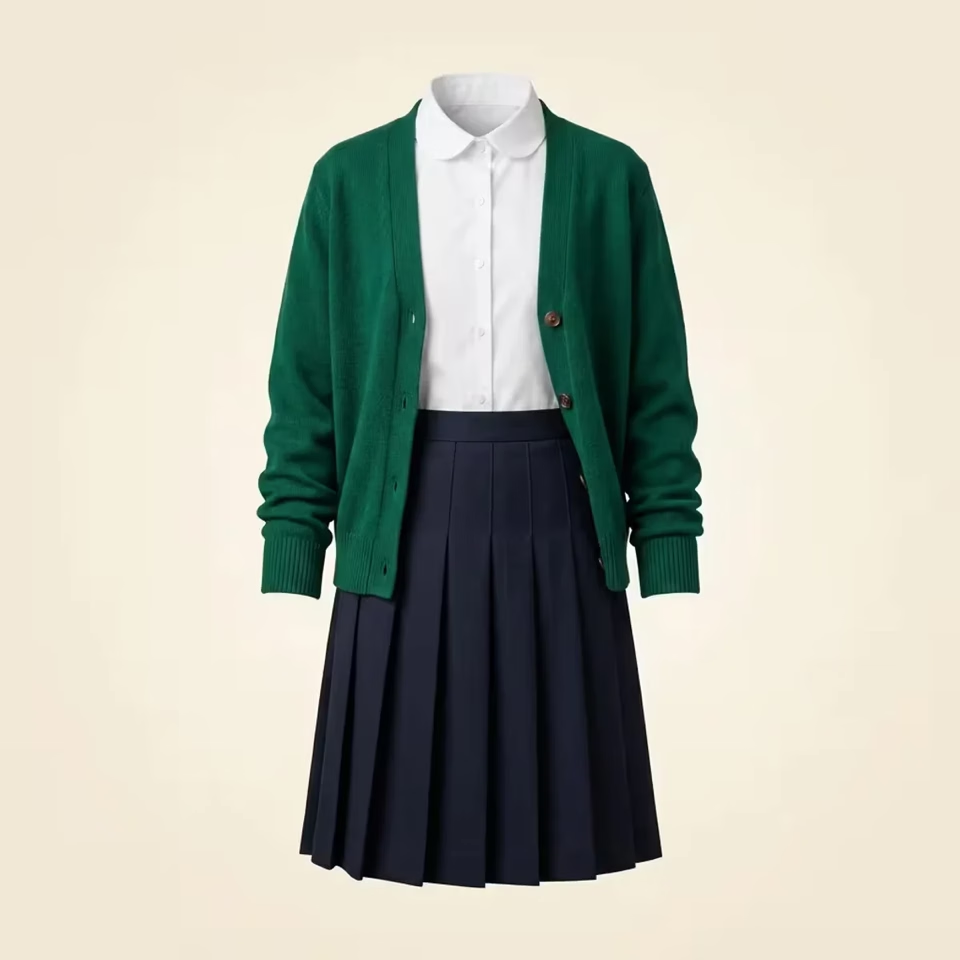
Most girls' uniform programmes are layered systems rather than single garments, and the layers have to be designed together. A school over-layer or abaya-style outer garment, where a school includes one, sits over a tunic and trousers or a skirt, so the total weight and air permeability of the stack — not the individual pieces — decide how the student feels at eleven in the morning. That argues for a lighter, smoother outer cloth that slides over the sleeve beneath instead of dragging, and for an opening style that a student can manage herself between classes. Where a headscarf forms part of a school's dress policy, cut and fabric should be chosen so it stays put during movement and sits comfortably under a bag strap. Cardigans and PE kit belong in the same conversation, because a modest sports layer that is planned from the start is far better than one improvised halfway through the term. Schools set their own expectations here, and the supplier's job is to serve the policy the school has written, respectfully and precisely.
Easy to wear, easy to wash
The last grade of the design is the one families live with. Younger pupils dress themselves, so front openings, generous button sizes, elastic waists with adjustable internal tabs and no awkward back closures matter more than any styling detail. Growth is continuous and uneven, which is why deep hems, adjustable waistbands and a size set built for real body shapes reduce mid-year replacements. Laundering happens at home, in different machines and water conditions, so colourfastness, shape retention and controlled shrinkage should be specified and confirmed on production cloth rather than assumed from a swatch, with clear care labelling in Arabic and English. Practical programmes also plan for replenishment: new joiners arrive, garments are lost, and children grow between terms. UNEOM has manufactured professional clothing inside Saudi Arabia since 2013 under an ISO 9001:2015 quality management system, and works with OEKO-TEX Standard 100 certified materials, which are tested for harmful substances — a documented basis for the reassurance parents ask for when a garment is worn all day.
Frequently asked
- What does a modesty-graded girls' school uniform mean?
- It means cut, length, sleeve, coverage and layering are stepped deliberately across primary, intermediate and secondary stages instead of scaling one design up. Each stage gets its own specification, size set and tailoring notes, so the garment suits how students of that age move, dress themselves and expect to look.
- Which fabric suits Saudi school heat best?
- There is no single answer. Cotton-rich cloth absorbs moisture and feels cool but dries slowly; polyester blends dry fast and hold colour and shape through heavy laundering. Weave openness and garment weight often matter more than fibre alone. Decide with wear trials in your own campus conditions before committing to a full programme.
- How do we check a uniform fabric is not see-through?
- Judge samples as they will be worn: over the intended under-layer, against strong daylight and corridor lighting, after several wash cycles, and while stretched over a shoulder or a seat. Damp cloth behaves differently, so check that too. For a documented result, request testing to a recognised method and record it in the specification.
- Do all schools in Saudi Arabia require the same uniform?
- No. Dress expectations differ between public, private and international schools, and often between stages inside one school. Some include an outer layer or headscarf in their policy; others do not. Build the specification from the school's own written dress policy and confirm details with its leadership rather than assuming a common standard.
- How can we reduce mid-year uniform replacements?
- Design for growth and wear: deep hems, adjustable waistbands, reinforced stress points and a size set validated by fitting real students before bulk production. Specify colourfastness and shrinkage on production cloth, label care clearly in Arabic and English, and hold a replenishment plan for new joiners and fast-growing pupils.