
School PE & Sports Kit in Saudi Arabia: Activewear for Saudi Schools
A procurement guide to school sports uniforms in Saudi Arabia: moisture-wicking knits, UPF for outdoor PE heat, modest girls' kit, tracksuits, durability and growth sizing.
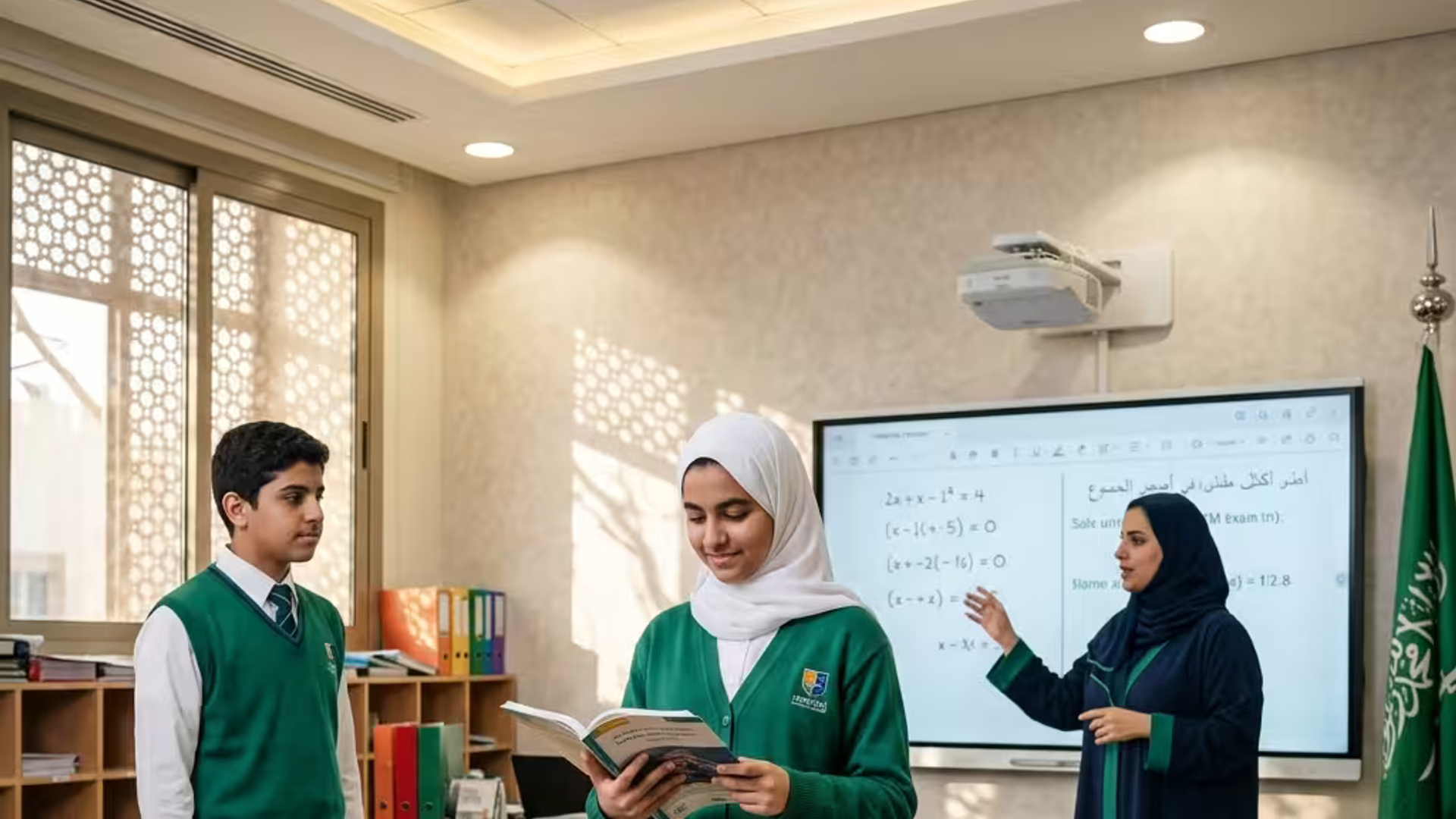
School PE kit is a technically distinct product from the classroom uniform: it must move sweat, breathe in Saudi heat, shield against sun during outdoor lessons, and survive frequent washing as children grow. This guide helps Saudi schools and procurement teams specify moisture-wicking activewear, modest girls' options, house-colour systems and tracksuits for cooler terms — built around real performance, durability and sizing.
Why PE kit is a different garment
School sports uniforms in Saudi Arabia should never be treated as a lighter version of the daily uniform. The classroom shirt is a woven cotton-blend built for a seated, air-conditioned day; PE kit is a knit garment engineered for movement, sweat and the outdoor pitch. The two products solve opposite problems. Activewear needs stretch so children can run, jump and stretch without restriction, and it needs a fabric structure that pulls moisture away from skin rather than holding it. When schools order PE shirts from the same supplier on the same cotton spec as their shirts, pupils overheat, fabric clings, and odour and discomfort follow. Specifying PE kit as its own line — with its own fibre, its own knit construction, and its own performance brief — is the single most important decision a procurement team makes here. It changes how children experience physical education in a climate where outdoor lessons can run in genuinely punishing heat for much of the academic year.
Moisture-wicking fabrics for Saudi heat
The core of any good PE kit is a moisture-wicking polyester knit, often a polyester-elastane blend for stretch. Unlike cotton, which absorbs sweat and stays wet, engineered polyester moves moisture along the fibre to the fabric surface where it evaporates, keeping the child drier and cooler during exertion. This matters acutely in Saudi Arabia, where PE is frequently outdoors and sweat load is high. Look for a knit with an open, breathable structure — jersey or mesh-panelled — rather than a dense fabric that traps heat. Mesh inserts at the back and underarm aid airflow where children sweat most. A small elastane percentage gives four-way stretch for full range of motion. For schools that prefer a softer hand-feel against young skin, a brushed-back or cotton-faced polyester offers a more natural touch while keeping the wicking polyester next to the body. The goal is qualitative comfort: dry, light and unrestrictive across a long, hot lesson.
Sun protection for outdoor PE
Because so much physical education in the Kingdom happens outdoors under intense sun, sun protection deserves a deliberate place in the specification. Tightly knitted synthetic fabrics naturally block more ultraviolet light than loose, light cotton, and many performance polyesters can be specified with a measured UPF rating that quantifies how much UV the fabric stops. For younger children especially, this is a meaningful safeguard during midday lessons. Beyond fabric, garment design carries part of the load: longer sleeves and longer hems shield more skin without sacrificing breathability when the fabric is engineered to wick and ventilate. A lightweight long-sleeve performance top can actually keep a child cooler in direct sun than a short-sleeve cotton tee, by reflecting and blocking radiation while still moving sweat. Pairing sun-aware garments with shaded timetabling and hydration is sound practice, but the uniform itself should be the first, always-present layer of protection a school can rely on.
Modest PE options for girls
As more Saudi girls take part in physical education, schools need activewear that supports full, energetic movement while respecting modesty — and the two are entirely compatible when the garment is tailored correctly. The principle is loose, full coverage in breathable performance fabric rather than tight or revealing cut. A practical modest PE kit pairs a longline, relaxed-fit tunic-length top with full-length athletic trousers or joggers, both in moisture-wicking knit so coverage never means overheating. Sleeves are full length but cut roomy at the underarm for free movement; tops are long enough to stay covering through bending and jumping. For pupils who wear a sport hijab, a lightweight wicking version in the school colour integrates cleanly with the kit and stays secure during activity. The key is that modesty is achieved through cut, length and fabric choice — not by adding bulky, hot layers. Done well, a modest girls' PE kit performs every bit as well as any other activewear in the heat.
Tracksuits for cooler terms
Saudi Arabia is not uniformly hot year-round, and a complete PE programme needs a warmer layer for cooler months and higher-altitude cities. Winter mornings in Riyadh can be genuinely cold, and a city like Abha sits at elevation with markedly cooler temperatures, so a school tracksuit earns its place in the kit. A good school tracksuit manufacturer will build the jacket and trousers in a brushed-back polyester or poly-cotton fleece that traps warmth while still breathing during activity, with a full-length zip so children can regulate temperature easily. Cuffed or elasticated hems keep warmth in and let pupils move. The tracksuit doubles as a presentable team layer for travel to fixtures and for assembly, so it should carry the school identity cleanly. Crucially, it should coordinate with the warm-weather PE kit in colour and branding, so families buy into one coherent system rather than two unrelated wardrobes across the seasons.
House colours and team identity
PE kit is where a school's house and team identity becomes most visible, so colour and branding should be planned, not improvised. A house-colour system — distinct shirt colours or coloured trim assigned to each house — turns sports day and inter-house competition into something pupils feel part of, and it helps staff organise large groups quickly on the field. For durable, wash-fast results, colour is best achieved through the fabric and yarn rather than printed panels that fade, and crests or house marks are best applied by a method suited to stretch performance knits so they flex with the garment instead of cracking. Heat-applied transfers and certain print methods made for activewear hold up far better on polyester than standard cotton printing. A coherent palette also lets a school run one base kit across all houses, swapping only the colour element, which simplifies ordering and reordering. Strong, consistent identity costs little extra when it is designed into the specification from the start.
Durability, washing and growth sizing
PE kit lives a harder life than any other school garment: it is sweated in, dragged across pitches, and washed far more often, sometimes after every lesson. Performance polyester is well suited to this, holding colour and shape through frequent laundering better than cotton, but construction still decides longevity. Specify reinforced seams, flatlock stitching that resists chafing and seam failure under stretch, and quality elastic at waistbands that survives repeated washing. Because children grow quickly, sizing strategy matters as much as fabric. Generous, well-graded size runs with a little growing room, adjustable or elasticated waistbands, and clear size guidance for families reduce mid-year replacements and waste. Ordering across a full size range with sensible buffer stock lets a school dress new and growing pupils without long lead times. As an in-Kingdom manufacturer holding ISO 9001:2015 and OEKO-TEX Standard 100, UNEOM can specify activewear to these durability and safety standards and manage sizing across a whole school as a programme, not a one-off purchase.
Frequently asked questions
What fabric is best for school sports uniforms in Saudi Arabia?
A moisture-wicking polyester knit, usually with a small elastane percentage for stretch, is the best base. It pulls sweat to the surface to evaporate rather than holding it like cotton, keeping pupils drier and cooler during outdoor PE in the heat. Look for breathable jersey or mesh-panelled constructions, and a soft brushed or cotton-faced finish where a gentler hand-feel on young skin is preferred.
How can PE kit protect children from the sun during outdoor lessons?
Tightly knitted performance polyester blocks more ultraviolet light than loose cotton, and many fabrics can be specified with a measured UPF rating. Garment design adds protection: longer sleeves and hems shield more skin while still wicking and ventilating. A lightweight long-sleeve performance top can keep a child cooler in direct sun than a cotton tee, alongside shaded scheduling and hydration.
Can girls' PE kit be both modest and good for active movement?
Yes. Modesty and performance are fully compatible when the garment is cut correctly. A loose, longline wicking top with full-length athletic trousers gives full coverage without overheating, and roomy underarms allow free movement. A lightweight wicking sport hijab in the school colour integrates cleanly. Modesty comes from cut, length and breathable fabric — not from adding bulky, hot layers.
Do Saudi schools need tracksuits as well as warm-weather kit?
For a complete programme, yes. Winter mornings in Riyadh can be cold, and higher-altitude cities like Abha are markedly cooler, so a brushed-back polyester or fleece tracksuit earns its place. A full-length zip lets pupils regulate temperature, and it doubles as a presentable team layer for fixtures. It should coordinate in colour and branding with the warm-weather PE kit as one system.
How should schools handle PE uniform sizing for growing children?
Plan sizing as carefully as fabric. Use generous, well-graded size runs with a little growing room, adjustable or elasticated waistbands, and clear size guidance for families to cut mid-year replacements. Ordering across a full size range with sensible buffer stock lets a school dress new and growing pupils quickly. Managing this across the whole school as a programme reduces waste and avoids long lead times.