When to Order School Uniforms in Saudi Arabia: The Back-to-School Timeline
A procurement timeline for Saudi schools: when to order school uniforms, why the summer queue punishes late orders, and how to build size buffer stock.
Order school uniforms months before term starts, not weeks. In Saudi Arabia the safe anchor is the end of the previous academic year: sizing while students are still on campus, specification and sampling in spring, production before the summer queue forms. Late ordering means missing sizes, rushed freight and students without uniforms in week one.
Count Backwards From Day One
The only reliable way to decide when to order school uniforms in Saudi Arabia is to start at the first morning of term and work backwards through every step that must finish before it. Distribution and exchanges need their own window. Before that, delivery to campus. Before that, packing and quality inspection. Before that, embroidery or applied crests. Before that, bulk cutting and sewing. Before that, fabric procurement and, if the shade is bespoke, dyeing. Before that, an approved sample the school has actually seen and signed. Before that, a written specification and a measured size run. Each link is counted in weeks rather than days, and they run in sequence, not in parallel. Laid end to end, the honest planning horizon is months. Schools that treat uniform ordering as a summer task are not planning; they are gambling that nothing in a long chain slips. Anchor the countdown to the published academic calendar for the coming year, not to what last year happened to look like.
What Actually Takes Time
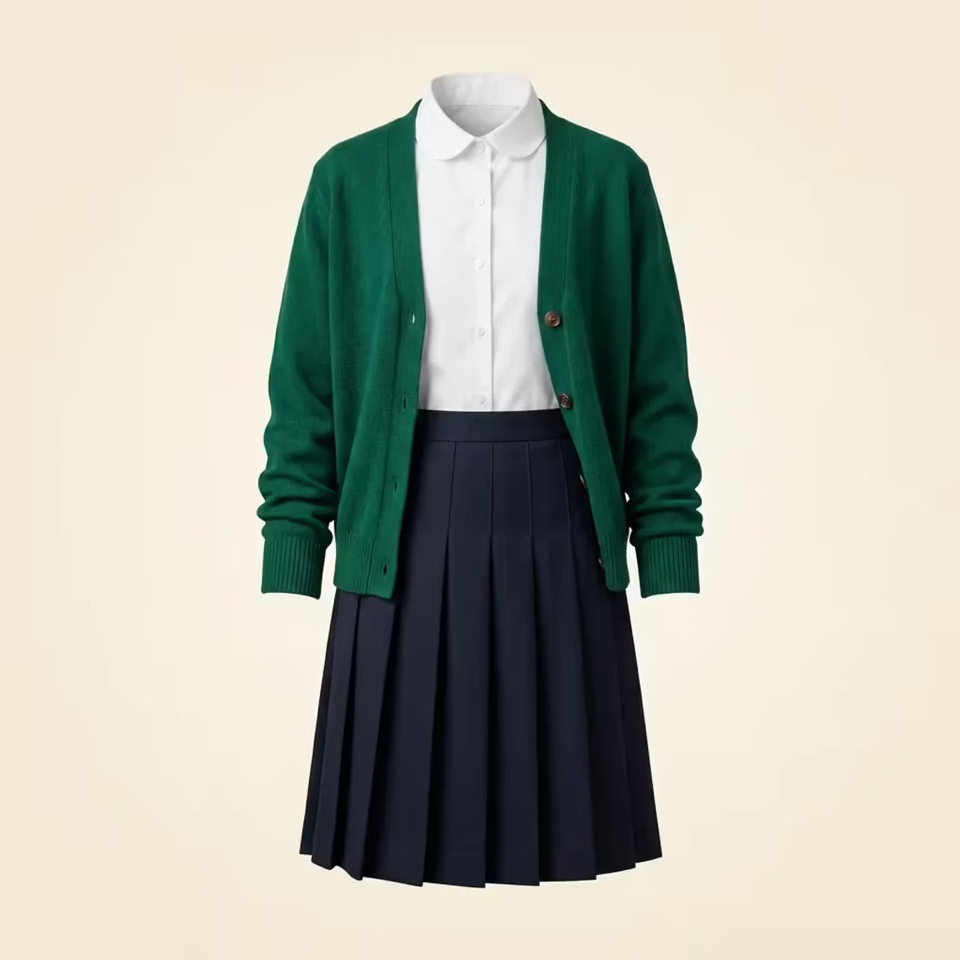
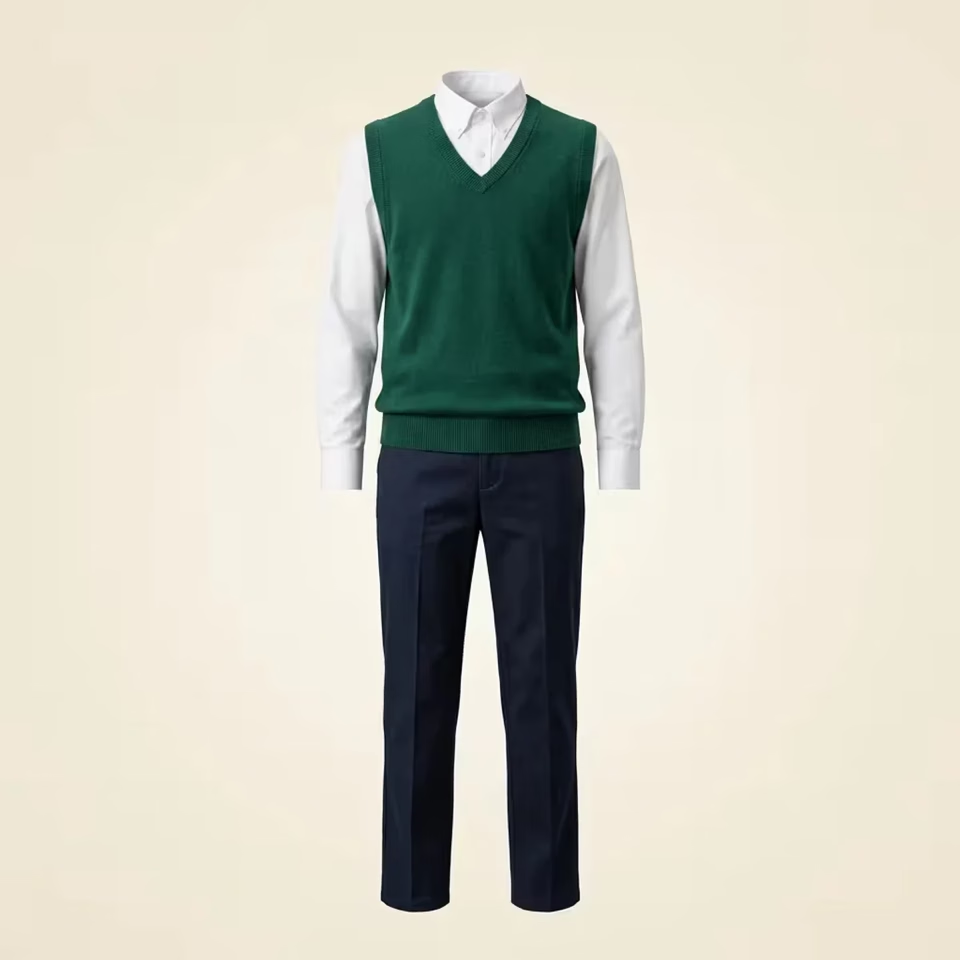
Procurement teams underestimate the chain because they picture sewing and nothing else. Sewing is rarely the constraint. Specification and approval consume real calendar time: collar style, sleeve length, girls' tunic coverage, trouser or skirt cut, crest placement, the exact shade of the house colours, and fabric assurances such as OEKO-TEX Standard 100 for garments worn against children's skin. A pre-production sample then has to be made, worn, photographed and approved by people who are frequently on leave. Fabric is the next gate: uniform cloth for Saudi conditions — breathable blends that survive repeated institutional laundering and hold colour under strong sun — is bought in lots, and a lot must be booked, woven or drawn from stock, then finished. Decoration is a separate queue with its own machines; embroidery runs at a fixed speed and cannot be compressed by adding cloth. Inspection, size-wise packing and labelling by class take longer than anyone expects. Local manufacturing removes ocean freight and customs, the biggest source of unrecoverable delay, but not the chain itself.
The Summer Bottleneck
Every school in the Kingdom needs its uniforms at roughly the same moment, and that shared deadline creates a queue that behaves predictably. From late spring onwards, factory capacity fills with school work while corporate, healthcare and hospitality programmes continue to run. Embroidery lines saturate first, because crest work is common to almost every school order. The window is fragmented too: staff annual leave, the slowdown of the hottest months, and the Eid al-Adha and Hajj period — which moves earlier in the Gregorian calendar each year and can land inside the production window — all remove working days from the very weeks in which late orders are trying to be made. Fabric suppliers face the same compression, so a shade or weight freely available in spring may be on allocation by midsummer. Orders placed early are scheduled into clean capacity, get proper sampling attention, and can absorb a problem without drama. Orders placed into the peak inherit whatever slot is left. The uniform order lead time quoted in March and the one quoted in July are rarely the same commitment.
Measure Before They Leave
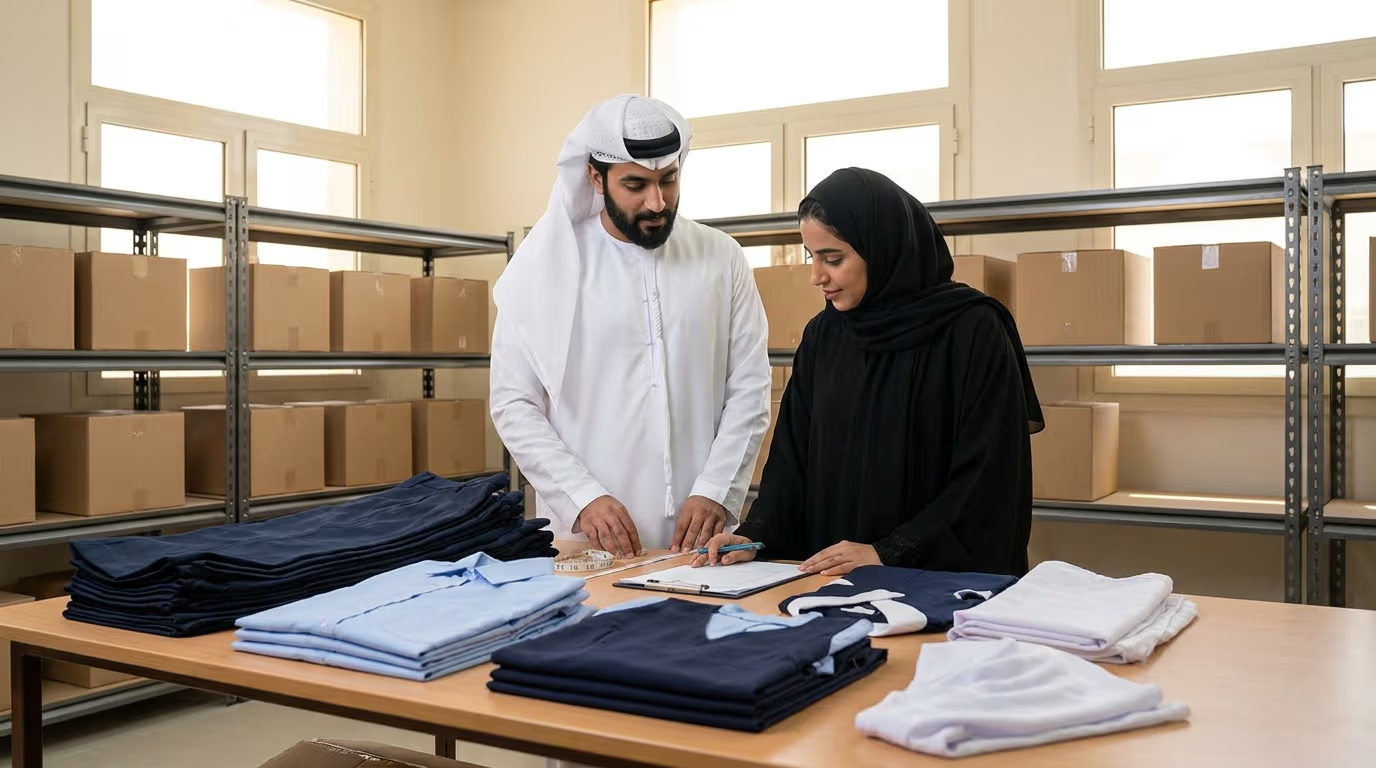
Sizing is the step that cannot be rushed and cannot be done retrospectively, because once the academic year ends the students are no longer on campus. A proper size run means fitting sessions with real garments in real sizes, not a spreadsheet of last year's numbers rolled forward. Children grow over a long summer, so measurements taken in spring need a deliberate growth allowance, applied differently by age band: the youngest and the early-adolescent cohorts move fastest. Girls' garments need their length and coverage confirmed against the school's own modesty standard rather than assumed from a size chart, and headscarf colour and fabric should be settled at the same session so the whole outfit reads as one uniform. Cuffs, hems and waist adjusters that let a garment be let out are worth specifying at this stage; they quietly reduce mid-year replacement. Schools that run a fitting week before the final term ends convert the single largest source of back-to-school uniform ordering error into a solved problem.
The Cost of Ordering Late
Late orders fail in a recognisable sequence. The middle of the size curve empties first, so the sizes most students need are exactly the ones unavailable, and families are offered a size up as consolation. Expedited production and air freight for imported components add cost that was never budgeted and buy back less time than expected. A rushed top-up run is often cut from a different fabric lot, and lot-to-lot shade variation is visible when two students stand side by side in assembly, even when both garments meet the specification. Deliveries arrive split, so distribution has to be repeated and staff time is consumed twice. The most damaging outcome is the one parents see: students in the first week without a complete uniform, or in an interim substitute, at a school that has spent years building a consistent image. None of this is a supplier failure in the ordinary sense. It is the predictable output of entering a saturated queue with no margin left against the school uniform delivery deadline.
Build a Buffer, Not Just an Order
A uniform order sized only to today's roll is an order that will fail by October. Build the buffer deliberately. Hold overage on the densest part of the size curve, where replacement demand concentrates, and a thinner spread across the tails. Add stock for enrolment that has not happened yet: late admissions, mid-year transfers and siblings joining are normal, and a new student without a uniform is a poor first impression. Reserve fabric from the same lot at the time of the main order so top-ups match the original in shade; this is far easier to arrange in advance than to fix afterwards. Agree with the supplier how replenishment is triggered and how quickly a small run can be produced, and put that in the contract rather than in an email thread. Finally, keep a small exchange pool at the school for genuine sizing errors. The buffer is not waste; it is the difference between a programme that absorbs surprises and one that escalates them.
Frequently asked
- When should a Saudi school start ordering uniforms for the new year?
- Work backwards from the first day of term through distribution, delivery, inspection, embroidery, production, fabric procurement and sampling. Each stage runs in weeks, and they run in sequence. The practical starting point is therefore the previous academic year: measure students before they leave, settle specification and samples in spring, and book production before the summer peak fills factory capacity.
- What happens if we order in July?
- A July order enters a saturated queue shared with every other school, and shortened further by annual leave and, in some years, by the Eid al-Adha and Hajj period. Expect limited fabric choice, longer quoted lead times, expedited charges and a real chance of split delivery. It is recoverable, but every margin for error disappears.
- How do we avoid running out of common sizes mid-year?
- Hold buffer stock weighted to the centre of the size curve, add units for late admissions and transfers, and reserve fabric from the original lot so replenishment matches in shade. Agree a written replenishment trigger and a small-run production commitment with your supplier before the year starts, not after the first shortage appears.
- Does local manufacturing shorten the lead time?
- It removes ocean freight, port handling and customs clearance — the least controllable parts of an imported chain — and makes sample review and mid-run correction practical. UNEOM has manufactured inside the Kingdom since 2013. Production, embroidery and inspection still take real time, so ordering early remains necessary even with a local supplier.
- When should student measurements be taken?
- Before the academic year ends, while students are still on campus; measuring once the holiday has started is impractical. Apply a growth allowance that varies by age band, confirm girls' garment length and coverage against the school's own standard, and keep the fitted size set on hand as a reference when new students enrol.